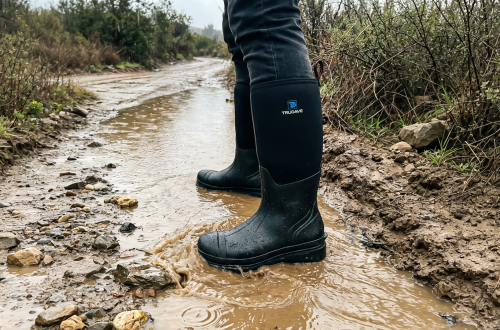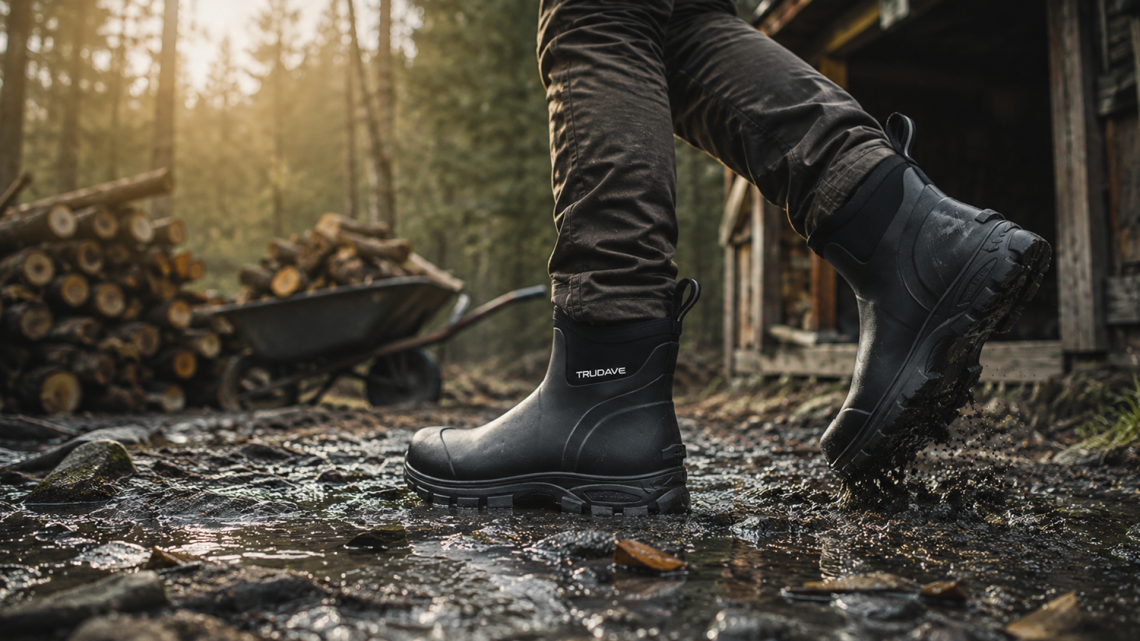
The Care and Feeding of Your Trudave Rain Boots — How to Turn a 2-Season Boot Into a Decade-Long Companion
Introduction
Here’s a quiet truth about outdoor gear that the industry rarely says out loud: the most sustainable, cost-effective boot you’ll ever own isn’t the one with the flashiest technology or the highest price tag. It’s the one you already have on your feet — provided you know how to take care of it.
Walk into any farm supply store in America, and you’ll see the same graveyard: racks of cheap rubber boots, PVC shells cracking at the flex points, destined for the landfill before the year is out. The average pair of low-quality rain boots lasts 2.1 years before the waterproofing fails, the soles wear smooth, or the seams separate beyond repair. With proper care, that number jumps to 5.8 years — nearly triple the service life. That’s not a marginal improvement. That’s the difference between buying boots twice a decade and buying them every other year until you die.
But here’s what makes this conversation interesting in 2026: the materials have changed. Trudave Gear builds its rain boot lineup — BloomBoot, MudTrek, HeatHold, MudFlex, and GardenStride — on a foundation of vulcanized natural rubber bonded to neoprene, not the petroleum-based PVC that dominates the budget market. These materials demand different care than the cheap wellies most people grew up with. Treat a vulcanized neoprene-rubber boot like a PVC boot, and you’ll still get more life than PVC delivers. Treat it correctly, and the difference compounds season after season.
This guide is the owner’s manual that should have come in the box. We’ll walk through Trudave’s official care protocol, explain the science behind each step, cover seasonal deep-cleaning cycles, detail the repair toolkit every boot owner should have, and give you the honest framework for knowing when to repair versus when to replace. No marketing fluff. No brand mythology. Just the practical knowledge that turns a pair of Trudave rain boots from a purchase into an investment.
1. The 90-Second Post-Wear Protocol: What Trudave Officially Recommends
The single most important thing you can do for any pair of rubber or neoprene-rubber boots takes less than two minutes, costs nothing, and requires no special tools. Trudave’s official guidance is straightforward: “Rinse the boots with clean water after use, wipe off dirt with mild soap, and let them air dry naturally. Avoid sunlight or heat to preserve waterproof seal and rubber durability”.
That’s the protocol. Rinse. Wipe. Air dry. No heat. No sunlight. Three actions, one prohibition.
The simplicity of this routine masks its importance. Mud and debris left on rubber boots don’t just look bad — they chemically degrade the material. Dirt, mud, and other debris can degrade rubber over time, leading to cracks and wear. Professional boot restorers recommend deep cleaning every 30 wears or immediately after exposure to corrosive substances like de-icing agents and road salt. But the daily rinse — just hose them off before you walk inside — prevents that degradation from getting started.
The prohibition on heat and sunlight is equally critical. High temperatures can cause materials to crack, peel, or lose their protective properties. Never try to dry boots using radiators, fireplaces, or direct sunlight as they will cause the rubber to crack prematurely. Direct sunlight overexposure will also cause wellies to fade over time. This isn’t cautionary language — it’s materials science. Rubber polymers break down under UV radiation and thermal stress. Heat accelerates the chemical reactions that cause rubber to stiffen, crack, and eventually fail.
For neoprene-lined boots like the BloomBoot and HeatHold series, there’s an additional step worth adopting. Neoprene lined boots should ideally be air-dried, and one trusty trick to soak up excess interior moisture is to use crumpled up newspapers — wrap them around and stuff them inside the boots to draw out moisture. This prevents the musty buildup that eventually makes any boot unpleasant to wear, and it preserves the neoprene’s insulating properties by keeping the foam cells dry.
2. The Seasonal Deep Clean: Quarterly Maintenance That Compounds
The daily rinse handles surface-level protection. But four times a year — or after any particularly brutal stretch of mud, manure, or salt exposure — your boots need a more thorough intervention.
Start with the most obvious step most people skip: knock the boots together outdoors to dislodge dried mud, then rinse under lukewarm water — maximum 100°F or 38°C. Hot water damages neoprene fibers, leading to cracks or reduced waterproof performance. Apply a pH-balanced rubber cleaner with a soft brush using circular motions.
For stubborn stains, create a paste from baking soda and white vinegar at a 3:1 ratio. Apply to problem areas with an old toothbrush and let it dwell for 15 minutes before rinsing. For oil-based stains — common if you wear your boots around farm equipment or a garage — cornstarch absorbs approximately 92% of surface grease within 24 hours without abrasion. Sprinkle it on dry, let it sit, brush it off.
After cleaning, the drying step is where most people go wrong. Remove the insoles and dry them separately. Never place boots near radiators, heaters, or in direct sunlight. Instead, allow 12 to 24 hours of air drying in a cross-ventilated area. For neoprene-lined boots, the newspaper-stuffing technique is especially valuable here — it wicks moisture from the interior while the exterior air-dries.
Once completely dry, conditioning enters the picture. Like skin, the materials used in rain boots need moisturizing to maintain flexibility and water resistance. Without proper conditioning, materials become brittle and develop micro-cracks. Apply a rubber conditioner with a clean cloth, focusing on seams and flex points, where cracking tends to start. A product like Gear Aid Revivex Rubber Boot Treatment works as a moisturizer that restores shine while providing protection from harmful UV rays and grime. Its 4-ounce formula prevents all types of rubber gear from cracking and deteriorating, keeping boots looking good and extending their life for many more years of use. Importantly, it can also be used on neoprene and vinyl — meaning it’s safe across Trudave’s full material lineup.
Here’s a common concern worth addressing directly: that white, chalky film that sometimes appears on the surface of rubber boots. This is called “bloom” — it’s the natural waxes and oils in rubber rising to the surface, not a sign of degradation. Blooming is normal with natural rubber and can be corrected with conditioning. Blooming doesn’t mean the rubber is old or bad, but it can make the boots less pleasant to look at. A conditioning session restores the finish and actually confirms the rubber still has plasticizers in it — which is good news for long-term flexibility.
3. The Enemies of Longevity: Rubber’s Three Weaknesses and How to Defend Against Them
Every material has vulnerabilities. For rubber and neoprene boots, three external factors do more damage than all the miles you’ll ever walk in them combined.
Enemy 1: UV Radiation. Sunlight breaks down rubber polymers at the molecular level. Exposure to mud, road salt, and UV radiation causes surface degradation in 78% of untreated boots within 18 months. The damage is invisible until it isn’t — by the time you see cracking, the polymer structure has already been compromised. The defense is simple: store boots out of direct sunlight, and condition regularly with a product that includes UV inhibitors.
Enemy 2: Heat. Temperature swings cause rubber to expand and contract, creating micro-stress points that eventually become cracks. These temperature changes can cause the rubber to grow or shrink, cracking and damaging the materials. Never store boots in an uninsulated garage, attic, or shed where summer temperatures can exceed 75°F or 24°C.
Enemy 3: Salt. For boots worn in winter conditions or coastal environments, salt is particularly aggressive. After exposure to road salt or saltwater, a thorough freshwater rinse is non-negotiable. Salt crystallizes in microscopic surface pores as water evaporates, creating stress points that accelerate cracking. For neoprene specifically, salt water causes the material to degrade and lose its flexibility. Rinsing after every saltwater or road-salt exposure is the single most effective defense.
4. Storage Science: How to Park Your Boots Between Seasons
How you store rain boots between uses significantly impacts their longevity. Poor storage can lead to material degradation even when boots aren’t being worn. The consequences of improper storage accumulate silently — boots you haven’t touched in six months can emerge from the closet with crease cracks that weren’t there when you put them away.
The foundational rule: boots must be completely clean and completely dry before storage. Store them upright in a cool, dry location away from direct sunlight and extreme temperatures, using boot trees or crumpled newspaper to help them maintain their shape and prevent creasing.
Several storage mistakes are worth calling out explicitly because they’re so common. Never fold the tops of tall boots over — keeping boots folded can lead to cracking and splitting. Never store boots in plastic bags, which trap moisture and create the damp, anaerobic conditions that breed mildew. Never store in damp basements or unventilated mudrooms where humidity sits above 60%. And never store near heat sources — radiators, furnace vents, or direct sunlight through a window — where temperatures regularly exceed the safe threshold for rubber integrity.
For Trudave boots specifically, the neoprene shaft adds a consideration: neoprene can retain odors if stored damp. After a season of heavy use — especially in agricultural settings around manure or compost — a deep interior clean before long-term storage is worth the effort. Fill boots about one-third with warm water and add an enzymatic cleaner. Let them stand upright for approximately six hours to break down the organic compounds that cause the majority of bacterial odors. Then empty, rinse, and dry completely before storing.
5. The Repair Toolkit: What to Do When Something Goes Wrong
Even with perfect care, rubber boots can develop cracks, punctures, or separated seams. The question isn’t whether damage will occur — it’s whether the damage is repairable, and whether you have the tools and knowledge to fix it.
Most cracks in rubber boots can be repaired with a little Shoe Goo or other flexible adhesives. Small holes can also be repaired in the same manner. A proper waterproof repair adhesive forms a watertight, flexible bond that moves with your footwear, preventing cracks and ensuring long-lasting durability in wet and rugged conditions.
The repair process is straightforward, but the details matter. Clean the damaged area thoroughly with soap and water, then let it dry completely. Smooth out the rough surface of the cracked area with fine-grit sandpaper — the goal is to create a surface the adhesive can grip, not to remove significant material. Tape off the area around the crack, leaving roughly half an inch of exposed boot on each side to give the adhesive enough surface area to bond securely. Apply the adhesive according to the product instructions, and allow full curing time — typically 24 hours — before wearing the boots again.
The line between repairable and replaceable comes down to severity. Excessive cracking and flaking may mean that the rubber is fundamentally dried out and should be conditioned first to see if the material can be restored before attempting repairs. If the boot has multiple deep cracks across different flex points, or if the vulcanized bond between the rubber and neoprene has begun separating across more than a few centimeters, the structural integrity is compromised and replacement is the safer option.
For Trudave boots specifically, the vulcanized bonded construction creates a single continuous waterproof barrier between the rubber lower and neoprene upper. This bonded seam is far more durable than the glued seams found on cheaper boots, and it’s less likely to fail. But if it does fail — if you see separation between the rubber and neoprene layers — a flexible waterproof adhesive can provide a field repair. Apply it immediately at the earliest sign of peeling; once the separation extends more than a centimeter or so, the rubber can stretch and may not glue down flat.
6. Knowing When to Say Goodbye: The Replace-or-Repair Decision Framework
Every boot has a terminal point. The skill isn’t in delaying it — it’s in recognizing when you’ve reached it, before a catastrophic failure sends you sprawling into the mud with a split boot and a long, squelching walk back to the house.
The decision framework has three clear signals:
Signal 1: The Bald Tire Test. If the outsole tread has worn smooth — especially if the siping channels on models that feature siped outsoles have disappeared — the boot has lost its primary safety function. A significant loss of tread means a loss of traction and safety on wet, slick, or uneven surfaces. For Trudave boots with multi-directional lug patterns or self-cleaning channels, once those features are gone, the boot is no longer performing as designed.
Signal 2: The Flex-Point Crack. Cracks that form at the toe crease — the flex point behind your toes where the boot bends with every step — are the most common failure mode for rubber boots. A small crack here can be repaired with adhesive. But multiple cracks radiating from the same flex point, or a single crack that extends more than half an inch, indicate that the rubber compound itself has lost its elasticity. Conditioning may buy time, but replacement is approaching.
Signal 3: The Midsole Collapse. If you can feel the ground through the boot — if the cushioned EVA insole has compressed to the point where you’re essentially standing on a flat rubber footbed — the comfort infrastructure is gone and your joints are absorbing impact directly. Reduced cushioning is a clear sign they may need replacing.
If you notice any damage, repair it promptly using a rubber repair kit, or consider replacing the boots if the damage is extensive. The worst mistake is ignoring small cracks that can expand, or attempting complex repairs without proper materials. Small cracks, punctures, or separated seams seem insignificant but allow water to penetrate. Unaddressed damage quickly worsens and compromises the entire boot.
7. Care by Series: What Each Trudave Boot Needs
Not all Trudave rain boots are built from the same materials, and the care requirements differ accordingly.
BloomBoot Series: The 4.5mm neoprene upper bonded to a flexible natural rubber shell demands the full neoprene care protocol. Rinse after every use, air dry completely, and condition the rubber shell quarterly. The neoprene shaft benefits from the newspaper-stuffing drying technique to maintain insulation integrity.
MudTrek Series: As a full rubber boot, the MudTrek is the most straightforward to maintain. Rinse, wipe, air dry. Conditioning every two to three months keeps the rubber from drying out and developing bloom. The self-cleaning outsole channels should be inspected periodically for packed-in debris that the self-cleaning feature hasn’t fully ejected.
HeatHold Series: The 6mm insulated neoprene demands the most attentive care of any Trudave boot because the insulation value depends on the neoprene foam cells remaining intact and dry. Salt exposure is particularly damaging to the thick neoprene — rinse thoroughly after any salt exposure, condition the rubber shell regularly, and always dry completely before storage. The breathable lining should be inspected seasonally for odor buildup.
MudFlex and GardenStride Series: These lighter, more flexible designs benefit from the same basic protocol — rinse, dry, condition — but the thinner materials mean UV exposure does damage faster. Don’t leave these sitting in a sunny window or on a porch between uses.
8. The Economics of Care: What Maintenance Actually Saves You
The financial case for boot maintenance is brutally simple, and it’s worth putting in hard numbers.
A pair of Trudave HeatHold boots costs roughly 70to90 depending on the model and current pricing. Without care — tossed in the garage wet, left in the sun, never conditioned — expect roughly two to three seasons before flex-point cracking or midsole compression forces replacement. With the care protocol described here — quarterly deep cleaning, regular conditioning, proper drying and storage — expect five to eight seasons of service.
That’s the difference between spending approximately 90everyotheryearandspendingapproximately90 once every five to eight years. Over a decade: roughly 450to540 without care, versus roughly 90to180 with care. Add the cost of a boot care kit (approximately 20foraconditioner,10 for a repair adhesive, and $5 for a brush), and the return on investment exceeds 300%.
But there’s a less quantifiable value that matters just as much. A boot you’ve maintained for five seasons is a boot you trust. You know its fit. You know its flex points. You know it won’t fail you on a freezing morning when the animals need feeding and there’s six inches of slush between you and the barn. A brand-new boot, even the same model, requires a trust-building period. And in outdoor work, trust in your gear isn’t a luxury — it’s what keeps you outside when conditions say stay in.
Conclusion: The Boot That Outlasts the Trend
The outdoor industry runs on a cycle of replacement. New models. New colors. New technologies that promise to revolutionize what a rain boot can do. But the most radical act in outdoor gear isn’t buying the newest thing — it’s taking care of what you already own, so well that you’re still wearing it when the trend cycle has lapped itself twice.
Trudave Gear builds boots on materials that reward maintenance. Vulcanized natural rubber that responds to conditioning. Neoprene that retains its insulation when kept clean and dry. Sealed, bonded seams that don’t delaminate when the boot is treated with basic respect. These aren’t disposable PVC shells destined for the landfill. They’re purpose-built tools for people who work outdoors, and like any good tool, they last longer when you care for them.
The protocol is simple. Rinse after use. Deep clean quarterly. Condition regularly. Store upright, dry, and out of the sun. Repair small damage before it becomes big damage. Know when the outsole is gone, the midsole is compressed, or the flex-point cracks have multiplied past the point of return. That’s it. Ninety seconds a day, an hour a season, and a repair kit that costs less than a single replacement pair.
You don’t need to be precious about your boots. You need to be consistent. And the reward for that consistency isn’t just money saved — it’s the quiet confidence of stepping into a pair of boots you’ve maintained for years, knowing they’ll keep your feet dry and warm through whatever the weather decides to throw at you. In a world of disposable everything, that’s worth more than any logo.


You May Also Like
When the Storm Hits: Why Trudave Rain Boots Are the Ultimate Emergency Preparedness Footwear

January Barn Maintenance: Quick Fixes That Prevent Costly Spring Repairs