The Rain Boot Buyer’s Guide to Materials: How to Spot Quality and Why Trudave Is Built to Last
Introduction: The Label Doesn’t Tell the Whole Story
Walk into any big-box store or scroll through an online marketplace, and you’ll see rain boots at every price point—from 25PVCwellingtonsto200 premium rubber boots. The labels all say the same thing: “waterproof.” But if you’ve ever had a boot crack at the toe crease in under a season, or felt your feet freeze inside a supposedly insulated pair, you know that “waterproof” is just the beginning of the story.
The real difference between a boot that lasts five years and one that fails in five months lies in the materials and construction hidden beneath the surface. Understanding what your boots are made of—and how they’re put together—is the single most powerful tool you have as a buyer. This guide will teach you how to decode rain boot labels, spot quality materials, and avoid the cheap imitations that dominate the market. And we’ll show you exactly how Trudave Gear builds every pair of its rain boots to meet the highest standards, from vulcanized natural rubber to insulating neoprene and supportive EVA midsoles.
Part 1: The Outer Shell — Natural Rubber vs. PVC vs. EVA
The first thing to look at when buying a rain boot is the primary material of the outer shell. This is the waterproof barrier that stands between your foot and the elements. Three materials dominate the market, and they could not be more different.
Natural Rubber
Natural rubber comes from the latex of the rubber tree, Hevea brasiliensis. It’s a renewable resource that, when vulcanized (chemically cross-linked with sulfur and heat), becomes flexible, elastic, and incredibly durable. A vulcanized natural rubber boot will bend with your foot, resist cracking in freezing temperatures, and maintain its waterproof integrity for years. It’s the gold standard for premium rain boots and the foundation of every Trudave boot.
PVC (Polyvinyl Chloride)
PVC is a petroleum-based plastic. It’s cheap to manufacture, which is why it dominates the budget end of the market. But PVC is stiff, brittle in cold weather, and prone to cracking at the flex point behind the toes within a single season. PVC boots are almost always glued together, and those glued seams are the first point of failure when water, temperature swings, and repeated flexing take their toll. A $30 PVC boot may look like a bargain, but it’s designed to be replaced, not repaired.
EVA (Ethylene-Vinyl Acetate)
EVA is a lightweight, shock-absorbing foam. It’s not typically used for the outer shell of a rain boot (it’s not as abrasion-resistant as rubber), but it is increasingly used in the midsoles and footbeds of high-quality boots. EVA provides cushioning without the weight of a steel shank, and it acts as a thermal barrier between your foot and the cold ground.
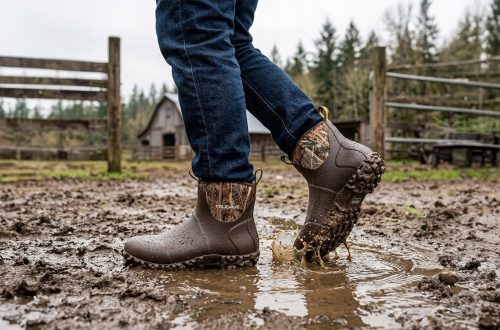
Trudave uses vulcanized natural rubber for the outer shells of all its rain boots—BloomBoot, MudTrek, HeatHold, GardenStride, AquaGuard, and beyond. No PVC. No shortcuts. Just premium, flexible, long-lasting rubber.
Part 2: The Lining and Insulation — Neoprene, Fleece, and Breathable Mesh
The inside of a rain boot is just as important as the outside. A boot can be 100% waterproof and still leave your feet cold and clammy if the lining doesn’t manage moisture and temperature. Trudave uses three distinct liner strategies across its lineup, each matched to a specific use case.
Neoprene
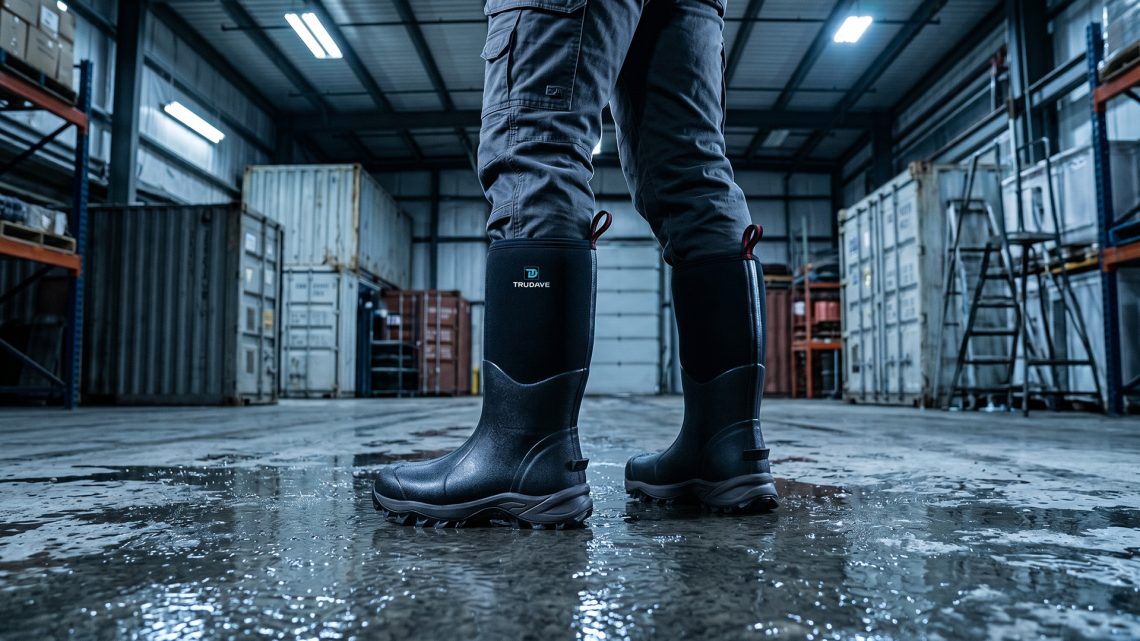
Neoprene is a closed-cell synthetic rubber foam, originally developed by DuPont and most famous for its use in wetsuits. The millions of microscopic air bubbles trapped in neoprene’s structure create a powerful thermal barrier. It insulates even when wet, which makes it vastly superior to synthetic fiber insulations that collapse and lose their warmth when they get damp. Trudave uses 5mm neoprene in the shafts of the HeatHold Series for cold-weather work and 4.5mm neoprene in the BloomBoot for flexible, insulating comfort during long gardening sessions.
Fleece
For extreme cold, Trudave adds a fleece lining on top of the neoprene in select boots. Fleece adds a second layer of trapped air for additional insulation and provides a soft, moisture-wicking surface against the skin. It’s the same principle as layering clothing: the fleece wicks moisture outward, while the neoprene blocks external cold.
Breathable Mesh
In boots designed for active use or warmer weather, Trudave uses a breathable moisture-wicking liner. This mesh layer helps move sweat away from the skin toward the outer shell, where it can evaporate more effectively. It doesn’t provide insulation, but it prevents the clammy, sweat-soaked feeling that turns waterproof boots into saunas.
When you’re evaluating a rain boot, look for a lining that matches your climate. An unlined PVC boot will leave your feet freezing in fall and sweating in summer. A neoprene-lined boot with a breathable or fleece liner will keep you comfortable across a wide range of conditions.
Part 3: The Midsole — EVA, Steel Shanks, and All-Day Comfort
Between the outer shell and the insole lies the midsole—the layer that determines how your feet feel after hours of standing, walking, and working on hard ground. This is where cheap boots cut the most corners.
Steel Shanks
Traditional work boots often use a steel shank—a rigid metal plate under the arch—to provide support. On paper, this sounds good. In practice, a steel shank adds significant weight, eliminates your foot’s ability to feel the ground, and conducts cold directly from the frozen earth into your foot. It’s a design holdover from a time before modern materials.
EVA Midsoles
EVA (ethylene-vinyl acetate) is a lightweight, shock-absorbing foam that has replaced steel shanks in high-performance footwear. An EVA midsole cushions every step, reduces impact on your knees and lower back, and provides arch support without the weight penalty. Crucially, EVA does not conduct cold the way steel does—it acts as a thermal break between your foot and the ground.
Every Trudave rain boot is built with an EVA midsole and a cushioned, removable insole. The BloomBoot features “cushioned EVA insoles and arch support that reduce fatigue on long treks.” The HeatHold includes “cushioned EVA insoles, breathable inner lining, and flexible rubber construction, providing all-day comfort.” The removable insole design means you can swap in your own orthotics or upgrade to Trudave’s ToughCush Comfort Insoles for even more support.
When shopping, avoid boots with flat, non-removable footbeds. That’s a sure sign that the manufacturer cut corners on the part of the boot that matters most for all-day wear.
Part 4: The Outsole — Siping, Lugs, and Self-Cleaning Tread
The bottom of the boot is where the rubber meets the mud. Tread pattern is not just about grip—it’s about how the boot releases mud, how it handles wet pavement, and whether it keeps you upright on a slick slope.
Multi-Directional Lugs
For soft ground—garden soil, wet grass, mulch—a multi-directional lug pattern provides grip in all directions. The BloomBoot uses this type of tread, with smaller, more numerous lugs that provide traction without tearing up delicate garden beds.
Self-Cleaning Deep Lugs
For heavy mud and muck, widely spaced, deep lugs are essential. They bite into soft ground and then release cleanly as the boot flexes, ejecting mud with each step. The GardenStride and HeatHold use this self-cleaning tread to prevent the five-pound mud-brick effect that plagues boots with tightly spaced lugs.
Slip-Resistant Siping
For wet pavement, tile, and hard surfaces, look for siping—thousands of tiny slits in the rubber that channel water away and create a vacuum-like grip. The MudTrek uses a slip-resistant siped outsole optimized for urban surfaces. The AquaGrip takes it further with a signature suction-pod outsole that grips algae-covered rocks and slick riverbanks.
Cheap boots often use a single, generic tread pattern across all their models. Trudave engineers each outsole for the specific terrain the boot is built to handle—soft garden soil, frozen mud, slick concrete, or treacherous rocks.
Part 5: The Construction — Vulcanized vs. Glued
How a boot is put together determines whether it stays waterproof or starts leaking at the seams. There are two methods, and they are not remotely equal.
Glued Construction
Glued boots are assembled by bonding the upper, sole, and lining with adhesives. It’s fast, cheap, and the industry standard for budget footwear. But adhesives degrade over time. Water exposure weakens them. Temperature swings cause the rubber and adhesive to expand and contract at different rates, creating microscopic gaps. Within a single season, those gaps become leaks.
Vulcanized Construction
Vulcanization is a chemical process that cross-links rubber molecules using heat and sulfur. The result is a boot that is, at the molecular level, a single continuous piece of rubber. There are no glued seams to separate. No stitches to rot. No weak points for water to penetrate. A vulcanized boot is permanently waterproof, and its structural integrity does not degrade with flexing or temperature swings.
Every Trudave rain boot is vulcanized. The BloomBoot, MudTrek, HeatHold, GardenStride, AquaGuard—every series, every model. When you see “vulcanized natural rubber” on a Trudave label, you’re looking at a boot built to last.
Part 6: How Trudave Measures Up — A Material-by-Material Checklist
Let’s apply what we’ve learned. Here’s the material checklist you should run on any rain boot you’re considering, and how Trudave answers each question.
| Quality Indicator | What to Look For | Trudave Standard |
|---|---|---|
| Outer Shell Material | Vulcanized natural rubber, not PVC | Vulcanized natural rubber across all models |
| Lining/Insulation | Neoprene, fleece, or breathable mesh matched to use | 5mm neoprene (HeatHold), 4.5mm neoprene (BloomBoot), breathable mesh (DeckFlow, MudFlex) |
| Midsole | EVA foam, removable insole, no steel shank | EVA midsoles with removable cushioned insoles on all models |
| Outsole | Terrain-specific tread: siping, self-cleaning lugs, suction pods | Terrain-matched outsoles for gardening, mud, pavement, and slick rock |
| Construction | Vulcanized, not glued | Vulcanized on every boot |
| Fit Philosophy | Intentional volume for thick socks, size chart with insole length | Runs slightly large by design to accommodate sock systems |
No single rain boot is right for every task, but every boot that earns a place in your mudroom should meet these material standards. Trudave does.
Part 7: The Trudave Lineup — Matching Materials to Your Work
By now, the logic should be clear: different materials serve different purposes. Trudave’s lineup reflects this.
- BloomBoot: 4.5mm neoprene upper for flexibility. Multi-directional tread for garden soil. For the gardener who kneels and bends.
- MudTrek: Full vulcanized rubber. Slip-resistant siped outsole. For commutes, errands, dog walks.
- HeatHold: 5mm insulated neoprene with fleece liner. Self-cleaning deep lugs. For winter chores and frozen ground.
- GardenStride: Heavy-duty rubber shell. Deep, open lugs that eject mud. For deep mud, manure, standing water.
- GreenStep / MudFlex: Lightweight, grab-and-go designs. For quick trips and light chores.
- AquaGuard: Industrial-grade rubber. Ergonomic arch support. For construction, farming, and commercial work.
- AquaGrip: Suction-pod outsole. For slick rocks, riverbanks, and algae-covered surfaces.
Every boot shares the same material foundation: vulcanized natural rubber, EVA midsoles, and sealed, permanent construction.
Conclusion: Buy With Your Eyes Open
The rain boot industry has a transparency problem. Labels shout “waterproof” while hiding the PVC, glued seams, and flat footbeds that guarantee a short, uncomfortable life. An educated buyer is the best defense against this race to the bottom.
Trudave Gear’s rain boot lineup stands out because the materials are on the label, not hidden behind it. Vulcanized natural rubber. Insulating neoprene. Shock-absorbing EVA midsoles. Purpose-built outsoles. Sealed construction that can’t separate. These are the standards of a $200 boot, delivered directly to you without the retail markup.
The next time you’re shopping for rain boots, run the checklist. Look at the materials. Ask how the boot is made. And choose a pair that’s built to last longer than a single season.
To explore the complete Trudave Gear rain boot lineup and see the materials for yourself, visit trudavegear.com.


You May Also Like
How Heat and Drying Soil Quietly Reduce Grazing Productivity
The 6 AM Enemy: How Trudave Rain Boots Solved My Wet Grass Problem (For Good)