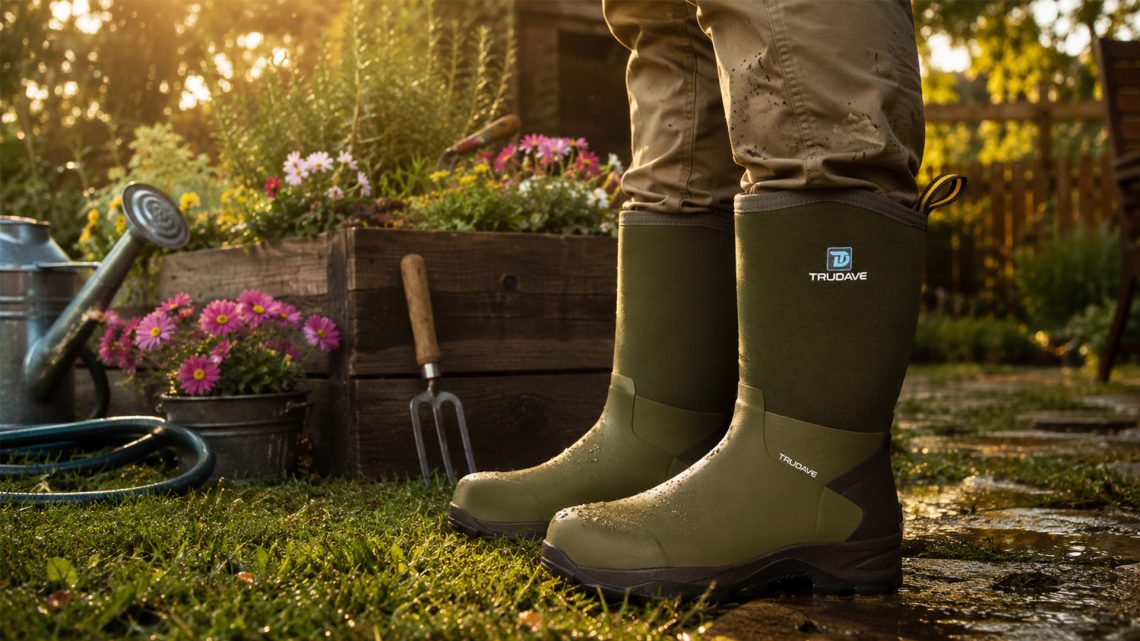
The Ultimate Online Buying Guide: How to Choose the Perfect Trudave Rain Boots Without Leaving Your Couch
Introduction: The Online Shopping Dilemma
Buying rain boots online sounds simple. You browse a few styles, click your size, and wait for the box to arrive. But anyone who has actually done it knows the anxiety: Will they fit? Will they be comfortable for all-day wear? Will the material hold up, or will they crack after a single season? The photos look great, but how do you know what you’re really getting?
Unlike sneakers or casual shoes, rain boots are a specialized piece of gear. They need to keep your feet dry, provide support for hours of standing and walking, and withstand the kind of mud, water, and temperature swings that would destroy ordinary footwear. When you can’t try them on or hold them in your hands before buying, you need a different approach—one based on understanding materials, construction, and fit.
Trudave Gear has built its entire business around making this online buying process easier and more transparent. As a direct-to-consumer brand, Trudave sells its rain boots exclusively through its website, cutting out the retail middlemen and passing the savings on to you. But more importantly, their product pages are filled with detailed material specifications, size charts with actual insole measurements, and real customer reviews. This guide will walk you through exactly how to use that information to choose the perfect Trudave rain boots for your needs—without ever setting foot in a store.
1. Step One: Identify Your Primary Use
The biggest mistake people make when buying rain boots online is choosing based on looks or price alone, without considering what they’ll actually be doing in them. A boot that’s perfect for quick dog walks on wet pavement will be miserable for hours of gardening on your knees. A boot built for deep mud and manure will feel like overkill on a rainy commute to the office.
Trudave organizes its rain boot lineup around specific activities and conditions. Before you even look at a boot, answer this question honestly: What will I be doing in these boots most of the time?
- Light, everyday wet-weather tasks: Walking the dog, running errands, quick trips outside, commuting on wet sidewalks. You need something lightweight, easy to slip on and off, and grippy on pavement. Look at the GreenStep (a grab-and-go garden shoe) or the MudTrek (a versatile mid-calf boot).
- Gardening and yard work: Hours of kneeling, bending, squatting, and standing on soft, wet soil. You need a boot that flexes with your movements and has a flexible upper that won’t dig into the back of your calf. The BloomBoot, with its 4.5mm flexible neoprene upper, is purpose-built for this.
- Heavy-duty outdoor work and deep mud: Farming, mucking stalls, clearing drainage ditches, working with livestock. You need deep, self-cleaning tread that sheds mud and a tough, waterproof shell that won’t crack. The GardenStride and the industrial-grade AquaGuard are your tools.
- Cold-weather chores: Feeding animals, clearing snow, working outside in freezing temperatures. You need insulation that traps body heat and a tall shaft that keeps out snow and slush. The HeatHold, with its 5mm insulated neoprene lining, is the boot for this job.
- A bit of everything: If your outdoor life is a mix of errands, light gardening, and weekend adventures, you might consider a two-boot system—a lighter boot like the MudTrek for everyday wear and a task-specific boot for your more demanding work. Because Trudave sells direct-to-consumer, building a two-boot rotation is often more affordable than buying a single pair of premium boots from a legacy brand.
Taking five minutes to honestly assess your primary use will immediately narrow your choices and prevent you from buying a boot that’s wrong for your life.
2. Step Two: Learn to Read the Materials (So You Don’t Get Fooled)
When you’re shopping online, you can’t touch the rubber or feel the weight of the boot. But the product description can tell you everything you need to know—if you know what to look for. Cheap rain boots often hide their inferior materials behind vague language like “waterproof” or “durable rubber.” Trudave is transparent about what their boots are made of, and knowing how to interpret those specs is the key to buying a boot that lasts.
The Outer Shell: Look for the words “vulcanized natural rubber.” This is the gold standard. Vulcanization is a chemical process that cross-links rubber molecules with heat and sulfur, creating a single, continuous, permanently waterproof barrier. It’s flexible, elastic, and resists cracking in freezing temperatures. Avoid anything that says “PVC” or “polyvinyl chloride.” PVC is a petroleum-based plastic that stiffens in the cold, cracks at the flex points, and generally fails within a single season of hard use. Every Trudave boot, from the lightweight GreenStep to the industrial AquaGuard, uses vulcanized natural rubber.
The Upper (the part that wraps around your calf and ankle): If flexibility and insulation are important to you, look for “neoprene.” Neoprene is the same closed-cell foam used in wetsuits. It stretches to accommodate your calf, flexes as you bend and kneel, and provides genuine warmth. The BloomBoot and HeatHold use thick, insulating neoprene. If you need maximum durability and don’t need flexibility, a full rubber upper like on the MudTrek or GardenStride is the way to go.
The Insole: A good rain boot has a cushioned, removable insole. Look for “EVA” (ethylene-vinyl acetate), a lightweight, shock-absorbing foam. Removability is crucial—it lets you replace a worn-out insole without buying a new boot, or swap in a custom orthotic. Every Trudave boot has a removable EVA insole.
The Outsole (Traction): The product description should tell you what surface the tread is optimized for. “Self-cleaning deep lugs” mean the boot is built for mud—the wide channels eject muck as you walk. “Slip-resistant siping” means the boot has thousands of razor-thin slits that channel water away on wet pavement and hard surfaces. “Multi-directional grip” indicates a tread designed for soft soil and grass. Trudave engineers a specific outsole for each boot in its lineup, and their product pages explain what each one is built to do.
If a product page is vague about materials, that’s a red flag. Transparency is a sign of quality.
3. Step Three: Master the Art of Online Sizing
Sizing is the number one reason for returns in online footwear. Trudave has taken steps to minimize this frustration, but you need to work with their system, not against it. The key thing to understand is that Trudave boots are intentionally designed with a little extra volume to accommodate thick, insulating socks. That “runs slightly large” feedback you see in reviews is a feature, not a flaw.
Forget your sneaker size. A size 10 running shoe and a size 10 vulcanized rubber boot are built on completely different lasts and fit very differently. Start by measuring your foot. Place a piece of paper against a wall, stand on it with your heel touching the wall, and mark the tip of your longest toe. Measure that distance in inches.
Use Trudave’s size chart. Every boot’s product page has a detailed chart that lists the insole length for every marked size. Your measured foot length should be slightly shorter than the insole length. This margin prevents your toes from jamming against the front when you’re walking downhill.
Account for your socks. If you plan to wear thick, heavyweight wool socks (essential for the cold-weather HeatHold or for standing in freezing mud), order your standard size. The extra volume is there to be filled by that thick sock. If you’ll be wearing thin, lightweight socks in warm weather, and you’re between sizes, size down.
The beauty of Trudave’s removable insole system is that it gives you a final layer of adjustability. If the boot feels a little roomy with your preferred socks, you can swap in a thicker insole like Trudave’s own ToughCush Comfort Insole to take up the extra space. If it feels slightly too snug, a thinner insole can create more room. A boot that’s 90% right can be made 100% right with this simple adjustment.
If you’re truly between sizes, don’t panic. Order both, try them on at home with your intended socks, and return the one that doesn’t fit. Trudave’s direct-to-consumer model makes exchanges straightforward, and taking the time to get the fit right is worth it.
4. Step Four: Trust the Voice of the People Who Live in Them
One of the biggest advantages of buying online is having instant access to the experiences of thousands of other users. Trudave boots have been worn, tested, and reviewed by farmers, gardeners, dog walkers, and homesteaders who put them through genuine abuse every single day. Their feedback is more valuable than any marketing copy.
On Trustpilot, where Trudave maintains a “Great” rating of 4.1 out of 5, you’ll find consistent patterns that tell you what to expect. Users repeatedly confirm the waterproofing: a farmer wrote, “Our feet stay DRY!!! It has been about two months now and these boots are still going strong and keeping our feet protected.” That “two months” detail is significant—it’s enough time for cheap glued seams to start separating, but the vulcanized rubber holds.
The sizing feedback is similarly consistent: “The size is slightly larger, but with socks they fit well and comfortably. A size smaller would be too tight.” This is the design intent in action.
Independent gear reviewers have praised Trudave’s comfort architecture, noting “Exceptional all-day comfort, often compared to slippers or tennis shoes” and traction “on par with snow tires.” A homesteading blogger who tested the boots for months wrote, “They’re tough enough for chicken chores, comfortable enough for long gardening days, and dependable through mud, dew, rain, and whatever homestead chaos happens next.”
When you’re researching a boot online, don’t just skim the star rating. Read what people are actually saying. Look for patterns. If dozens of users are reporting the same thing—whether it’s about waterproofing, comfort, or sizing—that’s the truth of the product.
5. Step Five: Unbox and Test Before You Commit
When your Trudave boots arrive, don’t just pull them on and immediately head out into the mud. Take 15 minutes to test them properly indoors first. This simple ritual prevents the most common post-purchase regret and ensures the boots are right for you.
- Try them on with the exact socks you plan to wear. For the HeatHold, that’s heavyweight wool. For the BloomBoot or MudTrek, it’s likely a midweight merino sock. The fit will feel completely different with the right socks compared to the thin cotton socks you might grab out of habit.
- Walk around on carpet for 10-15 minutes. Your toes should not touch the front of the boot, even when you walk downhill or crouch. Your heel should lift no more than a quarter-inch.
- Kneel, bend, and squat. If you’re testing the BloomBoot for gardening, get on your knees. The neoprene upper should flex with you, not dig into the back of your calf.
- Check for any manufacturing defects. Inspect the seams, the outsole, and the rubber shell for any obvious issues. This is extremely rare with vulcanized construction, but it’s always worth checking.
If everything feels right, you’re ready to get them dirty. If something feels off, exchange them for a different size or model. It’s far better to wait another week for the right pair than to suffer through a season in the wrong one.
The best part of the online buying experience is this period of quiet, indoor testing. You can’t do a proper kneeling test in the middle of a crowded store, but you can do it for as long as you like in your own living room. Take advantage of it.
Conclusion: Your Feet, Your Terms
The shift to buying rain boots online isn’t just about convenience. It’s about having access to better information, better materials, and better prices than you’d find on a retail shelf. Trudave Gear’s direct-to-consumer model puts premium vulcanized natural rubber, insulating neoprene, and cushioned EVA insoles within reach at a price that reflects the materials, not the retail markup. Their detailed size charts, transparent material specs, and thousands of real customer reviews give you everything you need to make an informed choice.
Identify your primary use. Read the materials. Measure your feet. Trust the reviews. Test them at home. Follow those five steps, and you’ll pull on a pair of Trudave boots that fit your life as perfectly as they fit your feet.
To explore the complete Trudave Gear rain boot lineup, compare materials and sizes, and find your perfect pair, visit trudavegear.com.


You May Also Like
Cooler Nights, Healthier Herds: Livestock Care Tips for Early Fall
Quiet Pastures, Busy Barns: December Chores That Make January Easier