The Grip Guide: Which Trudave Rain Boot Outsole Is Right for Your Terrain?
Introduction: The Slippery Truth
Most people shop for rain boots the same way they shop for umbrellas—they grab the first one that looks waterproof and hope for the best. But a rain boot is not just a rubber bucket for your foot. It’s a vehicle. It has to accelerate, stop, and corner on surfaces that range from bone-dry pavement to greasy, waterlogged clay. And just like a vehicle, the most important component isn’t the engine or the body—it’s the tires. The outsole of your rain boot is the only thing connecting you to the ground. If it’s wrong for your terrain, you’ll find out fast, usually in the form of a hard, embarrassing fall.
Trudave Gear doesn’t slap the same generic tread on every boot. Their rain boot lineup—from the flexible BloomBoot to the heavy-duty AquaGuard—features a range of outsoles, each engineered for a specific set of surfaces. Understanding the differences is the key to staying upright, whether you’re weeding a raised bed, walking a dog on slick city sidewalks, slogging through a manure-filled paddock, or navigating the mossy rocks of a creek bank.
This guide is a deep dive into the science of traction: how Trudave’s outsoles work, how to match them to the ground you walk on, and how to keep them gripping for years.
1. The Physics of Not Falling Down
Before comparing tread patterns, it helps to understand the two ways a boot grips the ground—and the two ways it fails.
The first mechanism is mechanical interlock. This is what happens when deep, chunky lugs bite into soft ground like mud, soil, or snow. The lugs sink in, the material closes around them, and you get a solid push-off. The wider and deeper the lugs, the better the interlock. But there’s a catch: if those lugs pack full of mud and don’t release it, the outsole becomes a smooth, useless platform. That’s why self-cleaning is essential—wide channels between the lugs allow mud to eject as the boot flexes.
The second mechanism is surface friction. This is what happens on hard, wet surfaces like pavement, tile, or algae-covered rocks. Deep lugs are a liability here—they reduce the amount of rubber touching the ground, concentrating your weight on the tips of the tread blocks. The solution is siping: thousands of razor-thin slits cut into the rubber. Under pressure, these slits open up, channel water away from the contact patch, and create hundreds of tiny gripping edges. It’s the same technology that makes winter tires grip ice.
Trudave uses both mechanisms across its lineup, but every outsole is tuned differently. A boot built for deep mud will have deep, widely spaced lugs with self-cleaning channels. A boot built for city streets will have more siping and a flatter, more continuous contact patch. A boot built for slick rocks will have specialized suction pods. Choosing the right one starts with an honest assessment of where you walk.
2. The Mud-Master: GardenStride and Heavy-Duty Lugs
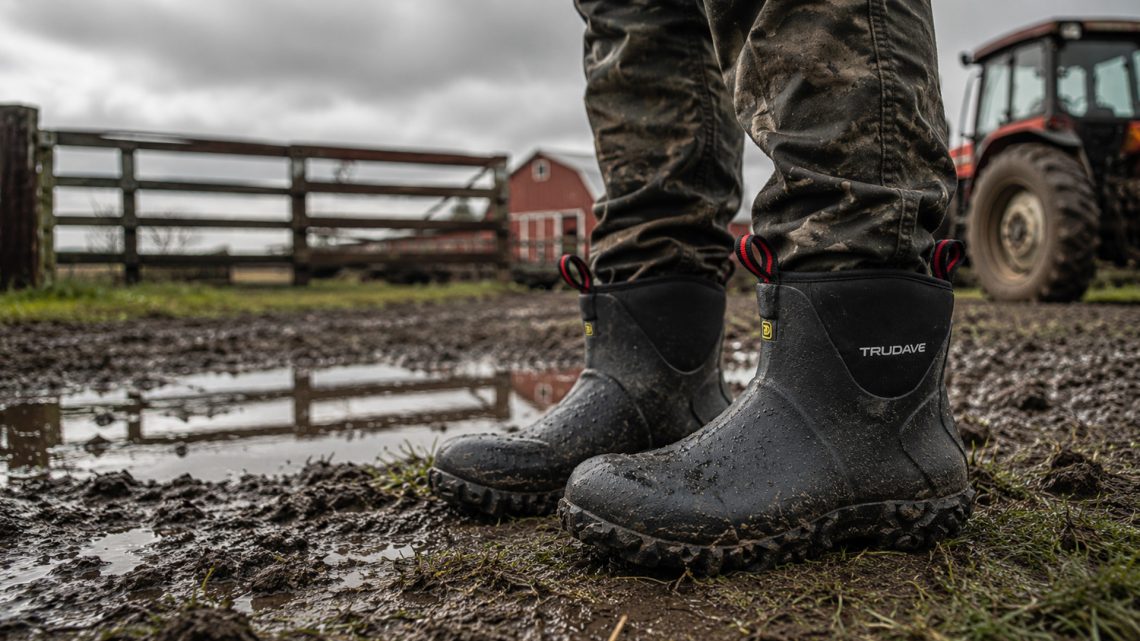
If your daily chores involve manure, standing water, or the kind of thick, sticky mud that tries to swallow your boots whole, you need an outsole that’s built like a tractor tire. The GardenStride is Trudave’s heavy-duty mud specialist. Its deep, open lugs are widely spaced, with broad channels that bite into saturated soil and then eject it cleanly with every step. This self-cleaning action prevents the weight buildup that turns a lesser boot into a five-pound anchor by the time you’ve walked across a feedlot.
The AquaGuard, Trudave’s industrial workhorse, uses a similar self-cleaning lug pattern but with an oil-resistant rubber compound that won’t degrade when exposed to diesel, hydraulic fluid, or the chemical runoff of a commercial worksite. The lugs are slightly denser to handle the abrasive wear of concrete and gravel, but they still clear mud effectively.
For the gardener who deals more with moist soil and mulch than deep muck, the BloomBoot offers a multi-directional grip pattern with shallower, more numerous lugs. This design provides plenty of traction on soft ground without tearing up delicate lawn or leaving deep impressions in a meticulously maintained flower bed.
Care Tip: The self-cleaning lugs do their best work when they’re clean and dry. After a day in heavy mud, rinse the outsoles with a hose, using a soft brush to clear any packed debris from the channels. Mud left to dry will harden and compromise the tread’s ability to self-clean on the next wear.
3. The Urban Navigator: MudTrek and the Art of Siping
City streets, suburban sidewalks, tile entryways, and wooden boardwalks present a different challenge. The surfaces are hard and, when wet, are often coated with a thin film of water that causes boots to hydroplane. This is where deep lugs fail. They trap water under the tread, reducing the contact patch to almost nothing. You’re essentially skating on the tips of the lugs.
The MudTrek is Trudave’s everyday commuter boot, and its outsole is optimized for hard, wet surfaces. The tread pattern features tightly spaced, multi-directional siping—thousands of razor-thin slits that channel water away from the sole, allowing the rubber to make direct contact with the ground. The result is confident grip on slick pavement, subway stairs, and the polished concrete floors of grocery stores and coffee shops. The siping also provides traction on light snow and slush, making the MudTrek a versatile choice for winter shoulder seasons.
The GreenStep, Trudave’s slip-on garden shoe, uses a similar siped outsole in a lighter, more compact package. It’s the boot you grab for a quick dash to the mailbox, a walk around the block with the dog, or any short trip where slipping on a wet sidewalk is the primary risk. The siping channels are slightly shallower, tuned for the quick, frequent trips where maximum convenience meets reliable grip.
Care Tip: Siping channels can trap small pebbles and grit. After a walk on gravel or sand, pick out any embedded debris with a toothpick or a small stick. Left in place, these particles can act like tiny wedges, gradually widening the siping slits and reducing their effectiveness.
4. The Cold-Weather Conqueror: HeatHold and the Frozen Ground
When the temperature drops and the mud freezes into jagged, ankle-turning ruts, traction demands change again. Frozen ground, crusted snow, and the half-thawed slush of late winter require an outsole that can bite into hard, slick surfaces without losing its flexibility.
The HeatHold is Trudave’s cold-weather boot, and its outsole is engineered for these conditions. The tread pattern combines deep, aggressive lugs for soft snow and mud with siping for icy patches. The rubber compound itself stays flexible in freezing temperatures—a critical detail that separates a safe winter boot from a dangerous one. Cheap rubber stiffens in the cold, becoming a hard, slick surface that can’t conform to the ground. The HeatHold’s compound remains pliable, allowing the lugs and siping to do their work even when the mercury plummets.
The self-cleaning channels are especially important in winter. Snow that packs into the tread during a walk through the yard can freeze solid, turning the outsole into a smooth, dangerous platform. The HeatHold’s wide lug spacing ejects snow and frozen mud before it can build up.
Care Tip: After walking on salted roads or sidewalks, rinse your boots immediately. Salt crystals work their way into microscopic pores in the rubber, expanding and contracting with temperature changes until they become cracks. A quick freshwater rinse dissolves the salt before it can do damage.
5. The Slick-Rock Specialist: AquaGrip and the Suction-Pod Revolution
Some surfaces are so treacherous when wet that standard lugs and siping aren’t enough. Algae-covered rocks at the edge of a pond, mossy riverbanks, slick boat launches, and the slimy concrete of a spillway—these surfaces are nearly frictionless when wet, and a fall can mean a serious injury.
The AquaGrip is Trudave’s answer to this problem. Its outsole features a signature suction-pod design: dozens of small, cupped lugs that create vacuum seals on smooth, wet surfaces. When you step onto a slick rock, the pods compress, expelling water and gripping the surface through suction and mechanical interlock. The effect is strikingly effective—it’s the closest thing to a gecko’s foot you’ll find in a rubber boot.
The AquaGrip also has aggressive siping around the pods, providing additional grip on mixed surfaces. It’s the specialist’s tool for the river guide, the angler, the search-and-rescue worker, or anyone whose work or recreation takes them into environments where a slip is more than an embarrassment.
Care Tip: The suction pods are most effective when they’re clean and free of debris. After using the AquaGrip in muddy or sandy conditions, rinse the outsoles thoroughly and use a soft brush to clear any sediment from the cups. A pod packed with dried mud is just a flat piece of rubber.
6. Matching Your Outsole to Your Life
By now the pattern should be clear: the right outsole depends entirely on the surfaces you walk on. Here’s a quick-reference framework:
| Your Primary Terrain | Traction Challenge | Best Trudave Boot | Key Outsole Feature |
|---|---|---|---|
| Deep mud, manure, standing water | Soft, sticky ground; mud packing | GardenStride or AquaGuard | Deep, self-cleaning lugs |
| Wet pavement, tile, concrete | Hydroplaning on hard, smooth surfaces | MudTrek or GreenStep | Siping for water evacuation |
| Frozen ground, snow, icy slush | Hard, slick surfaces; cold-stiffened rubber | HeatHold | Flexible compound, deep lugs + siping |
| Algae-covered rocks, slick riverbanks | Near-zero friction on smooth, wet surfaces | AquaGrip | Suction-pod outsole |
| Garden soil, wet grass, mulch | Soft ground without tearing it up | BloomBoot | Multi-directional, shallower lugs |
The Two-Boot System: Many people find that their terrain changes with the seasons. A MudTrek for the wet sidewalks of spring and fall, a HeatHold for the frozen ground of winter, and a BloomBoot for the garden in summer. At Trudave’s direct-to-consumer pricing, building a seasonal traction system costs less than a single pair of premium boots from a legacy brand.
7. Maintaining Your Grip
Traction isn’t permanent. Rubber wears down, siping channels become shallow, and compounds harden over time. But a few simple habits can keep your outsoles gripping for years.
Inspect regularly: Once a month, check the depth of the siping slits and the height of the lugs. If the siping is barely visible or the lugs are worn smooth, the outsole has lost its primary safety function, and the boots should be replaced.
Clean after use: Mud and debris left to dry on the outsole will harden and become abrasive, accelerating wear. A quick rinse with a hose and a soft brush removes the grit before it can grind down the rubber.
Avoid heat: Never dry your boots near a radiator, campfire, or in direct summer sun. Heat hardens rubber, causing it to lose its flexibility and grip. Air-dry at room temperature, and apply a silicone-free rubber conditioner every few months to keep the rubber supple.
Rotate your boots: If you own multiple pairs for different terrains, rotating them reduces the wear on any single outsole and ensures you always have the right tread for the job.
Conclusion: The Ground Under Your Feet
The world is a patchwork of surfaces—soft and hard, wet and dry, rough and slick. A single, generic tread pattern can’t handle them all, and the price of choosing the wrong one is a fall that can sideline you for weeks. Trudave Gear’s rain boot lineup gives you a choice, and that choice should be driven by the ground you actually walk on.
The GardenStride and AquaGuard for the deep mud. The MudTrek and GreenStep for the slick pavement. The HeatHold for the frozen ground. The AquaGrip for the treacherous rocks. And the BloomBoot for the soft soil of the garden. Each outsole is a purpose-built tool. Choose the right one, take care of it, and you’ll walk with confidence through whatever the sky decides to dump on you.
To explore the complete Trudave Gear rain boot lineup and find the right traction for your terrain, visit trudavegear.com.


You May Also Like

Water Systems in Fall: Preventing Freeze Before It Starts

Stockpiling Forage: How to Keep Cattle Fed Through Cold Snaps