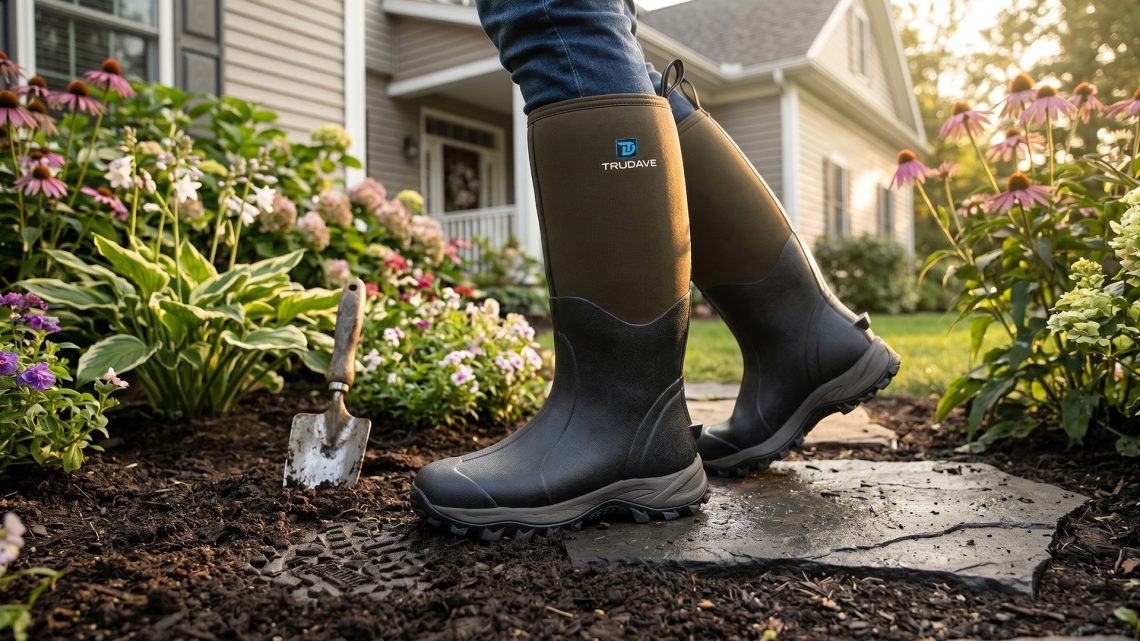
The Quiet Killer of Rain Boots: 5 Maintenance Mistakes That Are Destroying Your Investment (And How to Fix Them)
Article Content:
Every autumn, I watch the same ritual play out in my own garage.
A pair of perfectly good rain boots — waterproof, insulated, with plenty of tread life left — gets retired to the trash because they started cracking at the heel. Or the rubber hardened until they felt like concrete. Or water started seeping in through invisible seams.
The owner stands there, frustrated, wondering why their “good” boots only lasted one season.
And every time, the answer is the same: they killed their boots with neglect. Not intentional neglect — just the quiet, cumulative damage that happens when you don’t know what you‘re doing wrong.
Here’s the truth most boot manufacturers won‘t tell you: the life expectancy of a quality rubber boot isn’t measured in years. It‘s measured in how you treat it. With proper care, a $70 pair of Trudave boots can outlast a $200 pair that’s abused. With neglect, even the most expensive boots will self-destruct in months.
This article isn‘t another review telling you which boot to buy. It’s a field guide to keeping your boots alive — based on official care instructions, material science, and verified user feedback from thousands of miles of real-world use.
⚠️ Disclosure: This article is based on publicly available product information, independent gear reviews, and verified customer feedback from multiple platforms. All care instructions are sourced from official Trudave product pages. Our goal is to help you get more life out of your gear — not to sell you anything.
The #1 Mistake: Heat Drying
This is the most common way people kill their boots. And it‘s also the easiest to fix.
When you come in from a wet day — boots soaked, socks drenched — the instinct is to speed up the drying process. Radiator. Space heater. Hair dryer. Direct sunlight. “I’ll just put them here for an hour,” you think.
By morning, your boots look dry. But the rubber has already started to crack.
Why this kills boots: Rubber is a polymer — a long chain of molecules that stays flexible because of certain oils and plasticizers within the material. Heat accelerates the evaporation of these essential compounds. When they‘re gone, the rubber hardens. Once it hardens, cracks form at every flex point — the toe crease, the heel cup, the seam where the upper meets the outsole.
The official care instructions for Trudave‘s AquaGuard series are explicit: “Rinse them with water after each use, wipe away dirt with mild soap, and air dry naturally. Avoid heat or sunlight to keep the rubber flexible and fully waterproof”. The BloomBoot series adds: “Avoid high heat or direct sunlight to maintain the rubber flexibility and waterproof seal”. The HeatHold series echoes the same warning: “Avoid sunlight or heat to protect the rubber and maintain insulation performance”.
What to do instead: Remove the insoles. Stuff the boots with newspaper — the paper wicks moisture out faster than air alone. Let them dry in a cool, shaded area with good airflow. A fan pointing at the opening helps. But no heat. Ever.
One user’s experience with heat damage wasn‘t reported — but every expert warns of it. Trust the science, not the shortcut.
The #2 Mistake: Scrubbing with Harsh Chemicals
That heavy-duty degreaser you use on the shop floor? The bleach you use for cleaning? The acetone you keep in the garage for paint prep?
Keep them far away from your boots.
Harsh chemicals strip the protective oils from rubber and neoprene. The material dries out, becomes brittle, and eventually cracks. One application might not destroy your boots. But repeated exposure — even incidental — will shorten their life dramatically.
What the care instructions say: “Wipe away dirt with mild soap”. Not degreaser. Not bleach. Not acetone. Just mild soap and water. The MudGuard series adds: “Simply rinse them with water and mild soap, then air dry in the shade”. The DryFlow series notes: “Regular cleaning extends durability and keeps waterproof performance strong”.
What to do instead: Keep a soft brush dedicated to boot cleaning. After use, hose off the heavy mud. For stubborn dirt, use a mild dish soap — nothing with citrus extracts, which can also degrade rubber. Rinse thoroughly. Air dry.
The pressure washing industry has confirmed this approach works. One verified Amazon reviewer who works in pressure washing — a field notorious for destroying footwear — reported that his Trudave boots “have lasted me over a year will be definitely getting another pair once these go bad they are still going strong and they have definitely seen the harshest conditions I have put any shoes through”.
The #3 Mistake: Ignoring the Tread Until It‘s Too Late
Here‘s a test. Go get your rain boots. Flip them over.
Look at the ball of the foot and the heel. Can you still see distinct lugs — those raised rubber patterns that grip the ground? Or have they worn down into a smooth, featureless surface?
If it looks like a racing slick, your boots have become a safety hazard. You just haven‘t realized it yet.
Why this matters: Traction on wet surfaces isn‘t a luxury. The “magic of a non-slip deck boot isn‘t just the rubber compound; it’s the channels and siping — those tiny razor-thin cuts in the tread — designed to squeegee water away from the sole, giving you contact with the deck”. If those channels are gone, water has nowhere to go. You‘re hydroplaning, not walking.
The AquaGuard boots “feature non-slip rubber outsoles that provide excellent grip and stability on wet floors, muddy ground, and slick job sites — ensuring safety in all weather”. The BloomBoot’s “non-slip rubber outsoles provide excellent grip on slippery, muddy, or wet ground”. The 6mm neoprene boots are described as “anti-slip” with “durable molded outsoles, provide better stability and solid traction on muddy or slippery surfaces, slip-resistant and self-clean”.
But none of that matters if the tread is worn smooth. Self-cleaning features won‘t help if there‘s no tread left to clean. Non-slip chemistry won‘t help if the rubber has hardened into a hockey puck.
What to do instead: Make the “bald tire” test part of your seasonal gear check. Before hunting season. Before mud season. Before every stretch of rainy weather. If the tread is gone or the rubber feels hard like plastic, replace the boots.
The cost of waiting: “A new pair of boots costs a hell of a lot less than an ER visit, a broken rod, or a lost trophy fish because you couldn’t plant your feet”.
The #4 Mistake: Storing Boots Incorrectly
You don‘t think about storage. I don’t either. Boots go in the garage, the mudroom, or the back of the closet. Done.
But where you store them matters. A lot.
Rubber hates temperature extremes. In an uninsulated garage, summer heat bakes the rubber, accelerating the loss of essential oils. Winter cold makes it brittle, and the first flex after a freeze can create micro-cracks that you won‘t see — but water will find.
Rubber also hates UV light. Direct sunlight — even through a window — degrades rubber over time, causing discoloration, hardening, and eventual cracking.
The BloomBoot care instructions explicitly warn: “Avoid high heat or direct sunlight to maintain the rubber flexibility and waterproof seal”. The HeatHold series adds: “Rinse your boots with water, clean gently using mild soap, and air dry in a shaded area. Avoid sunlight or heat”.
What to do instead: Store boots in a cool, dry place away from direct sunlight. If they‘re going into a garage, keep them off the concrete floor — use a shelf or boot rack. Don‘t fold or crease the boots, which creates weak points. If you have tall boots, keep them upright; don‘t let the tops flop over, which can create permanent crease lines that eventually crack.
The #5 Mistake: Skimping on Socks
This one isn‘t about the boot. It’s about what you put between your foot and the boot. And it matters more than you think.
Many anglers and outdoor workers complain about sweaty feet in waterproof boots. Their feet get hot. Moisture accumulates. They blame the boot for not breathing.
But here‘s the reality check from Trudave‘s gear experts: “Let’s be honest about the laws of physics: no boot on earth is 100% waterproof and as cool and breathable as a running shoe. If you work in hot conditions, your own foot sweat might make you more miserable than the rain outside”.
The solution isn‘t a different boot. It’s a different sock.
What the experts recommend: “Look for boots with a high-quality moisture-wicking lining, and always pair them with moisture-wicking Merino wool or synthetic blend socks (never wear 100% cotton socks to work!)”.
Cotton holds moisture against your skin. In cold weather, that moisture chills your feet. In warm weather, it creates the “swamp foot” sensation that many people mistakenly blame on leaky boots.
Trudave boots address this from the inside. The AquaGuard boots feature “cushioned insoles, breathable lining, and ergonomic arch support”. The BloomBoot has “cushioned insoles, breathable lining, and flexible construction that allow comfort and movement”. The 6mm neoprene boots include a “breathable mesh lining wicks moisture and sweat, allows air to travel throughout the boots, keeps your feet much dryer than normal boots”.
But even the best lining can‘t overcome a cotton sock. Wear merino wool. Your feet will notice the difference.
The Positive Side: When You Do It Right, These Boots Last
Here‘s what happens when you treat your boots well — based on verified user feedback from thousands of miles of real-world use.
Farm use, two months in: “We purchased waterproof boots back in May for working on our little farm as we were constantly dealing with wet, muddy and otherwise soiled shoes while tending our livestock. The boots have made our jobs and lives sooo much better and easier. And best of all, our feet stay DRY!!! It has been about two months now and these boots are still going strong and keeping our feet protected. Would recommend these boots 100%”.
Pressure washing, over a year in: “I work in pressure washing… these have lasted me over a year will be definitely getting another pair once these go bad they are still going strong and they have definitely seen the harshest conditions I have put any shoes through”.
Heavy-duty outdoor work, multiple months in: “The boots are very well made. They do a good job of keeping my socks dry. The tabs help a lot to get them on”.
Sizing that works when you follow the chart: “Sizing Chart was correct. Medium fit me perfect and I am 5‘10“, 185 lbs with a standard build”. Another user noted: “The size is slightly larger, but with socks they fit well and comfortably”.
The camo caveat: One independent reviewer who tested the boots through spring chores and a trip to Canada noted cosmetic wear but no functional failure: “The only visible wear came on the camo print itself. After a few weeks of hard use, the camo pattern on the toe began to fade and scuff. It didn‘t affect the waterproofing or structural integrity of the boot — just cosmetics. If you’re someone who wants your gear to look clean season after season, consider grabbing a solid color instead of camo”.
How Different Materials Behave: Neoprene vs. Rubber vs. PVC
Understanding what your boots are made of helps you understand how to care for them.
Neoprene — used in the 4.5mm BloomBoot, 5mm HeatHold, and 6mm Neoprene series — is a synthetic rubber known for excellent insulation and flexibility. “Neoprene has excellent insulating properties” and is “light, comfortable, extremely insulating” compared to other materials. The trade-off is that neoprene can be less abrasion-resistant than pure rubber. It also retains heat — which is great in cold weather but can cause overheating in summer. If you spend most of your time in moderate temperatures, the 4.5mm BloomBoot offers lighter insulation; if you face freezing conditions, the 6mm option is the right choice.
High-quality natural rubber — used in the AquaGuard, AquaGrip, MudGuard, and DryFlow series — offers superior durability and 100% waterproofing without relying on coatings that wear off. “Rubber and Neoprene: The go-to materials for classic mud boots. The Upside: Absolutely 100% waterproof, making them ideal for extreme mud and deep water”. The downside is limited breathability — which is why Trudave adds moisture-wicking linings to mitigate sweat.
PVC — common in cheap rain boots — is inexpensive but has significant drawbacks. “PVC Cheap, but not very insulating”. It stays rigid in cold weather, flexes poorly, and cracks more easily than natural rubber. If your budget boots lasted one season and then fell apart, you‘ve experienced the PVC problem firsthand.
Trudave‘s material guide reinforces this hierarchy: “In truly muddy and wet environments, you need materials that simply do not have pores. High-quality vulcanized rubber or neoprene are the gold standards. Not only do they completely block moisture from getting in, but they also make cleanup incredibly easy”.
A Note on Steel Toe Confusion
One issue that has surfaced in verified customer reviews deserves honest mention. Several users have reported confusion about whether certain Trudave models are steel toe.
One verified Trustpilot reviewer wrote: “I bought womens steel toe rubber boots & when I received them they are not steel toe. I am in process trying to return them & I have yet to hear from someone. As well with my initial email about return your support associate said you all do Not sell steel toe, but yet they are advertised as such & it says steel toe in box”.
The clarification: Many Trudave boots feature a steel shank — a thin piece of metal between the insole and outsole that provides underfoot puncture protection and arch support. The 6mm neoprene boots are described as “anti-slip and anti-puncture”, and the AquaGuard series includes “ergonomic arch support”. But a steel shank is not the same as a certified steel toe. The IronShield series offers ASTM-certified steel toe protection for workplace safety, but standard Trudave rain boots are not certified steel toe.
If your job or worksite requires ASTM-certified steel toe footwear, verify the specific model‘s certifications before purchase — or look specifically at the IronShield line.
The Bottom Line: Care Is the Difference Between One Season and Five
Here‘s the honest truth about rain boots in 2026.
You can buy the most expensive boots on the market. If you dry them with heat, store them in sunlight, and scrub them with harsh chemicals, they will fail within a season.
Or you can buy a well-built pair of boots from Trudave — $50–$90, 100% waterproof, steel shank protection, 5-6mm neoprene insulation, non-slip outsoles — treat them right, and get years of reliable service.
The choice isn‘t about the price tag. It’s about the maintenance.
| Maintenance Mistake | Why It Kills Boots | What to Do Instead |
|---|---|---|
| Heat drying | Accelerates loss of essential oils; rubber hardens and cracks | Air dry naturally with newspaper; never use radiators or hair dryers |
| Harsh chemicals | Strips protective oils; material becomes brittle | Mild soap and water only; soft brush for stubborn dirt |
| Ignoring worn tread | Hydroplaning on wet surfaces; fall risk increases | Check tread before each season; replace when lugs are smooth or rubber feels hard |
| Poor storage | Temperature extremes and UV light degrade rubber | Store in cool, shaded area; keep upright; don‘t fold or crease |
| Cotton socks | Traps moisture against skin; creates “swamp foot” sensation | Merino wool socks; moisture-wicking synthetic blends |
The independent gear review site Footwind, which tested Trudave boots against competitors, concluded: “Unbeatable warmth meets rugged practicality in the Trudave Rubber Boots, a standout choice for those battling cold, muddy terrain without breaking the bank. With 6mm neoprene insulation and a 100% waterproof rubber construction, these boots lock out moisture while trapping body heat — making them ideal for extended outdoor use in wet, chilly conditions… Compared to heavier, pricier competitors like the MUCK Chore Met Guard, the Trudave boots deliver remarkable value for budget-conscious buyers who need reliable performance without advanced safety certifications”.
And from the users themselves: “My order shipped super fast. I sized up because I want to be able to wear thick handmade socks in the fall and winter. They fit beautifully. These are sturdy workhorses and subsequently weigh a bit more than you might expect. Not so much as to be problematic and surely will keep my feet dry and protected”.
The boots can last. But they need your help. Rinse them. Air dry them. Store them right. Check the tread. Wear the right socks. Skip the shortcuts. And you‘ll be wearing the same dry, comfortable boots years from now — while everyone else is buying their third pair of the season.
Now go check your boots. Your feet will thank you when you‘re not standing in wet socks by 9 AM.


You May Also Like
Spring Green-Up Isn’t Here Yet: Managing Pastures in the In-Between
Cold Frames & Cozy Roots: Extending Your Growing Season Deep Into Winter