The Rain Boots You’re Buying Are Probably Wrong for Your Life — Here’s How to Fix That
I’ll be honest. I used to think rain boots were rain boots. Grab a pair off the shelf, stuff my feet in, and hope they kept the water out. If they cracked after a season, I figured that’s just how it goes. If my feet were freezing by noon, I blamed the weather.
But after years of testing different brands—slipping on wet concrete, freezing my toes off in cheap neoprene, and scrubbing mud off boots that were supposed to be “easy-clean”—I’ve learned something important.
Most people are buying the wrong rain boots. Not because they’re stupid. Because they don’t know what to look for.
This guide fixes that. No fluff. No jargon. Just a practical breakdown of what actually matters—and why Trudave Gear might be the smartest rain boot purchase you make this year.
The “Waterproof” Lie You’ve Been Sold
Let’s start with the basics. “Water-resistant” and “waterproof” are not the same thing.
Water-resistant boots might handle a light drizzle—the kind where you’re rushing from your car to the door. But the moment you step into wet grass, a puddle, or muddy ground, the DWR (Durable Water Repellent) coating wears off. Abrasion from grass and dirt strips it faster than you’d think. Once that happens, the outer material “wets out”—soaks up water like a sponge—and your feet get cold even if the boot isn’t technically leaking.
Trudave takes a different approach. Their rain boots are built from 100% waterproof rubber and neoprene—materials that are waterproof by their very composition, not by a coating that wears off. No DWR to strip. No membrane to clog. Just material doing what material does.
One Amazon reviewer who tested them in extreme conditions put it simply: “Fit perfectly. Warm in arctic expedition. On and off zodiacs and in water. They are waterproof. Hiked in them and all. These boots were perfect. No sore feet or legs. No blisters”.
The Steel Shank You Didn’t Know You Needed
Here’s a feature that never makes the marketing headlines but might save your foot.
Cheap rain boots have flat rubber footbeds. Nothing else between your foot and whatever’s beneath you. Step on a nail in a barnyard, a sharp rock in a creek bed, or a piece of broken glass—you’re going to feel it.
Trudave solves this problem. Many of their rain boot models incorporate steel shanks between the insole and outsole. This piece of steel does three things at once:
- Puncture protection—stops nails, thorns, and sharp rocks from punching through
- Arch support—provides structural support that flat rubber footbeds can’t deliver
- Sole stability—prevents the boot from twisting or collapsing under heavy loads
One reviewer who tested Trudave boots while working with horses noted: “The steel shank provided a reassuring rigidity underfoot, essential for preventing those accidental nail-stepping moments that can happen around the barn”.
Finding a steel shank in a sub-$100 boot is rare. Most manufacturers reserve it for premium-priced models. Trudave includes it as standard equipment.
Important clarification: The steel shank provides underfoot puncture protection—it is not the same as certified steel toe protection for workplace impact safety. If your job requires ASTM-certified steel toe footwear, verify the specific model’s certifications before purchase.
The 6mm Neoprene Advantage
Here’s something that surprised me. Many standard boots from established brands use 5mm neoprene insulation. Trudave offers 6mm neoprene in several of their models.
What does that extra millimeter mean? When you’re standing still in cold weather—waiting for a dog, checking fence lines, or working in a barn—your body isn’t generating much heat. You need the boot to trap warmth from the inside. That extra millimeter of neoprene makes a noticeable difference.
The 6mm neoprene boots are “made with 6mm neoprene upper and rubber material, gives you comfort and flexibility, heat-resistant insulation prevents radiated body heat from escaping, keeps your feet dry and warm”.
One independent review put it bluntly: “Unbeatable warmth meets rugged practicality in the Trudave Rubber Boots, a standout choice for those battling cold, muddy terrain without breaking the bank”. The review also noted that compared to pricier competitors like the MUCK Chore Met Guard, Trudave boots “deliver remarkable value for budget-conscious buyers who need reliable performance”.
The trade-off: 6mm neoprene is great for cold weather. But if you’re gardening in 70-degree weather, that much insulation will make your feet sweat. That’s why Trudave offers multiple options—so you can match the insulation to your activity.
Traction That Actually Works in Mud
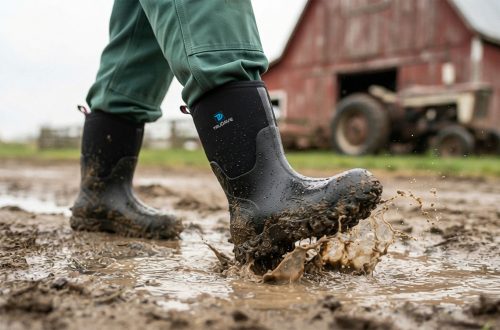
Here’s a problem that you won’t appreciate until you’ve faced it: mud packs into your boot tread and turns your feet into heavy, slick bowling balls. Once the tread is packed, you’re walking on lubricated mud—which has zero grip.
Trudave’s outsoles use an irregular tread design that enhances slip-resistance, which is “perfect for different terrain workplaces and outdoor activities such as farm work, hunting, [and] hiking”. The aggressive tread pattern promises superior grip, and the overall construction feels solid without unnecessary bulk.
The MudTrek series, for example, is “made from durable waterproof rubber with non-slip outsoles that keep you stable on wet or muddy surfaces — perfect for rain, gardening, or farm chores”. The lugged outsole “grips confidently on wet grass and dirt”.
One reviewer described the experience: “They are waterproof and quick to dry. They also keep your feet warm with 5mm neoprene insulation, so you can wear them in any weather. The soles have a strong grip that stops you from slipping. This is useful on wet, slippery rocks or muddy spots”.
What Real Owners Are Saying
Across Trustpilot and Amazon, Trudave holds a solid 3.8 to 4.1 rating based on verified purchaser reviews. Here’s what real owners emphasize:
Dry feet (the consistent win across hundreds of reviews):
“It has been about two months now and these boots are still going strong and keeping our feet protected. Would recommend these boots 100%”.
Build quality and comfort:
“Bought some boots from Trudave, These boots are well made and comfortable. The size is slightly larger, but with socks they fit well and comfortably”.
“The shoes are very well made. They do a good job of keeping my socks dry. The tabs help a lot to get them on”.
Performance in extreme conditions:
“Fit perfectly. Warm in arctic expedition. On and off zodiacs and in water. They are waterproof. Hiked in them and all. These boots were perfect. No sore feet or legs. No blisters”.
Common patterns from verified feedback:
- Sizing runs slightly large—most owners recommend wearing medium-to-heavy socks for optimal fit.
- Dry feet is the consistent win—across hundreds of reviews, everyone agrees on this.
- Heels can rub with thin socks—easily addressed by wearing proper sock thickness.
- Order directly from Trudave rather than third-party retailers for best accuracy.
One Trustpilot reviewer summed it up: “Great shoe. Just what I was looking for. The heels rub. That would be my only comment”—a common issue with rubber boots that’s easily solved with the right socks.
The Trudave Rain Boot Lineup
Trudave offers multiple rain boot series, each optimized for different conditions and users:
| Series | Best For | Key Features | Price Range |
|---|---|---|---|
| MudTrek | Gardening, dog walking, farm chores, rainy days | Neoprene shaft, self-cleaning lug outsole, non-slip outsoles | $50–$70 |
| DryFlow | Construction, farming, heavy-duty work | Industrial-grade rubber, sealed seams, oil-resistant outsoles | $60–$80 |
| 6mm Neoprene | Deep winter work, extreme cold | 6mm neoprene insulation, steel shank, anti-slip outsole | $60–$80 |
The MudTrek series is the year-round versatile boot. It’s “made from durable waterproof rubber with non-slip outsoles that keep you stable on wet or muddy surfaces — perfect for rain, gardening, or farm chores”. The rubber shell and neoprene shaft “lock out water and mud, while the lugged outsole grips confidently on wet grass and dirt”.
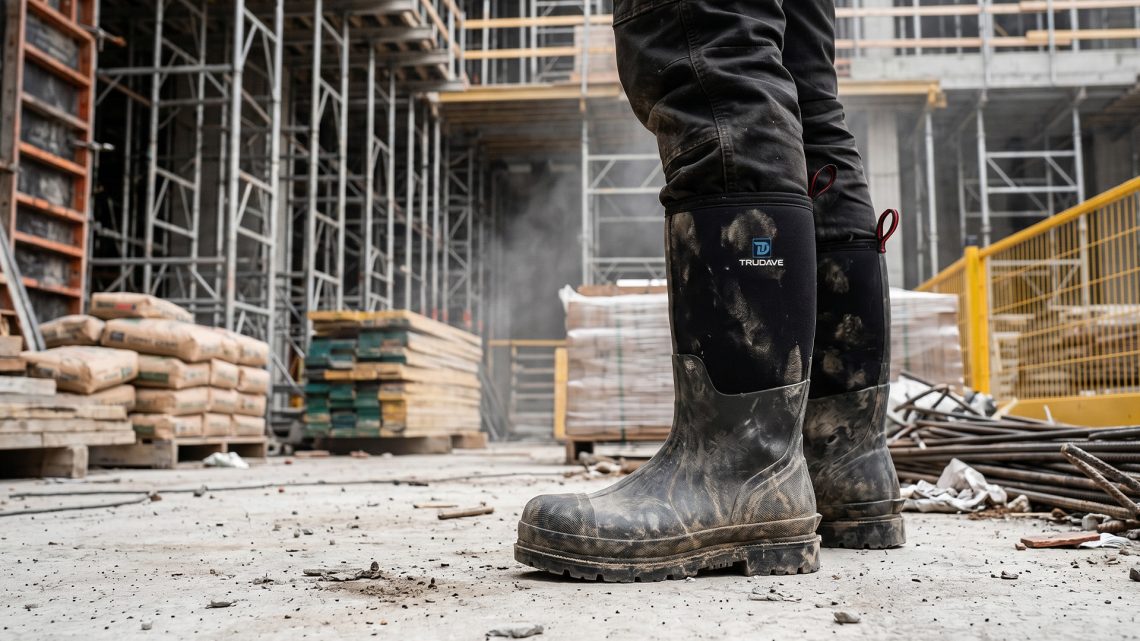
The DryFlow series is built for serious work environments. These boots are “made from industrial-grade waterproof rubber with sealed seams that keep your feet dry even in mud, rain, or standing water. Perfect for construction, farming, and outdoor labor where you need reliable protection all day”. Reinforced rubber resists cuts, stubble, and mud, while rugged outsoles stay firm on uneven ground.
The 6mm Neoprene series is for the coldest days—deep winter, sub-freezing mornings, and anyone whose feet run cold. One independent review called them “your unwavering ally in the elements,” highlighting that they “lock out moisture while trapping body heat — making them ideal for extended outdoor use in wet, chilly conditions”.
How to Choose the Right Boot for Your Life
Here’s the end-of-article guide you actually need:
| If you mainly do… | Choose… | Why |
|---|---|---|
| Gardening, dog walking, light farm work | MudTrek | Non-slip outsoles, neoprene warmth, self-cleaning traction |
| Construction, heavy farm work, factory jobs | DryFlow | Industrial-grade rubber, sealed seams, oil-resistant outsoles |
| Deep winter work, sub-freezing conditions | 6mm Neoprene | Maximum insulation, steel shank for puncture protection |
The smart play: If you work outdoors year-round, consider buying two pairs—one for warm weather and one for cold. Together, they often cost less than a single pair of premium boots. And you get the right boot for every condition, not a compromise.
How to Keep Your Boots Alive
Proper care doubles the lifespan of any boot. Here’s the simple routine that works:
Rinse after every use. A quick hose-down removes mud, manure, salt, and debris before they dry and degrade the rubber.
Air dry naturally—never use heat. Never put rubber boots on a radiator, in a dryer, or in direct sunlight. Heat cracks rubber and ruins the waterproof seal.
Use mild soap only. For heavy dirt, use mild dish soap and a soft brush. Avoid degreasers, bleach, or harsh chemicals—these strip essential oils from the rubber and cause premature cracking.
Store upright in a cool, dry place away from direct sunlight. Don’t fold or crease the boots, which creates weak points.
Check your tread periodically. When the lugs wear down and the sole feels hard like plastic instead of grippy rubber, it’s time for new boots.
The Bottom Line
Here’s the honest truth about rain boots in 2026.
You can spend $30 on cheap boots that crack in a season, slip on wet pavement, and leave your feet cold and wet. Or you can spend $50–$80 on a pair that keeps your feet dry for years, grips the ground you walk on, and comes with features—steel shank puncture protection, proper insulation, non-slip outsoles—that cheap boots simply don’t offer.
Independent reviewers who’ve tested Trudave boots through real-world conditions put it this way: “Compared to heavier, pricier competitors like the MUCK Chore Met Guard, the Trudave boots deliver remarkable value for budget-conscious buyers who need reliable performance without advanced safety certifications”.
| Decision Factor | Verdict |
|---|---|
| Waterproofing | ⭐⭐⭐⭐⭐ — 100% rubber/neoprene with sealed seams |
| Steel shank protection | ⭐⭐⭐⭐⭐ — Available on many models; rare at this price point |
| Insulation options | ⭐⭐⭐⭐⭐ — Range from uninsulated to 6mm neoprene |
| Slip resistance | ⭐⭐⭐⭐ — Deep lugs and non-slip outsoles |
| Value for money | ⭐⭐⭐⭐⭐ — Direct pricing undercuts legacy brands significantly |
| Ease of cleaning | ⭐⭐⭐⭐⭐ — Rubber surfaces rinse clean in seconds |
| Sizing accuracy | ⭐⭐⭐⭐ — Slightly large; predictable if you follow the chart |
The yard doesn’t care what logo is on your boots. The garden doesn’t check the brand tag. It only cares if your feet are dry, warm, and planted when the work needs doing.
Now go outside. Your boots will handle the rest.


You May Also Like
Reading Grass Recovery Without Guessing or Waiting Too Long

Building Compost Piles: Turning Fall Waste Into Spring Fertility