Best Boots for Wetland Restoration Work: Waterproof Footwear for Marshes, Mud, Stream Banks, and Conservation Projects
Wetland restoration puts footwear in some of the most unpredictable working conditions outdoors.
A conservation crew may begin the morning walking through dew-covered grass, cross a muddy stream bank, spend several hours planting native vegetation, remove invasive plants from shallow wetlands, carry tools across saturated ground, and finish the day cleaning mud from equipment near a gravel access road.
The terrain can change within a few yards.
Workers may encounter:
- Deep mud.
- Marsh grass.
- Standing water.
- Soft stream banks.
- Wet clay.
- Sandy soil.
- Gravel.
- Roots.
- Rocks.
- Flooded trails.
- Steep creek edges.
- Wet logs.
- Brush.
- Construction mats.
- Equipment staging areas.
Ordinary hiking shoes often do not provide enough waterproof protection.
Basic rain boots may keep water out but can become uncomfortable when crews walk long distances or work on uneven terrain.
The best boots for wetland restoration work should provide dependable waterproof protection, secure heel retention, practical mud traction, supportive cushioning, enough shaft height, and durable materials that can handle vegetation, tools, water, and long field days.
This guide explains how to choose practical footwear for wetland restoration crews, conservation workers, environmental technicians, wildlife habitat teams, stream restoration contractors, invasive-species crews, and other professionals working in muddy or saturated environments.
Why Wetland Restoration Is Hard on Boots
Wetland restoration combines environmental fieldwork with physical labor.
Workers may spend the day:
- Planting native vegetation.
- Installing erosion-control materials.
- Removing invasive plants.
- Monitoring water levels.
- Collecting field data.
- Carrying tools.
- Repairing fences.
- Moving nursery plants.
- Building habitat structures.
- Stabilizing stream banks.
- Maintaining access trails.
Unlike work on a normal construction site or farm, wetland terrain often has no consistent walking surface.
A worker may move from gravel to grass, then into mud, then across shallow water, and finally onto a steep bank.
Footwear must adapt quickly.
Waterproof Protection Is Essential
Wetland projects naturally involve water.
Moisture may come from:
- Marshes.
- Streams.
- Springs.
- Rain.
- Flooded ground.
- Wet vegetation.
- Shallow ponds.
- Groundwater.
- Mud.
- Restoration irrigation.
- Morning dew.
Water-resistant hiking boots may work for short inspections on relatively dry ground.
For workers spending hours in saturated vegetation or soft mud, fully waterproof footwear is usually more practical.
Rubber or molded waterproof boots also clean more easily after contact with mud, sediment, plant material, and organic residue.
Rubber Boots vs Waterproof Lace-Up Work Boots
Both styles can be useful in restoration work.
The right choice depends on water depth, terrain, and walking distance.
Rubber Wetland Boots
Rubber boots provide strong water protection.
Advantages include:
- Fully waterproof construction.
- Easy cleaning.
- Tall shaft options.
- Good mud protection.
- Minimal water absorption.
- Simple maintenance.
They work well for:
- Marsh restoration.
- Muddy planting areas.
- Shallow wetland edges.
- Invasive plant removal.
- Wet grass.
- Flooded field work.
- Stream-bank projects.
Potential disadvantages include:
- Less ankle adjustment.
- Possible heel movement.
- Heat buildup.
- Limited cushioning in basic models.
- Reduced stability during long sidehill walking.
Waterproof Lace-Up Work Boots
Waterproof lace-up boots may provide:
- Better ankle support.
- More precise fit.
- Stronger heel retention.
- Better comfort on long walks.
- Improved slope stability.
- Better control around tools.
- More secure climbing performance.
They may be better for:
- Stream-bank restoration.
- Long monitoring routes.
- Gravel access trails.
- Rocky terrain.
- Equipment work.
- Dry-to-moderately wet projects.
Many environmental crews keep both available.
Rubber boots handle deeper mud and water, while waterproof lace-up boots are often more comfortable during long walks over mixed terrain.
Choosing the Right Boot Height
Boot height is one of the most important decisions for wetland work.
Ankle-Height Waterproof Boots
These may work for:
- Dry monitoring routes.
- Gravel access roads.
- Equipment areas.
- Short upland inspections.
They provide limited protection in saturated vegetation and mud.
Mid-Calf Wetland Boots
Mid-calf boots are useful for:
- General habitat work.
- Wet grass.
- Moderate mud.
- Stream edges.
- Planting projects.
- Shallow standing water.
They provide useful coverage while remaining easier to walk in than knee-high boots.
Knee-High Rubber Boots
Knee-high boots are useful for:
- Marshes.
- Deep mud.
- Standing water.
- Flooded fields.
- Tall wet vegetation.
- Heavy rain.
- Saturated restoration sites.
Tall boots provide more protection but also add heat and weight.
When Waders Are Better Than Boots
Standard boots have clear limitations.
If water is deeper than the boot opening, crews may need:
- Hip boots.
- Chest waders.
- Specialized waterproof PPE.
Waders may be appropriate for:
- Stream-channel work.
- Pond restoration.
- Deeper marshes.
- Beaver-dam projects.
- Fisheries habitat work.
- Water-quality sampling.
Standard boots should not be used as a substitute for waders when water depth regularly exceeds the shaft.
Best Boots for Marsh Restoration
Marshes may contain deep organic mud, reeds, standing water, and hidden uneven surfaces.
Suitable footwear should provide:
- Fully waterproof construction.
- Tall shaft coverage.
- Secure heel retention.
- Open mud tread.
- Flexible rubber.
- Stable lateral support.
- Easy-clean materials.
Mud suction is a major issue.
A boot that is too loose can stay in the mud while the worker’s foot pulls upward.
Proper sizing matters.
Best Boots for Stream Restoration
Stream projects often involve rocks, wet banks, mud, roots, flowing water, and equipment access.
Suitable footwear should provide:
- Waterproof protection.
- Secure heel fit.
- Durable outsole construction.
- Good lateral stability.
- Flexible forefoot movement.
- Stable traction on mixed surfaces.
Waterproof lace-up work boots may be better for workers who spend more time on stream banks than directly in the water.
When entering deeper channels, waders may be required.
Best Boots for Stream-Bank Planting
Planting vegetation along stream banks involves repeated:
- Bending.
- Kneeling.
- Digging.
- Carrying plants.
- Walking slopes.
Suitable boots should provide:
- Flexible movement.
- Secure heel retention.
- Waterproof construction.
- Defined heel braking.
- Moderate tread.
- Stable ankle support.
Very tall stiff rubber boots may restrict kneeling.
For moderate moisture, supportive mid-calf waterproof boots can be more comfortable.
Best Boots for Native Plant Installation
Wetland restoration often involves installing:
- Sedges.
- Rushes.
- Grasses.
- Shrubs.
- Trees.
- Aquatic plants.
Workers may carry plant trays, shovels, stakes, and erosion-control materials.
Suitable footwear should provide:
- Waterproof construction.
- Mud traction.
- Good cushioning.
- Durable toe protection.
- Secure heel support.
- Manageable weight.
Planting crews may take thousands of steps during a single workday.
Heavy footwear can increase fatigue.
Best Boots for Invasive Plant Removal
Invasive-species crews may work around:
- Phragmites.
- Reed canary grass.
- Purple loosestrife.
- Brush.
- Wetland weeds.
- Thorny vegetation.
Footwear should provide:
- Durable waterproof uppers.
- Abrasion resistance.
- Tall enough shafts.
- Mud traction.
- Secure fit.
- Protection from plant debris.
Workers using herbicides should select footwear according to product-label PPE requirements.
Waterproof does not automatically mean chemical resistant.
Best Boots for Wildlife Habitat Restoration
Habitat crews may work across wetlands, grasslands, forest edges, ponds, and agricultural property.
Tasks may include:
- Installing nesting structures.
- Building brush piles.
- Planting vegetation.
- Maintaining water-control structures.
- Repairing fencing.
- Improving wildlife openings.
A versatile habitat boot should provide:
- Waterproof protection.
- Mixed-surface traction.
- Comfortable walking support.
- Durable construction.
- Easy cleaning.
For crews moving between wetland and upland habitat, versatility is especially important.
Best Boots for Duck Habitat Projects
Waterfowl habitat restoration often occurs in:
- Marshes.
- Shallow impoundments.
- Flooded fields.
- Pond edges.
- Muddy levees.
Suitable boots should provide:
- Tall waterproof shafts.
- Strong mud traction.
- Secure heel retention.
- Flexible rubber.
- Easy-clean surfaces.
This type of conservation work has many of the same footwear demands as waterfowl hunting, but workers may spend much longer on their feet.
Best Boots for Levee and Water-Control Work
Wetland restoration may involve levees, gates, culverts, pumps, and water-control structures.
Workers may walk along:
- Narrow embankments.
- Wet grass.
- Muddy slopes.
- Gravel.
- Concrete structures.
Suitable footwear should provide:
- Lateral stability.
- Defined heel braking.
- Waterproof construction.
- Secure heel fit.
- Multidirectional traction.
Loose boots can feel unstable on levee slopes.
Supportive waterproof lace-up boots may be better when deep water is not expected.
Best Boots for Erosion-Control Installation
Crews may install:
- Coir logs.
- Erosion blankets.
- Stakes.
- Wattles.
- Silt-control materials.
- Native vegetation.
Work may involve steep banks, mud, wet soil, and carrying materials.
Footwear should provide:
- Strong heel retention.
- Stable slope traction.
- Waterproof uppers.
- Durable toe areas.
- Comfortable support.
- Moderate weight.
The outsole should provide enough grip without making movement awkward on temporary mats or hard surfaces.
Best Boots for Muddy Restoration Sites
Wetland mud may consist of:
- Clay.
- Silt.
- Organic matter.
- Sand.
- Decomposed vegetation.
Suitable mud boots should provide:
- Wide lug spacing.
- Open tread channels.
- Defined heel braking.
- Flexible rubber.
- Secure heel retention.
- Easy cleaning.
Narrow grooves may fill quickly.
Once mud packs into the outsole, traction decreases and boot weight increases.
Best Boots for Soft Organic Soil
Organic wetland soils can feel unstable and may create strong suction.
Workers should look for:
- Broad outsole support.
- Secure heel fit.
- Moderate-to-deep tread.
- Flexible construction.
- Manageable boot weight.
Extremely heavy boots can make movement through soft wetlands more difficult.
Best Boots for Wet Grass
Restoration sites often include tall, saturated vegetation.
Suitable boots should provide:
- Fully waterproof uppers.
- Moderate or tall shafts.
- Multidirectional tread.
- Flexible rubber.
- Stable heel support.
Wet grass may remain soaked throughout the morning even when the weather is clear.
Best Boots for Rocky Stream Banks
Rocky terrain requires different performance from mud.
Suitable footwear should provide:
- Strong ankle support.
- Stable outsole edges.
- Secure heel retention.
- Durable toe areas.
- Flexible rubber.
- Good cushioning.
For rocky stream restoration, supportive waterproof lace-up boots usually perform better than loose rubber boots.
Best Boots for Gravel Access Roads
Environmental crews may walk long distances from vehicles to restoration sites.
Gravel roads require:
- Durable outsole rubber.
- Comfortable cushioning.
- Stable heel support.
- Moderate tread.
- Secure fit.
Very deep mud tread may become uncomfortable on long gravel approaches.
Best Boots for Environmental Field Monitoring
Not every wetland worker performs heavy construction.
Environmental technicians may conduct:
- Vegetation surveys.
- Wildlife monitoring.
- Water-quality sampling.
- Soil sampling.
- Hydrology measurements.
- Compliance inspections.
Suitable footwear should provide:
- Waterproof protection.
- Low-to-moderate weight.
- Long-walk comfort.
- Secure heel fit.
- Mixed-surface traction.
- Durable construction.
Workers covering several miles per day may prioritize weight and support over maximum boot height.
Best Boots for Soil Sampling
Soil sampling may involve muddy sites, augers, shovels, wet grass, and kneeling.
Suitable boots should provide:
- Waterproof construction.
- Durable toes.
- Flexible movement.
- Secure heel retention.
- Moderate tread.
- Easy-clean uppers.
If workers use manual soil probes, footwear should also provide enough sole structure for comfortable fieldwork.
Best Boots for Water-Quality Sampling
Water-quality crews may work along:
- Streams.
- Ponds.
- Marsh edges.
- Drainage channels.
- Wet banks.
Boots should provide:
- Waterproof construction.
- Secure traction.
- Enough shaft height.
- Stable lateral support.
- Easy-clean materials.
Deeper sampling points may require waders instead of boots.
Best Boots for Wetland Construction Crews
Some restoration projects involve heavy equipment and construction activity.
Workers may be around:
- Excavators.
- Skid steers.
- Trucks.
- Pumps.
- Culverts.
- Geotextiles.
- Stone.
- Timber structures.
Suitable footwear may require:
- Safety toes.
- Puncture resistance.
- Waterproof construction.
- Stable traction.
- Ankle support.
- Durable uppers.
The correct safety rating should match the actual job-site requirements.
Traction in Deep Mud
Deep mud requires a tread that can enter and release soil.
Look for:
- Wide channels.
- Open lug patterns.
- Defined heel edges.
- Flexible rubber.
- Secure heel retention.
Deep mud can pull loose boots off.
Proper sizing and heel control are essential.
Traction on Wet Logs and Roots
Wet logs and roots can be extremely slippery.
Useful outsole features include:
- Flexible rubber.
- Broad surface contact.
- Stable edges.
- Moderate tread.
- Secure foot positioning.
No boot makes slick logs completely safe.
Whenever possible, step around rather than directly onto them.
Traction on Wet Rocks
Wet rocks may be covered with algae or moss.
Workers should use:
- Stable foot placement.
- Flexible rubber.
- Broad outsole contact.
- Secure ankle support.
Move slowly.
Extremely aggressive mud lugs do not automatically provide better traction on smooth rock.
Traction on Temporary Construction Mats
Wetland sites may use timber, composite, or steel access mats for equipment.
Suitable footwear should provide:
- Broad outsole contact.
- Stable heel structure.
- Moderate tread.
- Secure fit.
- Flexible rubber.
Mud should be cleaned from boots before walking on smoother temporary surfaces whenever possible.
Comfort for Long Field Days
Wetland restoration often means long hours far from vehicles.
Workers may spend the day:
- Walking.
- Digging.
- Carrying.
- Planting.
- Standing.
- Kneeling.
- Climbing banks.
Comfort depends on:
- Cushioned midsoles.
- Supportive removable insoles.
- Stable heel cups.
- Proper arch support.
- Enough toe room.
- Moderate boot weight.
- Flexible movement.
A fully waterproof boot that lacks support may still become uncomfortable after several hours.
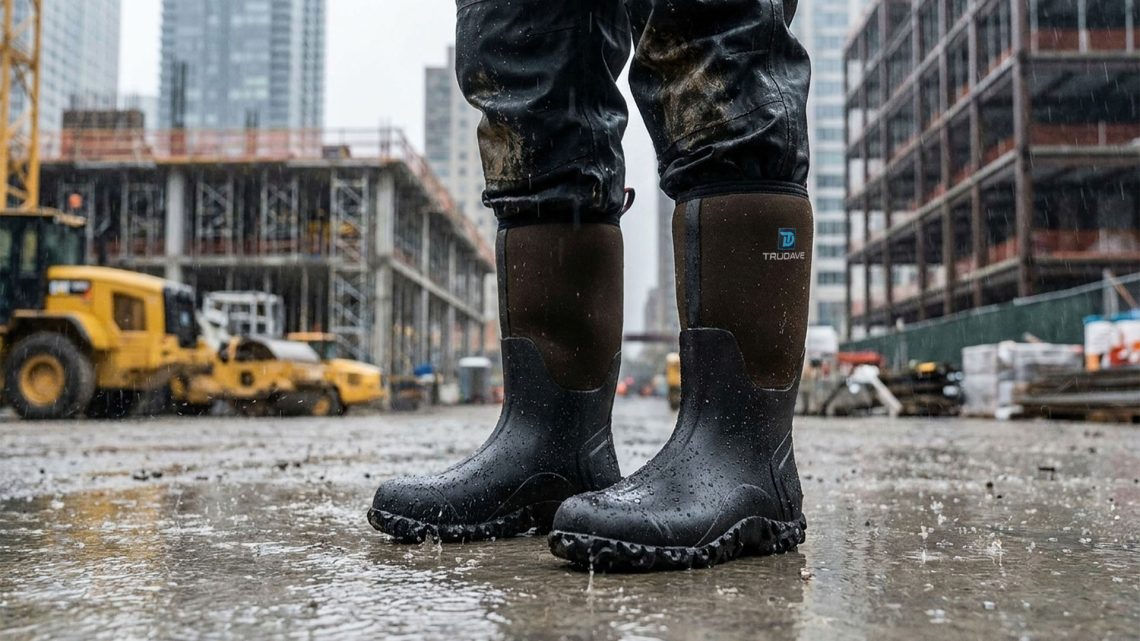
When comparing waterproof outdoor footwear from brands such as Trudave Gear, consider waterproofing, fit, traction, weight, support, and shaft height together.
Boot Weight Matters
Wet ground already increases walking effort.
Heavy footwear makes this more difficult.
Boot weight may increase because of:
- Tall shafts.
- Thick rubber.
- Safety toes.
- Heavy insulation.
- Aggressive outsoles.
- Reinforcement.
Choose the lightest boot that still provides the required protection.
Hot-Weather Wetland Boots
Wetland work frequently occurs during warm growing seasons.
Suitable summer footwear should prioritize:
- Uninsulated construction.
- Manageable weight.
- Removable insoles.
- Moisture-wicking socks.
- Appropriate shaft height.
- Easy drying.
Tall waterproof boots can become hot.
Use only the amount of boot height needed for the work.
Cold-Weather Restoration Boots
Late fall and winter restoration may involve:
- Cold rain.
- Snow.
- Frozen mud.
- Slush.
- Cold water.
Cold-weather boots may need:
- Waterproof construction.
- Light or moderate insulation.
- Flexible low-temperature rubber.
- Thick midsoles.
- Room for warm socks.
- Secure heel support.
The right insulation depends on how much workers move versus stand in one place.
Best Socks for Wetland Work
Cotton socks are generally a poor choice in wet environments.
Wool-blend and synthetic socks usually perform better.
Choose socks that:
- Wick moisture.
- Cushion the heel and forefoot.
- Fit without bunching.
- Extend above the boot collar.
- Match the season.
- Dry efficiently.
Keeping spare socks in the work vehicle is useful for long wet days.
Do Wetland Workers Need Safety-Toe Boots?
Safety toes may be appropriate around:
- Heavy equipment.
- Culverts.
- Pumps.
- Stone.
- Timber structures.
- Pallets.
- Tools.
- Construction materials.
Not every biological monitoring job requires safety toes.
Choose protection based on actual worksite hazards and employer requirements.
Puncture Resistance
Wetland restoration sites may contain:
- Wire.
- Old fencing.
- Nails.
- Sharp branches.
- Metal debris.
- Construction materials.
- Broken boards.
A thick outsole does not automatically provide puncture resistance.
Use appropriately rated footwear when puncture hazards are present.
Chemical Exposure and Herbicide Work
Invasive-plant management may involve herbicides or other treatment products.
Workers should select boots based on:
- Product-label PPE requirements.
- Chemical compatibility.
- Exposure level.
- Boot height.
- Cleaning procedure.
Waterproof boots are not automatically chemical resistant.
Always follow the product label and employer safety procedures.
Wetland Biosecurity and Invasive Species
Footwear can move:
- Seeds.
- Mud.
- Aquatic organisms.
- Plant fragments.
- Pathogens.
Field crews may need to clean boots between sites to reduce the spread of invasive species.
Cleaning procedures may include:
- Removing visible mud.
- Brushing tread.
- Washing footwear.
- Drying equipment.
- Using approved decontamination procedures.
Site-specific protocols should always be followed.
Easy-Clean Boot Design
Useful wetland-work boot features include:
- Smooth waterproof uppers.
- Limited exposed fabric.
- Open tread channels.
- Simple lug shapes.
- Removable insoles.
- Few decorative overlays.
- Rounded exterior surfaces.
Complex tread can trap mud, seeds, and plant material.
Simple construction is easier to inspect and clean between sites.
How to Clean Wetland Work Boots
A practical routine includes:
- Remove heavy mud and vegetation.
- Rinse the exterior.
- Brush the outsole channels.
- Remove seeds and plant fragments.
- Follow site-specific decontamination procedures.
- Inspect for cracks, cuts, and punctures.
- Remove damp insoles when possible.
- Dry boots completely.
- Store footwear in a ventilated area.
Regular cleaning helps maintain traction and reduces transfer of soil and invasive material.
How to Remove Marsh Mud
Marsh mud should be removed before it dries.
Use:
- Running water.
- A stiff nonmetallic brush.
- A blunt plastic scraper.
- A boot wash station.
Avoid sharp tools that can cut rubber.
How to Remove Seeds and Plant Material
Check:
- Tread grooves.
- Heel channels.
- Shaft seams.
- Pull tabs.
- Areas around the outsole.
Plant fragments can travel long distances on dirty footwear.
Thorough cleaning is especially important when crews move between restoration sites.
How to Dry Waterproof Wetland Boots
Waterproof footwear can become damp internally from sweat or water entering over the top.
After work:
- Remove insoles.
- Open shafts or loosen laces.
- Wipe visible water.
- Direct airflow inside.
- Use a low-temperature boot dryer if approved.
- Avoid strong direct heat.
High temperatures may damage rubber, adhesives, membranes, and linings.
How to Prevent Boot Odor
Wetland boots may develop odor from:
- Sweat.
- Marsh water.
- Organic mud.
- Plant residue.
- Incomplete drying.
Reduce odor by:
- Cleaning footwear regularly.
- Wearing moisture-wicking socks.
- Removing insoles.
- Drying interiors completely.
- Rotating footwear.
- Replacing worn footbeds.
- Storing boots with airflow.
Drying and cleaning are more effective than fragrance.
How Long Should Wetland Work Boots Last?
Boot lifespan depends on:
- Walking distance.
- Mud exposure.
- Water exposure.
- Rocks and roots.
- Chemical exposure.
- Construction work.
- Cleaning frequency.
- Material quality.
- Outsole wear.
Inspect footwear regularly for:
- Cracks.
- Leaks.
- Worn tread.
- Sole separation.
- Cuts.
- Punctures.
- Unstable heel support.
- Compressed cushioning.
A boot may still keep water out while no longer providing adequate traction or support.
When Should Wetland Boots Be Replaced?
Replace footwear when:
- Water repeatedly enters.
- Tread becomes severely worn.
- Cracks spread.
- The outsole separates.
- Heel support becomes unstable.
- Cushioning collapses.
- Chemical damage occurs.
- Punctures cannot be safely repaired.
Keeping backup footwear is useful for crews working on multi-day restoration projects.
Common Mistakes When Buying Wetland Work Boots
Buying Casual Rain Boots
They may lack support for long field days.
Choosing Boots Too Large
Loose boots can be pulled off by deep mud.
Buying Tall Heavy Boots for Every Project
Maximum height is unnecessary when most work occurs on stream banks or upland trails.
Ignoring Ankle Support
Uneven banks and rocky streams require stability.
Choosing Mud Tread Only
Workers may also need traction on rocks, mats, gravel, and equipment.
Assuming Waterproof Means Chemical Resistant
Herbicide work may require specific protective footwear.
Forgetting Invasive-Species Cleaning
Dirty boots can move seeds and organisms between restoration sites.
Drying Boots With High Heat
Strong heat can damage waterproof materials.
How to Choose the Best Boots for Wetland Restoration Work
Before purchasing, consider the actual project.
Ask:
How deep is the water?
Is the site marsh, stream, pond, or wet meadow?
How much mud is present?
How far do workers walk?
Are steep banks involved?
Are workers using herbicides?
Is heavy equipment present?
Are safety toes required?
Will workers move between multiple restoration sites?
Is summer heat or winter cold a major factor?
Then compare:
- Waterproof construction.
- Boot height.
- Mud traction.
- Wet-rock traction.
- Heel retention.
- Ankle support.
- Cushioning.
- Boot weight.
- Safety features.
- Ease of cleaning.
For conservation crews, environmental technicians, habitat workers, land managers, and outdoor professionals comparing waterproof footwear, Trudave Gear offers boots designed for rain, mud, wet grass, marshes, farms, forests, and demanding outdoor environments.
Choose footwear based on water depth, terrain, walking distance, vegetation, project type, weather, and the number of hours spent in the field.
Frequently Asked Questions
What are the best boots for wetland restoration work?
The best wetland restoration boots are fully waterproof, securely fitted, easy to clean, comfortable for long field days, and equipped with traction for mud, wet grass, stream banks, and uneven terrain.
Are rubber boots good for wetland work?
Yes. Rubber boots are practical for marshes, wet fields, shallow water, deep mud, invasive-plant removal, and habitat restoration.
How tall should wetland work boots be?
Mid-calf boots work well for many wet restoration sites. Knee-high boots provide more protection in deeper mud, tall wet vegetation, and shallow standing water.
Do wetland workers need waders?
Waders may be necessary when workers enter water deeper than normal boot height.
What tread is best for marsh mud?
Open tread with wide lug spacing, defined heel edges, and flexible rubber helps provide traction and release mud.
Are lace-up boots better for stream restoration?
Waterproof lace-up boots are often better for rocky banks, long walking routes, steep slopes, and areas where ankle support is important.
Are waterproof boots chemical resistant?
Not automatically. Herbicide or chemical work may require specific footwear based on the product label.
How do you clean wetland boots between restoration sites?
Remove mud, seeds, and plant fragments, wash the boots thoroughly, and follow any project-specific decontamination procedures.
Do conservation workers need safety-toe boots?
Safety toes may be appropriate when crews work around heavy equipment, stone, culverts, pumps, tools, or construction materials.
How often should wetland boot insoles be replaced?
Replace insoles when they become flat, damaged, permanently damp, uneven, or no longer supportive.
Final Thoughts
Wetland restoration requires footwear that can handle marsh mud, standing water, wet grass, stream banks, rocks, native planting, invasive vegetation, equipment areas, and long field days.
The best boots provide dependable waterproof protection, secure heel retention, practical mixed-surface traction, supportive cushioning, manageable weight, and materials that are easy to clean between projects.
Mid-calf rubber boots are a strong choice for planting, wet grass, moderate mud, habitat monitoring, and shallow wetland work.
Knee-high waterproof boots provide more protection during marsh restoration, deep mud, standing water, and flooded habitat projects.
Supportive waterproof lace-up boots may be better for rocky streams, steep banks, long monitoring routes, equipment work, and mixed wet-upland terrain.
Trudave Gear offers waterproof outdoor and work boots designed for rain, mud, wet grass, farms, forests, marshes, and demanding field conditions.
Choose footwear based on water depth, terrain, vegetation, project duties, safety requirements, climate, and the number of hours spent on your feet.
Reliable wetland restoration boots should help workers stay drier, maintain better footing, reduce fatigue, and remain more comfortable from the first site assessment in the morning to the final equipment cleanup at the end of the day.


You May Also Like
Why Your Ranch Output Feels Lower Even Without Major Changes

Simple Ways to Boost Pasture Recovery After a Long Winter