Best Boots for Pumpkin Farms and Corn Maze Work
Pumpkin farms become some of the busiest agricultural properties of the year once fall arrives.
What may look like a simple pumpkin patch to visitors is usually a working farm filled with harvest crews, tractors, trailers, corn fields, hayrides, parking areas, concession zones, muddy footpaths, loading stations, and thousands of customers moving across the property.
Workers may begin the morning harvesting pumpkins from wet vines, spend midday restocking customer displays, help pull a tractor wagon through muddy lanes, repair signs inside a corn maze, direct parking on wet grass, and finish the evening cleaning up after the last visitors leave.
During peak season, footwear may encounter:
- Mud.
- Wet grass.
- Pumpkin vines.
- Corn stalks.
- Gravel.
- Tractor ruts.
- Hay.
- Rain.
- Morning dew.
- Frost.
- Parking-lot puddles.
- Loading areas.
The best boots for pumpkin farm work should keep feet dry, provide stable traction on soft ground, remain comfortable during long walking shifts, and be practical enough for employees who move continuously between working fields and customer-facing areas.
Pumpkin Season Is Often Wet Season
Pumpkin harvest and agritourism usually happen during fall.
Depending on the region, workers may regularly deal with:
- Rain.
- Cool mornings.
- Dew.
- Early frost.
- Soft soil.
- Wet leaves.
Even when the weather is clear, the ground may stay damp for hours.
Waterproof footwear is especially useful because seasonal workers often spend the entire shift outdoors.
Pumpkin Patches Turn Muddy Very Quickly
A pumpkin field may remain manageable until hundreds of visitors begin walking through it.
Constant foot traffic can quickly turn soft soil into:
- Mud.
- Deep footprints.
- Ruts.
- Slippery paths.
Tractors and wagons may make conditions even worse.
Workers need tread that provides enough grip without becoming so aggressive that it carries pounds of mud everywhere.
Best Tread for Muddy Pumpkin Fields
Useful outsole characteristics include:
- Open tread channels.
- Moderate-to-deep lugs.
- Defined heel edges.
- Flexible rubber.
- Enough spacing to release soil.
For ordinary customer areas, extreme farm tread may be unnecessary.
Workers moving constantly between fields and buildings often benefit from a balanced mixed-surface outsole.
Clay Pumpkin Fields Need Wider Tread Channels
Wet clay can stick firmly inside narrow outsole grooves.
Once the tread fills completely, the boot may become:
- Heavy.
- Difficult to clean.
- Less effective on hard surfaces.
Wider channels are usually easier to maintain.
Sandy Pumpkin Farms Need Less Aggressive Tread
Pumpkins may also be grown on lighter sandy soils.
Deep lugs can dig unnecessarily into loose soil.
Moderate tread and broad outsole contact may provide better walking efficiency.
Boots for Pumpkin Harvest Crews
Harvest workers may spend hours:
- Cutting stems.
- Lifting pumpkins.
- Carrying fruit.
- Filling bins.
- Loading trailers.
Footwear should provide:
- Waterproof protection.
- secure heel fit.
- stable soil traction.
- supportive midsoles.
- flexible forefoot movement.
Heavy Pumpkins Change Footwear Requirements
Large pumpkins may weigh dozens of pounds.
Workers carrying them need a stable base.
Loose footwear can make balance more difficult when the hands are occupied.
Secure heel retention becomes especially important.
Safety-Toe Boots for Pumpkin Harvest
Some workers may handle:
- Heavy bins.
- Pallets.
- Large pumpkins.
- Loading equipment.
Protective-toe footwear may be appropriate depending on workplace procedures.
Boots for Pumpkin Cutting
Workers may use:
- Knives.
- Clippers.
- Pruning tools.
The footwear should allow stable crouching and kneeling.
A boot that is too stiff can make repetitive cutting uncomfortable.
Pumpkin Vines Create Hidden Trip Hazards
Vines can cover:
- Holes.
- uneven soil.
- irrigation lines.
- small rocks.
Workers need predictable foot placement.
Supportive uppers and secure heel fit help when the ground cannot be seen clearly.
Boots for Wet Pumpkin Vines
Pumpkin leaves and vines can hold significant moisture after:
- Rain.
- Dew.
- Irrigation.
Workers brushing through fields may soak low shoes even when the soil is relatively firm.
Mid-height waterproof boots provide more useful coverage.
Boots for Pumpkin Loading Crews
Harvested pumpkins may be loaded into:
- Wagons.
- Trailers.
- Trucks.
- Bins.
- Customer vehicles.
Workers frequently transition from soft ground to hard loading surfaces.
A mixed-surface boot works best.
Mud Should Be Removed Before Climbing Trailers
Mud packed into tread can reduce contact on:
- Metal.
- wood.
- ramps.
Workers should remove heavy soil whenever practical before climbing equipment.
Boots for Tractor Operators
Pumpkin farms may use tractors for:
- Harvest transport.
- Hayrides.
- Field preparation.
- Customer wagon rides.
Operators need footwear that allows reliable pedal control.
Tall heavy rubber boots may feel bulky inside the cab or operator station.
Boots for Hayride Drivers
Hayride drivers may spend much of the day operating equipment but still step out into:
- Mud.
- Wet grass.
- Gravel.
A mid-height waterproof work boot is often more practical than knee-high farm boots.
Boots for Hayride Loading Areas
Workers helping visitors enter wagons may stand in one location for hours.
Cushioning becomes important.
The ideal footwear should combine:
- Waterproof construction.
- stable grass traction.
- supportive midsoles.
Boots for Corn Maze Workers
Corn maze staff may perform:
- Trail inspections.
- Sign repairs.
- Customer assistance.
- Evening closing checks.
They may walk long distances through narrow corn rows.
Lightweight waterproof boots are especially useful.
Corn Rows Hold Moisture
Corn leaves may remain wet long after rainfall.
Workers brushing through dense rows can quickly soak clothing and footwear.
Mid-height waterproof boots help protect lower legs.
Boots for Muddy Corn Mazes
Heavy visitor traffic can create deep mud along maze paths.
Workers need enough tread for these conditions without wearing extremely heavy agricultural footwear.
Corn Stalk Debris Can Enter Low Shoes
Dry leaves and stalk fragments may work into low-cut footwear.
A higher boot collar helps keep debris out.
Boots for Night Corn Maze Work
Some farms operate evening or haunted corn mazes.
Workers may move through fields after dark.
Reduced visibility makes secure footing especially important.
Useful footwear should provide:
- Stable heel support.
- good ankle control.
- reliable mud traction.
Boots for Haunted Farm Attractions
Seasonal farms may include:
- Haunted trails.
- Corn mazes.
- Night hayrides.
- Outdoor event areas.
Employees may need to move quickly between different surfaces.
A lightweight waterproof boot with secure fit is useful.
Boots for Customer Pumpkin Patches
Customer-facing workers may spend hours:
- Helping families.
- Moving pumpkins.
- Restocking displays.
- Cleaning paths.
They need footwear that is practical but not unnecessarily bulky.
Smooth waterproof uppers are easier to clean during the day.
Appearance Matters in Agritourism
Farm employees interact constantly with visitors.
Boots often become part of the visible work uniform.
Easy-clean footwear helps employees move between:
- Muddy fields.
- Gift shops.
- Food areas.
- Ticket booths.
Boots for Pumpkin Display Areas
Pumpkin displays may be set up on:
- Grass.
- Straw.
- Gravel.
- Pavement.
Workers repeatedly move heavy pumpkins.
Stable heel support and cushioning are valuable.
Boots for Straw-Covered Walkways
Some farms spread straw over muddy paths.
Straw can:
- Hide uneven ground.
- Become wet.
- Pack into deep boot tread.
Moderate open tread is easier to clean.
Boots for Farm Parking Crews
Parking attendants may spend entire shifts on:
- Wet grass.
- Gravel.
- Mud.
- Asphalt.
They may also stand in one place for long periods.
Supportive midsoles are particularly important.
Wet Grass Parking Lots Become Soft Quickly
Hundreds of vehicles can create:
- Ruts.
- Mud.
- standing water.
Waterproof boots with moderate outdoor tread perform well.
Boots for Traffic-Control Workers
Workers directing vehicles need good lateral stability.
They may need to step quickly away from moving cars or tractors.
Loose boots are a poor choice.
Boots for Gravel Parking Areas
Crushed stone drains well but can be hard on thin soles.
Look for:
- Durable outsole rubber.
- supportive midsoles.
- heel cushioning.
Boots for Ticket Booth Staff Who Also Work Outside
Some seasonal workers alternate between:
- Ticket booths.
- Parking.
- Pumpkin fields.
- Event areas.
A lighter waterproof work boot is usually more practical than tall rubber footwear.
Boots for Farm Market Workers
Pumpkin farms may operate:
- Produce stands.
- Gift shops.
- Cider markets.
Workers may move between indoor hard floors and outdoor mud.
Moderate tread transitions more easily between both environments.
Boots for Concession Support Crews
Food-service areas may have:
- Concrete.
- Wet floors.
- Outdoor grass.
Employees should use footwear appropriate to the actual food-service and outdoor duties involved.
Boots for Apple Cider Areas
Some farms sell or produce cider.
Processing or serving areas may contain wet floors.
Deep mud tread carried in from the field may be undesirable.
Dedicated indoor footwear may sometimes be useful.
Boots for Petting Zoo Areas
Agritourism farms may also keep:
- Goats.
- Sheep.
- Chickens.
- Small livestock.
Workers cleaning these areas may encounter:
- Mud.
- Bedding.
- Manure.
Waterproof easy-clean boots are practical.
Boots for Animal Pen Cleaning
More shaft coverage may be useful when washing or cleaning pens.
Smooth molded uppers make rinsing easier.
Boots for Farm Playground Maintenance
Seasonal farms may offer:
- Playgrounds.
- Climbing areas.
- Corn pits.
- Outdoor games.
Maintenance workers may move across grass, mulch, and mud.
Mixed-surface traction is useful.
Boots for Corn Pit Maintenance
Loose corn kernels can act like small rolling objects underfoot.
Workers should keep floors clear and avoid relying only on footwear for traction.
Boots for Tractor-Pulled Wagon Maintenance
Workers may service:
- Trailers.
- Hitches.
- Steps.
- Seating.
They may need more structured safety footwear when working around equipment.
Boots for Farm Mechanics
Mechanics may repair:
- Tractors.
- UTVs.
- Wagons.
- Harvest equipment.
Useful footwear may include:
- Safety toes.
- oil-resistant outsoles.
- ankle support.
- waterproof construction.
Waterproof Does Not Mean Oil Resistant
Equipment maintenance may involve:
- Fuel.
- Oil.
- Grease.
Material compatibility should be evaluated separately.
Boots for UTV Workers
Utility vehicles may be used for:
- Restocking.
- Field patrol.
- Customer assistance.
- Security.
Operators need:
- Good pedal control.
- secure heel positioning.
- moderate outsole thickness.
Boots for Field Security Crews
Large seasonal farms may patrol after closing.
Workers may walk long distances through:
- Dark fields.
- Parking lots.
- Maze areas.
Comfort and stable footing matter.
Boots for Early-Morning Farm Setup
Workers may arrive before visitors.
Grass can be heavily covered with dew.
Waterproof footwear prevents wet feet before the public even enters.
Boots for Evening Cleanup
After sunset, cooler temperatures may increase moisture and condensation.
Workers may still need to:
- Move pumpkins.
- collect trash.
- close attractions.
- inspect fields.
A secure waterproof boot remains useful.
Boots for Rainy Fall Weekends
Rain does not always stop seasonal farm operations.
Workers may spend entire days in:
- Mud.
- Wet grass.
- Puddles.
Fully waterproof boots become especially valuable.
Boots for Heavy Autumn Mud
Long periods of rain may require more aggressive tread and additional shaft coverage.
Knee-high rubber boots can be useful for workers stationed in the wettest parts of the farm.
When Mid-Calf Boots Are Better
For employees walking long distances or operating equipment, mid-calf boots are often easier to move in.
They provide a good compromise between coverage and weight.
Boots for Early Frost
Late fall mornings may begin below freezing.
Workers may encounter:
- Frosted grass.
- cold mud.
- frozen puddles.
Moderate insulation may improve comfort.
Frozen Mud Changes Traction
Soft ruts can freeze overnight.
What was mud the day before can become hard uneven ground the next morning.
Supportive midsoles and ankle stability help.
Boots for Light Snow
Some northern pumpkin farms stay open late into the season.
Workers may occasionally deal with:
- Snow.
- slush.
- cold rain.
Waterproof boots with moderate insulation can handle these conditions.
Ice Requires Separate Traction Measures
No ordinary work boot completely eliminates ice risk.
Farms may need:
- Surface treatment.
- approved traction devices.
- route maintenance.
Boots for Spring Pumpkin Field Preparation
Pumpkin production begins long before fall.
Spring work may involve:
- Plowing.
- planting.
- irrigation setup.
- weed control.
Wet spring fields can require more aggressive mud traction.
Boots for Pumpkin Planting
Workers may walk repeatedly across soft soil.
Mid-calf waterproof boots with secure heel fit are practical.
Boots for Irrigation Installation
Pumpkin farms may use:
- Drip tape.
- Sprinklers.
- hoses.
Leaks and irrigation work can create localized mud.
Waterproof footwear is valuable.
Boots for Summer Pumpkin Field Work
Summer crews may perform:
- Scouting.
- weed control.
- irrigation.
- disease monitoring.
Heavy insulated rubber boots are usually unnecessary.
Workers should prioritize lightweight construction.
Heat Changes Boot Choice
During warm weather, workers may prefer:
- Uninsulated uppers.
- removable insoles.
- moisture-wicking socks.
- lower boot weight.
Boots for Pest Scouting
Crop scouts may walk long rows.
They need comfortable supportive footwear rather than maximum shaft height.
Boots for Fungicide or Pesticide Work
Pumpkin production may require crop-protection products.
Footwear must follow specific label requirements.
Waterproof does not automatically mean chemically resistant.
Boots for Fertilizer Application
The correct footwear depends on the product being handled.
General rubber boots should not automatically be treated as universal chemical PPE.
Boots for Weed-Control Crews
Workers may perform:
- Hand hoeing.
- Mechanical cultivation.
- Herbicide application.
Footwear needs depend on the task.
Boots for Pumpkin Disease Scouting
Workers may inspect vines for:
- Mildew.
- Rot.
- insect damage.
Morning wet foliage makes waterproof uppers especially useful.
Boots for Harvest Bin Handling
Large pumpkin operations may use:
- Bins.
- Pallets.
- Forklifts.
Safety-toe footwear may be required for certain employees.
Boots for Forklift Operators
Workers need:
- Pedal control.
- secure heel fit.
- stable machine steps.
Very tall rubber boots may be unnecessarily bulky.
Boots for Wholesale Pumpkin Shipping
Wholesale crews may load pumpkins onto trucks for:
- Grocery stores.
- Garden centers.
- Farm markets.
These workers may spend more time on hard loading surfaces.
Cushioning becomes important.
Boots for Loading Docks
Loading areas may contain:
- Wet concrete.
- pallets.
- Gravel.
- Rain.
A supportive waterproof safety boot works well.
Boots for Delivery Drivers
Drivers may move between:
- Farms.
- Retail stores.
- Distribution centers.
A lower-profile waterproof work boot usually provides better driving comfort.
Boots for Decorative Pumpkin Display Crews
Some workers build large seasonal displays.
They may handle:
- Pumpkins.
- Hay bales.
- Wooden crates.
- Decorations.
Protective toes may be appropriate depending on the materials used.
Boots for Hay Bale Handling
Hay can create loose footing and dust.
Simple tread reduces material buildup.
Boots for Corn Stalk Decoration Crews
Corn stalk bundles may be moved around customer areas.
Workers need stable footing while carrying awkward loads.
Boots for Field Drainage Work
Heavy autumn rain may require crews to clear:
- Ditches.
- Culverts.
- Drainage channels.
This is one task where taller rubber boots can be particularly useful.
Boots for Culvert Cleaning
Workers may encounter:
- Mud.
- Standing water.
- Leaves.
- Gravel.
Open tread channels improve mud release.
Boots for Farm Road Maintenance
Seasonal traffic can damage:
- Gravel roads.
- field lanes.
- parking entrances.
Workers may fill:
- Ruts.
- potholes.
- muddy areas.
Supportive waterproof boots are practical.
Boots for Storm Cleanup
Strong autumn storms may leave:
- Branches.
- fallen signs.
- water.
- damaged attractions.
More protective footwear may temporarily be required.
Puncture Hazards After Storms
Workers may encounter:
- Nails.
- Screws.
- broken wood.
- wire.
A thick outsole does not automatically provide puncture resistance.
Boots for Fence Maintenance
Pumpkin farms may use temporary or permanent fencing around attractions and crops.
Workers may encounter sharp:
- Wire.
- stakes.
- fasteners.
Appropriate footwear should be used.
Boots for Temporary Event Structures
Seasonal farms may install:
- Tents.
- signs.
- barriers.
- lighting.
Setup crews may need stronger safety footwear than ordinary field staff.
Boot Weight Matters During Peak Season
Agritourism employees may spend 10 or more hours moving around the property.
Heavy boots increase fatigue.
Choose enough protection without unnecessary bulk.
Cushioning Matters Even on Soft Ground
Workers may transition constantly between:
- Soil.
- Gravel.
- Concrete.
- Asphalt.
A supportive midsole helps across all surfaces.
Heel Retention Matters in Mud
Secure heel fit prevents the boot from sliding excessively during each step.
This is especially important when pulling carts or carrying pumpkins.
Toe Space Matters During Long Shifts
Feet may swell after hours of standing and walking.
Boots should secure the heel while leaving comfortable toe room.
Forefoot Flexibility Helps Harvest Workers
Workers constantly:
- Bend.
- Squat.
- Kneel.
- Lift.
A stiff forefoot can make the job more tiring.
Best Socks for Pumpkin Farm Workers
Synthetic and wool-blend socks generally perform better than cotton.
Useful features include:
- Moisture wicking.
- heel cushioning.
- quick drying.
- enough height above the boot collar.
Spare Socks Can Help During Rainy Days
Unexpected water may enter over the boot shaft.
Dry replacement socks can make the rest of the shift much more comfortable.
Removable Insoles Improve Daily Use
Removable footbeds allow workers to:
- Dry boots faster.
- replace worn cushioning.
- manage odor.
- customize support.
Waterproof Boots Can Still Get Damp Inside
Active harvest workers may sweat.
Boots should be dried fully between shifts.
How to Clean Pumpkin Farm Boots
A practical routine may include:
- Remove vines and grass.
- Brush mud from tread.
- Rinse soil and pumpkin residue.
- Remove straw and corn leaves.
- Inspect for stones or sharp objects.
- Remove damp insoles.
- Dry the boots completely.
Pumpkin Residue Can Become Sticky
Damaged pumpkins may leave:
- Pulp.
- juice.
- seeds.
on footwear.
Cleaning this material before it dries makes maintenance easier.
Corn Leaves and Straw Should Be Removed From Tread
Organic debris may pack into deep outsole channels.
Keep tread clear for better surface contact.
How to Dry Pumpkin Farm Boots
After wet work:
- Remove insoles.
- open the boots.
- allow airflow.
- use low-temperature drying if approved.
Avoid excessive direct heat.
Rotating Two Pairs Can Help During October
Peak pumpkin season may involve consecutive long wet shifts.
A second pair allows the first pair more time to dry.
When Pumpkin Farm Boots Should Be Replaced
Replace footwear when:
- Waterproofing fails.
- tread becomes worn smooth.
- outsole separation develops.
- heel support collapses.
- cracks appear.
- protective components are damaged.
- cushioning becomes ineffective.
Do Pumpkin Farm Workers Need Safety-Toe Boots?
Some roles may require protective toes around:
- Forklifts.
- heavy bins.
- tractors.
- trailers.
- equipment.
Customer-facing field staff may have different requirements.
Do Pumpkin Farm Workers Need Puncture-Resistant Boots?
Workers dealing with:
- Fencing.
- temporary structures.
- broken pallets.
- equipment debris.
may need puncture-rated footwear depending on the site.
Common Mistakes When Buying Pumpkin Farm Boots
Buying Knee-High Mud Boots for Every Worker
Employees walking long distances may benefit from lighter mid-height footwear.
Wearing Low Shoes Through Wet Pumpkin Vines
Dew and rain can soak them quickly.
Buying Boots Too Loose
Mud suction and heavy lifting make poor fit more noticeable.
Choosing Deep Mud Lugs for Customer-Facing Areas
Moderate mixed-surface tread often works better across fields, gravel, and pavement.
Ignoring Parking Crew Comfort
Standing on gravel for hours requires cushioning.
Wearing Heavy Insulated Boots During Warm Early-Fall Days
Excess heat can cause sweat.
Assuming Waterproof Means Chemical Resistant
Crop-protection products have separate PPE requirements.
Failing to Clean Mud Before Climbing Equipment
Packed soil can reduce traction on steps and trailers.
How to Choose the Best Boots for Pumpkin Farm Work
Start with the employee’s actual job.
For harvest crews, prioritize:
- Waterproof construction.
- mud traction.
- secure heel fit.
- cushioning.
- flexible movement.
For corn maze workers, prioritize:
- Lightweight support.
- wet-grass protection.
- long-distance comfort.
- moderate tread.
For parking attendants, prioritize:
- Cushioning.
- mixed-surface traction.
- weather protection.
For hayride and tractor operators, prioritize:
- Pedal control.
- secure heel position.
- moderate outsole thickness.
For customer-service field crews, prioritize:
- Easy-clean construction.
- waterproofing.
- manageable weight.
For drainage and storm crews, prioritize:
- More shaft coverage.
- mud-release tread.
- rugged construction.
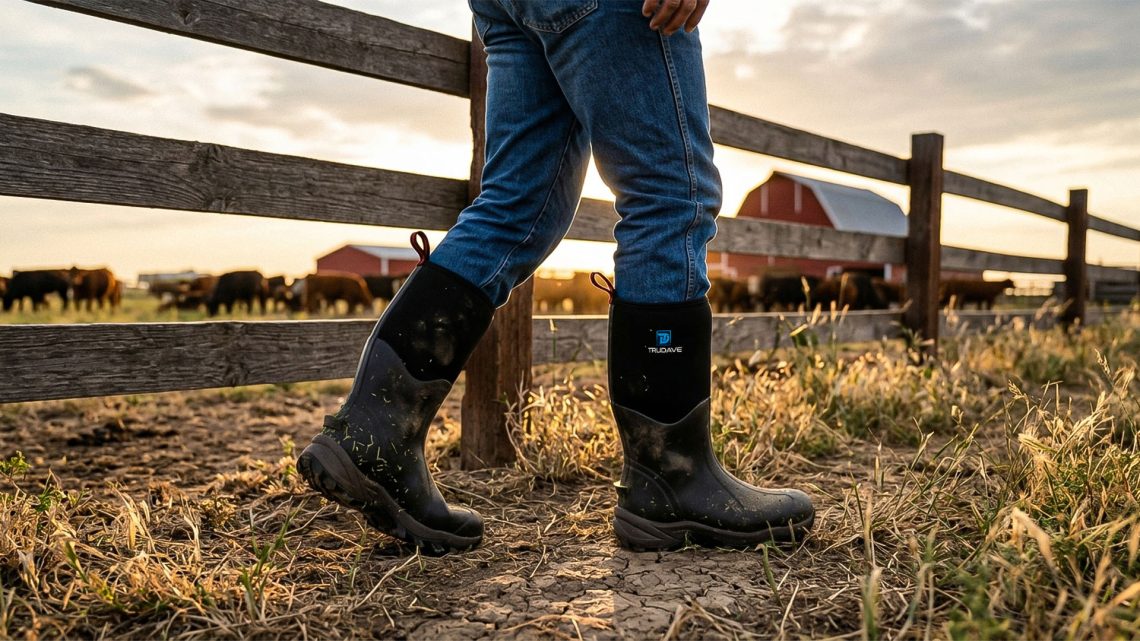
Workers comparing waterproof footwear from brands such as Trudave Gear should choose boots based on the actual combination of muddy fields, wet grass, corn rows, customer areas, machinery, gravel, and long seasonal shifts involved in their job.
Frequently Asked Questions
What are the best boots for pumpkin farm work?
The best pumpkin farm boots are waterproof, securely fitted, comfortable for long walking shifts, and equipped with traction suitable for mud, wet grass, gravel, and seasonal farm work.
Are rubber boots good for pumpkin patches?
Yes. Rubber boots are useful for muddy pumpkin fields, rainy harvest days, irrigation work, and wet customer areas.
How tall should pumpkin patch boots be?
Mid-height or mid-calf boots are versatile for most workers. Knee-high boots may be useful for deep mud, drainage work, and heavy rain.
What boots are best for corn maze workers?
Lightweight waterproof boots with secure heel support, moderate tread, cushioning, and enough height to keep wet vegetation and debris out are practical.
Are deep mud boots good for pumpkin farms?
They are useful in severe mud, but moderate-tread waterproof boots are often more versatile for workers moving between fields, gravel, trailers, and customer areas.
Do pumpkin farm workers need insulated boots?
Moderate insulation may help during cold late-season shifts, but heavy insulation is usually unnecessary during warmer early-fall harvest days.
What boots are best for pumpkin harvest crews?
Waterproof work boots with mud traction, flexible forefoot movement, secure heel fit, and supportive midsoles are practical.
Do pumpkin farm workers need safety-toe boots?
Some loading, tractor, forklift, heavy-bin, and maintenance jobs may require safety-toe footwear.
Are waterproof boots suitable for pesticide work?
Not automatically. Workers should follow the PPE requirements on the specific product label.
How should pumpkin farm boots be cleaned?
Remove vines, grass, straw, and corn leaves, brush mud from tread, rinse pumpkin residue, inspect the outsole for debris, and allow boots to dry completely.
Final Thoughts
Pumpkin farm and corn maze work combines muddy harvest fields, wet vines, long walking routes, gravel parking areas, tractors, hayrides, customer service, corn rows, autumn rain, frost, and heavy seasonal traffic.
The best footwear depends on the employee’s role.
Harvest crews need waterproof boots with strong mud performance and secure heel fit.
Corn maze workers benefit from lighter footwear designed for long walking routes.
Parking employees need better cushioning and mixed-surface support.
Hayride and tractor operators need reliable pedal control.
Customer-facing workers benefit from waterproof boots that are easy to clean.
Drainage and storm crews may need taller, more rugged rubber footwear.
Trudave Gear offers waterproof outdoor and work footwear suited to wet grass, rain, mud, farms, gravel, seasonal harvest work, and demanding outdoor environments.
Choosing footwear according to the actual pumpkin-farm task can help workers stay drier, reduce fatigue, maintain better footing, and remain comfortable from the first dew-covered field inspection in the morning to the final hayride returning after sunset.

You May Also Like
The Rain Boot You Actually Need: How to Stop Guessing and Find Your Perfect Match
Best Boots for Cranberry Farms and Bog Harvest Work