Best Boots for Water Treatment Plant and Municipal Utility Work
Municipal water workers operate in environments where wet concrete, pipes, pumps, valves, outdoor excavation sites, reservoirs, treatment equipment, and emergency repair work are part of everyday operations.
A worker may begin the morning inspecting treatment equipment, walk through a damp filter gallery, check pumps and valves, respond to a hydrant problem, drive to a muddy water-main repair site, and finish the shift cleaning tools or inspecting a reservoir facility.
Footwear may encounter:
- Wet concrete.
- Standing water.
- Mud.
- Gravel.
- Pipe galleries.
- Pump rooms.
- Metal stairs.
- Utility trenches.
- Rain.
- Washdown water.
- Mechanical fluids.
- Outdoor construction areas.
That makes footwear an important part of municipal water and utility work.
The best boots for water treatment plant employees should provide dependable waterproof protection, stable footing on wet hard surfaces, enough cushioning for long concrete shifts, durable support for outdoor utility work, and the safety features required for pumps, pipes, construction sites, and maintenance operations.
Water Utility Work Covers More Than One Environment
One of the biggest challenges for municipal water workers is that the job may move between very different surfaces in a single day.
A worker may spend time on:
- Indoor concrete.
- Outdoor gravel.
- Mud.
- Asphalt.
- Metal stairs.
- Grass.
- Utility excavation sites.
That makes highly specialized footwear less practical for many employees.
A balanced waterproof work boot often provides better versatility.
Waterproofing Is Important in Treatment Facilities
Water-treatment employees work around systems designed to move enormous quantities of water.
Moisture may come from:
- Equipment washdown.
- Pipe leaks.
- Drainage.
- Pump maintenance.
- Filter systems.
- Outdoor weather.
Water-resistant shoes may be adequate for brief exposure, but fully waterproof boots provide more reliable protection for workers regularly entering wet areas.
Boots for Treatment Plant Operators
Plant operators may inspect:
- Pumps.
- Filters.
- Valves.
- Basins.
- Control equipment.
They often walk long distances through large facilities.
Useful footwear features include:
- Waterproof construction.
- Supportive midsoles.
- Moderate hard-floor tread.
- Secure heel fit.
- Durable uppers.
Concrete Comfort Matters
Water-treatment plants often contain extensive concrete flooring.
Even when floors are dry, standing or walking on concrete for hours can create fatigue.
Workers should prioritize:
- Cushioned midsoles.
- Removable insoles.
- Stable heel support.
Boots for Wet Treatment Floors
Water around treatment equipment may leave floors damp.
Workers generally benefit from outsoles with:
- Broad floor contact.
- Moderate grooves.
- Flexible rubber.
- Defined heel edges.
Extremely deep field-style tread is usually unnecessary indoors.
Boots for Filter Galleries
Filter galleries may include:
- Concrete floors.
- Pipes.
- Valves.
- Drainage channels.
Workers need predictable footing around mechanical systems.
A mid-height waterproof safety boot is practical.
Boots for Filter Maintenance
Filter maintenance may involve:
- Water.
- Tools.
- Mechanical components.
Additional safety protection may be required depending on the job.
Boots for Backwash Areas
Filter backwashing can involve significant water movement.
Workers may encounter splash or wet floors.
Fully waterproof footwear is useful.
Boots for Pump Rooms
Pumps are central to water treatment and distribution.
Pump-room employees may work around:
- Motors.
- Pipes.
- Valves.
- Couplings.
- Wet concrete.
More structured safety footwear may be appropriate.
Waterproof Does Not Mean Electrical Protection
Pump rooms may contain substantial electrical equipment.
General waterproof boots are not automatically electrically rated.
Electrical work requires task-specific procedures and PPE.
Boots for Pump Maintenance
Technicians may handle:
- Motors.
- Bearings.
- Pumps.
- Heavy tools.
Protective-toe footwear may be appropriate.
Boots for Valve Maintenance
Large valves may require workers to:
- Kneel.
- Crouch.
- Use hand tools.
Forefoot flexibility helps reduce discomfort.
Boots for Pipe Galleries
Water-treatment facilities may contain long pipe corridors.
Workers may spend hours walking on hard floors.
Boot weight and cushioning become important.
Boots for Metal Stairs and Platforms
Plants often include:
- Grating.
- Stairs.
- Catwalks.
Very deep outsole lugs may reduce precise contact.
Moderate tread and defined heel edges are usually more practical.
Boots for Ladder Access
Maintenance employees may use ladders around tanks or equipment.
Bulky soles can make rung positioning less precise.
Secure heel retention matters.
Boots for Reservoir Workers
Municipal systems may include:
- Ground reservoirs.
- Elevated tanks.
- Storage basins.
Workers may inspect both indoor and outdoor areas.
Boots for Reservoir Grounds
Outdoor reservoir sites may contain:
- Grass.
- Gravel.
- Mud.
- Slopes.
Mixed-terrain waterproof boots work well.
Boots for Tank Inspection Support
Workers supporting tank inspections may need safety footwear appropriate to:
- Stairs.
- Platforms.
- Construction-style access.
Confined Space Procedures Come First
Certain tanks, vaults, or enclosed structures may qualify as confined spaces.
Footwear is only one component of a broader safety system.
Boots for Water Main Repair Crews
Water-main failures often create some of the wettest municipal work conditions.
Crews may encounter:
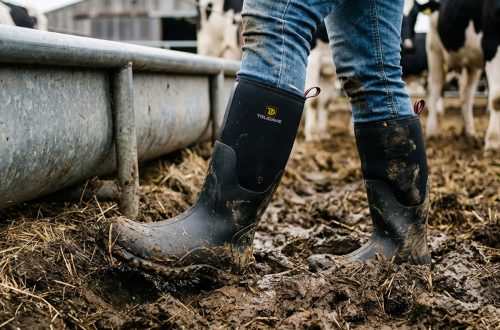
- Deep mud.
- Standing water.
- Excavated soil.
- Gravel.
- Broken pavement.
More rugged waterproof boots are useful.
Boots for Muddy Water-Main Breaks
When a pipe fails, water may quickly saturate surrounding soil.
Workers may need:
- Higher shafts.
- Open tread.
- Strong heel retention.
Mud Suction Can Pull at Footwear
Loose boots can shift or partially pull off in saturated soil.
Secure fit reduces:
- Heel lift.
- Blisters.
- Wasted movement.
Boots for Utility Excavation Sites
Water crews may work around excavators and trenches.
Footwear may encounter:
- Clay.
- Crushed stone.
- Wet soil.
- Concrete debris.
Strong midsoles and protective toes may be appropriate.
Excavation Safety Cannot Be Solved by Footwear
Workers must follow proper trenching and excavation procedures.
Boots do not make an unstable excavation safe.
Boots for Trench Crews
Utility trenches may contain:
- Mud.
- Pipe.
- Gravel.
- Standing water.
Mid-calf waterproof safety boots can be practical.
Boots for Shovel Work
Repeated digging puts pressure through the sole.
Strong midsoles improve comfort.
Boots for Water Pipe Installation
New distribution systems may involve:
- Pipe sections.
- Fittings.
- Gravel bedding.
- Construction equipment.
Safety footwear is often appropriate.
Boots for Pipe Bedding Work
Crushed stone can be uncomfortable through thin soles.
Supportive midsoles distribute pressure.
Boots for Hydrant Maintenance
Fire hydrant crews may work beside:
- Roads.
- Grass.
- Mud.
- Concrete.
They need versatile mixed-surface footwear.
Boots for Hydrant Flushing
Water released during flushing may create:
- Wet pavement.
- Grass runoff.
- Mud.
Waterproof boots are useful.
Boots for Hydrant Replacement
Replacement work may involve:
- Excavation.
- Heavy components.
- Pipe fittings.
Protective-toe footwear may be required.
Boots for Valve Box Crews
Distribution valves may be located in:
- Streets.
- Sidewalks.
- Grass.
- Mud.
Workers may transition frequently between hard and soft surfaces.
Boots for Street Valve Maintenance
Moderate tread works well on asphalt and concrete.
Boots for Muddy Valve Sites
Outdoor valve boxes can fill with:
- Water.
- Soil.
- Debris.
Mid-height waterproof boots provide useful protection.
Boots for Meter Crews
Water-meter employees may visit:
- Residential properties.
- Commercial sites.
- Meter vaults.
They may spend significant time walking.
Lightweight waterproof work boots are practical.
Boots for Meter Pit Work
Meter pits may contain:
- Water.
- Mud.
- Insects.
- Debris.
More waterproof coverage can be useful.
Boots for Utility Locators
Workers locating underground utilities may walk through:
- Grass.
- Pavement.
- Construction sites.
Mixed-surface waterproof boots work well.
Boots for Leak Detection Crews
Leak-detection technicians may inspect:
- Streets.
- Hydrants.
- Valves.
- Utility corridors.
Comfort and lower boot weight matter.
Boots for Emergency Repair Crews
Water utility workers may be called out after:
- Pipe breaks.
- Storms.
- Equipment failures.
Conditions may be unpredictable.
Versatile waterproof safety boots are especially useful.
Boots for Night Water-Main Repairs
Emergency repairs often happen after dark.
Reduced visibility increases the importance of:
- Secure fit.
- Predictable traction.
- Good work-zone procedures.
Boots for Roadside Utility Work
Water infrastructure frequently runs beneath or beside roads.
Workers may operate around:
- Asphalt.
- Gravel.
- Traffic-control zones.
Mixed-surface footwear is practical.
Boots for Wet Asphalt
Broad outsole contact works better than extremely deep mud lugs.
Boots for Gravel Shoulders
Strong midsoles reduce underfoot pressure.
Boots for Storm Response
Heavy storms may cause:
- Flooding.
- Pipe damage.
- Access problems.
Workers may need more shaft coverage.
Floodwater Requires Additional Caution
Floodwater can contain:
- Biological contaminants.
- Chemicals.
- Sharp debris.
General waterproof work boots may not provide sufficient protection.
Task-specific PPE may be necessary.
Boots for Flooded Utility Vaults
Workers should not enter flooded electrical or confined spaces simply because they are wearing waterproof boots.
Proper isolation and safety procedures come first.
Boots for Treatment Plant Washdown
Facilities may regularly wash:
- Floors.
- Equipment.
- Work areas.
Mid-height or mid-calf waterproof boots work well.
Boots for Hose Work
Workers pulling hoses need secure footing.
Moderate outsole thickness makes it easier to step around:
- Hoses.
- Drains.
- Equipment.
Pressure Washing Safety
Waterproof boots protect against ordinary splash.
They do not protect feet from direct high-pressure spray.
Boots for Chemical Treatment Areas
Drinking-water treatment may involve chemicals used for:
- Disinfection.
- pH adjustment.
- Coagulation.
- Other treatment processes.
Waterproof Does Not Mean Chemical Resistant
This distinction is critical.
General waterproof boots should not automatically be considered suitable for concentrated treatment chemicals.
Workers should follow:
- SDS guidance.
- Facility PPE requirements.
- Chemical-specific procedures.
Boots for Chemical Delivery Areas
Workers receiving treatment products may operate around:
- Pallets.
- Tanks.
- Containers.
Specialized chemical-resistant footwear may be required.
Boots for Chemical Spill Response
Spill response requires PPE matched to the specific substance.
Ordinary rubber work boots may not be adequate.
Boots for Chlorination Areas
Chemical and respiratory hazards require site-specific procedures.
Footwear should be chosen according to actual facility requirements.
Boots for Laboratory Technicians
Water plants often operate onsite laboratories.
Lab employees may move between:
- Clean indoor spaces.
- Treatment areas.
Lower-profile waterproof safety footwear may be more practical.
Boots for Sampling Crews
Water-quality technicians may collect samples from:
- Treatment processes.
- Reservoirs.
- Distribution systems.
They may travel across multiple surfaces.
Boots for Field Water Sampling
Outdoor sampling may involve:
- Mud.
- Grass.
- Stream edges.
Waterproof mixed-terrain footwear is useful.
Boots for Reservoir Sampling
Workers may operate near wet banks or platforms.
Secure heel fit matters.
Boots for Distribution-System Sampling
Employees may visit numerous utility sites during a shift.
Driving comfort becomes important.
Boots for Utility Truck Drivers
Municipal water workers may spend substantial time driving service vehicles.
Very tall, bulky boots may reduce pedal comfort.
Mid-height waterproof work boots are often more versatile.
Boots for Vacuum and Service Trucks
Some utility operations use specialized vehicles.
Drivers may repeatedly enter and exit onto:
- Mud.
- Gravel.
- Pavement.
Mixed-surface tread is practical.
Boots for Backhoe and Excavator Operators
Operators need:
- Good pedal control.
- Secure heel fit.
- Stable equipment-step contact.
Extremely thick soles may reduce control feel.
Boots for Skid Steer Operators
Workers may move repeatedly between equipment and wet excavation areas.
A structured waterproof safety boot works well.
Boots for Crane and Hoist Support
Large pipe or pump components may require lifting equipment.
Protective footwear may be appropriate.
Boots for Utility Warehouses
Water departments may store:
- Pipe fittings.
- Valves.
- Meters.
- Tools.
Warehouse workers spend more time on concrete.
Hard-floor cushioning becomes a priority.
Boots for Pipe Storage Yards
Outdoor yards may contain:
- Gravel.
- Mud.
- Pipe sections.
More rugged tread may be useful.
Boots for Pallet Handling
Workers moving fittings and supplies may use:
- Forklifts.
- Pallet jacks.
Protective toes may be appropriate.
Boots for Forklift Operators
Drivers need:
- Moderate outsole thickness.
- Secure heel support.
- Good pedal control.
Boots for Utility Maintenance Shops
Municipal departments may repair:
- Pumps.
- Vehicles.
- Valves.
- Equipment.
Mechanics often need industrial footwear.
Boots for Mechanical Repair
Workers may encounter:
- Grease.
- Oil.
- Hydraulic fluid.
Waterproof Does Not Mean Oil Resistant
Maintenance workers should verify outsole properties separately.
Boots for Hydraulic Repairs
Excavators and service equipment may use hydraulic systems.
Oil-resistant outsole materials may be useful.
Boots for Welding and Fabrication
Utility shops may perform:
- Welding.
- Cutting.
- Metal repair.
Standard waterproof boots are not automatically appropriate for hot-metal exposure.
Boots for Electrical Maintenance
Treatment plants contain motors, controls, and electrical panels.
Electrical work requires appropriately rated footwear and procedures.
Boots for Generator Areas
Backup generators may involve:
- Fuel.
- Oil.
- Electrical systems.
Waterproofing alone is not sufficient protection.
Boots for Backup Power Maintenance
Industrial safety footwear may be appropriate.
Boots for Fueling Areas
Utility vehicles and generators may require onsite fuel.
Boot material should be compatible with actual exposure.
Boots for Water Tower Grounds
Elevated tank sites may contain:
- Grass.
- Gravel.
- Slopes.
Waterproof outdoor boots are practical.
Boots for Water Tower Maintenance Support
Workers on elevated structures require specialized fall protection.
Footwear is only part of the safety system.
Boots for Municipal Well Sites
Groundwater systems may include:
- Wells.
- Pump houses.
- Outdoor service yards.
Workers may transition between wet mechanical areas and gravel.
Boots for Well Pump Technicians
A structured waterproof safety boot works well.
Boots for Well House Floors
Concrete cushioning matters.
Boots for Spring and Rainy Utility Work
Spring often creates:
- Saturated soil.
- Mud.
- Standing water.
More shaft coverage may be useful.
Boots for Summer Treatment Plant Work
Some facilities can become hot and humid.
Workers should avoid unnecessary insulation.
Useful features include:
- Lightweight construction.
- Moisture-wicking socks.
- Moderate shaft height.
Waterproof Boots Can Still Become Damp Inside
Sweat may create internal moisture.
Daily drying is important.
Boots for Winter Water Utility Work
Municipal utilities operate year-round.
Winter workers may face:
- Snow.
- Slush.
- Frozen mud.
- Ice.
Insulated waterproof boots may be required.
Boots for Frozen Water-Main Repairs
Workers may encounter cold water plus freezing outdoor temperatures.
Appropriate insulation becomes especially important.
Boots for Slush
Mid-height or mid-calf waterproof boots provide useful protection.
Ice Requires Separate Traction Measures
No ordinary work boot completely eliminates ice hazards.
Approved traction devices or site controls may be needed.
Boots for Road Salt Exposure
Municipal work zones may contain deicing salt.
Regular rinsing helps remove residue.
Boots for Long Utility Shifts
Emergency repairs can extend normal working hours.
Workers may spend long periods:
- Walking.
- Standing.
- Digging.
- Driving.
- Climbing equipment.
Comfort becomes increasingly important.
Boot Weight Matters
Heavy footwear adds fatigue over a long shift.
Workers should choose enough protection without unnecessary bulk.
Cushioning Matters Across Concrete and Gravel
Water workers rarely stay on one surface.
Supportive midsoles help across:
- Treatment floors.
- Utility yards.
- Gravel.
- Pavement.
Heel Retention Matters in Mud
Secure fit prevents excessive internal movement.
Ankle Support Matters at Excavation Sites
Ruts, gravel, and uneven ground can twist the foot unexpectedly.
Forefoot Flexibility Helps Maintenance Work
Workers frequently:
- Kneel.
- Crouch.
- Turn valves.
- Repair pipes.
The boot should flex naturally.
Toe Room Matters During Long Shifts
Feet may swell.
Enough space improves comfort.
Best Socks for Municipal Water Workers
Synthetic and wool-blend socks generally perform better than cotton.
Useful features include:
- Moisture wicking.
- Quick drying.
- Heel cushioning.
- Temperature regulation.
Spare Socks Can Be Useful
Water-main repairs or heavy washdown may occasionally allow water into footwear.
A dry replacement pair can improve the rest of the shift.
Removable Insoles Improve Daily Drying
Replaceable footbeds allow workers to:
- Dry footwear.
- Restore cushioning.
- Improve hygiene.
- Adjust support.
Easy-Clean Construction Is Important
Utility boots may collect:
- Mud.
- Gravel dust.
- Treatment residue.
- Road grime.
Smooth durable uppers simplify cleaning.
How to Clean Water Utility Work Boots
A practical routine may include:
- Remove mud and gravel.
- Brush debris from tread.
- Rinse ordinary water and road residue.
- Follow PPE procedures after chemical exposure.
- Clean oil or fuel exposure according to footwear guidance.
- Remove damp insoles.
- Allow boots to dry completely.
Mud Should Be Removed Before It Hardens
Utility-site clay can become difficult to remove once dry.
Chemical Exposure Requires Specific Procedures
Do not assume rinsing alone is sufficient after treatment-chemical exposure.
Follow facility guidance.
How to Dry Water Treatment Work Boots
After wet work:
- Remove insoles.
- Open boots fully.
- Allow airflow.
- Use low-temperature drying if approved.
Avoid excessive direct heat.
Rotating Two Pairs Can Help Full-Time Utility Workers
Water exposure, rain, and emergency repair work may prevent boots from drying overnight.
Alternating pairs provides more drying time.
When Water Treatment Work Boots Should Be Replaced
Replace footwear when:
- Waterproofing fails.
- Tread becomes badly worn.
- Outsole separation develops.
- Chemical damage appears.
- Heel support collapses.
- Puncture damage occurs.
- Safety components are compromised.
- Cushioning becomes ineffective.
Do Water Treatment Workers Need Safety-Toe Boots?
Many maintenance, pump, warehouse, construction, pipe-repair, and utility roles may require protective-toe footwear.
Requirements depend on the employer and task.
Do Water Utility Workers Need Puncture-Resistant Boots?
Puncture protection may be useful around:
- Excavation sites.
- Construction debris.
- Nails.
- Wire.
- Broken pavement.
Are Rubber Boots Good for Water Utility Work?
Yes. Rubber boots are especially useful for:
- Water-main repairs.
- Washdown.
- Mud.
- Standing water.
Workers around heavy equipment may need more structured safety footwear.
Common Mistakes When Buying Water Utility Boots
Buying Cheap Rain Boots for Full-Time Utility Work
They may lack enough underfoot support.
Choosing Deep Mud Lugs for Indoor Treatment Plants
Aggressive tread is usually unnecessary on concrete and metal stairs.
Wearing Boots Too Loose at Water-Main Breaks
Mud can pull poorly fitted boots off the foot.
Ignoring Concrete Cushioning
Plant operators may spend hours on hard floors.
Choosing Tall Heavy Boots for Equipment Operators
Pedal control may suffer.
Assuming Waterproof Means Chemical Resistant
Treatment chemicals may require specialized PPE.
Assuming Rubber Means Electrically Safe
Electrical-hazard protection is a separate rating.
Ignoring Puncture Hazards at Excavation Sites
Construction debris can penetrate ordinary soles.
How to Choose the Best Boots for Water Treatment Plant Work
Start with the worker’s main responsibilities.
For treatment-plant operators, prioritize:
- Waterproof construction.
- Hard-floor cushioning.
- Moderate tread.
- Secure heel fit.
For water-main crews, prioritize:
- More shaft coverage.
- Rugged mud-release tread.
- Strong midsoles.
- Safety protection.
For hydrant and valve workers, prioritize:
- Mixed-surface traction.
- Flexible movement.
- Waterproof construction.
For pump technicians, prioritize:
- Safety-toe protection.
- Stable hard-floor contact.
- Appropriate electrical or chemical ratings where required.
For equipment operators, prioritize:
- Pedal control.
- Moderate outsole thickness.
- Secure heel positioning.
For maintenance mechanics, prioritize:
- Oil resistance where required.
- Safety ratings.
- Puncture, electrical, or chemical protection appropriate to the actual task.
Workers comparing waterproof footwear from brands such as Trudave Gear should select boots according to the actual combination of wet concrete, mud, pipe repairs, treatment equipment, utility vehicles, outdoor weather, and long municipal shifts involved in their job.
Frequently Asked Questions
What are the best boots for water treatment plant work?
The best water-treatment boots are waterproof, supportive on concrete, securely fitted, comfortable for long shifts, and equipped with safety protection appropriate to plant maintenance and utility work.
Are rubber boots good for water-main repair crews?
Yes. Rubber boots are particularly useful for muddy excavations, standing water, pipe breaks, and wet repair sites.
How tall should water utility boots be?
Mid-height boots work well for routine plant and utility work. Mid-calf or knee-high boots may be more practical for deep mud and high-water repair sites.
What boots are best for wet treatment plant floors?
Waterproof work boots with broad outsole contact, flexible rubber, moderate grooves, secure heel support, and good cushioning are practical.
Are deep-lug boots good inside water-treatment plants?
Usually not. Deep outdoor tread may feel awkward on concrete, stairs, grating, and equipment platforms.
Do water-treatment workers need safety-toe boots?
Many maintenance, pump, warehouse, pipe, construction, and equipment roles may require protective-toe footwear.
Are waterproof boots resistant to water-treatment chemicals?
Not automatically. Chemical resistance should be evaluated separately for the specific substances present.
Are waterproof rubber boots electrically protective?
Not automatically. Electrical protection requires appropriately rated footwear.
What boots are best for water-main repair work?
Waterproof safety boots with secure heel fit, strong midsoles, mud-release tread, ankle support, and enough shaft height for site conditions are practical.
How should water utility boots be cleaned?
Remove mud and gravel, clean tread grooves, rinse ordinary residue, follow workplace procedures after chemical or fuel exposure, and allow the footwear to dry completely.
Final Thoughts
Water treatment and municipal utility work combine wet concrete, pumps, filters, pipes, reservoirs, hydrants, muddy excavations, gravel yards, emergency repairs, chemical areas, and long shifts across constantly changing surfaces.
The best footwear depends on the worker’s actual role.
Treatment-plant operators need waterproof boots with strong concrete cushioning.
Water-main crews require more rugged mud performance and additional shaft coverage.
Hydrant and valve teams benefit from versatile mixed-surface traction.
Pump technicians may need additional industrial safety features.
Equipment operators require reliable pedal control.
Maintenance workers may need oil, puncture, electrical, chemical, or other task-specific protection.
Trudave Gear offers waterproof outdoor and work footwear suited to rain, mud, wet concrete, utility maintenance, outdoor repair work, and demanding daily environments.
Choosing footwear according to the actual municipal-water task can help workers stay drier, reduce fatigue, maintain better footing, and remain more comfortable from the first morning treatment-plant inspection to the final emergency water-main repair completed after dark.


You May Also Like
Scent Control Starts at Your Feet: Why Serious Deer Hunters Are Switching to Rubber Rain Boots (And Why Trudave Gear Is Worth the Look)
Best Boots for Cranberry Farm Work: Waterproof Footwear for Bogs, Wet Harvests, and Cold Conditions