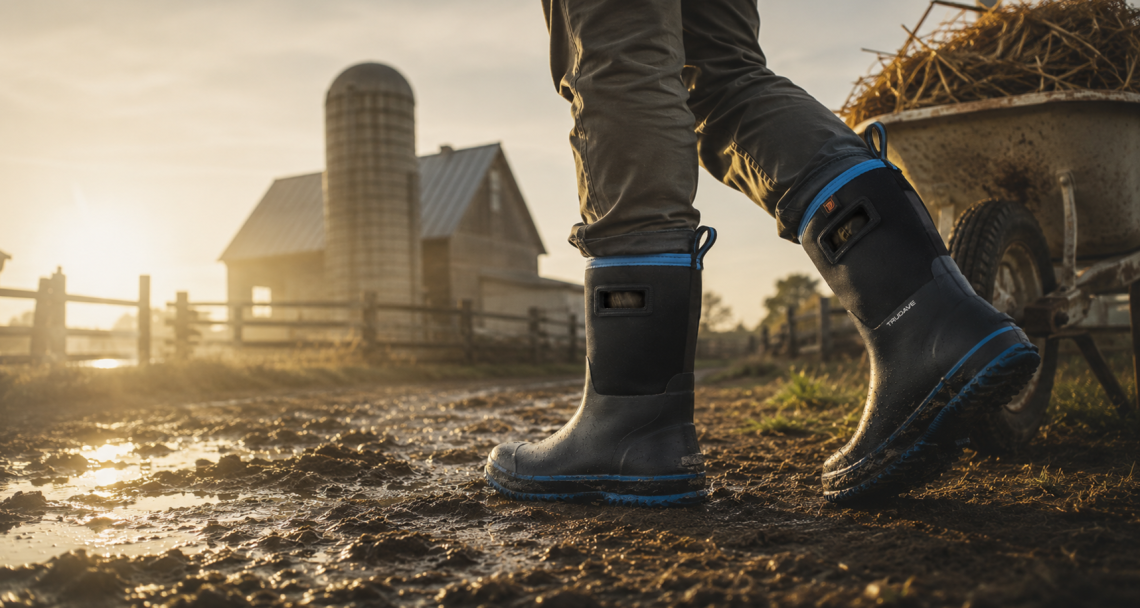
Trudave Rain Boots: The Complete Breakdown of BloomBoot, MudTrek, HeatHold, and MudFlex Series
There’s a particular kind of frustration that only hits when you’re standing in three inches of icy mud, a cold drizzle is sneaking down your collar, and you feel that first telltale squish between your toes. Suddenly, the task you were about to tackle — feeding animals, clearing a drainage ditch, finishing the spring garden prep — just doubled in difficulty. Bad boots don’t just make you uncomfortable; they steal your time and sap your will to be outside.
Trudave Gear entered the rain boot space not to make fashion statements, but to solve these exact problems. The brand’s direct-to-consumer approach means the money goes into materials and construction, not retail markups. Across their four distinct rain boot series, they target very specific outdoor challenges. And because choosing the wrong type of waterproof footwear is almost as bad as having none at all, this guide exists to walk you through every detail.
We’ll dissect the BloomBoot, MudTrek, HeatHold, and MudFlex series across eight critical categories: waterproof construction, insulation and temperature range, outsole design and traction, shaft height and flexibility, weight and all-day comfort, target use cases, sizing and fit, and care and longevity. By the end, you’ll know exactly which pair belongs on your feet — and why.
1. The BloomBoot Series: The Gardener’s Precision Tool
The BloomBoot was built for a very specific person: someone who spends hours kneeling, bending, and working in wet soil and mulch, not in deep, soupy mud. This is a boot that prioritizes lightweight flexibility and scratch resistance over sheer brute toughness.
Waterproof Construction and Materials
The BloomBoot uses a 4.5mm neoprene upper — slightly thinner than the MudTrek’s — bonded to a flexible natural rubber shell. The seam sealing is vulcanized rather than just glued, which creates a permanent molecular bond between the neoprene and rubber. In practical terms, this means the boot won’t start separating at the seam after a season of constant flexing. Trudave rates it as 100% waterproof, and field reports back that up: standing in a flooded flower bed for an hour? No leaks.
Outsole Design and Traction
The BloomBoot outsole features a multi-directional tread pattern with smaller, more numerous lugs than you’ll find on the farm-focused boots. This design grips soft, loose ground exceptionally well — ideal for garden soil, wet grass, and gravel paths — but it isn’t self-cleaning. In sticky clay mud, the tread can clog if you’re walking long distances. That’s by design; the BloomBoot assumes you’re working in cultivated earth, not a cattle pasture.
Shaft Height and Flexibility
At roughly mid-calf, the BloomBoot shaft is just tall enough to clear raised garden beds and shallow puddles. The real advantage here is flexibility: the 4.5mm neoprene and softer rubber compound allow an almost sneaker-like bend at the ankle and forefoot. When you’re crouching to pull weeds for 45 minutes, that flex prevents the boot from digging into the back of your calf. A reinforced heel kick-off tab lets you remove them hands-free, a small detail that gardeners who frequently move between indoors and outdoors will immediately appreciate.
Who It’s For — and Who It Isn’t
The BloomBoot is perfect for home gardeners, landscapers working in manicured settings, and anyone whose “wet” means damp soil and morning dew rather than ankle-deep mud. It is not the right choice for farm chores, deep mud, or prolonged exposure to standing water above the shaft line. For those conditions, you step up to the MudTrek.
2. The MudTrek Series: The Heavy-Duty Mud Conqueror
If the BloomBoot is a garden trowel, the MudTrek is a spade. This boot was engineered specifically for the kind of thick, sucking mud that tries to steal your footwear with every step — the sort found in horse paddocks, feedlots, and early-season construction sites.
Waterproof Construction and Materials
The MudTrek uses a taller 5mm neoprene shaft bonded to a thicker, more abrasion-resistant rubber shell. The neoprene is the same material used in wetsuits, and at 5mm thickness it provides not only complete water impermeability but also genuine thermal insulation — which brings us to an often-overlooked point: standing water in early spring can be just a few degrees above freezing. Traditional rubber boots transfer that cold straight to your feet within minutes. The neoprene in the MudTrek breaks that thermal bridge. Sealed seams extend through the entire boot, and the rubber toe cap and heel counter add structural protection against rocks, roots, and kicked tools.
Outsole Design and Self-Cleaning Technology
This is the MudTrek’s headline feature. The aggressive lug pattern has deep, widely spaced channels that do something remarkably simple but effective: as you walk and the boot flexes, mud is physically ejected from the tread. Anyone who has walked a hundred yards through wet clay only to find their boots have gained five pounds per foot will understand why this matters. The outsole compound is also firmer than the BloomBoot’s, providing better bite on loose soil and snow, though it is slightly less grippy on smooth wet pavement.
Shaft Height and Upper Design
The MudTrek shaft reaches higher than the BloomBoot, typically mid to upper calf depending on size. The top opening has an adjustable gusset with a locking drawstring, which serves two purposes: it seals out rain and debris, and it allows you to cinch the boot snugly against your calf to prevent sloshing when walking through deeper water. The interior lining is a breathable moisture-wicking fabric that helps manage sweat — critical because neoprene, while warm and waterproof, does not breathe inherently.
Use Cases
This is the boot for farmers, ranchers, and homesteaders. It’s also ideal for hunters setting up in wet ground during early season, campers dealing with persistently soggy conditions, and anyone who works outdoors in the kind of wet spring where the ground doesn’t fully dry for weeks.
3. The HeatHold Series: When Cold Is the Enemy
There are rain boots, and then there are rain boots that have to function when the puddles have a crust of ice on them. The HeatHold series is Trudave’s answer to the latter.
Insulation and Temperature Rating
The HeatHold boots feature a 5mm insulated neoprene lining that is specifically treated for higher thermal retention. Combined with a dense, heat-reflective insole, these boots keep feet warm in conditions well below freezing. Users report comfortable wear in temperatures down to -10°F when paired with good wool socks, even when standing still. Unlike some heavily insulated boots that rely on thick felt liners that pack out and become stiff over time, the HeatHold’s neoprene-based insulation retains its loft and flexibility.
Waterproofing and Shaft Height
Like the MudTrek, the HeatHold uses a 100% waterproof rubber shell with sealed seams and a tall shaft — generally at least 14 inches in height — designed to handle deep snow and slush. The rubber compound used in the HeatHold remains flexible in cold temperatures, whereas cheaper rubber boots can turn rigid and brittle. This cold-flex formulation prevents cracking at the flex points behind the toes and at the ankle, which is the most common failure point for winter rain boots.
Outsole Design
The HeatHold outsole is deeper and more aggressive than the MudTrek’s, optimized for snow, slush, and icy ground. It doesn’t replace a dedicated ice cleat, but the siped lugs (small slits cut into the rubber) provide better purchase on slick surfaces than a standard mud boot sole.
Who Needs This
If your outdoor winter work involves standing in cold water or slush — cleaning paddocks in a thaw, working at a winter dog training facility, clearing drainage ditches in February — the HeatHold is the right choice. It’s not designed for high-output aerobic activity where your feet would overheat; for that, a lighter uninsulated boot with a thick sock is preferable. But for stationary or low-movement cold-weather tasks, it’s a lifesaver.
4. The MudFlex Series: The Grab-and-Go Hybrid
Not every wet task demands a full-height, heavy-duty rubber boot. Sometimes you just need to take the dog out, move the trash bins, or run a quick errand to the feed store on a rainy day. The MudFlex was designed for exactly this kind of convenience without sacrificing waterproof integrity.
Design Philosophy and Materials
The MudFlex is a mid-height boot — hitting just above the ankle — with a slip-on design that takes roughly two seconds per foot. Integrated grab handles at the top make pulling them on effortless, and the kick-off heel plate lets you remove them without bending over. The boot uses a lighter, more flexible rubber compound and a thinner neoprene panel than the MudTrek, which reduces weight significantly.
Waterproofing and Traction
The rubber lower shell extends high enough to handle puddles up to about mid-ankle, and the sealed seams keep water out in all but full submersion. The outsole is a modified version of the MudTrek’s, with a slightly shallower lug pattern for better performance on mixed surfaces including pavement and packed gravel. It still sheds mud reasonably well but isn’t as aggressive as the full MudTrek.
Comfort and Daily Wearability
The MudFlex feels more like a rugged outdoor shoe than a traditional rain boot. The cushioned EVA insole and flexible upper mean you can wear them for hours of light activity without fatigue. Some users keep a pair in their vehicle as emergency wet-weather footwear or slip them on for quick trips to the chicken coop on dewy mornings.
Limitations
The MudFlex is not a replacement for a full-height boot when facing deep mud, standing water, or heavy-duty chores. If you need to wade through a flooded area or work for hours in wet conditions, step up to the MudTrek or HeatHold. The MudFlex is the boot you want for the 80% of wet situations that don’t require full armor.
Head-to-Head Comparison Table
| Feature | BloomBoot | MudTrek | HeatHold | MudFlex |
|---|---|---|---|---|
| Best For | Gardening, light yard work | Farming, deep mud, wet trails | Freezing temps, snow, icy slush | Quick chores, daily errands, dog walks |
| Neoprene Thickness | 4.5mm | 5mm | 5mm insulated | Lighter flex panels |
| Shaft Height | Mid-calf | Mid to upper calf | Tall (14+ inches) | Mid-ankle |
| Waterproofing | 100% sealed | 100% sealed | 100% sealed | Waterproof lower shell |
| Insulation | Minimal | Moderate (neoprene) | High (neoprene + reflective insole) | Minimal |
| Outsole | Multi-directional, fine tread | Aggressive, self-cleaning | Deep, siped for ice | Moderate, mixed-surface |
| Flexibility | High | Moderate | Moderate | Very High |
| Weight | Lightest | Moderate | Moderate to heavy | Lightest |
| Kick-off Heel | Yes | Yes | Yes | Yes |
| Grab Handles | No | No | No | Yes |
| Price Range (DTC) | $ | $$ | $$$ | $ |
Sizing, Fit, and Care Recommendations
Sizing: Trudave rain boots, across all series, tend to run slightly large by design. This allows room for thick socks (crucial in cooler weather) and prevents the boot from fitting too tightly when your feet swell slightly during a long day of work. If you’re between sizes, size down. If you plan to wear heavy wool socks exclusively, order your standard size. The adjustable gusset on the MudTrek and HeatHold also helps dial in fit.
Break-in Period: Neoprene and rubber boots don’t require a traditional leather break-in, but they do have a short molding period where the insole and upper conform to your foot. Expect them to feel slightly stiff for the first one or two wears, especially in cold weather.
Care and Longevity: To maximize the life of your Trudave boots, rinse mud and debris off after each use (a hose works perfectly). Store them upright in a cool, dry place away from direct sunlight, which can degrade natural rubber over time. Avoid leaving them in a hot vehicle or near a heater; extreme heat can cause delamination at the seams. If the boots are used around manure or chemicals, a mild disinfectant rinse is recommended to prevent material breakdown.
The Bottom Line: A Decision Framework
Still unsure? Run your use case through this quick decision tree:
- Is deep mud your primary challenge? → MudTrek
- Are you mainly a gardener or yard worker on soft ground? → BloomBoot
- Are freezing temperatures and snow/slush your daily reality? → HeatHold
- Do you need a grab-and-go waterproof shoe for quick trips and light chores? → MudFlex
- Do you face both deep mud and freezing temperatures regularly? → Consider owning both the MudTrek and HeatHold — it’s not redundancy, it’s the right tool for two very different jobs.
Trudave’s approach is refreshingly simple: build boots that solve specific problems, use quality materials, and skip the retail markup. Whether you’re a market gardener in Vermont, a horse owner in Kentucky, or someone just trying to survive mud season in the Pacific Northwest, there’s a Trudave rain boot designed for exactly the mess you’re facing.


You May Also Like
Fall Parasite Control: Protecting Your Herd as Temperatures Drop

Winter Grazing: How to Prepare Your Pastures for the Cold Season