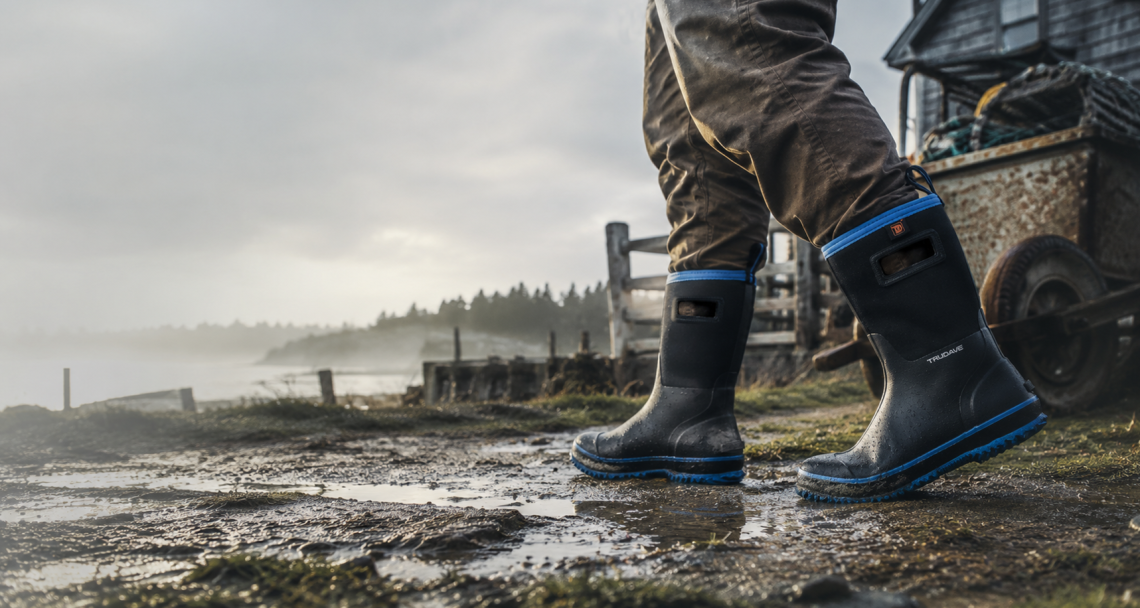
I Spent Two Weeks in Trudave MudTrek Boots: Mud, Ice, Chores, and Everything In Between
I have a low tolerance for boots that make promises they can’t keep. I’ve been through enough “waterproof” footwear that soaked through by lunch to develop a healthy skepticism of marketing claims. So when I decided to put the Trudave MudTrek Mid-Calf Waterproof Rain Boots through a real-world evaluation, I didn’t go easy on them. I picked the worst two weeks of late winter and early spring that northern Minnesota could offer — a stretch where temperatures swung from -5°F to 45°F, where mornings brought frozen mud and afternoons delivered ankle-deep slush, and where the list of outdoor chores didn’t care about the weather.
This isn’t a one-day impression dressed up as a review. This is a 14-day, no-shortcuts account of what these boots did well, where they struggled, and whether they belong on a working person’s feet. I wore them for feeding animals, repairing fences, clearing snow, hauling firewood, and slogging through a half-frozen marsh. Here’s everything that happened.
The Setup: First Impressions Out of the Box
The MudTrek arrives looking serious. The 5mm neoprene upper is substantial to the touch — thick enough that you can feel its insulating potential immediately — and the rubber shell has a matte finish that doesn’t look like it’s trying to be polished. The self-cleaning outsole pattern is visually aggressive, with lugs that stand out noticeably from the sole body. Pulling them on for the first time, I noticed two things: the adjustable gusset at the top is a genuine functional feature, not a design afterthought, and the boots run large enough to accommodate a thick wool sock without constriction. I’d read the sizing advice and ordered my usual size, knowing I’d be pairing them with heavyweight merino socks. The fit was perfect for that setup.
The insole felt cushioned but not squishy — supportive rather than pillow-like. A small but important detail: the reinforced kick-off heel tab at the back is molded, not just stitched, so it won’t tear even if you use it aggressively, which I do.
Days 1–3: The Frozen Morning Gauntlet
The first three days were brutally cold. Morning temperatures hovered around -5°F to 5°F, with frozen ground that had thawed and refrozen into a jagged, uneven mess. My morning routine involved walking a quarter-mile to the barn, breaking ice out of water troughs, and hauling hay bales across a frozen paddock.
In terms of warmth, I wasn’t expecting a miracle from an uninsulated boot. The MudTrek is not a HeatHold — it doesn’t have the reflective insole or the cold-specific rubber compound. But the 5mm neoprene shaft does provide significant passive insulation. With a thick wool sock, my feet stayed warm during the 45-minute walk-and-chore window. Not toasty — I wouldn’t recommend standing still in these for hours at sub-zero temperatures — but warm enough that I wasn’t thinking about my feet. By the time I got back inside, they felt neutral, not cold. That’s an important distinction: cold feet become painful feet, and painful feet cut a chore session short. The MudTrek kept me in the comfortable range for active work in single-digit temperatures.
Traction on frozen, uneven ground was solid. The deep lugs bit into the crusted snow and crumbled ice, and the boot’s flexibility meant my ankle could adjust to the uneven terrain rather than forcing my leg to absorb every angle change. I only slipped once — on a patch of sheer ice hidden under powder, where no rubber boot would have held — and the boot protected my ankle from twisting when I caught myself.
Days 4–7: The Thaw — Mud, Water, and Relentless Wet
Then the temperature swung hard. Within 48 hours, we went from frozen solid to a full-on thaw. The paddock turned into a slushy, muddy soup, with standing water in every low spot. This is where the MudTrek is supposed to shine, and I pushed it intentionally hard.
Waterproof Performance
I waded through water that came within two inches of the boot top. I stood in a flooded section while repairing a fence post, water lapping at the mid-calf neoprene for at least 20 minutes. I deliberately kicked water up onto the shaft to test the gusset seal. The result: completely dry socks every time. Not damp. Not “mostly dry.” Dry enough that I could have taken the boots off and put on indoor shoes without changing socks. The vulcanized seam construction and the gusset lock do exactly what they promise.
Self-Cleaning Tread in Action
Walking through sticky, clay-heavy mud that had the consistency of peanut butter was the real test. After 50 yards of this, my pants were splattered but my boot soles were remarkably clean. The lugs flex and eject the mud with each step, and I never felt that dread of lifting a boot that weighed twice what it should. It’s not 100% — some mud sticks in the deepest crevices — but it’s about 90% self-cleaning in practice, which is far better than any standard boot I’ve used. This feature alone saved me noticeable energy over the course of a day.
Comfort During Extended Mud Work
What surprised me most during this phase was how the boots handled the awkward, uneven footing of a thawed paddock. Stepping on half-submerged rocks, hidden tree roots, and inconsistent mud depths puts a lot of torque on your ankles and arches. The MudTrek’s EVA midsole absorbed enough shock that my arches didn’t ache, and the cushioned insole didn’t compress into a flat pancake after a few hours. By the end of Day 6, I’d logged over 18,000 steps entirely in mud and slush, and my feet felt tired but not painful — a meaningful difference.
Days 8–11: Mixed Terrain and the “Boot Swap” Test
Midway through the test, I deliberately introduced a comparison. I spent alternating days in the Trudave MudTrek and a pair of standard rubber farm boots from a well-known competitor (same price tier, similar shaft height). The goal was to understand whether the MudTrek’s features translated to a genuine practical advantage.
On the competitor boot days, I noticed three things immediately:
- The lack of a self-cleaning outsole meant I was stopping every few hundred yards to kick mud off my boots. My knees felt the extra weight.
- The pure rubber shaft offered zero insulation; my feet were noticeably colder within 15 minutes of standing in cold water.
- The stiffer shaft dug into the back of my calf when I knelt down, creating a hot spot after about an hour.
Switching back to the MudTrek the next day felt like getting into a vehicle with better suspension. The differences weren’t subtle — they were cumulative. The MudTrek reduced the physical tax of working in wet conditions. By Day 11, I’d stopped reaching for the competitor boots entirely, even though they were sitting right there.
Days 12–14: The Cleanup and the Unexpected Durability Find
The final days involved cleaning up after the thaw — hauling debris, pressure-washing equipment, and moving compost. This meant frequent transitions between wet and dry areas, kneeling, and a lot of bending.
The MudTrek’s neoprene upper proved its worth again in the kneeling test. Because it flexes so readily, the boot didn’t dig into the back of my knee or restrict my movement when I was crouched down untangling a tarp or lifting heavy bags. The kick-off heel tab became an unconscious habit by now — step on the back of the left boot with the right toe, slide out, repeat. A tiny design feature that I now miss on every other pair of boots I own.
A durability note: after 14 days of hard use, including scraping against rocks, rubbing against wooden stall edges, and enduring freeze-thaw cycles, the boots showed almost no visible wear beyond light scuffing. The seam bonds remained intact. The rubber hadn’t developed any hairline cracks. The outsole lugs were still sharp. I had expected some degradation, especially at the flex point behind the toes where rubber boots typically crack first. The MudTrek’s compound clearly has enough flex agent to avoid that early failure.
What I’d Change: Honest Critiques
No boot is perfect, and the MudTrek has two areas worth noting.
First, weight. At 5mm neoprene and a full rubber shell, these are not ultralight boots. They’re not unreasonably heavy — they’re comparable to other serious muck boots in this class — but if you’re used to minimalist footwear, you’ll notice them, especially after a full day. The tradeoff is durability and insulation, and I’ll take that trade every time, but it’s worth knowing.
Second, breathability in warmer weather. Neoprene doesn’t breathe. Trudave included a moisture-wicking liner that helps manage sweat, but on a 50°F day with high activity, my feet were damp by the end — not from leaking, but from perspiration. This is inherent to the material and the price of being completely waterproof. For warm-weather wet work, a lighter boot like the BloomBoot or MudFlex would be more comfortable. If you’re using the MudTrek in spring and fall, this won’t be an issue. In summer, plan to swap socks mid-day if you’re working hard.
Who Should Buy the Trudave MudTrek
After two weeks of deliberately miserable conditions, I can confidently say:
The MudTrek is for you if:
- You work on a farm, ranch, or homestead where deep mud, standing water, and messy conditions are a regular part of life.
- You’re tired of boots that make your feet feel like they’re wrapped in wet newspaper by 10 AM.
- You value the energy-saving benefit of a self-cleaning outsole — it sounds like a gimmick until you don’t have it, and then you realize how much extra work your old boots were making you do.
- You need a boot that’s genuinely comfortable for all-day wear and flexible enough for kneeling, crouching, and uneven terrain.
- You hunt or camp in wet conditions during spring and fall and need a boot that keeps you dry without overheating you (as insulated hunting boots often do).
Look elsewhere if:
- You only need occasional light-duty rain boots for pavement and well-drained paths. The MudFlex will feel more natural and convenient.
- Your primary challenge is extreme cold where you’re standing still for long periods. The HeatHold is purpose-built for that.
- You do most of your outdoor work in hot, humid summers. A lighter, more breathable boot is a better fit.
Final Thought: What a Boot Like This Actually Changes
There’s a quiet confidence that comes from knowing your feet will stay dry and comfortable no matter what you step into. It’s not about toughness or bravado — it’s about being able to focus entirely on the task in front of you without that nagging, energy-sapping awareness of wet, cold, or discomfort creeping up from below. The Trudave MudTrek earned that trust over two weeks of genuinely lousy conditions, and it’s the boot I’m reaching for the next time the forecast looks foul and the to-do list doesn’t care.


You May Also Like

Stockpiling Forage: How to Keep Cattle Fed Through Cold Snaps
Best Boots for Tractor Drivers and Farm Equipment Operators: A Practical Agricultural Footwear Guide