The Gardener’s Guide to Trudave Rain Boots: Comfort, Traction, and Waterproofing for Every Bed and Border
Introduction: The Gardener’s Footwear Problem
Gardeners ask more from their footwear than almost any other outdoor worker. A single afternoon in the garden demands a boot that can keep out water while kneeling in wet soil, grip slippery grass on a slope while hauling a loaded wheelbarrow, flex through hundreds of squats and bends without digging into the back of the calf, and rinse clean in seconds so the mud stays outside where it belongs.
Most rain boots fail at least one of these tasks. The stiff PVC wellingtons sold at big-box stores for 30willcrackattheflexpointsbeforethefirsttomatoripens.Thepremiumleathergardeningbootsthatcost200 will soak through after an hour in wet soil. And even purpose-built rubber garden boots can leave your feet aching after a long day if they lack proper arch support and cushioning.
Trudave Gear has built two boots specifically for the gardener who treats their time in the dirt as seriously as any other craft: the BloomBoot and the GardenStride. They’re not the same boot with different colors. They’re engineered for different kinds of gardening days, different bodies of work, and different seasons. One prioritizes flexibility and all-day comfort for the gardener who spends hours kneeling, bending, and working in wet soil. The other prioritizes heavy-duty traction and protection for the gardener who wrestles with deep mud, manure, and standing water. This guide will help you choose between them—or build a system that includes both.
Part 1: The BloomBoot — Built for the Gardener Who Lives in the Dirt
The BloomBoot is Trudave’s purpose-built gardening boot, and it starts with a simple insight: gardeners don’t just walk in their boots. They kneel. They squat. They bend forward for minutes at a time to weed a row of carrots, then shift sideways to reach the next bed. A stiff boot punishes every one of those movements. A flexible boot disappears and lets you focus on the plants.
“Trudave BloomBoot Series women’s garden boots are completely waterproof, featuring a 4.5mm neoprene upper and rubber shell that keep your feet dry in mud, rain, or wet grass. Ideal for gardening, yard work, or farm chores”.
The Material Difference
The BloomBoot’s defining feature is its 4.5mm neoprene upper. This is the same material used in wetsuits—a closed-cell foam that’s naturally flexible, insulating, and waterproof. Unlike the basic PVC or hard plastic boots that dominate the budget market, neoprene is both waterproof and insulating, meaning it doesn’t just keep water out; it also helps maintain a comfortable temperature around your foot, especially in cool, damp conditions. Natural rubber provides a completely waterproof and durable shell, while the flexible neoprene upper offers insulation and comfort, creating a boot optimized for wet and cool conditions.
The neoprene portion of the boot moves with your body. When you kneel to pull weeds, the boot flexes at the ankle instead of digging into the back of your calf. When you squat to harvest, the shaft gives instead of resisting. This is the single most important difference between a boot designed for gardening and a boot designed for walking through puddles. The gardening boot has to flex; the puddle boot doesn’t.
Traction for Soft Ground
The BloomBoot’s multi-directional grip pattern holds firm on soft soil and grass—the surfaces that dominate a gardener’s world. The tread features smaller, more numerous lugs than you’ll find on a heavy-duty farm boot, providing the ground contact and surface area that soft terrain demands. The rubber shell resists scratches and abrasions from tools and rough ground, so a season of contact with trowels, stakes, and sharp-edged raised beds won’t tear up the surface.
Comfort Infrastructure
Gardeners spend hours on their feet, often on hard, compacted paths between beds. The BloomBoot is built with this in mind. These mid-calf waterproof boots have cushioned insoles, breathable lining, and flexible construction that allow comfort and movement during long gardening sessions or outdoor chores. The mid-calf height hits the sweet spot—high enough to keep out splashes and shallow puddles, low enough to avoid the bulk and restriction of a knee-high boot.
“MudTrek is lightweight and supportive for everyday wear, while BloomBoot offers extra comfort thanks to the flexible neoprene upper, which is ideal if you stand or walk for longer periods”. For the gardener who treats their plot as a second job, that “extra comfort” is the difference between finishing the day’s work and quitting early with aching arches.
Quick Rinse, Quick Dry
One of the unsung benefits of the BloomBoot’s rubber-and-neoprene construction is how easily it cleans up. A quick blast with the hose removes mud, compost, and debris in seconds. The boot doesn’t absorb water or odor, so it’s ready to go again by the time you’ve put away your tools. This easy cleaning matters more than you’d think—it’s what keeps the boots by the back door rather than exiled to the garage because they’re too dirty to bring inside.
Part 2: The GardenStride — When the Garden Fight Gets Ugly
If the BloomBoot is a scalpel for the precision gardener, the GardenStride is a shovel for the gardener who deals with mud that tries to swallow boots whole.
Not every gardening day involves gentle weeding in manicured raised beds. Some days involve digging out a drainage ditch after a storm, turning over a new plot in heavy clay soil, or hauling wheelbarrows of compost across a churned-up paddock. These are the days when you need a boot with more aggressive traction, a taller profile, and an outsole that won’t pack full of mud after fifty yards.
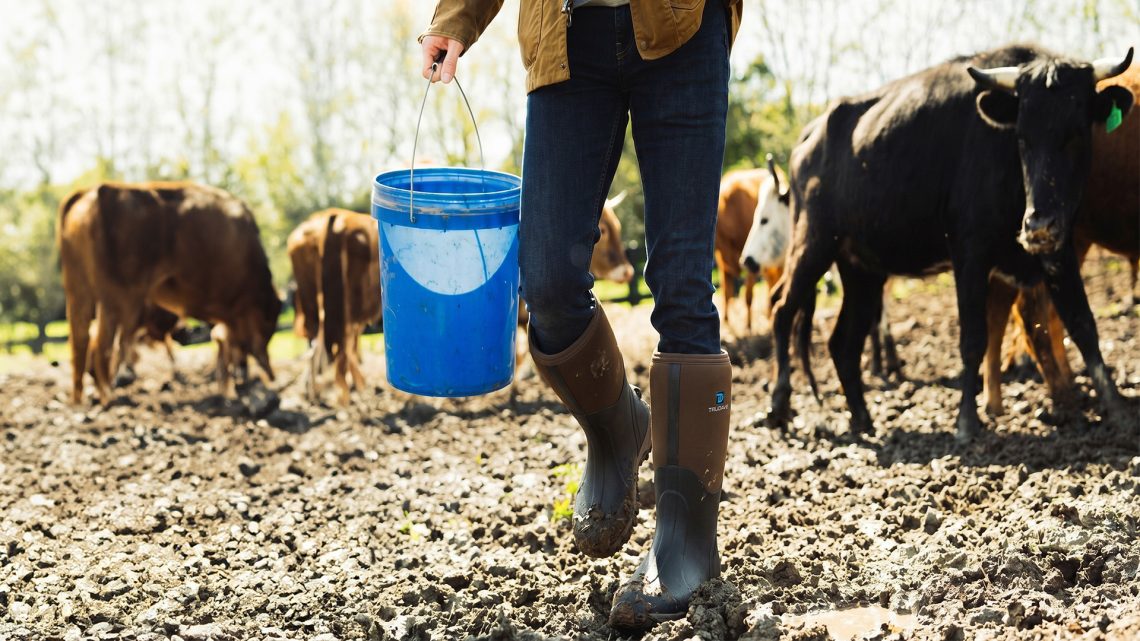
The GardenStride is Trudave’s answer to these conditions. It features deep, open lugs designed to eject mud as you walk—a self-cleaning feature that maintains traction through the messiest conditions. The outsole bites into deep mud, manure, and loose soil, then releases cleanly with each step. No five-pound mud anchors. No traction loss at the bottom of a slippery slope.
“If your day involves deep mud, manure, or standing water, you need a seal, not a sieve. The high-top design ensures no debris sneaks over the collar. When you’re done, you just hose ’em off. No laces to scrub. No eyelets to pick mud out of. No tongue to trap debris”.
The GardenStride is fully waterproof, built from vulcanized natural rubber with a mid-calf height that provides more coverage than the BloomBoot without the bulk of a full knee-high. It’s the boot for the heavy-lifting, deep-digging, mud-slinging days that every serious gardener faces a few times a season.
Part 3: The Seasonal Gardener’s System
The BloomBoot and GardenStride aren’t competitors. They’re complementary tools for different gardening conditions, and many gardeners find that owning both covers the full spectrum of their season.
Spring (40°F to 65°F, wet and muddy)
The soil is saturated. The paths between beds are slick with mud. Early spring cleanup involves hauling debris, turning soil, and working in conditions that will soak through a lightweight boot in minutes. This is GardenStride territory—the deep lugs handle the mud, the full rubber shell keeps water out, and the taller profile protects against the splashes and slop of early-season work.
Summer (65°F to 90°F, occasional rain and heavy dew)
The garden is in full production. Days are spent weeding, harvesting, tying, and pruning—hours of kneeling, bending, and moving between beds. This is BloomBoot territory. The flexible neoprene upper moves with you through hundreds of bends and squats. The breathable lining keeps feet cooler than a full rubber boot. The lightweight construction doesn’t fatigue your legs over a long day. Pair with lightweight moisture-wicking socks for maximum comfort.
Fall (35°F to 55°F, wet, muddy, with early frost)
The season transitions. Mornings start cool and damp. Afternoons might still be warm. The garden needs putting to bed—clearing spent plants, mulching, planting garlic. This is where the two-boot system earns its keep. BloomBoot for the warmer afternoons and lighter tasks. GardenStride for the muddy mornings and heavy cleanup. Midweight merino wool socks bridge the temperature gap.
Winter (10°F to 35°F, frozen ground, snow, ice)
For the gardener who keeps going through winter—pruning fruit trees, repairing fences, managing compost—the HeatHold Series becomes the tool of choice. It features a 5mm insulated neoprene lining that keeps feet warm through long outdoor chores in freezing conditions. The deep, self-cleaning lugs handle snow and frozen mud.
At Trudave’s direct-to-consumer pricing, owning a two-boot or three-boot seasonal system costs less than a single pair of premium gardening boots from a legacy brand sold through traditional retail. You’re not buying extra boots. You’re buying the right tool for each season’s work.
Part 4: What Gardeners Are Saying
The real-world validation for Trudave gardening boots comes from the people who wear them through genuine mud, manure, and morning frost.
On Trustpilot, where Trudave maintains a “Great” rating of 4.1 out of 5, a farm user who purchased boots for daily outdoor work described the core experience: “We purchased waterproof boots back in May for working on our little farm as we were constantly dealing with wet, muddy and otherwise soiled shoes while tending our livestock. The boots have made our jobs and lives sooo much better and easier. And best of all, our feet stay DRY!!! It has been about two months now and these boots are still going strong and keeping our feet protected.”
A homesteading blogger who tested Trudave boots through months of daily abuse provided one of the most comprehensive gardener-specific assessments available: “They’re tough enough for chicken chores, comfortable enough for long gardening days, and dependable through mud, dew, rain, and whatever homestead chaos happens next. After months of nonstop use, I can confidently say: these boots earn their keep.” She specifically called out the “supportive, cushioned footbed,” the “slip-resistant soles for wet grass and coop floors,” and the “easy-to-clean materials” as the features that turned the boots from an occasional tool into a daily essential.
The sizing feedback from gardeners is consistent with Trudave’s broader user base: the boots run slightly large by design, and this is a feature to be planned around. “The size is slightly larger, but with socks they fit well and comfortably. A size smaller would be too tight.” Another gardener who intentionally sized up reported: “I sized up because I want to be able to wear thick handmade socks in the fall and winter. They fit beautifully.” For the gardener whose season spans warm spring afternoons and frosty fall mornings, this sock-system adaptability is a genuine advantage.
Part 5: Care for Garden Boots
Gardening boots face unique abuse: constant exposure to wet soil, organic acids in compost and manure, and repeated flexing through kneeling and bending. Proper care turns a boot that might last two seasons into one that lasts five.
Trudave’s official care guidance is simple: “Rinse your boots with water, clean gently using mild soap, and air dry in a shaded area. Avoid sunlight or heat to protect the rubber and maintain insulation performance.” For gardeners, the rinse step is particularly important. Soil left to dry on rubber accelerates surface degradation. A quick hose-down after each session removes the organic acids and mineral salts that break down rubber polymers over time.
For the neoprene upper on the BloomBoot, interior moisture management matters. Pull the insoles out after long, sweaty days and let them dry separately. Crumpled newspaper stuffed inside overnight wicks moisture from the neoprene lining and prevents the musty buildup that eventually makes any boot unpleasant to wear. Never dry gardening boots with direct heat—no radiators, no wood stoves, no direct summer sun. Heat destroys the polymer cross-links that give vulcanized rubber its flexibility and durability.
Part 6: The Decision Framework for Gardeners
| Your Gardening Profile | Primary Conditions | Boot Match | Key Feature |
|---|---|---|---|
| Precision gardener, raised beds, hours of kneeling | Wet soil, mulch, frequent bending | BloomBoot | 4.5mm neoprene flexibility for kneeling/squatting |
| Heavy-duty gardener, new plots, deep mud | Standing water, mud, manure | GardenStride | Self-cleaning deep lugs, full rubber shell |
| Multi-season gardener | Variable across spring, summer, fall | Two-boot system | BloomBoot for warm/dry, GardenStride for wet/muddy |
| Winter gardener | Frozen ground, snow, ice | HeatHold | 5mm insulated neoprene lining |
Choose the BloomBoot if your gardening is characterized by long hours of kneeling, bending, and precision work in wet soil and mulch. The 4.5mm neoprene upper flexes with you, the cushioned insoles support your arches through hours on your feet, and the breathable lining keeps you comfortable as the day warms up.
Choose the GardenStride if your gardening involves heavy mud, standing water, manure, or the kind of ground-disturbing work that lesser boots can’t handle. The self-cleaning deep lugs maintain traction where standard treads clog, and the full rubber shell provides maximum waterproof protection.
Build a two-boot system if your gardening season spans both gentle weeding in dry July and muddy plot-turning in wet April. At Trudave’s direct-to-consumer pricing, the BloomBoot and GardenStride together cost less than a single pair of premium gardening boots from a legacy brand sold through traditional retail.
Conclusion: The Right Boot for the Right Bed
Gardening isn’t one activity. It’s a collection of wildly different physical tasks—some delicate, some brutal—that all happen in the same square footage of ground over the course of a season. The boot that’s perfect for a gentle morning of deadheading in July is wrong for an afternoon of double-digging in March. The boot that handles deep mud and standing water is overkill for a dry day of harvesting tomatoes.
Trudave Gear has built the BloomBoot and GardenStride to respect this variety. The BloomBoot flexes with the gardener who kneels and bends. The GardenStride grips for the gardener who digs and hauls. Together, they cover the full spectrum of gardening work without forcing the gardener to choose between comfort and protection.
When your boots match your tasks, you stop thinking about your feet and start thinking about your plants. And for a gardener, that’s exactly how it should be.
To explore the complete Trudave Gear rain boot lineup and find the right pair for your garden, visit trudavegear.com.


You May Also Like

The “Waterproof” Lie: Why Most Rain Boots Fail (And How Trudave Gets It Right)
Frost-Guard Foliage: Protecting Perennials Through January Blasts