The $30 Mistake: Why Cheap Rain Boots Cost You More, and How Trudave Gear Engineered a Better Value
Introduction: The Cycle Nobody Talks About
Walk into any big-box hardware store in March, and you’ll see them: the $29.99 rain boots. They’re shiny. They’re new. They’re stacked in a display near the garden section, positioned exactly where a hopeful gardener who just wants to get outside will see them and think, “Why not? They’re only thirty bucks.”
By July, those boots will be in a landfill. The PVC will have cracked at the toe crease. The glued seams will have separated. The flat, unsupportive footbed will have compressed into a hard, slick surface that offers neither cushioning nor grip. The gardener will have spent 30andgottenthreemonthsofuse.Nextspring,they′lldoitagain.Overadecade,that′s300 to $400 spent on disposable boots that were never comfortable and never dry by the end of the season.
This is the cycle that the budget rain boot industry depends on. It’s not designed to keep your feet dry. It’s designed to keep you coming back.
Trudave Gear took a different approach. Instead of asking “How cheaply can we make a boot?”, they asked “How cheaply can we deliver a premium boot?” The answer lies in the direct-to-consumer model that eliminates the retailer markup, the wholesale distributor margin, and the shelf-space fees—and puts the money that would have gone to middlemen into materials and construction instead.
The result is a rain boot lineup—BloomBoot, MudTrek, HeatHold, MudFlex, GardenStride, GreenStep, AquaGuard, and AquaGrip—built on premium vulcanized natural rubber, neoprene insulation, and EVA midsoles, sold at prices that reflect what the boot actually costs to make rather than what a retail store needs to charge to cover its overhead. This article is about the math behind that decision, the materials that make the difference, and why “cheap” boots are the most expensive footwear you’ll ever buy.
Part 1: The Cycle of Cheap — Why 30BootsCost30BootsCost300
The economics of cheap rain boots are brutal in their simplicity. A PVC boot that costs $30 is designed to last one season—sometimes less. The PVC compound is stiff, brittle in cold weather, and prone to cracking at the flex point behind the toes. The construction is glued rather than vulcanized, meaning the seams between the upper and the outsole are held together by adhesives that degrade with exposure to water, temperature swings, and the repeated flexing of normal walking. The footbed is a flat piece of foam or, in many cases, nothing at all—no arch support, no shock absorption, no moisture management.
When the boot fails—and it will—you buy another one. At 30peryear,that′s150 over five years and 300overadecade.Butthefinancialcostisonlypartofthestory.Thecomfortcost—cold,wet,achingfeetformonthsatatime—ishardertoquantifybutmoreconsequential.Theenvironmentalcost—PVCbootsthatsitinlandfillsforcenturiesbecausethematerialdoesn′tbiodegrade—isanexternalitythatthe30 price tag doesn’t capture.
The decision to buy cheap is rarely a conscious choice to be wasteful. It’s usually a response to the sticker shock of premium boots that seem unjustifiably expensive. 180forapairofrubberboots?Why?Themissinginformationiswhat′sinthe180 boot versus the 30boot—andwhatthe180 boot actually costs to make versus what it’s marked up to in a retail store.
The global rain boot market was valued at 1.9billionin2024andisprojectedtoreach2.4 billion by 2030. A significant driver of that growth is replacement purchases—people buying the same cheap boots over and over because the last pair didn’t last. Breaking that cycle requires understanding what a boot is made of and how it’s sold.
Part 2: Vulcanized Natural Rubber vs. PVC — The Material Gap
The single biggest difference between a Trudave boot and a big-box PVC special is the material it’s made from.
PVC (polyvinyl chloride) is a petroleum-based plastic. It’s cheap, lightweight, and can be molded into a boot shape quickly and at scale. It’s also stiff, brittle in cold weather, and prone to cracking at flex points because plastic fatigues when bent repeatedly. PVC boots are typically glued together—the upper, the outsole, and any decorative elements are bonded with adhesives that begin to degrade the first time the boot gets wet.
Vulcanized natural rubber is a fundamentally different material. Vulcanization is a chemical process discovered by Charles Goodyear in 1839 that cross-links rubber polymers at the molecular level using heat and sulfur. The result is a stable, elastic, durable material that flexes without breaking and resists cracking in freezing temperatures. The vulcanization process also helps prevent fading, chipping, or peeling of the rubber surface over time—damage that, on a PVC boot, signals the beginning of the end.
Natural rubber offers superior flexibility and comfort, moving more naturally with the foot. It also tends to perform better in extreme cold, resisting the cracking that plagues cheaper materials. PVC is lighter and more affordable at the point of purchase but stiffer, more brittle, and less comfortable for extended wear.
When you buy a vulcanized rubber boot, you’re buying a material that’s designed to flex millions of times without failing. When you buy a PVC boot, you’re buying a material that’s designed to be cheap enough that you won’t complain when it fails. The difference shows up in the first season and compounds every season thereafter.
Part 3: The Construction Gap — Vulcanized vs. Glued
Material choice is only half the story. How a boot is put together determines whether it stays waterproof or starts leaking at the seams.
Glued construction is the industry standard for budget boots. The upper, outsole, and lining are bonded with strong, waterproof adhesives. On day one, the bond is intact and the boot is waterproof. But adhesives degrade. Water exposure weakens them. Temperature swings cause the adhesive and the rubber to expand and contract at different rates, creating microscopic gaps that widen with each flex cycle. Within months—sometimes weeks—those gaps become leaks.
Vulcanized construction is fundamentally different. The rubber components are chemically fused at the molecular level into a single continuous unit. There is no seam to separate because there is no “seam” in the traditional sense. The upper and outsole are one piece of material. Water cannot get in at the seams because there are no seams to penetrate.
Trudave builds its rain boot lineup on vulcanized construction. The BloomBoot, MudTrek, HeatHold, GardenStride, and AquaGuard all use vulcanized rubber shells with sealed, chemically-bonded seams. This is the same construction method used by premium brands like Muck Boot and LaCrosse. The difference is not in how the boot is made—it’s in how it’s sold.
Part 4: The Comfort Infrastructure — EVA Midsoles and Neoprene
The third gap between budget boots and premium boots is inside the boot, where you can’t see it until you feel it.
Cheap rain boots have flat, unsupportive footbeds. There is no arch support. There is no shock absorption. There is no moisture management. Your foot stands on a thin layer of foam (or, in the cheapest models, directly on the rubber outsole) that compresses flat within weeks. After that, every step transmits impact directly through your skeleton. Standing on hard ground for an hour leaves your arches aching. Standing for a full day of gardening or farm work is genuinely painful.
Trudave boots are built with EVA (ethylene-vinyl acetate) midsoles. EVA is the same shock-absorbing foam used in high-performance running shoes. It cushions each step, absorbs impact rather than transmitting it, and provides arch support that reduces fatigue during long hours on hard surfaces. Across the BloomBoot, MudTrek, HeatHold, and AquaGuard series, “cushioned EVA insoles and arch support reduce fatigue on long treks.”
For insulated models, neoprene replaces the stiff rubber shaft. Neoprene is a closed-cell foam—the same material used in wetsuits. It provides insulation by trapping body heat in millions of microscopic air pockets, something pure rubber cannot do. It flexes with the foot and calf rather than fighting against them, preventing the chafing and stiffness that budget rubber boots are notorious for. “Neoprene is an excellent insulator, trapping body heat to keep you warm in cold water or air. It is also exceptionally flexible and soft, which prevents the chafing and stiffness that can occur with a full rubber boot.”
The user experience confirms the spec sheet. An independent reviewer noted that Trudave boots deliver “exceptional all-day comfort, often compared to slippers or tennis shoes.” That’s not language anyone has ever used to describe a $30 PVC boot.
Part 5: The Direct-to-Consumer Model — Where the Math Breaks in Your Favor
The material and construction advantages are clear. The question is how Trudave delivers them at prices that undercut premium legacy brands by 40% to 60%. The answer is the business model.
When you buy a boot from a traditional brand at a retail store, the money you pay gets split several ways. The manufacturer makes a margin. The wholesaler takes a cut. The retailer marks the boot up—typically by 50% to 100%—to cover rent, staffing, utilities, and profit. On top of that, the brand has spent millions on advertising, sponsorships, and retail display fees. All of these costs are baked into the final price tag.
Trudave sells directly to consumers through its own website. There is no wholesaler. There is no retailer. There are no shelf-space fees. The money that would have gone to those middlemen goes into the boot itself—the vulcanized natural rubber instead of PVC, the EVA midsole instead of a flat foam footbed, the neoprene insulation instead of a cheap synthetic lining.
As Trudave’s company profile states: “Trudave is an outdoor sports company dedicated to providing footwear for hunting, fishing, farm work and other outdoor activities to users around the world at direct prices. Our goal is to provide high quality products at incredible prices that exceed your expectations.”
This is not a “budget” approach. Budget means cheap materials, cheap construction, and a short lifespan. Direct value means premium materials, premium construction, and a long lifespan, delivered at a lower price by eliminating the layers of markup between the factory and your feet. The distinction matters enormously when you’re evaluating a boot purchase.
Part 6: The Lifetime Cost Comparison — A Simple Spreadsheet
Let’s put the math in concrete terms. We’ll compare three boot-buying strategies over a ten-year period.
The Budget Cycle
PVC boots from a big-box store, 30perpair.Averagelifespan:oneseason.Overtenyears:300, plus the intangible costs of cold, wet, uncomfortable feet for a decade of outdoor work.
The Legacy Premium
Vulcanized rubber boots from a premium brand sold through retail, 180perpair.Averagelifespanwithpropercare:fourtofiveseasons.Overtenyears:360 to $540 (two to three pairs), plus retail markup that you paid each time but never saw because it was hidden in the price tag.
The Trudave Direct Value
Vulcanized rubber boots from Trudave, sold direct to consumer. Average lifespan with proper care: five to seven seasons. Over ten years: roughly the cost of one pair, maybe two, with no retail markup baked into the price.
The difference between the budget cycle and the direct-value approach is not just financial—though it is financial. It’s also the difference between spending a decade with cold, wet, aching feet and spending a decade with dry, warm, comfortable feet. That difference has a value that no spreadsheet captures.
The care requirement for extending boot life is minimal. Trudave’s official guidance is simple: “Rinse your boots with water, clean gently using mild soap, and air dry in a shaded area. Avoid sunlight or heat to protect the rubber and maintain insulation performance.” Rinse them off. Let them air dry. Don’t put them next to a heater. That’s it. Those three habits can double the lifespan of a vulcanized rubber boot compared to one that’s neglected.
Part 7: The Environmental Case — Fewer Boots, Less Waste
The environmental argument for buying a boot that lasts is straightforward but worth stating. Every PVC boot that’s thrown away after a single season spends centuries in a landfill. The material doesn’t biodegrade. It breaks down into microplastics that eventually find their way into soil and water. The manufacturing process for PVC generates toxic byproducts that are expensive and difficult to manage safely.
Natural rubber is a renewable resource. Vulcanized rubber boots, properly maintained, can last five to seven seasons before they need to be replaced—meaning two or three pairs over a decade instead of ten. Fewer boots manufactured means less energy consumed, less waste generated, and less plastic sitting in landfills for the next several hundred years.
This is not to say that Trudave boots are a zero-impact product. They’re not. Every manufactured good has an environmental footprint. But a boot that lasts five times as long as a disposable PVC alternative has a dramatically smaller footprint per year of use. That’s the metric that matters.
Part 8: The Trudave Lineup — Which Boot for Which Body of Work
Trudave doesn’t build one boot and hope it fits everyone. Their lineup is a system of purpose-built tools.
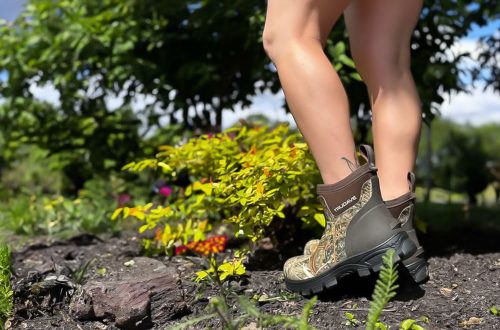
BloomBoot Series: The gardener’s precision tool. 4.5mm neoprene upper for flexibility during kneeling and bending. Multi-directional grip for soft soil and grass. Mid-calf height for splash protection. For the serious gardener who spends hours in the dirt.
MudTrek Series: The everyday workhorse. Full rubber construction for sealed waterproofing. Slip-resistant outsole for wet pavement and tile. Mid-calf height for versatile wear. For commutes, dog walks, and light outdoor work.
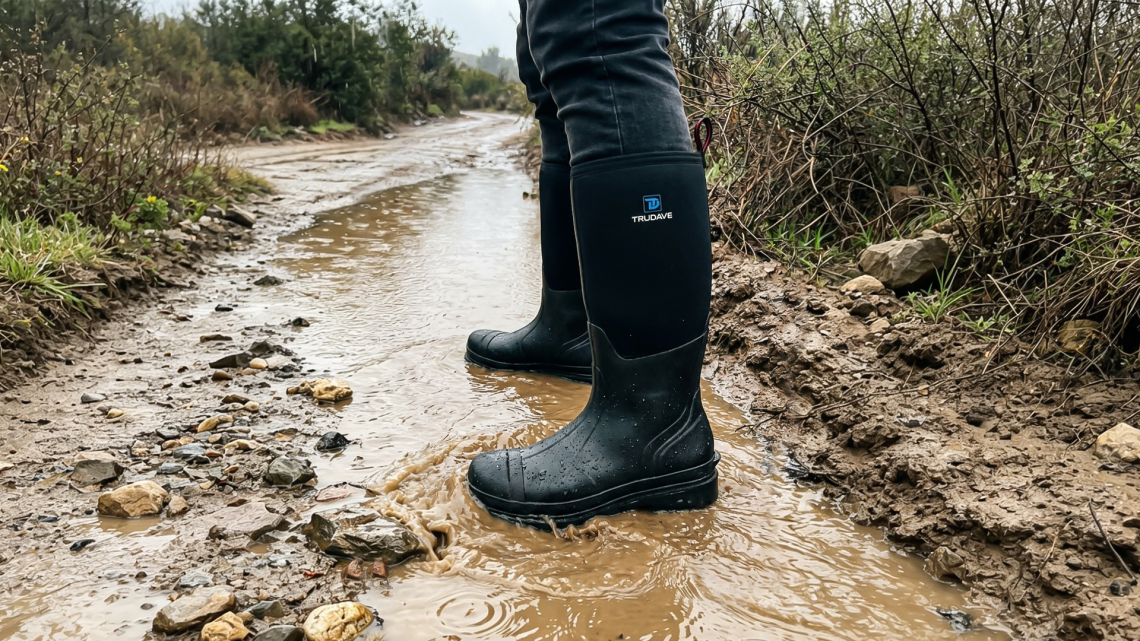
HeatHold Series: The cold-weather fortress. 5mm insulated neoprene lining for warmth in freezing conditions. Self-cleaning deep lugs for frozen mud and snow. Tall shaft for maximum protection. For winter chores and cold-weather work.
MudFlex Series: The grab-and-go hybrid. Flexible neoprene upper combined with durable rubber lower. Integrated grab handles for instant slip-on. Mid-ankle height for quick trips and light chores.
GardenStride Series: The heavy-duty problem solver. Deep, open lugs designed to eject mud. Full rubber construction for maximum waterproofing. For deep mud, manure, and standing water.
GreenStep Series: The back-door essential. Lightweight slip-on garden shoe. 100% waterproof natural rubber. For quick trips—taking out the trash, watering plants, checking the mail.
AquaGuard Series: The industrial protector. Industrial-grade rubber for construction, farm, and commercial work. Ergonomic arch support for long shifts. For the heaviest-duty outdoor work.
AquaGrip Series: The specialist. Signature suction-pod outsole for slick rocks and riverbanks. For environments where standard treads fail.
Each boot is built for a specific set of conditions. At Trudave’s direct-to-consumer pricing, owning two or three boots for different seasons and tasks costs less than a single pair of premium boots from a legacy brand sold through traditional retail.
Conclusion: The Math of Quality
The budget rain boot industry has built a profitable business model on a simple premise: make the boot cheap enough that the customer won’t complain when it fails, and make sure it fails fast enough that they have to come back next year.
Trudave Gear has built a different business model on a different premise: make the boot well enough that the customer doesn’t have to come back for years, and sell it directly to them so the price reflects what it actually costs to make, not what a retail store needs to charge to cover its overhead.
The math is straightforward. A 30PVCbootthatlastsoneseasoncosts30 per season. A premium vulcanized natural rubber boot with neoprene insulation and EVA midsole architecture, sold direct to consumer and maintained properly, can cost as little as $20 per season over its lifetime—with the added benefits of dry, warm, comfortable feet for every one of those seasons.
Cheap boots are expensive. They’re expensive in dollars over time, expensive in comfort lost to cold and wet, and expensive in the environmental cost of disposable products that aren’t designed to last. The alternative is not a $200 premium boot from a retail store. It’s a boot that delivers premium materials at a direct price—the materials without the markup.
To explore the complete Trudave Gear rain boot lineup and find the right pair for your garden, farm, or everyday wet-weather life, visit trudavegear.com.


You May Also Like

Garden Beds to Winter Beds: Cover Crops That Feed Your Soil
Best Boots for Animal Shelter and Kennel Work: Footwear for Washdown, Wet Floors, Dog Runs, and Daily Animal Care