The Cheap Boot Trap: Why That $30 Pair of Rain Boots Is Actually Costing You a Fortune
You know the feeling. You pull on your rain boots, head out into the wet morning, and within an hour your feet are cold, heavy, and miserable. Not soaked—just… damp. That creeping chill that tells you moisture has found its way in.
You check the boots. No visible cracks. No obvious damage. But somehow, your feet are wet.
Here’s the uncomfortable truth: most “waterproof” rain boots are only water-resistant. And water-resistant means they‘ll fail you the moment you actually need them. But the problem goes deeper than wet socks. The real issue is what I call the “Cheap Boot Trap” —the cycle of buying inexpensive boots that don’t last, then buying them again, and again, and again. Over time, that “bargain” ends up costing you far more than a quality pair ever would.
The $30 Illusion
I used to think I was being smart. Every spring, I’d walk into the hardware store, grab the cheapest pair of rain boots on the rack, and walk out feeling like I‘d beaten the system. Thirty dollars. Maybe forty. How could anyone justify spending more?
And every fall, I’d be back. The rubber would crack at the toe flex point. The tread would wear smooth. Water would start seeping in through invisible seams. I‘d tell myself it was just bad luck, buy another pair, and repeat the cycle.
It took me five years and six pairs of boots to realize the truth: I wasn’t saving money. I was paying a tax.
A tax on my time. A tax on my comfort. A tax on my safety. And the worst part? I didn‘t even know I was paying it.
The Hidden Math of “Affordable” Footwear
Let’s do some simple arithmetic. Over five years, I spent roughly $180 on six pairs of cheap rain boots. That‘s $36 per year—not a fortune, but not nothing either.
But the financial cost was only the beginning. Every time a pair failed, I lost time. Time driving back to the store. Time reading reviews, trying to convince myself this pair would be different. Time changing wet socks, cutting chores short, and explaining to my wife why I needed another pair of boots.
And then there was the discomfort. Cold, wet feet aren’t just unpleasant—they‘re distracting. When your feet are miserable, you move slower. You think less clearly. You cut your day short. That lost productivity has a real cost—one that doesn’t show up on any receipt.
Finally, there was the safety cost. When your tread wears smooth, you slip. On a wet driveway, a muddy slope, or a slick barn floor, a fall can mean a sprained ankle, a broken wrist, or worse.
Add it all up, and those “$30” boots were costing me hundreds of dollars a year in time, comfort, and risk.
Cheap boots aren’t cheaper. They‘re just priced lower upfront.
The Manufacturing Reality: What You’re Actually Paying For
Here‘s what I eventually learned about cheap rain boots.
They’re often made of rigid PVC plastic, not high-grade rubber. They don‘t flex with your foot—they fight against it. Every step requires extra energy just to bend the boot, leading to shin splints and fatigue long before the day is done.
They rely on DWR (Durable Water Repellent) coatings that wear off with the first abrasive step through wet grass. Once the coating fails, the outer material “wets out”—soaking up water like a sponge and rapidly pulling heat from your feet. Your feet get cold, heavy, and miserable, and you cut your day short.
They have flat footbeds with zero arch support and zero shock absorption. It’s like standing on concrete barefoot.
But here‘s the part that really gets me: the difference in materials between a $30 boot and a $70 boot isn’t $40. It‘s pennies. The real cost difference comes from something else entirely: distribution.
Premium brands sell through retailers. Each middleman takes a cut. By the time a boot reaches your feet, you’ve paid for the factory, the distributor, the wholesaler, the retailer, and the marketing budget that convinced you to buy it.
Trudave takes a different approach. They sell directly to customers—no middlemen, no retail markup. Your money goes into the boots, not into a supply chain.
This is why a $70 Trudave boot can have features—like a steel shank, 6mm neoprene insulation, and sealed waterproof construction—that you‘d normally find in boots costing twice as much.
The Three Features That Break the Cycle
1. 100% Waterproof Construction, Not Just a Coating.
Cheap boots rely on DWR coatings that wear off. Trudave boots are built from industrial-grade rubber and neoprene—materials that are waterproof by their very composition. The 6mm neoprene models feature heat-resistant insulation that “prevents radiated body heat from escaping, keeps your feet dry and warm.” No coating to wear off. No membrane to clog. Just material doing what material does.
2. The Steel Shank You Didn‘t Know You Needed.
Cheap rain boots have flat rubber footbeds. Nothing between your foot and whatever’s beneath you. Step on a nail, a sharp rock, or broken glass, and you‘re going to feel it.
Trudave solves this with a steel shank embedded between the insole and outsole. This piece of steel provides underfoot puncture protection, arch support, and sole stability. One reviewer who tested these boots while working with horses noted that the steel shank provided “a reassuring rigidity underfoot, essential for preventing those accidental nail-stepping moments.”
3. Insulation That Matches Your Season.
Cheap boots force you into a compromise—too hot or too cold, never quite right. Trudave offers multiple insulation levels. The 6mm neoprene models provide maximum warmth for deep winter work, with heat-resistant insulation that “keeps your feet dry and warm.” The 4.5mm neoprene BloomBoot series offers lighter insulation for cool spring mornings. The uninsulated AquaGuard series is perfect for warmer conditions.
What Real Owners Are Saying
I‘m not the only one who’s made this discovery. Across Trustpilot and Amazon, verified owners consistently report the same experience. Trudave holds a 4.1/5 rating on Trustpilot.
The durability difference:
“I spend 12 to 14 hours a day in them and about 4-5 hours standing at a time and my feet don‘t hurt and stay dry. Good resilience they go to work on a rock crusher everyday and for the month I’ve had them they seem to be holding up.”
The dry feet win:
“We purchased waterproof boots back in May for working on our little farm… The boots have made our jobs and lives sooo much better and easier. And best of all, our feet stay DRY!!! It has been about two months now and these boots are still going strong and keeping our feet protected.”
The comfort verdict:
“Bought some boots from Trudave, These boots are well made and comfortable. The size is slightly larger, but with socks they fit well and comfortably. A size smaller would be too tight.”
The value verdict from an independent reviewer:
“If you’re hunting, working long shifts outdoors, or just need a reliable pair of waterproof boots that won‘t break the bank, Trudave delivers surprisingly solid value — just don’t expect premium-brand polish. What you trade in price, you gain in practicality.”
Common patterns from verified feedback:
- Sizing runs slightly large. Most owners recommend wearing medium-to-heavy socks for optimal fit.
- Dry feet is the consistent win. Across reviews, the one feature everyone agrees on is that Trudave boots keep feet dry.
- Heels can rub with thin socks—easily addressed by wearing proper sock thickness.
- Order directly from Trudave rather than third-party retailers for accurate sizing.
The Trudave Rain Boot Lineup
Trudave offers multiple rain boot series, each optimized for different conditions:
- AquaGuard Series — The Heavy-Duty Workhorse. Best for farming, outdoor work, and rainy days. Made from industrial-grade waterproof rubber with non-slip outsoles and cushioned insoles.
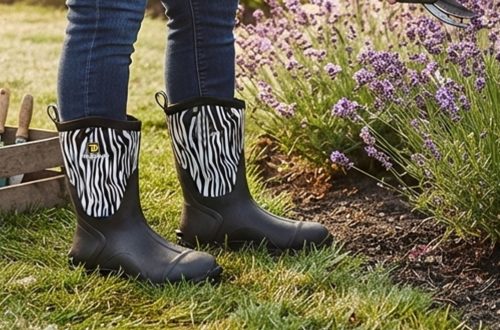
- BloomBoot Series — The Lightweight Garden Boot. Best for gardening, yard work, and rainy walks. Features a 4.5mm neoprene upper and rubber shell with multi-direction grip.
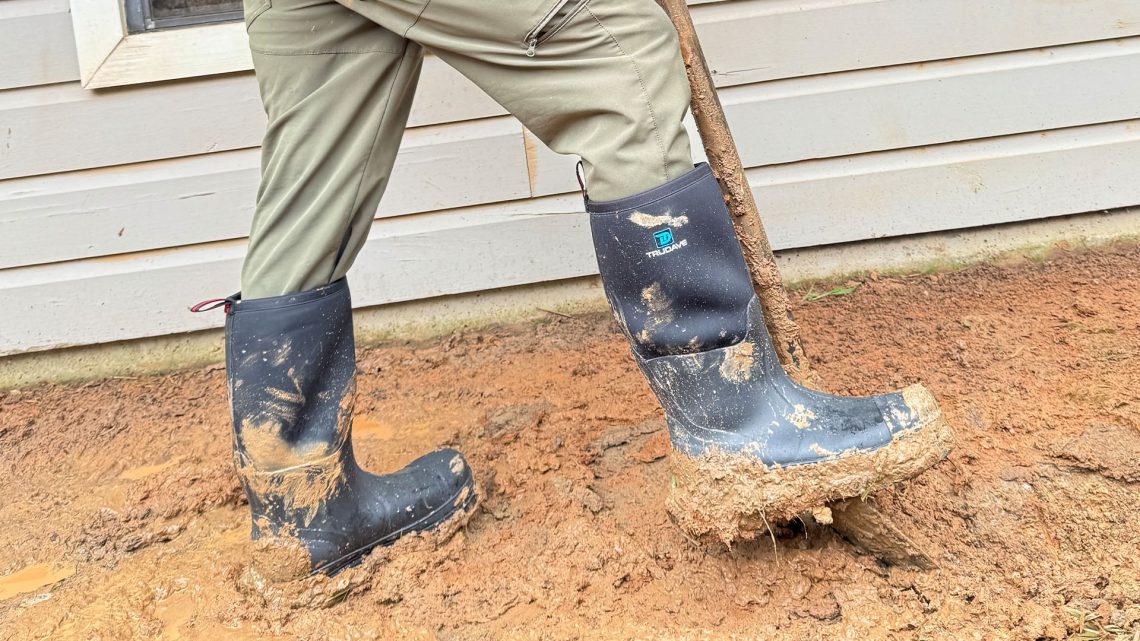
- 6mm Neoprene Series — The Deep Winter Workhorse. Best for brutal winter conditions. Features maximum insulation, steel shank, and anti-slip outsole.
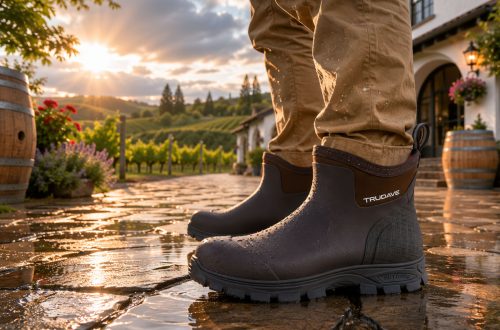
- HuntGuard Series — The Versatile Ankle Boot. Best for gardening, farming, fishing, and outdoor yard work. Made from high-quality waterproof rubber that keeps your feet dry in rain, mud, or wet grass.
How to Keep Your Boots Alive
Proper care doubles the lifespan of any boot. Here‘s the simple routine that works across all Trudave rain boot series:
Rinse after every use. A quick hose-down removes mud, manure, and debris before they dry and degrade the rubber.
Air dry naturally—never use heat. Never put rubber boots on a radiator, in a dryer, or in direct sunlight. Heat cracks rubber and ruins the waterproof seal.
Use mild soap only. For heavy dirt, use mild dish soap and a soft brush. Avoid degreasers, bleach, or harsh chemicals—these strip essential oils from the rubber and cause premature cracking.
Store upright in a cool, dry place away from direct sunlight. Don’t fold or crease the boots, which creates weak points.
Check your tread periodically. When the lugs wear down and the sole feels hard like plastic instead of grippy rubber, it‘s time for new boots.
The Bottom Line
Here’s the honest truth about rain boots in 2026.
You can spend $30 on cheap boots that crack in a season, slip on wet pavement, and leave your feet cold and wet. Over five years, you‘ll spend $180 on boots that never really worked—plus the time, discomfort, and risk that come with every failure.
Or you can spend $50–$80 on a pair of Trudave boots that keeps your feet dry for years, grips the ground you walk on, and comes with features—steel shank puncture protection, proper insulation, non-slip outsoles—that cheap boots simply don’t offer.
Independent reviewers who‘ve tested Trudave boots through real-world conditions put it this way: “Trudave trades the top pick’s lightweight all-day comfort for heavy-duty insulation and steel shank support — your feet stay warm and stable during hours of winter chores or barn work.”
The cheap boot tax is real. You‘ve been paying it every time you bought a pair that didn’t last, every time you cut a chore short because your feet were miserable, every time you slipped on a wet surface because your tread was worn smooth.
Trudave breaks the cycle. Not because they‘re cheaper—but because they actually work.
| Decision Factor | Verdict |
|---|---|
| Waterproofing | ⭐⭐⭐⭐⭐ — 100% rubber/neoprene with sealed seams |
| Steel shank protection | ⭐⭐⭐⭐⭐ — Available on many models; rare at this price point |
| Insulation options | ⭐⭐⭐⭐⭐ — Range from uninsulated to 6mm neoprene |
| Slip resistance | ⭐⭐⭐⭐ — Deep lugs and non-slip outsoles |
| Value for money | ⭐⭐⭐⭐⭐ — Direct pricing undercuts legacy brands significantly |
| Ease of cleaning | ⭐⭐⭐⭐⭐ — Rubber surfaces rinse clean in seconds |
| Sizing accuracy | ⭐⭐⭐⭐ — Slightly large; predictable if you follow the chart |
The barn doesn‘t care what logo is on your boots. The garden doesn’t check the brand tag. It only cares if your feet are dry, warm, and protected when the work needs doing.
Trudave delivers that. Without emptying your wallet.
Now go outside. Your boots will handle the rest.


You May Also Like

Testing Soil Compaction After Winter: What Ranchers Often Miss
Best Boots for Cattle Ranch Work: A Practical Buying Guide for Long Days Around Livestock