Best Boots for Orchard and Fruit Farm Work: A Practical Guide for Wet Grass, Mud, Ladders, and Long Harvest Days
Orchard work can look calm from a distance.
Rows of fruit trees, open fields, and quiet rural roads create the impression of an easy outdoor environment.
In reality, orchard workers face wet grass, mud, irrigation water, steep slopes, fallen fruit, ladders, gravel lanes, pruning debris, chemicals, heavy harvest bins, and long hours on their feet.
A worker may begin the morning walking through dew-covered grass, climb ladders during fruit picking, repair irrigation lines in muddy soil, carry tools across sloped ground, and finish the day loading boxes near a wet packing area.
That variety makes footwear selection important.
Basic rain boots may keep feet dry but provide too little ankle support for ladder work.
Heavy leather boots may offer stability but become uncomfortable when repeatedly exposed to wet vegetation and mud.
The best boots for orchard work should provide waterproof protection, stable traction, secure heel fit, supportive cushioning, manageable weight, and enough flexibility for walking, climbing, kneeling, and equipment operation.
This guide explains how to choose practical footwear for apple orchards, citrus groves, peach farms, cherry orchards, vineyards, berry farms, and other fruit-growing operations.
Why Orchard Work Is Hard on Footwear
Fruit farms combine several different surfaces and tasks.
Workers may regularly move across:
- Wet grass.
- Muddy rows.
- Gravel access roads.
- Clay soil.
- Sloped ground.
- Fallen leaves.
- Fallen fruit.
- Irrigation channels.
- Concrete packing floors.
- Metal ladders.
- Wooden platforms.
- Tractor steps.
- Rocky field edges.
A boot that performs well in mud may feel unstable on a ladder.
A smooth outsole that works well on concrete may lose traction on wet grass.
Orchard footwear must balance outdoor protection with mobility and precise footing.
Waterproof Protection Matters in Orchards
Even when there is no rain, orchard workers can spend hours in wet conditions.
Moisture may come from:
- Morning dew.
- Irrigation systems.
- Wet grass.
- Rain.
- Muddy rows.
- Sprayer runoff.
- Drainage areas.
- Snowmelt.
- Fallen wet leaves.
- Washing and packing areas.
Water-resistant boots may handle short exposure.
Workers who walk through wet vegetation for several hours generally benefit from fully waterproof construction.
A waterproof boot also simplifies cleaning after mud, fruit residue, and field debris collect on the exterior.
Rubber Boots vs Waterproof Lace-Up Boots
Both types of footwear can be useful in orchard work.
The better choice depends on the task.
Rubber Orchard Boots
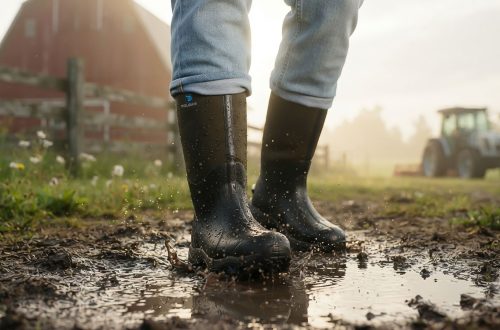
Rubber boots are practical for wet and muddy conditions.
Advantages include:
- Reliable waterproof protection.
- Easy cleaning.
- Fast entry and removal.
- Tall shaft options.
- Minimal exterior maintenance.
- Good protection from wet grass.
They are especially useful for:
- Irrigation work.
- Muddy field inspections.
- Early-morning harvest.
- Rainy pruning.
- Wet orchard rows.
- Equipment washing.
- Ground-level maintenance.
Potential disadvantages include:
- Limited ankle adjustment.
- Possible heel movement.
- Heat buildup.
- Reduced breathability.
- Less precise footing on ladders.
- Greater weight in tall models.
Waterproof Lace-Up Work Boots
Waterproof lace-up boots may provide:
- Better ankle support.
- More precise fit.
- Improved heel retention.
- Greater stability on slopes.
- Better control on ladders.
- More comfort during long walking distances.
They may be more suitable for:
- Fruit picking from ladders.
- Pruning.
- Sloped orchards.
- Rocky terrain.
- Equipment operation.
- Long harvest shifts.
- Carrying heavy tools or boxes.
However, lace-up footwear often takes longer to clean and may require more maintenance.
Many orchard workers benefit from owning both styles.
Rubber boots can be used for wet ground and irrigation, while supportive lace-up boots can be reserved for ladder work, dry harvest, and steep terrain.
Choose the Right Boot Height
Boot height affects protection, mobility, heat, and weight.
Ankle-Height Waterproof Boots
These may work for:
- Packing sheds.
- Dry orchard lanes.
- Equipment operation.
- Light field inspections.
- Short harvesting tasks.
They provide limited protection from wet grass and mud.
Mid-Calf Waterproof Boots
Mid-calf boots are useful for:
- General orchard work.
- Wet grass.
- Moderate mud.
- Irrigation checks.
- Ground-level picking.
- Pruning.
- Property maintenance.
They provide more coverage without the bulk of tall knee-high boots.
Tall Rubber Boots
Tall boots are useful for:
- Deep mud.
- Heavy rain.
- Tall wet grass.
- Drainage work.
- Irrigation repairs.
- Saturated spring conditions.
- Snowmelt.
Tall boots may feel heavy and restrictive during ladder work.
Choose the lowest shaft height that provides enough protection for the task.
Best Boots for Apple Orchard Work
Apple orchards often involve sloped ground, wet grass, ladders, harvest bags, fallen fruit, and long walking distances.
Suitable boots should provide:
- Waterproof construction.
- Secure heel fit.
- Good lateral stability.
- Moderate tread depth.
- Comfortable cushioning.
- Flexible forefoot movement.
- A defined heel.
- Manageable weight.
Heavy mud boots may be useful during spring maintenance but less comfortable during dry harvest.
For ladder-based picking, supportive waterproof lace-up boots are usually more stable than loose pull-on rain boots.
Best Boots for Citrus Grove Work
Citrus farms may involve warm weather, irrigation, muddy rows, thorns, uneven soil, and long walking distances.
Useful features include:
- Lightweight waterproof construction.
- Abrasion-resistant uppers.
- Secure ankle support.
- Flexible movement.
- Moderate tread.
- Moisture-wicking linings.
- Durable toe protection.
Tall insulated boots are generally unnecessary in warm citrus-growing regions.
Heat management should be a priority.
Best Boots for Peach and Cherry Orchards
Peach and cherry harvests often require careful ladder movement and repeated walking between rows.
Boots should provide:
- Secure heel positioning.
- Precise fit.
- Moderate outsole thickness.
- Good ladder contact.
- Waterproof protection.
- Comfortable cushioning.
- Stable lateral support.
Loose boots can shift during climbing.
Workers should avoid oversized footwear and excessive heel movement.
Best Boots for Pear and Plum Orchards
Pear and plum farms may include wet grass, sloped rows, irrigation systems, and heavy harvest bins.
Suitable footwear should balance:
- Waterproof protection.
- Walking comfort.
- Heel support.
- Traction on slopes.
- Durability.
- Moderate weight.
- Easy cleaning.
A mid-height waterproof work boot can provide enough protection without interfering with movement.
Best Boots for Berry Farms
Berry farms may involve low plants, wet leaves, mud, irrigation, repeated bending, and narrow rows.
Boots should provide:
- Flexible shafts.
- Lightweight construction.
- Waterproof protection.
- Easy-clean materials.
- Secure fit.
- Moderate tread.
- Comfortable forefoot flex.
Tall stiff boots can make kneeling and squatting uncomfortable.
Mid-calf rubber boots are often practical for strawberries, blueberries, raspberries, and similar crops.
Best Boots for Orchard Irrigation Work
Irrigation maintenance may involve leaking pipes, wet soil, ditches, standing water, and muddy valve areas.
Look for:
- Fully waterproof construction.
- Tall enough shaft height.
- Secure heel retention.
- Mud-release tread.
- Flexible movement.
- Durable toe protection.
- Easy-clean uppers.
Water should remain below the boot opening.
Deeper water may require specialized waders or other protective equipment.
Best Boots for Orchard Pruning
Pruning work involves ladders, cutting tools, branches, wet grass, and fallen debris.
Suitable boots should provide:
- Secure ankle fit.
- Stable ladder contact.
- Abrasion-resistant uppers.
- Protective toe construction.
- Waterproof protection.
- Flexible forefoot movement.
- Good ground traction.
Thin casual rain boots may be vulnerable to sharp branches and pruning debris.
Supportive lace-up work boots are often the better option.
Best Boots for Fruit Picking
Fruit pickers may walk and stand for long hours while carrying harvest bags or containers.
The footwear should provide:
- Comfortable cushioning.
- Secure heel fit.
- Enough toe room.
- Moderate boot weight.
- Waterproof protection.
- Stable traction.
- Flexible movement.
Heavy boots increase fatigue over thousands of steps.
The best picking footwear is often lighter than the boots used for winter maintenance or deep mud.
Best Boots for Ladder Work in Orchards
Ladder use requires precise footing.
Boots should provide:
- A defined heel.
- Stable outsole edges.
- Secure ankle fit.
- Minimal heel slip.
- Moderate sole thickness.
- Flexible forefoot movement.
- Good contact with ladder rungs.
Loose pull-on boots may not provide enough control.
Very deep mud lugs can also reduce stable contact on narrow rungs.
Workers who spend significant time on ladders should prioritize supportive lace-up boots.
Always follow ladder safety procedures and use equipment appropriate for orchard work.
Best Boots for Sloped Orchard Rows
Many orchards are planted on hills or rolling terrain.
Side slopes require strong lateral stability.
Look for:
- Secure lacing.
- Supportive ankle construction.
- Firm heel cups.
- Multidirectional tread.
- Defined heel braking.
- Stable midsoles.
- Moderate boot weight.
Tall loose rubber boots may shift inside during sidehill walking.
A fitted waterproof work boot is often safer and more comfortable.
Traction on Wet Grass
Wet grass is one of the most common orchard hazards.
Suitable outsoles should provide:
- Multidirectional tread.
- Moderate lug depth.
- Flexible rubber.
- A defined heel.
- Good lateral edges.
- Stable heel positioning.
Extremely deep mud tread is not always necessary.
It may collect grass, leaves, and fruit debris.
Choose enough traction without excessive bulk.
Traction on Fallen Fruit
Apples, peaches, cherries, citrus fruit, and other produce can create slippery ground when crushed.
Fruit juice, skins, and pulp may reduce traction on grass, concrete, and ladders.
Workers should:
- Remove fallen fruit from walkways.
- Clean boot tread regularly.
- Use flexible slip-resistant outsoles.
- Avoid sudden turns.
- Move carefully on slopes.
- Keep packing-area floors clean.
No boot can fully compensate for heavy fruit residue.
Good housekeeping remains essential.
Traction on Wet Leaves
Wet leaves can hide holes, rocks, roots, and uneven ground.
They can also become extremely slippery.
Look for:
- Flexible rubber compounds.
- Multidirectional tread.
- Broad contact zones.
- Defined heel edges.
- Secure foot positioning.
Take shorter steps when descending slopes.
Avoid assuming that visible grass underneath provides stable footing.
Traction on Gravel Orchard Roads
Gravel access roads require stable surface contact.
Useful features include:
- Moderate lug depth.
- Broad outsole contact.
- Durable rubber.
- Stable heel construction.
- Comfortable cushioning.
Extremely deep lugs may feel unstable on hard gravel.
Workers who move between mud and roads should choose a balanced tread pattern.
Comfort for Long Harvest Days
Fruit harvest can require ten or more hours of standing, walking, climbing, carrying, and bending.
Comfort depends on:
- Cushioned midsoles.
- Arch support.
- Removable insoles.
- Secure heel fit.
- Enough toe room.
- Shock absorption.
- Moderate weight.
- Moisture management.
Basic rain boots often provide waterproofing without enough support for full professional shifts.
Work-grade waterproof boots are generally better for daily use.
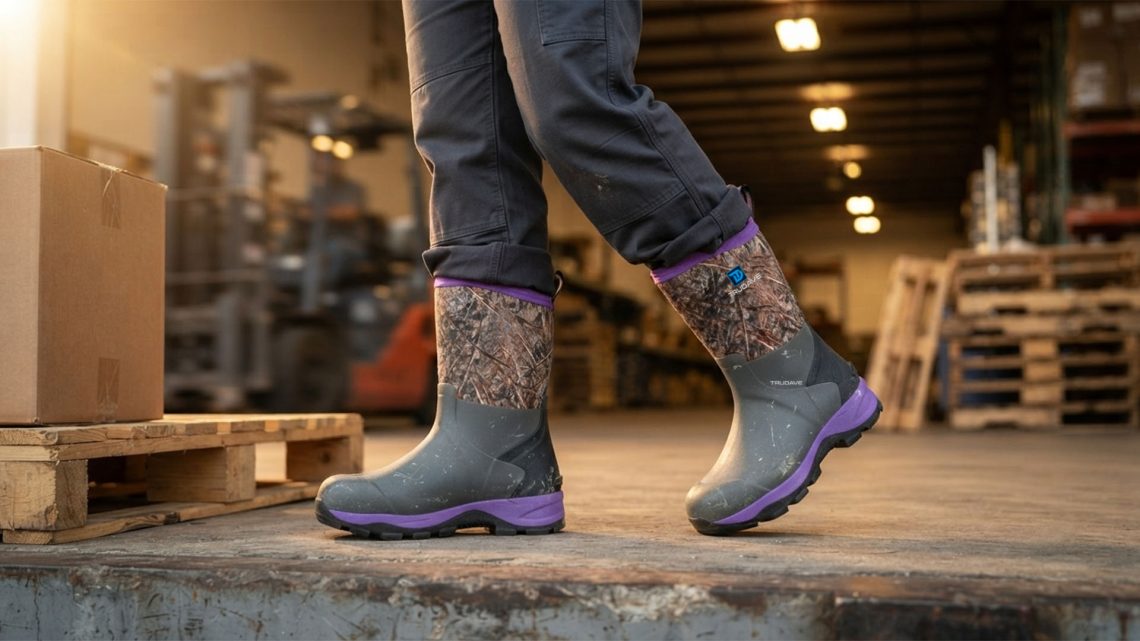
Outdoor footwear brands such as Trudave Gear offer waterproof boots designed for rain, mud, wet grass, farms, orchards, and demanding outdoor work.
When comparing orchard footwear, evaluate support, traction, fit, shaft height, and weight together.
Secure Heel Retention
Heel movement creates friction and reduces stability.
Excessive slipping may cause:
- Blisters.
- Foot fatigue.
- Poor ladder control.
- Reduced balance on slopes.
- Instability in mud.
- Difficulty carrying harvest bags.
Pull-on boots may allow slight heel movement.
The heel should not rise dramatically with every step.
Choose the correct size and look for structured heel cups or ankle support.
Toe Room for Swelling
Feet can swell during long harvest days.
The toe box should provide enough space without allowing the foot to slide forward.
A proper fit provides:
- Natural toe movement.
- Comfortable width.
- No front contact.
- No side pressure.
- Enough space for work socks.
- Stable positioning.
Workers with wide feet should look for wide sizes rather than simply buying a longer boot.
Boot Weight Matters in Orchards
Orchard workers may walk thousands of steps each day.
Heavy footwear adds effort to every movement.
Boot weight increases because of:
- Tall shafts.
- Thick rubber.
- Safety toes.
- Heavy insulation.
- Aggressive outsoles.
- Reinforcement.
Choose the lightest boot that still provides the necessary protection.
A tall insulated boot may be appropriate for winter pruning but unnecessarily heavy for summer harvest.
Summer Orchard Boots
Summer orchard work can be hot and humid.
Choose:
- Uninsulated construction.
- Lightweight materials.
- Moisture-wicking linings.
- Moderate shaft height.
- Removable insoles.
- Breathable socks.
- Manageable weight.
Tall rubber boots may trap significant heat.
Use them only when mud, irrigation, or wet vegetation requires the extra coverage.
Winter Orchard Boots
Winter pruning and maintenance may involve snow, ice, frozen mud, and cold rain.
Cold-weather boots may need:
- Waterproof construction.
- Appropriate insulation.
- Thick midsoles.
- Flexible low-temperature materials.
- Snow and slush traction.
- Room for warm socks.
Boots should not compress the toes.
Restricted circulation can make feet colder.
Extremely bulky boots may also reduce ladder control.
Best Socks for Orchard Work
Cotton socks absorb sweat and dry slowly.
Wool-blend and synthetic work socks usually perform better.
Choose socks that:
- Wick moisture.
- Fit without bunching.
- Extend above the boot collar.
- Cushion the heel and forefoot.
- Match the season.
- Avoid bulky seams.
Carry a spare pair during long wet-weather shifts.
Changing damp socks can reduce friction and improve comfort.
Do Orchard Workers Need Safety-Toe Boots?
Safety-toe footwear may be useful around:
- Harvest bins.
- Pallets.
- Tractors.
- Forklifts.
- Heavy tools.
- Packing areas.
- Equipment maintenance.
- Loading operations.
Steel toes provide impact protection but add weight and may transfer cold.
Composite toes may be lighter and less conductive.
The correct choice depends on the task, employer policy, and applicable safety standards.
Waterproof footwear is not automatically safety rated.
Puncture and Abrasion Resistance
Orchards may contain:
- Pruning debris.
- Sharp branches.
- Nails.
- Wire.
- Broken trellis materials.
- Metal fasteners.
- Thorny plants.
- Damaged pallets.
Lightweight casual rain boots may puncture or tear.
Look for reinforced construction when these hazards are common.
A thick-looking outsole should not automatically be assumed to be puncture resistant.
Check the manufacturer’s specifications.
Chemical Exposure During Orchard Work
Fruit farms may use fertilizers, pesticides, herbicides, fungicides, fuels, oils, and cleaning products.
Ordinary waterproof boots are not automatically chemical-resistant.
Chemical exposure may cause:
- Swelling.
- Softening.
- Cracking.
- Adhesive failure.
- Discoloration.
- Reduced waterproofing.
Use footwear and personal protective equipment specified by product labels, safety information, employer procedures, and applicable regulations.
Do not assume that all rubber compounds provide the same chemical protection.
Boots for Spraying and Chemical Applications
Spraying tasks may require dedicated protective footwear.
The boots should be selected according to:
- Product label requirements.
- Chemical compatibility.
- Shaft height.
- Closure design.
- Cleaning procedures.
- Employer safety rules.
- Applicable agricultural regulations.
Contaminated footwear should be cleaned and stored according to approved procedures.
Do not wear chemical-application boots for unrelated tasks when cross-contamination is a concern.
Orchard Biosecurity and Footwear
Boots can carry soil, weed seeds, pests, fungal material, and plant pathogens between orchard blocks and properties.
Farm procedures may include:
- Dedicated footwear for certain areas.
- Removing soil before leaving a block.
- Cleaning tread and uppers.
- Disinfecting boots when required.
- Avoiding movement from infected to clean areas.
- Inspecting boots for plant material.
Open, easy-clean tread patterns can support these procedures.
Follow orchard-specific biosecurity guidance.
How to Clean Orchard Work Boots
A practical cleaning routine includes:
- Remove mud, leaves, grass, and fruit residue.
- Rinse the exterior.
- Brush the outsole channels.
- Use mild soap when necessary.
- Follow chemical and biosecurity procedures.
- Inspect for cuts or punctures.
- Remove damp insoles.
- Dry the footwear with airflow.
- Store boots away from direct heat and sunlight.
Cleaning prevents organic residue from drying into the tread.
How to Remove Crushed Fruit From Boot Tread
Fruit skins, pulp, and juice can become sticky and slippery.
Rinse the outsole before residue dries.
Use a stiff nonmetallic brush to clean:
- Lug channels.
- Heel edges.
- Toe areas.
- Sidewalls.
- Creases around the sole.
Use mild soap when needed.
Do not use harsh chemicals unless approved by the boot manufacturer.
How to Prevent Orchard Boot Odor
Odor can develop from sweat, wet grass, mud, fruit residue, and incomplete drying.
To reduce odor:
- Wear clean moisture-wicking socks.
- Rinse boots after dirty work.
- Remove insoles.
- Dry interiors completely.
- Rotate between two pairs.
- Replace worn footbeds.
- Store boots in moving air.
- Clean fruit residue promptly.
Strong fragrance only covers odor temporarily.
The moisture and organic material must be removed.
How to Dry Waterproof Orchard Boots
Waterproof boots can become damp inside from sweat.
After work:
- Remove the insoles.
- Wipe visible moisture.
- Open the shafts.
- Direct airflow inside.
- Use a low-temperature boot dryer when approved.
- Avoid strong direct heat.
Radiators, fireplaces, and high-temperature dryers can damage rubber, adhesives, and linings.
Daily workers may benefit from rotating between two pairs.
How Long Should Orchard Boots Last?
Boot lifespan depends on:
- Daily walking distance.
- Ladder use.
- Concrete exposure.
- Mud.
- Chemical contact.
- Cleaning.
- Storage.
- Outsole wear.
- Material quality.
- Terrain.
Inspect boots regularly for:
- Cracks.
- Leaks.
- Smooth tread.
- Punctures.
- Sole separation.
- Damaged linings.
- Compressed cushioning.
- Unstable heel structure.
A boot may remain waterproof while losing the support or traction needed for orchard work.
When Should Orchard Boots Be Replaced?
Replace boots when:
- Water enters repeatedly.
- Tread becomes dangerously smooth.
- The sole separates.
- Cuts or punctures expose the interior.
- Chemical damage appears.
- Heel support collapses.
- Cushioning becomes uncomfortable.
- Ladder contact feels unstable.
- Repairs repeatedly fail.
Keep a backup pair available during harvest and rainy seasons.
Common Mistakes When Buying Orchard Boots
Buying Casual Rain Boots for Full Workdays
Light-duty boots may lack support and cushioning.
Wearing Loose Rubber Boots on Ladders
Heel movement reduces control.
Choosing Deep Mud Tread for Every Task
Aggressive lugs may feel unstable on ladder rungs and concrete.
Buying Boots Too Large
Oversized footwear creates heel slip and blisters.
Wearing Tall Boots for Every Job
Extra height adds heat and weight.
Ignoring Sloped Terrain
Hills require lateral support and secure ankle fit.
Choosing Too Much Insulation
Heavy insulation can make harvest work uncomfortable.
Ignoring Fruit and Leaf Buildup
Organic residue can reduce traction.
Never Replacing Insoles
Footbeds often wear out before the waterproof shell.
How to Choose the Best Boots for Orchard Work
Before purchasing, consider the actual orchard and daily tasks.
Ask:
Is the ground flat or sloped?
How much ladder work is required?
Are rows usually wet or muddy?
How far do workers walk?
Is irrigation maintenance common?
Are thorns or sharp pruning materials present?
Are safety toes required?
Will boots be exposed to agricultural chemicals?
What temperatures occur during harvest and pruning?
Can the insoles be removed?
Then compare:
- Waterproof construction.
- Boot height.
- Heel retention.
- Ankle support.
- Outsole traction.
- Ladder compatibility.
- Toe protection.
- Boot weight.
- Cushioning.
- Ease of cleaning.
For orchard workers, fruit growers, and agricultural professionals comparing waterproof footwear, Trudave Gear offers boots designed for rain, mud, wet grass, farms, orchards, and demanding outdoor work.
Choose footwear according to the terrain, ladder use, weather, crop, safety requirements, and number of hours spent on your feet.
Frequently Asked Questions
What are the best boots for orchard work?
The best orchard boots are waterproof, securely fitted, supportive for long walking, and equipped with traction suited to wet grass, mud, slopes, ladders, and gravel.
Are rubber boots good for fruit picking?
Rubber boots work well in wet grass and mud. For extensive ladder work, fitted lace-up boots may provide better ankle and heel control.
What boots are best for apple orchards?
Choose waterproof boots with moderate tread, stable heel support, comfortable cushioning, and enough flexibility for walking and climbing.
Are tall boots necessary for orchard work?
Tall boots are useful in deep mud, heavy rain, and irrigation work. Mid-height boots are often more comfortable for daily harvesting.
What tread is best for wet orchard grass?
Moderate multidirectional lugs with flexible rubber and a defined heel provide useful grip without excessive bulk.
Are deep mud lugs good for ladder work?
Not always. Very deep lugs may reduce stable contact with ladder rungs.
Do orchard workers need safety-toe boots?
Safety toes may be appropriate around harvest bins, pallets, machinery, loading areas, and maintenance tasks.
How do you remove fruit residue from boot soles?
Rinse the boots promptly and use a stiff nonmetallic brush with mild soap before the residue dries.
Why do orchard boots smell?
Odor usually comes from sweat, wet grass, mud, fruit residue, damp insoles, and incomplete drying.
How often should orchard boot insoles be replaced?
Replace them when they become flat, damaged, uneven, permanently smelly, or no longer supportive.
Final Thoughts
Orchard and fruit-farm work require footwear that can handle wet grass, mud, slopes, ladders, irrigation, fallen fruit, gravel, machinery, and long harvest days.
The best boots provide dependable waterproof protection, secure heel fit, practical traction, supportive cushioning, manageable weight, and enough flexibility for walking and climbing.
Tall rubber boots work well for irrigation, muddy rows, heavy rain, and early-season maintenance.
Mid-calf waterproof boots provide a useful balance for general orchard work and ground-level harvesting.
Supportive waterproof lace-up boots may be better for ladder work, steep terrain, pruning, long walking distances, and heavy material handling.
Trudave Gear offers waterproof outdoor boots designed for rain, mud, wet grass, farms, orchards, and demanding field conditions.
Choose boots based on the terrain, crop, ladder use, weather, safety requirements, and hours spent on your feet.
Reliable orchard footwear should help workers stay drier, move more confidently, and remain more comfortable from the first morning inspection to the final harvest load.


You May Also Like
How Late Spring Fertilizer Choices Affect Summer Growth

Spring Rain and Runoff: Protecting Your Pastures and Streams