Best Boots for Fish Hatchery and Aquaculture Work: A Practical Guide for Wet Floors, Tanks, and Long Shifts
Fish hatcheries and aquaculture farms are among the wettest agricultural workplaces.
Workers may spend the entire day moving between tanks, raceways, ponds, filtration systems, feed storage areas, docks, laboratories, and wash-down stations.
Water may come from overflowing tanks, hoses, pumps, splashing fish, cleaning operations, rain, pond edges, and drainage systems.
The ground may include smooth concrete, metal walkways, gravel, mud, algae-covered surfaces, dock boards, and shallow standing water.
That combination creates demanding footwear requirements.
Ordinary work shoes can become soaked quickly.
Lightweight recreational rain boots may keep water out but provide too little traction, cushioning, or support for long hatchery shifts.
The best boots for fish hatchery and aquaculture work should provide dependable waterproof protection, strong wet-surface traction, secure heel fit, comfortable support, easy-clean construction, and materials suited to repeated exposure to water and organic residue.
This guide explains how to choose practical waterproof footwear for hatcheries, fish farms, shrimp farms, shellfish operations, pond maintenance, tank cleaning, feeding, and daily aquaculture work.
Why Aquaculture Work Is Hard on Footwear
Aquaculture workers regularly move across surfaces with very different traction requirements.
A single shift may include:
- Wet concrete.
- Smooth indoor floors.
- Gravel.
- Muddy pond banks.
- Metal grating.
- Wooden docks.
- Tank platforms.
- Algae-covered surfaces.
- Shallow water.
- Feed residue.
- Sloped drainage areas.
- Outdoor walkways.
The boots must provide enough grip on wet floors without becoming unstable on hard surfaces.
They must also remain comfortable during repeated walking, standing, lifting, bending, and climbing.
Fully Waterproof Construction Is Essential
Fish hatchery workers are rarely exposed to only light moisture.
Footwear may encounter continuous water from:
- Tank overflow.
- Hoses.
- Pumps.
- Splashing fish.
- Wash-down procedures.
- Filtration maintenance.
- Pond edges.
- Rain.
- Drainage channels.
- Equipment cleaning.
- Wet nets.
- Shallow standing water.
Water-resistant footwear may handle brief splashes.
It is less suitable for repeated exposure over an entire shift.
Fully waterproof rubber or molded boots provide a more dependable barrier and are easier to rinse after work.
Boot height should remain above the expected water and splash level.
Rubber Boots vs Waterproof Work Boots
Both types may be useful in aquaculture environments.
Rubber Aquaculture Boots
Rubber boots are the most common choice for continuously wet work.
Advantages include:
- Reliable waterproof protection.
- Smooth, easy-clean uppers.
- Tall shaft options.
- Fast entry and removal.
- Minimal water absorption.
- Practical use around tanks and ponds.
They are useful for:
- Tank cleaning.
- Feeding.
- Wash-down work.
- Pond inspections.
- Moving fish.
- Raceway maintenance.
- Dock work.
- Wet processing areas.
Potential disadvantages include:
- Heat buildup.
- Limited breathability.
- Possible heel movement.
- Less ankle adjustment.
- Reduced cushioning in basic models.
Waterproof Lace-Up Work Boots
Waterproof lace-up boots may provide:
- Better ankle support.
- More precise fit.
- Greater heel control.
- Improved comfort for long walking distances.
- Better stability on uneven pond banks.
- More protection around tools and equipment.
They may be more useful for:
- Outdoor pond farms.
- Sloped terrain.
- Maintenance work.
- Long property inspections.
- Gravel and rocky areas.
- Equipment operation.
However, lace-up footwear usually takes longer to clean and may contain more seams and absorbent materials.
Many workers use rubber boots inside wet hatchery areas and supportive waterproof work boots for outdoor maintenance.
Choose the Right Boot Height
Boot height affects water protection, mobility, heat, and weight.
Ankle-Height Waterproof Boots
These may be useful for:
- Laboratories.
- Offices connected to hatchery areas.
- Dry storage rooms.
- Light inspection work.
- Short tasks around low splash levels.
They provide limited protection during tank cleaning or pond work.
Mid-Calf Rubber Boots
Mid-calf boots provide a practical balance for:
- Daily feeding.
- Indoor hatchery work.
- Moderate splashing.
- Wet concrete.
- Equipment inspections.
- General cleaning.
They are usually lighter and cooler than knee-high boots.
Tall Rubber Boots
Tall boots are useful for:
- Tank cleaning.
- Deep wash-down water.
- Pond edges.
- Heavy splashing.
- Raceway maintenance.
- Storm conditions.
- Muddy outdoor farms.
- Shallow standing water.
Choose the lowest shaft height that safely handles the normal work environment.
Extra height adds heat and weight.
Best Boots for Wet Concrete Floors
Wet concrete is one of the most common hatchery surfaces.
Water, fish slime, feed, algae, and cleaning residue can reduce traction.
Boots for wet concrete should provide:
- Flexible rubber outsoles.
- Broad surface contact.
- Water-dispersing channels.
- Moderate tread depth.
- Slip-resistant construction.
- Stable heel design.
- Secure foot positioning.
Extremely deep mud lugs may reduce outsole contact on smooth concrete.
For indoor hatcheries, a balanced slip-resistant pattern is often better than an aggressive field tread.
No outsole is completely slip-proof.
Workers should still move carefully and keep floors as clean as possible.
Best Boots for Fish Tank Cleaning
Tank cleaning involves water, organic residue, brushes, hoses, and repeated bending.
Suitable boots should provide:
- Fully waterproof uppers.
- Tall enough shaft protection.
- Flexible movement.
- Easy-clean surfaces.
- Secure heel fit.
- Wet-floor traction.
- Removable insoles.
Boots should be cleaned after tank maintenance to reduce odor and biological transfer.
If workers enter tanks or deeper water, ordinary boots may not provide enough protection.
Specialized waders or task-specific protective equipment may be required.
Best Boots for Raceway Hatcheries
Raceway systems use continuous flowing water and long narrow work areas.
Workers may walk beside channels, operate gates, inspect fish, remove debris, and handle nets.
Useful boot features include:
- Waterproof construction.
- Stable lateral traction.
- Moderate shaft height.
- Secure heel positioning.
- Comfortable cushioning.
- Flexible forefoot movement.
- Easy-clean tread.
Walkways may remain continuously wet.
Boots should provide dependable contact without carrying excessive mud or debris.
Best Boots for Pond-Based Fish Farms
Outdoor pond farms create different footwear demands.
Workers may encounter:
- Muddy banks.
- Tall wet grass.
- Gravel roads.
- Soft soil.
- Shallow water.
- Sloped ground.
- Feeding platforms.
- Boats and docks.
For pond work, look for:
- Taller waterproof shafts.
- Mud-release tread.
- Defined heel braking.
- Secure heel retention.
- Durable sidewalls.
- Supportive midsoles.
- Manageable boot weight.
Loose boots can become stuck in soft pond-bank mud.
Fit is especially important.
Best Boots for Shrimp Farms
Shrimp farms often involve ponds, raceways, tanks, mud, water, feed, and harvest operations.
Workers may need boots with:
- Fully waterproof construction.
- Tall shafts.
- Strong mud traction.
- Easy-clean uppers.
- Secure heel fit.
- Flexible movement.
- Resistance suited to cleaning agents used on site.
Organic material can collect in deep tread.
Clean boots frequently to maintain traction and hygiene.
Best Boots for Shellfish Farms
Oyster, clam, and mussel operations may expose workers to mud, shells, docks, boats, rocks, and shallow coastal water.
Footwear should provide:
- Waterproof protection.
- Puncture-resistant construction when required.
- Durable toe caps.
- Wet-rock traction.
- Secure heel fit.
- Abrasion-resistant uppers.
- Appropriate shaft height.
Sharp shells can damage lightweight rain boots.
A thick-looking sole should not automatically be assumed to be puncture resistant.
Check the product specifications for appropriate protection.
Best Boots for Aquaponics Facilities
Aquaponics combines fish tanks with plant-growing systems.
Facilities may include wet concrete, hoses, nutrient water, greenhouse humidity, and smooth walkways.
Suitable boots should provide:
- Waterproof construction.
- Slip-resistant outsoles.
- Lightweight interiors.
- Low or mid-calf height.
- Comfortable cushioning.
- Easy cleaning.
- Moisture-wicking linings.
Heavy insulated boots are usually unnecessary in warm indoor systems.
Heat and sweat management may be more important than tall coverage.
Best Boots for Feeding Fish
Daily feeding often involves carrying feed bags, buckets, and equipment along wet walkways.
The footwear should provide:
- Stable traction.
- Comfortable cushioning.
- Secure heel fit.
- Appropriate toe protection.
- Moderate weight.
- Waterproof construction.
- Flexible movement.
Feed dust and pellets can mix with water and create slippery surfaces.
Keep the outsole clean and remove spilled feed promptly.
Best Boots for Netting and Fish Handling
Moving, grading, or netting fish requires workers to shift weight while handling equipment.
Suitable boots should provide:
- Strong lateral stability.
- Secure heel positioning.
- Wet-floor traction.
- Flexible forefoot movement.
- Supportive midsoles.
- Waterproof uppers.
- Enough toe room.
Loose boots can reduce control during lifting or sudden movement.
Proper fit becomes especially important when workers are carrying nets or containers.
Best Boots for Hatchery Maintenance Workers
Maintenance staff may work around pumps, pipes, filters, electrical systems, tools, platforms, and wet machinery.
Their boots may require:
- Waterproof construction.
- Safety toes when appropriate.
- Puncture resistance where required.
- Oil-resistant outsoles.
- Good metal-step traction.
- Ankle support.
- Secure lacing or heel retention.
Waterproof boots are not automatically rated for electrical hazards, puncture resistance, chemical exposure, or safety-toe protection.
Check the manufacturer’s certifications.
Traction on Algae-Covered Surfaces
Algae can make concrete, rocks, ramps, and dock areas extremely slippery.
Look for:
- Flexible rubber compounds.
- Multidirectional tread.
- Broad contact zones.
- Water channels.
- Stable heel construction.
- Good lateral grip.
Even high-quality tread may struggle on heavy algae growth.
Facilities should remove buildup through proper cleaning and maintenance.
Footwear should support a safe workplace, not replace it.
Traction on Metal Grating
Metal grating is common around tanks, pumps, and filtration equipment.
The outsole should provide:
- Stable contact across narrow surfaces.
- Moderate tread depth.
- Defined edges.
- Flexible rubber.
- Secure heel positioning.
- Minimal mud buildup.
Extremely deep lugs may catch or feel unstable on open grating.
Workers should choose tread suited to the actual flooring used in the facility.
Traction on Wooden Docks
Wooden docks may become slippery from rain, algae, fish residue, and morning moisture.
Boots should provide:
- Flexible wet-surface rubber.
- Multidirectional tread.
- Moderate lug depth.
- Stable heel fit.
- Broad outsole contact.
Move slowly when carrying feed, nets, or equipment.
Loose boards and hidden gaps create additional hazards that traction alone cannot solve.
Secure Heel Fit Matters
Heel movement reduces stability and creates friction.
Excessive heel slip may cause:
- Blisters.
- Foot fatigue.
- Reduced control.
- Difficulty climbing steps.
- Instability on wet surfaces.
- Boots becoming stuck in mud.
Pull-on rubber boots may allow slight heel movement.
The foot should not lift dramatically inside the boot.
Choose proper sizing and look for shaped heel cups or structured ankle areas.
Toe Room for Long Shifts
Feet can swell during long workdays.
The toe box should provide enough room without allowing the foot to slide.
A good fit provides:
- Natural toe movement.
- Comfortable width.
- No pressure on the little toe.
- No front contact.
- Space for appropriate socks.
- Stable positioning.
Workers with wide feet should look for wide sizes or broad boot designs rather than purchasing a longer boot.
Comfort for Standing on Concrete
Hatchery employees may stand for hours on hard floors.
Comfort depends on:
- Cushioned midsoles.
- Supportive footbeds.
- Arch support.
- Shock absorption.
- Secure heel positioning.
- Appropriate boot weight.
- Removable insoles.
Thin rain-boot footbeds may not provide enough support for daily professional use.
Work-grade waterproof boots are generally better suited to full shifts.
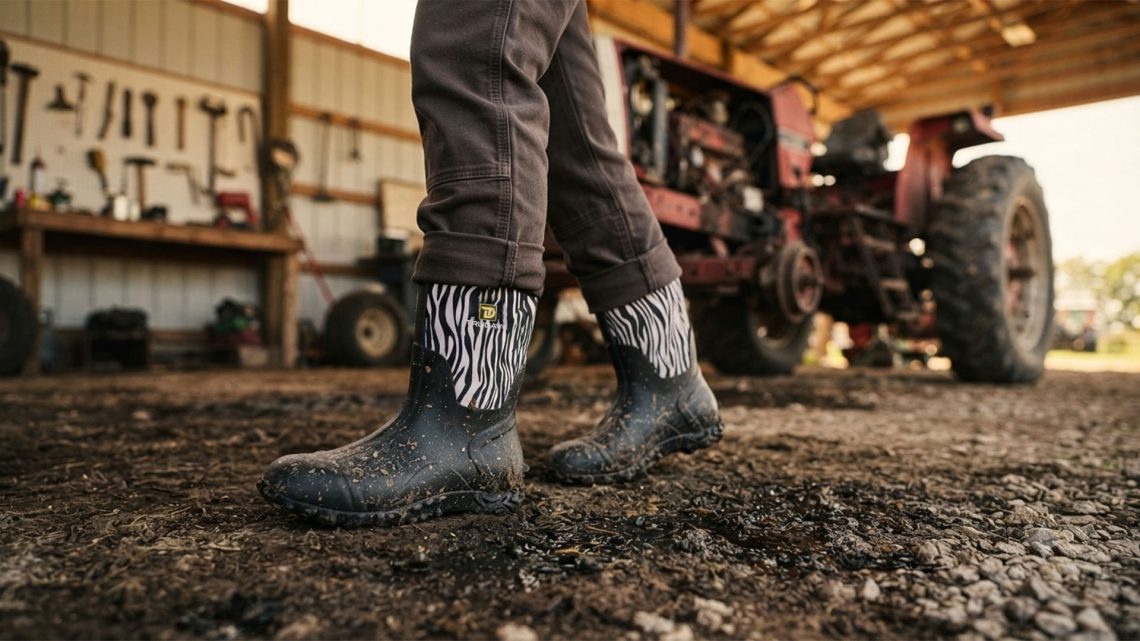
Outdoor brands such as Trudave Gear offer waterproof footwear designed for wet environments, mud, rain, farms, outdoor work, and demanding daily conditions.
When comparing options, evaluate traction, fit, support, boot height, and ease of cleaning together.
Removable Insoles Improve Hygiene
Removable footbeds are valuable in wet environments because they can be:
- Taken out for drying.
- Cleaned separately.
- Replaced when worn.
- Upgraded for support.
- Rotated between shifts.
Insoles absorb sweat and can hold odor.
Remove them after work and allow both the boots and footbeds to dry fully.
Replace insoles when they become flat, damaged, uneven, or permanently smelly.
Boot Weight and Worker Fatigue
Hatchery workers may walk and stand throughout the day.
Heavy boots add effort to every step.
Weight may come from:
- Tall shafts.
- Thick rubber.
- Safety toes.
- Heavy outsoles.
- Insulation.
- Reinforcement.
Choose the lightest footwear that still provides the required protection.
A tall insulated boot may be unnecessary inside a temperature-controlled hatchery.
Summer Aquaculture Boots
Warm weather and indoor humidity can make waterproof boots uncomfortable.
For summer work, consider:
- Uninsulated construction.
- Lightweight linings.
- Moderate shaft height.
- Removable insoles.
- Moisture-wicking socks.
- Quick-drying interiors.
- Manageable weight.
Tall rubber boots may still be necessary for pond work or heavy wash-down tasks.
Workers should change damp socks when practical.
Winter Fish Farm Boots
Outdoor fish farms may continue operating during cold weather.
Workers may encounter snow, freezing spray, cold mud, and icy walkways.
Winter boots may require:
- Waterproof construction.
- Appropriate insulation.
- Flexible low-temperature rubber.
- Thick midsoles.
- Traction for snow and slush.
- Room for warm socks.
Boots should not compress the toes.
Restricted circulation can make feet colder.
Very bulky boots may also reduce control on ladders and platforms.
Best Socks for Hatchery Work
Cotton socks absorb moisture and dry slowly.
Wool-blend and synthetic work socks usually provide better moisture management.
Choose socks that:
- Wick sweat.
- Fit without bunching.
- Extend above the boot collar.
- Cushion the heel and forefoot.
- Match the temperature.
- Avoid bulky seams.
Keep spare socks available during long or especially wet shifts.
Dry socks can significantly improve comfort.
Do Hatchery Workers Need Safety-Toe Boots?
Protective toes may be useful around:
- Feed bags.
- Tanks.
- Pumps.
- Pallets.
- Equipment.
- Heavy tools.
- Loading areas.
- Maintenance operations.
Steel toes provide impact protection but add weight and may transfer cold.
Composite toes may be lighter and less conductive.
Requirements depend on the facility, employer rules, and actual hazards.
A waterproof boot is not automatically safety rated.
Puncture Resistance in Aquaculture Work
Aquaculture sites may contain:
- Sharp shells.
- Hooks.
- Wire.
- Nails.
- Broken plastic.
- Metal fasteners.
- Fish-processing debris.
- Damaged pallets.
A thick outsole is not automatically puncture resistant.
Workers exposed to these hazards should choose footwear with an appropriate certified rating.
Inspect soles regularly for cuts and embedded objects.
Chemical Compatibility and Cleaning Agents
Fish farms and hatcheries may use detergents, disinfectants, sanitizers, water-treatment products, and other chemicals.
Not every rubber boot is compatible with every substance.
Chemical exposure may cause:
- Swelling.
- Softening.
- Cracking.
- Adhesive failure.
- Discoloration.
- Reduced waterproofing.
Use footwear and personal protective equipment approved for the specific chemical task.
Follow product labels, facility procedures, and manufacturer instructions.
Do not assume that ordinary rain boots provide chemical protection.
Biosecurity and Aquaculture Footwear
Boots can move water, mud, fish waste, parasites, bacteria, and other biological material between tanks, ponds, buildings, and farms.
Biosecurity procedures may include:
- Dedicated boots for specific areas.
- Cleaning before disinfection.
- Boot-wash stations.
- Separate footwear for quarantine zones.
- Visitor boot covers.
- Disinfection between facilities.
- Controlled storage of clean boots.
Visible organic material should be removed before disinfectant is applied.
Heavy soil and residue can reduce disinfectant effectiveness.
Follow facility and aquatic-animal-health guidance.
How to Clean Fish Hatchery Boots
A practical cleaning routine includes:
- Remove fish residue, feed, mud, and algae.
- Rinse the exterior.
- Brush the outsole channels.
- Use an approved cleaner.
- Follow facility biosecurity procedures.
- Remove damp insoles.
- Rinse when required.
- Dry the footwear completely.
- Store clean boots in a ventilated area.
Use dedicated cleaning tools to reduce cross-contamination.
How to Remove Fish Slime and Organic Residue
Fish slime, feed, and organic material can make boots slippery and cause odor.
Rinse the footwear before residue dries.
Use warm water, a suitable brush, and an approved cleaning solution.
Pay particular attention to:
- Outsole grooves.
- Heel edges.
- Shaft seams.
- Pull handles.
- Areas around the toe.
Avoid harsh chemicals unless the boot manufacturer approves them.
How to Prevent Aquaculture Boot Odor
Odor may develop from sweat, fish residue, feed, algae, and incomplete drying.
To reduce odor:
- Wear clean moisture-wicking socks.
- Rinse boots after each shift.
- Remove insoles.
- Dry interiors completely.
- Rotate between two pairs.
- Replace worn footbeds.
- Store boots in moving air.
- Use approved deodorizing products after cleaning.
Strong fragrances only cover odor temporarily.
The source of moisture and contamination must be removed.
How to Dry Waterproof Hatchery Boots
Waterproof boots can become damp inside from sweat.
After work:
- Remove the insoles.
- Wipe visible moisture.
- Open the shafts.
- Direct airflow inside.
- Use a low-temperature boot dryer when approved.
- Avoid strong direct heat.
Radiators, fireplaces, and high-temperature dryers can damage rubber, linings, and adhesives.
Daily workers may benefit from rotating between two pairs.
How Long Should Fish Hatchery Boots Last?
Boot lifespan depends on:
- Daily hours of use.
- Concrete exposure.
- Chemical contact.
- Cleaning frequency.
- Tread wear.
- Boot material.
- Storage.
- Walking distance.
- Worker weight.
- Outdoor terrain.
Inspect boots regularly for:
- Cracks.
- Leaks.
- Smooth tread.
- Sole separation.
- Chemical damage.
- Damaged linings.
- Compressed cushioning.
- Unstable heel structure.
A boot may remain waterproof while losing the traction needed for wet floors.
When Should Aquaculture Boots Be Replaced?
Replace boots when:
- Water enters repeatedly.
- Tread becomes dangerously smooth.
- The sole separates.
- Chemical damage appears.
- Cracks continue spreading.
- Cushioning collapses.
- Heel support becomes unstable.
- The interior cannot be cleaned.
- Repairs repeatedly fail.
Keep a backup pair available.
Wet-work facilities should not depend on a single pair of worn boots.
Common Mistakes When Buying Hatchery Boots
Buying Casual Rain Boots for Full Shifts
Light-duty boots may lack cushioning and support.
Choosing Deep Mud Tread for Smooth Concrete
Aggressive lugs may reduce contact on indoor floors.
Buying Boots Too Large
Oversized footwear creates heel slip and instability.
Choosing the Tallest Boot for Every Job
Extra height increases heat and weight.
Ignoring Biosecurity
Boots can transfer biological material between tanks and facilities.
Assuming Waterproof Means Chemical Resistant
Waterproof rubber may still be damaged by disinfectants and chemicals.
Never Replacing Insoles
Footbeds often wear out before the waterproof shell.
Ignoring Algae and Feed Buildup
Organic residue reduces traction.
Storing Boots While Damp
Moisture causes odor and interior deterioration.
How to Choose the Best Boots for Fish Hatchery Work
Before purchasing, consider the actual work environment.
Ask:
Are floors mostly concrete, metal, wood, or mud?
How much standing water is present?
Do workers clean tanks?
Are ponds or docks involved?
How many hours are spent standing?
Are safety toes required?
What cleaning chemicals are used?
Are separate biosecurity boots required?
What temperatures occur?
Can the insoles be removed?
Then compare:
- Waterproof construction.
- Boot height.
- Wet-floor traction.
- Heel retention.
- Toe room.
- Cushioning.
- Boot weight.
- Safety ratings.
- Chemical compatibility.
- Ease of cleaning.
For hatchery workers, fish farmers, and agricultural professionals comparing waterproof footwear, Trudave Gear offers boots designed for wet environments, rain, mud, farms, outdoor work, and demanding daily conditions.
Choose footwear according to the flooring, water depth, cleaning procedures, safety requirements, and number of hours spent on your feet.
Frequently Asked Questions
What are the best boots for fish hatchery work?
The best hatchery boots are fully waterproof, slip resistant on wet floors, easy to clean, securely fitted, and comfortable enough for long standing and walking.
Are rubber boots good for aquaculture workers?
Yes. Rubber boots are practical around tanks, ponds, wash-down areas, wet concrete, and fish-handling operations.
What tread is best for wet concrete?
Moderate tread with flexible rubber, broad contact areas, and water-dispersing channels generally performs better than extremely deep mud lugs.
How tall should fish farm boots be?
Mid-calf boots work well for general hatchery tasks. Tall boots provide more protection during tank cleaning, pond work, and heavy splashing.
Are regular rain boots safe on algae?
No footwear guarantees traction on algae. Choose slip-resistant tread and ensure surfaces are cleaned and maintained.
Do hatchery workers need safety toes?
Safety toes may be appropriate around tanks, pumps, pallets, feed bags, equipment, and maintenance work.
Are waterproof boots resistant to disinfectants?
Not necessarily. Chemical compatibility must be confirmed through the manufacturer’s specifications.
How do you clean fish slime from rubber boots?
Rinse promptly, brush the outsole and upper, use an approved cleaner, and follow facility sanitation procedures.
Why do hatchery boots smell?
Odor usually comes from sweat, fish residue, feed, algae, dirty insoles, and incomplete drying.
How often should hatchery boot insoles be replaced?
Replace them when they become flat, damaged, uneven, permanently smelly, or no longer supportive.
Final Thoughts
Fish hatchery and aquaculture work require footwear designed for continuous exposure to water, wet floors, organic residue, tanks, ponds, docks, and long work shifts.
The best boots provide dependable waterproof protection, secure heel fit, practical wet-surface traction, supportive cushioning, manageable weight, and easy-clean construction.
Mid-calf rubber boots work well for routine feeding, inspections, and indoor hatchery tasks.
Tall rubber boots provide more protection during tank cleaning, pond work, heavy wash-down operations, and muddy outdoor conditions.
Supportive waterproof lace-up boots may be more appropriate for pond banks, maintenance work, rocky terrain, and long walking distances.
Trudave Gear offers waterproof outdoor boots designed for wet environments, rain, mud, farms, and demanding work conditions.
Choose footwear based on the flooring, water exposure, cleaning procedures, temperature, safety requirements, and hours spent on your feet.
Reliable aquaculture boots should help workers stay drier, move more confidently, and remain more comfortable from the first feeding round to the final tank inspection.


You May Also Like

The Hidden Damage Caused by Grazing During Wet Soil Conditions

Why Some Pastures Green Up But Fail to Feed Your Herd Efficiently