Best Boots for Ready-Mix Concrete Plant and Washout Work
A ready-mix concrete plant is one of those workplaces where footwear can look destroyed long before the shift is over.
Workers move between aggregate yards, wet concrete, mixer trucks, washout stations, loading areas, maintenance bays, gravel roads, and muddy plant entrances.
Waterproofing matters, but concrete work creates another problem:
The material itself.
Fresh concrete, cement slurry, wash water, aggregate, and fine abrasive particles can all affect footwear differently.
A boot that works well for ordinary rain or mud may be a poor choice around repeated concrete exposure.
The best boots for concrete plant work need to provide waterproof protection, secure footing, easy cleaning, practical traction, and material compatibility with the actual substances workers encounter.
Ready-Mix Plants Are Not Just Concrete Floors
From outside, a concrete plant may look like an industrial yard filled with trucks and silos.
Workers actually move across many surfaces during the same shift.
These may include:
- Wet concrete.
- Gravel.
- Crushed stone.
- Mud.
- Steel platforms.
- Mixer-truck steps.
- Washout areas.
- Asphalt.
- Loading zones.
- Maintenance floors.
- Slurry-covered surfaces.
Each surface creates a different traction problem.
A boot that performs well in deep mud may feel awkward on truck steps.
A smooth indoor work boot may struggle in an aggregate yard.
Concrete plant footwear needs balance.
Fresh Concrete Exposure Changes the Conversation
Fresh concrete is not just dirty water.
Wet cementitious material can be highly alkaline and can irritate or burn skin.
That means workers should avoid allowing wet concrete to enter footwear.
Boots used around fresh concrete should provide enough shaft height and closure protection for the actual exposure.
Workers should also follow workplace PPE procedures and product safety guidance.
Waterproof does not automatically mean resistant to every cementitious or chemical exposure.
Why Tall Rubber Boots Are Common Around Washout
Truck washout areas are among the wettest places at a ready-mix facility.
Workers may encounter:
- Concrete slurry.
- Water.
- Cement residue.
- Mud.
- Aggregate.
- Standing wash water.
Tall rubber boots can be practical because they provide:
- More splash protection.
- Smooth cleanable surfaces.
- Minimal water absorption.
- Easy rinsing.
- Simple construction.
For workers who regularly stand near washout pits, additional shaft height can be useful.
When Mid-Calf Boots Are Better
Not every ready-mix worker needs knee-high boots.
Mid-calf waterproof boots may be more comfortable for:
- Plant inspections.
- Yard work.
- Dispatch support.
- Loading-area maintenance.
- Short washdown tasks.
- General facility work.
They provide useful splash protection while remaining lighter and easier to move in.
Why Ordinary Leather Work Boots May Struggle
Traditional leather work boots can provide excellent support, but constant slurry and wash-water exposure creates extra maintenance.
Concrete residue may collect around:
- Stitching.
- welt areas.
- laces.
- seams.
- outsole edges.
For workers spending most of the day in wet washout zones, molded waterproof footwear may be easier to clean.
For workers mainly operating machinery or performing maintenance, supportive waterproof lace-up boots may still be preferable.
Concrete Slurry Can Fill Tread Quickly
Outsoles may become packed with:
- Cement paste.
- Sand.
- fine stone.
- mud.
Once tread channels fill, traction changes.
Workers should choose a tread pattern that can be cleaned efficiently.
Useful outsole characteristics may include:
- Open channels.
- Simple lug shapes.
- Moderate spacing.
- Defined heel edges.
- Durable rubber.
Extremely complicated tread can make dried concrete difficult to remove.
Do Not Let Concrete Harden on Boots
Fresh concrete is much easier to remove before it cures.
After work, workers should follow plant procedures and clean footwear promptly.
Once cement material hardens inside outsole grooves, removal becomes much more difficult.
Repeated buildup can also change how the sole contacts the ground.
Best Boots for Mixer Truck Washout
Mixer washout crews may work around:
- Truck chutes.
- Drums.
- hoses.
- wash racks.
- slurry.
- wet gravel.
Suitable footwear should provide:
- Fully waterproof construction.
- Enough shaft height.
- easy-clean surfaces.
- stable heel support.
- practical wet-surface traction.
Workers should avoid allowing concrete slurry to enter over the boot opening.
Boots for Chute Cleaning
Cleaning mixer chutes can expose workers to splashing water and concrete residue.
The worker may stand on:
- Gravel.
- concrete.
- mud.
- truck platforms.
Footwear needs good mixed-surface traction.
Loose oversized rubber boots may feel unstable when workers climb or reposition around vehicles.
Truck Steps Need Different Traction Than Mud
Mixer trucks have:
- Metal steps.
- ladders.
- narrow footholds.
Footwear used around trucks should provide controlled contact on these surfaces.
Very bulky deep-lug boots can make precise foot placement harder.
Workers should clean slurry and mud from tread before climbing when practical.
Boots for Mixer Drivers
Mixer drivers may spend most of the shift inside the cab but repeatedly step outside to:
- Inspect loads.
- operate chutes.
- wash equipment.
- walk construction sites.
Their boots need to balance:
- Pedal control.
- waterproofing.
- site traction.
- truck-step grip.
- comfort.
A heavy tall rubber boot may be less convenient for constant driving.
Supportive waterproof work boots may be more practical for drivers who are only occasionally in deep washout areas.
Boots for Batch Plant Operators
Batch plant operators may work around:
- Control rooms.
- aggregate systems.
- conveyors.
- hoppers.
- wet plant floors.
Their footwear may need less shaft height but more hard-floor support.
A waterproof work boot with:
- Stable heel fit.
- comfortable cushioning.
- moderate tread.
- durable construction.
may be more useful than tall rubber footwear.
Boots for Aggregate Yards
Aggregate areas can contain:
- Crushed stone.
- sand.
- gravel.
- wet fines.
- mud.
Thin rubber soles may become uncomfortable on coarse rock.
Workers who spend long periods in aggregate yards should prioritize:
- Supportive midsoles.
- durable outsole rubber.
- strong heel cups.
- secure fit.
Sharp Aggregate Is Hard on Outsoles
Crushed stone can be abrasive.
Repeated walking on aggregate can wear soft outsole compounds quickly.
Concrete plant workers may benefit from durable work-grade soles rather than lightweight rain-boot construction.
Boots for Sand Piles
Sand creates a different problem from gravel.
Deep aggressive lugs may sink more than necessary.
Broad outsole contact and moderate tread can reduce effort.
Workers who alternate between sand and mud need a balanced sole.
Boots for Cement Powder Areas
Dry cement handling creates dust rather than water.
Workers may move around:
- Silos.
- bagged materials.
- transfer systems.
- maintenance platforms.
Footwear should be selected according to plant PPE procedures.
A waterproof boot may still be useful because workers move between dusty and wet areas during the same shift.
Boots for Conveyor Maintenance
Conveyor systems may require workers to climb:
- Platforms.
- stairs.
- ladders.
Suitable footwear should provide:
- Secure heel retention.
- controlled outsole edges.
- moderate tread.
- durable uppers.
- appropriate safety ratings.
Loose pull-on boots may be less comfortable during repeated climbing.
Boots for Plant Mechanics
Maintenance technicians may work around:
- Motors.
- bearings.
- hydraulic systems.
- mixers.
- pumps.
- heavy equipment.
They often need more protective footwear than washout crews.
Depending on the job, useful features may include:
- Safety toes.
- puncture resistance.
- oil-resistant outsoles.
- waterproof construction.
- ankle support.
Hydraulic Fluid and Concrete Are Different Hazards
A boot that handles water well may not provide appropriate resistance to:
- Hydraulic fluid.
- oil.
- grease.
- fuel.
Maintenance workers should check material compatibility with substances used in the plant.
Boots for Loader Operators
Front-end loaders are central to ready-mix operations.
Operators may spend hours in the cab but periodically step onto:
- Gravel.
- mud.
- wet concrete.
- metal steps.
Footwear should support:
- Pedal control.
- stable equipment entry.
- secure heel positioning.
- outdoor traction.
Tall heavy rubber boots may be unnecessary for operators who rarely work inside washout zones.
Boots for Skid-Steer Operators
Skid steers may be used for:
- Cleanup.
- aggregate movement.
- washout maintenance.
- mud removal.
Suitable footwear should provide moderate outsole thickness and secure fit so machine controls remain predictable.
Mud Around Concrete Plants Is Different From Farm Mud
Plant mud may contain:
- Cement fines.
- sand.
- aggregate dust.
- wash water.
This mixture may become extremely dense and sticky.
Tread should allow material to release instead of forming a heavy packed layer.
Boots for Concrete Washout Pits
Washout pits can contain extremely wet slurry and uneven surfaces.
Workers may need:
- Tall waterproof shafts.
- open tread.
- secure heel retention.
- durable construction.
- easy-clean materials.
If conditions exceed ordinary boot height or involve deeper hazardous material, workers should follow site-specific PPE requirements.
Boots for Slurry Cleanup
Slurry cleanup may involve:
- Shovels.
- hoses.
- pumps.
- wet vacuum systems.
Footwear should remain stable while workers twist, push, and lift.
A secure fit reduces foot movement during repetitive cleanup tasks.
Concrete Slurry and Slip Risk
Slurry can act differently depending on concentration.
A thin film on concrete may become slippery.
Thicker slurry may pack into tread.
Workers should keep both walking surfaces and outsole grooves as clean as possible.
Boots for Wet Concrete Floors
On wet hard surfaces, suitable outsoles typically benefit from:
- Broad contact zones.
- flexible rubber.
- multiple grooves.
- moderate tread depth.
Extreme mud tread is not always the best choice.
Boots for Steel Platforms
Batch plants may have elevated steel access platforms.
Workers may climb and stand on:
- grating.
- steel plate.
- stairs.
Boots should provide stable contact and secure heel retention.
Packed concrete residue should be removed before climbing whenever possible.
Boots for Plant Stairs
Repeated stair climbing makes boot fit important.
Excessive heel movement can lead to:
- Blisters.
- fatigue.
- reduced confidence.
Supportive waterproof lace-up boots may be better than loose rubber boots for workers spending much of the day on elevated plant structures.
Boots for Concrete Testing Technicians
Quality-control workers may move between:
- Batch plants.
- Mixer trucks.
- Construction sites.
- Labs.
Their footwear needs versatility.
They may encounter wet concrete during sampling but also spend time walking on gravel, asphalt, and indoor laboratory floors.
A supportive waterproof work boot may be the best compromise.
Boots for Slump Testing
Concrete testing can expose workers to fresh material and rinse water.
Boots should provide enough waterproof coverage for the sampling process while remaining comfortable for travel and site walking.
Boots for Construction-Site Deliveries
Mixer drivers may deliver to:
- Residential foundations.
- highways.
- commercial slabs.
- industrial sites.
- remote construction areas.
Site surfaces may include:
- Mud.
- rebar zones.
- gravel.
- wet soil.
- concrete.
Protective footwear needs can vary significantly.
Rebar and Puncture Hazards
Construction sites may contain:
- Wire.
- nails.
- sharp metal.
- broken forms.
- rebar debris.
A thick outsole does not automatically mean puncture resistant.
Workers should use properly rated footwear where puncture hazards are present.
Safety-Toe Boots for Concrete Workers
Safety toes may be appropriate or required around:
- Mixer trucks.
- heavy hoses.
- aggregate.
- pallets.
- plant machinery.
- construction sites.
The correct protection depends on the job and employer requirements.
Composite vs Steel Toes
Both may provide protection when appropriately rated.
Selection may depend on:
- Weight.
- temperature.
- workplace standards.
- personal preference.
The key is using footwear that meets the required safety standard.
Boots for Cold-Weather Concrete Work
Winter concrete production may expose workers to:
- Snow.
- slush.
- icy yards.
- cold wash water.
- frozen aggregate areas.
Suitable footwear may need:
- Waterproof construction.
- cold-flexible rubber.
- moderate insulation.
- thicker midsoles.
- room for warm socks.
Concrete Plant Ice Hazards
Wash water can freeze around:
- Chutes.
- racks.
- truck areas.
- plant drains.
No ordinary boot eliminates ice hazards.
Facilities may need:
- Deicing.
- housekeeping.
- approved supplemental traction.
Boots for Hot-Weather Concrete Plants
Summer work can be extremely hot.
Tall rubber boots may trap heat.
Workers who do not need full knee-high protection should consider:
- Lower shaft height.
- uninsulated construction.
- moisture-wicking socks.
- removable insoles.
- lighter materials.
Heat From Fresh Concrete
Fresh concrete can generate heat as it cures, but workers should not select ordinary boots based on thermal exposure alone.
PPE should match the actual work process.
Waterproof boots are not automatically heat-resistant footwear.
Heel Retention Matters in Slurry
Slurry and mud create suction.
Loose boots can move excessively during each step.
Secure heel retention helps reduce:
- Friction.
- blistering.
- fatigue.
- boot loss in sticky material.
Boot Weight Matters During Washout
Workers may spend hours walking while carrying:
- Hoses.
- tools.
- shovels.
Heavy boots add effort to every movement.
Choose enough shaft height and protection without unnecessary bulk.
Cushioning Still Matters in an Industrial Yard
Concrete plant employees may spend much of the shift on:
- Hard concrete.
- compacted gravel.
- equipment steps.
A supportive midsole can reduce fatigue.
Waterproofing alone does not make a boot comfortable.
Best Socks for Ready-Mix Workers
Synthetic or wool-blend socks generally work better than cotton inside waterproof footwear.
Useful features include:
- Moisture wicking.
- heel cushioning.
- secure fit.
- quick drying.
Spare socks can be useful after heavy washout work.
Removable Insoles Help Boots Dry
Waterproof boots may become damp inside from sweat.
Removable insoles make it easier to:
- Dry footwear.
- replace worn cushioning.
- control odor.
- improve support.
Cleaning Concrete Plant Boots
Cleaning should follow company procedures.
A practical routine may include:
- Remove fresh slurry before it cures.
- Rinse the exterior.
- Brush aggregate from tread.
- Clean around outsole edges.
- Inspect for cracks or chemical damage.
- Remove damp insoles.
- Dry boots completely.
- Store them in a ventilated work area.
Why Timing Matters When Cleaning Concrete
Fresh residue may rinse away relatively easily.
Cured material becomes much harder to remove.
Allowing buildup to accumulate can:
- Increase boot weight.
- alter tread contact.
- hide damage.
- make cleaning difficult.
Avoid Aggressive Metal Scraping
Sharp metal tools can damage:
- Rubber.
- outsole edges.
- waterproof surfaces.
Use safer cleaning tools approved for the footwear whenever possible.
Chemical Cleaners Should Be Used Carefully
Workers should not apply strong acids or harsh cleaning chemicals to footwear unless the manufacturer confirms compatibility.
Removing concrete buildup is not worth damaging the boot material or creating another exposure hazard.
Drying Boots After Washout Work
After cleaning:
- Remove insoles.
- open shafts or loosen laces.
- allow airflow.
- use low-temperature drying if approved.
Avoid strong direct heat that may damage rubber or adhesives.
When Concrete Work Boots Need Replacement
Replace footwear when:
- Waterproofing fails.
- outsole tread becomes badly worn.
- concrete buildup cannot be removed.
- rubber cracks.
- sole separation develops.
- heel support collapses.
- chemical damage appears.
- the shaft no longer protects adequately.
Common Mistakes When Buying Concrete Plant Boots
Buying Casual Rain Boots for Industrial Washout
They may lack enough support and durability.
Choosing Boots Only for Mud
Plant workers also spend time on steel, concrete, gravel, and equipment.
Ignoring Cement Exposure
Fresh concrete requires appropriate PPE practices.
Letting Slurry Cure on Tread
Hardened buildup can permanently affect the outsole.
Choosing Boots Too Loose
Sticky material increases heel movement.
Wearing Tall Rubber Boots for Constant Driving
Mixer and loader operators may need better pedal control.
Assuming Waterproof Means Chemical Resistant
Concrete plant environments may include cement, oils, fuels, and cleaning agents.
Ignoring Safety Ratings
Industrial and construction roles may require protective-toe or puncture-resistant footwear.
How to Choose the Best Boots for Concrete Plant Work
Start with the worker’s main role.
For washout crews, prioritize:
- Fully waterproof construction.
- taller shaft coverage.
- easy-clean materials.
- open tread.
- secure fit.
For mixer drivers, prioritize:
- Pedal control.
- waterproof protection.
- mixed-surface traction.
- truck-step stability.
- all-day comfort.
For batch plant operators, prioritize:
- Hard-floor support.
- moderate tread.
- secure heel fit.
- waterproof construction.
For mechanics, prioritize:
- Safety features.
- oil resistance where required.
- ankle support.
- durable construction.
For aggregate-yard crews, prioritize:
- Strong midsoles.
- abrasion-resistant outsoles.
- gravel comfort.
- mud traction.
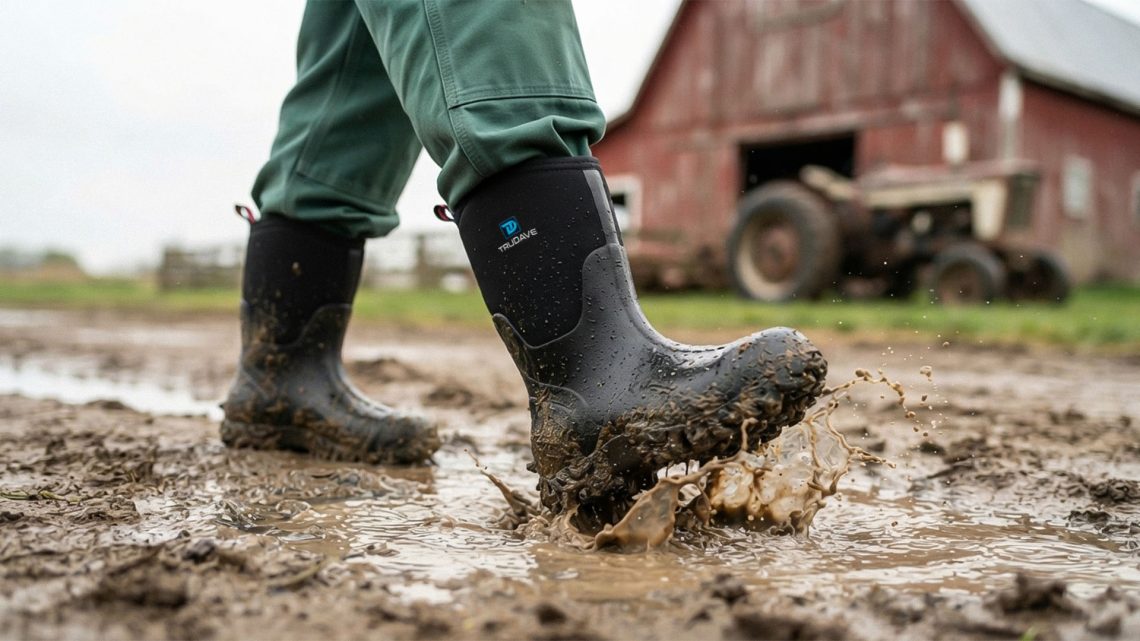
Workers comparing waterproof work footwear from brands such as Trudave Gear should match the boot to the actual mix of concrete slurry, washout water, gravel, truck work, machinery, and safety requirements.
Frequently Asked Questions
What are the best boots for concrete plant work?
The best concrete plant boots are waterproof, durable, securely fitted, easy to clean, and suitable for wet concrete, slurry, gravel, mud, truck steps, and industrial surfaces.
Are rubber boots good for ready-mix concrete work?
Yes. Rubber boots are especially useful for washout areas, wet slurry, truck cleaning, and other tasks involving heavy water exposure.
How tall should concrete washout boots be?
Mid-calf boots work for moderate splash exposure, while knee-high rubber boots provide better protection around heavy washout and deeper slurry.
What tread works best around concrete plants?
A balanced tread with open channels and good hard-surface contact works well because employees often move between mud, gravel, wet concrete, and steel.
Are deep mud boots good for mixer drivers?
Not always. Drivers may prefer lower-profile waterproof work boots that provide better pedal feel and truck-step control.
Do concrete workers need safety-toe boots?
Safety toes may be required around mixer trucks, aggregate, heavy equipment, pallets, construction sites, and maintenance work.
Can wet concrete damage skin?
Yes. Fresh cementitious material can irritate or burn skin. Workers should prevent concrete from entering footwear and follow workplace PPE procedures.
Are waterproof boots resistant to cement and concrete chemicals?
Not automatically. Material compatibility depends on the specific boot and exposure.
How should concrete be removed from work boots?
Fresh residue should be removed promptly using approved cleaning methods before it cures. Avoid damaging the boot with sharp tools or incompatible chemicals.
When should ready-mix work boots be replaced?
Replace them when leaks, cracks, severe tread wear, sole separation, chemical damage, loss of support, or unremovable concrete buildup affects performance.
Final Thoughts
Ready-mix concrete work requires footwear that can handle an unusual combination of wet cement, slurry, aggregate, washout water, gravel, mud, truck steps, plant platforms, and construction sites.
The right boot depends heavily on the job.
Washout crews may need tall, fully waterproof rubber boots that are easy to rinse.
Mixer drivers need waterproof footwear with better pedal control and stable truck-step traction.
Batch plant operators need comfort on hard surfaces.
Mechanics may require waterproof safety boots with stronger ankle support and additional protective ratings.
Aggregate-yard workers need durable soles and cushioning for rough stone.
Trudave Gear offers waterproof outdoor and work footwear suited to wet ground, mud, rain, industrial work, and demanding outdoor environments.
Choosing footwear according to the actual concrete-plant role can help workers stay drier, maintain better footing, reduce fatigue, and move more comfortably from the first truck load of the morning to the final washout at the end of the shift.


You May Also Like

The Seasonal System: Why One Pair of Rain Boots Isn’t Enough—and How to Build a Trudave Rotation That Works Year-Round

Hay Storage Mistakes That Cost Farmers Thousands Every Winter