Best Boots for Christmas Tree Farm and Tree Harvest Work
Christmas tree farms become some of the busiest outdoor agricultural businesses of the year during late fall and early winter.
Workers may spend entire days walking through wet grass, cutting trees, dragging them across muddy rows, operating tractors, helping customers, netting trees, loading vehicles, maintaining gravel parking areas, and working through cold rain or early snow.
A normal shift may involve:
- Wet grass.
- Mud.
- Tree needles.
- Cold rain.
- Frost.
- Snow.
- Gravel.
- Tractor ruts.
- Sawdust.
- Tree sap.
- Customer parking areas.
- Loading stations.
That makes footwear an important part of seasonal tree-farm work.
The best boots for Christmas tree farm workers should provide dependable waterproof protection, secure traction in wet grass and mud, enough support for long walking shifts, and enough flexibility for workers who cut, drag, lift, carry, net, and load trees throughout the day.
Christmas Tree Season Is Usually Cold and Wet
Tree harvest often happens during November and December.
Depending on the region, workers may experience:
- Rain.
- Dew.
- Frost.
- Snow.
- Slush.
- Mud.
Even when the weather is dry, tall grass between tree rows may remain wet for hours.
Waterproof footwear is especially useful.
Morning Dew Can Soak Footwear Quickly
Many tree farms open early.
Workers may begin:
- Inspecting rows.
- Preparing saw stations.
- Moving wagons.
- Checking customer areas.
Grass can be heavily covered with dew.
Ordinary fabric shoes may become wet long before the first customers arrive.
Mid-Height Boots Work Well for Most Tree-Farm Workers
Mid-height waterproof boots provide a useful balance of:
- Wet-grass protection.
- ankle support.
- manageable weight.
- flexibility.
They are often more practical than knee-high rubber boots for employees who walk long distances.
When Taller Rubber Boots Make Sense
Mid-calf or knee-high boots may be useful during:
- Heavy rain.
- deep mud.
- snowmelt.
- drainage work.
- extremely wet fields.
For routine walking and customer service, however, very tall boots can add unnecessary bulk.
Boots for Christmas Tree Cutting Crews
Tree-cutting workers may move from one tree to another carrying:
- Hand saws.
- Chainsaws.
- Measuring tools.
They need stable footing on uneven ground.
Useful footwear characteristics include:
- Waterproof construction.
- secure heel fit.
- ankle support.
- moderate outdoor tread.
Tree Cutting Requires Task-Specific Protection
General waterproof boots should not automatically be considered appropriate for chainsaw work.
Chainsaw operators may require specialized cut-resistant footwear and other PPE.
Boots for Hand-Saw Cutting
Workers using hand saws still need secure footing because they may kneel or crouch under branches.
Forefoot flexibility helps.
Boots for Kneeling Under Trees
Lower branches may require workers to:
- Bend.
- Kneel.
- Reach.
A stiff heavy boot can make these movements tiring.
Boots for Tree Dragging
After cutting, trees may need to be dragged from the field to:
- Roads.
- Wagons.
- Loading stations.
This requires strong heel retention and good traction.
Tree Dragging Changes Balance
Workers may lean forward while pulling a heavy tree.
A loose boot can slide around the foot and reduce control.
Mud Makes Dragging More Difficult
A heavy tree combined with slippery ground increases the importance of:
- Stable heel support.
- moderate-to-deep tread.
- ankle control.
Boots for Tree-Carrying Crews
Smaller trees may be carried by hand.
Workers need secure footing because both hands may be occupied.
Boots for Team Carrying
Large trees may be moved by two or more workers.
Everyone needs predictable footing to avoid sudden imbalance.
Boots for Wet Christmas Tree Rows
Tree farms may have:
- Grass.
- Weeds.
- Soft soil.
between rows.
Waterproof mid-height boots work well.
Tall Grass Holds Water
Wet vegetation can soak low shoes even when soil drainage is good.
Higher collars help prevent moisture entry.
Boots for Muddy Tree Farms
Heavy customer and tractor traffic may create deep ruts.
Useful outsole features include:
- Open tread channels.
- moderate-to-deep lugs.
- defined heel edges.
- flexible rubber.
Clay Soil Can Fill Outsole Grooves
Wet clay may pack into narrow tread.
Once filled, the outsole becomes:
- Heavy.
- smoother.
- harder to clean.
Wider channels release mud more easily.
Sandy Tree Farms Need Less Aggressive Tread
On sandy or well-drained soil, deep lugs may be unnecessary.
Broad outsole contact and lighter footwear can improve walking comfort.
Boots for Sloped Tree Farms
Christmas trees are often grown on rolling or hilly land.
Workers may walk:
- Uphill.
- downhill.
- sideways across rows.
Secure heel fit becomes especially important.
Sidehill Walking Requires Lateral Support
Loose rubber boots may shift inside the shaft.
Supportive waterproof lace-up boots may feel more stable on steep fields.
Toe Room Matters on Downhill Rows
Descending pushes the foot forward.
Enough toe space helps prevent repeated toe impact.
Boots for Tree Netting Stations
After harvest, many farms use netting machines to compress trees for transport.
Workers may stand for hours around:
- Concrete.
- Gravel.
- Wet grass.
Cushioning becomes important.
Boots for Netting-Machine Operators
Workers may repeatedly:
- Lift trees.
- guide trunks.
- pull netting.
Secure heel support helps while handling awkward loads.
Boots for Tree Shaker Stations
Some farms mechanically shake loose needles or debris from trees.
Workers may stand around:
- Machines.
- gravel.
- wet ground.
Protective footwear may be appropriate around mechanical equipment.
Safety-Toe Boots for Tree Handling
Protective toes may be useful when workers handle:
- Heavy trunks.
- mechanical netters.
- tractors.
- pallets.
- equipment.
Requirements depend on the farm.
Boots for Loading Crews
Trees may be loaded onto:
- Cars.
- SUVs.
- Trucks.
- Trailers.
Workers may move constantly between:
- Gravel.
- Pavement.
- Grass.
- Mud.
Mixed-surface waterproof footwear works well.
Boots for Roof-Loading Trees
Some farms help secure trees to vehicle roofs.
Employees may carry trees across parking areas.
Good hard-surface traction is useful.
Boots for Customer Pickup Areas
Loading zones may become wet from:
- Rain.
- snow.
- mud tracked by vehicles.
Moderate mixed-surface tread is practical.
Boots for Gravel Parking Lots
Large tree farms may use temporary gravel lots.
Thin rain boots can become uncomfortable after hours.
Supportive midsoles improve comfort.
Boots for Grass Parking Areas
Wet grass parking fields may become soft after traffic.
Waterproof boots with moderate outdoor tread are useful.
Boots for Parking Attendants
Parking workers may stand for long periods.
Cushioning matters just as much as waterproofing.
Boots for Traffic Direction
Employees directing customers need stable lateral movement.
Loose oversized boots are a poor choice.
Boots for Customer-Service Field Workers
Some employees spend most of the day helping customers find trees.
They may walk several miles through the farm.
Lightweight waterproof boots help reduce fatigue.
Public-Facing Appearance Matters
Tree-farm workers often interact directly with customers.
Smooth waterproof uppers are easier to clean.
Boots for Choose-and-Cut Farms
Choose-and-cut farms require employees to move through customer areas all day.
Workers may assist with:
- Measuring.
- cutting.
- dragging.
- loading.
Versatile footwear is best.
Boots for Pre-Cut Tree Lots
Employees at retail tree lots may spend less time in fields and more time on:
- Asphalt.
- Concrete.
- Gravel.
Hard-floor cushioning becomes more important.
Boots for Urban Christmas Tree Lots
City tree lots may operate on paved surfaces.
Deep mud tread is usually unnecessary.
Boots for Tree-Lot Watering
Cut trees may be sprayed or watered to maintain freshness.
Workers may encounter wet pavement.
Waterproof footwear remains useful.
Boots for Tree Stand Preparation
Some farms trim tree bases before sale.
Workers may handle:
- Saws.
- cutting equipment.
- wood debris.
Task-specific safety footwear may be required.
Boots for Trimming Stations
Sawdust and needles can collect in deep tread.
Simple outsole channels are easier to clean.
Boots for Tree Sap Exposure
Fresh-cut trees can leave sticky resin on footwear.
Smooth uppers are easier to maintain than porous fabric.
How to Clean Tree Sap From Boots
Use footwear-safe cleaning methods recommended by the manufacturer.
Avoid harsh solvents that may damage:
- Rubber.
- coatings.
- adhesives.
Boots for Sawdust-Covered Areas
Sawdust may reduce traction on hard surfaces.
Regular sweeping and cleaning remain important.
Boots for Pine Needle Buildup
Needles may lodge inside outsole channels.
Workers should remove them regularly.
Boots for Tractor Operators
Tree farms may use tractors for:
- Wagons.
- Tree transport.
- Mowing.
- Farm maintenance.
Drivers need reliable pedal control.
Tall Rubber Boots Can Be Bulky in Tractors
Mid-height waterproof work boots may provide better control.
Boots for Wagon Ride Drivers
Many Christmas tree farms offer wagon rides.
Drivers may move between:
- Tractor cabs.
- Gravel.
- Muddy fields.
Mixed-surface waterproof boots are practical.
Boots for Wagon Loading Areas
Workers helping customers enter wagons may stand in one place for hours.
Supportive midsoles reduce fatigue.
Boots for UTV Workers
UTVs may be used for:
- Customer assistance.
- Tree pickup.
- Field patrol.
- Equipment transport.
Footwear should provide good pedal control and outdoor traction.
Boots for Field Patrol Workers
Large farms may need employees to inspect distant rows.
Walking comfort becomes important.
Boots for Fence Maintenance
Tree farms may use fencing to control:
- Deer.
- Trespassing.
- Customer access.
Workers may handle:
- Wire.
- Posts.
- Fasteners.
Puncture hazards should be considered.
A Thick Sole Is Not Automatically Puncture Resistant
Workers dealing with wire or nails may need appropriately rated footwear.
Boots for Gate Areas
Gates may become muddy because of heavy vehicle and customer traffic.
More open tread can help.
Boots for Drainage Work
Tree farms may maintain:
- Ditches.
- Culverts.
- Water channels.
These jobs may require more shaft coverage.
Boots for Culvert Cleaning
Workers may encounter:
- Mud.
- Standing water.
- leaves.
- gravel.
Mid-calf waterproof boots are practical.
Boots for Tree Farm Roads
Service roads may be made from:
- Gravel.
- Dirt.
- Crushed stone.
Strong midsoles improve comfort.
Boots for Muddy Farm Roads
Rain and tractor traffic can create deep ruts.
Moderate outdoor tread is useful.
Boots for Snowy Christmas Tree Farms
Snow is part of the experience at many northern farms.
Workers may need:
- Waterproof construction.
- moderate insulation.
- cold-flexible outsoles.
Boots for Fresh Snow
Moderate-to-deep tread helps on loose snow.
Boots for Packed Snow
Packed customer pathways may become slick.
Cold-flexible rubber and stable heel contact are useful.
Boots for Slush
Slush combines:
- Water.
- cold.
- unstable footing.
Mid-calf waterproof boots work well.
Ice Requires Separate Traction Measures
No ordinary farm boot completely eliminates ice risk.
Approved traction devices may be needed.
Boots for Frozen Mud
Mud ruts may freeze overnight.
Supportive midsoles and ankle control improve stability.
Boots for Cold Rain
Late fall rain can be colder and more uncomfortable than summer rain.
Waterproof construction helps prevent chilled wet feet.
Boots for Winter Tree Harvest
Workers who remain outside all day may benefit from moderate insulation.
Too Much Insulation Can Cause Sweat
Tree harvesting is physically active.
Overly warm boots may cause feet to become damp internally.
Boots for Spring Tree-Farm Work
Christmas tree farms operate year-round.
Spring tasks may include:
- Planting.
- fertilizing.
- weed control.
Wet spring fields make waterproof boots useful.
Boots for Seedling Planting
Workers may walk repeatedly through soft soil.
Lightweight waterproof boots with moderate tread are practical.
Boots for Summer Tree-Farm Work
Summer may involve:
- Mowing.
- pruning.
- pest scouting.
Heavy winter boots are usually inappropriate.
Boots for Shearing Crews
Christmas trees are commonly shaped by trimming or shearing.
Workers may walk row after row carrying tools.
Lightweight support reduces fatigue.
Boots for Hot-Weather Shearing
Workers should prioritize:
- Uninsulated construction.
- moisture-wicking socks.
- manageable boot weight.
Boots for Weed-Control Crews
Tree farms may use:
- Mowing.
- Mechanical trimming.
- Herbicides.
Footwear requirements depend on the task.
Waterproof Does Not Mean Chemical Resistant
Workers using herbicides or pesticides should follow product-specific PPE instructions.
Boots for Fertilizer Application
The correct footwear depends on the material used.
General rain boots should not automatically be treated as universal chemical PPE.
Boots for Pest Scouting
Workers checking trees for:
- Insects.
- Disease.
- Damage.
may cover long routes.
Lightweight waterproof boots are useful.
Boots for Deer-Damage Inspection
Workers may follow fencelines and remote tree rows.
Ankle support and mixed-terrain tread are helpful.
Boots for Storm Cleanup
Wind, rain, or snow may damage:
- Trees.
- Fences.
- Signs.
- Roads.
Workers may encounter more hazards than during normal farm work.
Fallen Branches Can Hide Sharp Debris
Protective footwear may be necessary during cleanup.
Chainsaw Cleanup Requires Specialized PPE
Ordinary waterproof boots should not automatically be used for chainsaw work.
Boots for Holiday Event Areas
Tree farms may also offer:
- Gift shops.
- Bonfires.
- Food areas.
- Photo areas.
Workers may move constantly between fields and customer spaces.
Boots for Gift Shop Support Workers
Employees who spend more time indoors may prefer lower-profile waterproof footwear.
Boots for Outdoor Firewood Areas
Some farms sell:
- Firewood.
- Wreath materials.
Workers may handle rough wood and heavy bundles.
More protective footwear may be useful.
Boots for Wreath-Making Support
Workers transporting:
- Branches.
- Greenery.
- materials.
may work across wet indoor and outdoor areas.
Boots for Garland and Greenery Crews
Needles and cuttings can lodge in outsole grooves.
Simple tread is easier to clean.
Boots for Farm Market Workers
Christmas tree farms may sell:
- Decorations.
- Produce.
- Hot drinks.
Workers transitioning between mud and indoor retail areas should keep tread clean.
Separate Footwear May Help Larger Farms
Large operations may benefit from separate pairs for:
- Field harvesting.
- Indoor retail and packing.
Boots for Tree Shipping Crews
Wholesale tree farms may ship large numbers of trees.
Workers may handle:
- Pallets.
- Trucks.
- Trailers.
Safety-toe footwear may be appropriate.
Boots for Wholesale Loading
Workers may move trees across:
- Gravel yards.
- Loading platforms.
Mixed-surface work boots are practical.
Boots for Truck Drivers
Drivers may spend long hours behind the wheel.
A lower-profile waterproof work boot usually provides better pedal comfort.
Boots for Trailer Loading
Workers should keep tread clear before climbing metal ramps or trailers.
Boots for Night Tree-Farm Work
Some farms operate after sunset.
Workers may handle:
- Lighting.
- Customer traffic.
- Field assistance.
Reduced visibility makes predictable footing important.
Boots for Evening Closing Crews
After customers leave, workers may need to:
- Collect tools.
- Move trees.
- Clean loading areas.
Waterproof footwear remains useful as temperatures drop.
Boots for Rainy Holiday Weekends
Customer demand may remain high even in poor weather.
Workers may spend entire shifts in:
- Mud.
- Rain.
- Wet grass.
Fully waterproof boots become especially valuable.
Boots for Deep Holiday-Season Mud
Repeated customer traffic may turn certain paths into deep mud.
More aggressive tread and greater shaft coverage may be useful.
Boot Weight Matters During Peak Season
Tree-farm employees may work long days and weekends.
Heavy footwear adds fatigue.
Cushioning Matters Across Mixed Surfaces
Workers may transition constantly between:
- Grass.
- Gravel.
- Concrete.
- Pavement.
Supportive midsoles help.
Heel Retention Matters During Tree Dragging
Secure heel fit reduces movement when workers pull heavy loads.
Ankle Support Matters in Tree Rows
Roots, holes, and uneven soil may be hidden by:
- Grass.
- branches.
- needles.
Supportive uppers improve control.
Toe Room Matters During Long Shifts
Feet may swell.
The boot should secure the heel while leaving enough toe space.
Forefoot Flexibility Helps With Cutting and Loading
Workers repeatedly:
- Kneel.
- crouch.
- lift.
- climb.
The boot should flex naturally.
Best Socks for Christmas Tree Farm Workers
Synthetic and wool-blend socks generally perform better than cotton.
Useful features include:
- Moisture wicking.
- warmth.
- heel cushioning.
- quick drying.
Spare Socks Can Help
Deep mud, rain, or snow may occasionally send water over the boot collar.
A dry pair can improve comfort.
Removable Insoles Improve Daily Use
Replaceable footbeds allow workers to:
- Dry footwear.
- Restore cushioning.
- Improve hygiene.
- adjust warmth.
Easy-Clean Construction Saves Time
Christmas tree farm boots may collect:
- Mud.
- Grass.
- Needles.
- Sap.
- Sawdust.
Smooth waterproof uppers simplify cleaning.
How to Clean Christmas Tree Farm Boots
A practical routine may include:
- Remove pine needles and grass.
- Brush mud from tread.
- Remove sawdust.
- Clean sap using footwear-safe methods.
- Inspect for wire or sharp debris.
- Remove damp insoles.
- Allow boots to dry completely.
Needles Should Be Removed From Tread
Needles may pack tightly inside deep grooves.
Regular cleaning helps maintain outsole contact.
Mud Should Be Removed Before It Hardens
Dried soil makes tread harder to inspect.
How to Dry Tree-Farm Boots
After wet work:
- Remove insoles.
- Open the boots fully.
- Allow airflow.
- Use low-temperature drying if approved.
Avoid strong direct heat.
Rotating Two Pairs Can Help During Peak Season
Workers may operate every day during the holiday rush.
Alternating footwear gives each pair more time to dry.
When Christmas Tree Farm Boots Should Be Replaced
Replace footwear when:
- Waterproofing fails.
- tread becomes badly worn.
- outsole separation appears.
- heel support collapses.
- cracks form.
- puncture damage occurs.
- safety components are damaged.
- cushioning becomes ineffective.
Do Christmas Tree Farm Workers Need Safety-Toe Boots?
Some roles may require protective toes around:
- tractors.
- tree netting machines.
- loading equipment.
- pallets.
- heavy trunks.
Routine customer-service workers may have different needs.
Do Tree-Farm Workers Need Puncture-Resistant Boots?
Puncture protection may be appropriate for workers handling:
- Fence wire.
- nails.
- construction debris.
- maintenance materials.
Common Mistakes When Buying Christmas Tree Farm Boots
Buying Heavy Knee-High Boots for Every Worker
Long-distance field workers often benefit from lighter footwear.
Wearing Low Shoes Through Wet Grass
Dew and rain can soak them quickly.
Choosing Boots Too Loose for Tree Dragging
Secure heel fit improves control.
Wearing Deep Mud Lugs on Loading Platforms
Balanced tread is often better across both field and hard surfaces.
Ignoring Ladder or Equipment Control
Bulky soles may reduce precise footing.
Choosing Too Much Insulation
Active workers may overheat.
Assuming Waterproof Means Chainsaw Protective
Cut protection is a separate requirement.
Letting Sap, Mud, and Needles Build Up in Tread
Debris can reduce traction.
How to Choose the Best Boots for Christmas Tree Farm Work
Start with the worker’s primary duties.
For tree-cutting and harvest crews, prioritize:
- Waterproof construction.
- secure heel fit.
- ankle support.
- moderate outdoor tread.
For tree-dragging workers, prioritize:
- Strong heel retention.
- mud traction.
- supportive midsoles.
For loading crews, prioritize:
- Mixed-surface traction.
- safety protection where required.
- hard-floor cushioning.
For customer-service field workers, prioritize:
- Lightweight waterproof construction.
- walking comfort.
- easy-clean uppers.
For tractor and UTV operators, prioritize:
- Pedal control.
- moderate outsole thickness.
- secure heel positioning.
For winter and snow crews, prioritize:
- Appropriate insulation.
- cold-flexible outsoles.
- enough shaft coverage.
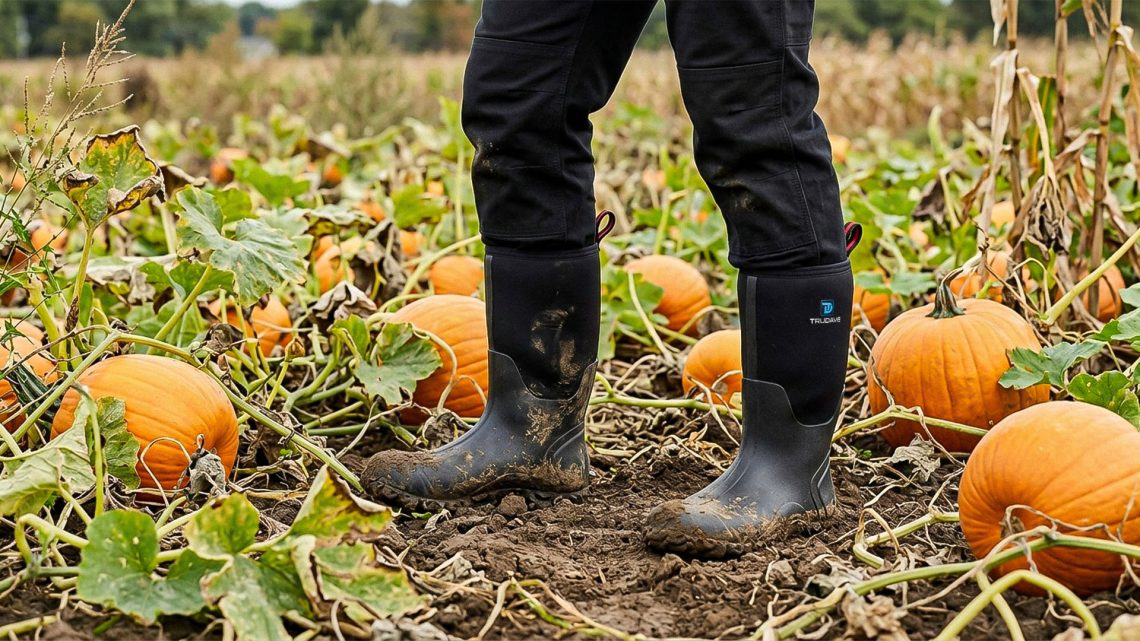
Workers comparing waterproof footwear from brands such as Trudave Gear should select boots according to the actual combination of wet grass, mud, tree handling, gravel, machinery, cold rain, and long seasonal shifts involved in their work.
Frequently Asked Questions
What are the best boots for Christmas tree farm work?
The best Christmas tree farm boots are waterproof, securely fitted, comfortable for long walking shifts, and equipped with traction suitable for wet grass, mud, gravel, cold rain, and seasonal farm work.
Are rubber boots good for Christmas tree farms?
Yes. Rubber boots are especially useful during rainy harvests, deep mud, wet grass, slush, and farm maintenance.
How tall should Christmas tree farm boots be?
Mid-height or mid-calf boots are versatile for most workers. Taller boots may be useful for deep mud, snowmelt, and drainage work.
What boots are best for muddy tree farms?
Waterproof boots with open tread channels, moderate-to-deep lugs, secure heel retention, and supportive uppers are practical.
Are deep mud boots good for tree loading crews?
They are useful in muddy fields, but balanced moderate tread may work better for workers moving between fields, gravel, pavement, trailers, and loading areas.
What boots are best for workers dragging Christmas trees?
Waterproof boots with secure heel fit, ankle support, mud traction, strong midsoles, and flexible movement work well.
Do Christmas tree farm workers need safety-toe boots?
Some loading, equipment, machinery, wholesale, and maintenance jobs may require safety-toe footwear.
Are ordinary waterproof boots appropriate for chainsaw work?
Not automatically. Chainsaw tasks may require specialized cut-resistant protective footwear.
What boots are best for snowy Christmas tree farms?
Waterproof boots with moderate insulation, cold-flexible outsole rubber, secure heel fit, and enough shaft coverage for snow and slush are useful.
How should Christmas tree farm boots be cleaned?
Remove pine needles, grass, mud, and sawdust, clean sap with footwear-safe methods, inspect tread for debris, and allow the boots to dry completely.
Final Thoughts
Christmas tree farm work combines wet grass, mud, cold rain, tree cutting, dragging, loading, customer service, tractors, gravel parking areas, frost, snow, and long seasonal shifts.
The best footwear depends on the worker’s actual role.
Tree-harvest crews need waterproof boots with secure heel support and outdoor traction.
Tree-dragging workers need stronger mud performance.
Loading crews benefit from mixed-surface support and appropriate safety protection.
Customer-service employees need lighter footwear for long walking routes.
Equipment operators need reliable pedal control.
Winter crews may require moderate insulation and greater snow protection.
Trudave Gear offers waterproof outdoor and work footwear suited to wet grass, rain, mud, cold-weather farm work, seasonal harvest, and demanding outdoor environments.
Choosing footwear according to the actual Christmas-tree-farm task can help workers stay drier, reduce fatigue, maintain better footing, and remain more comfortable from the first wet field inspection before opening to the final tree loaded onto a customer’s vehicle after sunset.


You May Also Like
Cold-Weather Feed Planning: Keeping Cattle in Top Shape All Winter

Why Wet Spring Soil Can Ruin Your Entire Growing Season