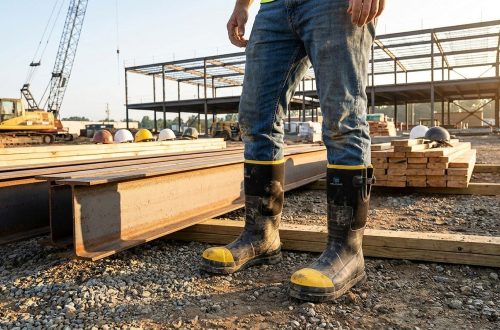
Best Boots for Marina and Boat Yard Work
Marina and boat-yard work combines wet docks, saltwater, slippery launch ramps, gravel service yards, marine equipment, pressure washing, boat hauling, repair shops, and long outdoor shifts.
A marina employee may begin the day checking docks, help launch boats, handle dock lines, move equipment through a wet service yard, assist with a travel lift, pressure wash a freshly hauled hull, inspect shore-power pedestals, and finish the shift around a repair or storage area.
Footwear may encounter:
- Wet docks.
- Saltwater.
- Rain.
- Boat ramps.
- Gravel.
- Mud.
- Hull wash water.
- Marine growth.
- Oil and grease.
- Metal platforms.
- Boat trailers.
- Yard equipment.
That makes footwear a critical part of everyday marina work.
The best boots for marina workers should provide dependable waterproof protection, secure traction on wet marine surfaces, enough cushioning for long dock shifts, easy-clean construction, and the task-specific protection required around boats, trailers, lifts, machinery, and repair equipment.
Marina Work Is Wet Even on Sunny Days
A marina does not need rain to become wet.
Workers may encounter water from:
- Boat wakes.
- Dock spray.
- Bilge discharge.
- Hull washing.
- Launching operations.
- Hose cleaning.
Even on a clear summer day, footwear may be exposed to water throughout the shift.
Fully waterproof boots are therefore more practical than ordinary work shoes for many marina jobs.
Marina Workers Move Across Very Different Surfaces
One of the biggest footwear challenges in marine-service work is the constant transition between surfaces.
A worker may move from:
- Floating dock.
- Concrete pier.
- Boat ramp.
- Gravel yard.
- Workshop floor.
within minutes.
A highly aggressive mud outsole may work well in a soft yard but feel awkward on a wet dock.
A flat deck shoe may feel excellent on fiberglass but provide too little protection in a gravel repair yard.
For many employees, a waterproof boot with balanced mixed-surface tread provides the best compromise.
Boots for Floating Dock Workers
Floating docks move continuously with:
- Waves.
- Boat wakes.
- Wind.
Workers benefit from footwear with:
- Secure heel fit.
- Flexible outsole construction.
- Broad deck contact.
- Low unnecessary weight.
Balance Matters on Moving Docks
The surface itself may shift while the worker is:
- Carrying tools.
- Handling lines.
- Helping customers.
Loose boots add another source of movement.
A secure fit improves control.
Boots for Wooden Marina Docks
Wooden docks can become slippery when covered with:
- Water.
- Algae.
- Organic growth.
No outsole completely eliminates this hazard.
Regular dock maintenance remains essential.
Boots for Composite Docks
Composite decking can also become slick when wet.
Broad flexible outsole contact is generally more useful than extremely deep lugs.
Boots for Concrete Piers
Workers on fixed concrete docks need more underfoot cushioning.
Hard surfaces can create fatigue during long shifts.
Boots for Metal Dock Surfaces
Some marina structures include:
- Aluminum.
- Steel grating.
- Metal gangways.
Moderate tread provides better precise contact than oversized field-style lugs.
Boots for Dock Line Handling
Marina workers may handle:
- Dock lines.
- Mooring lines.
- Fender lines.
Footwear should allow careful movement around rope.
Loose Rope Creates Trip Hazards
Workers should avoid stepping inside:
- Coils.
- Loops.
A boot with excessive bulk can make precise movement more difficult.
Boots for Dockhand Work
Dockhands may help customers:
- Arrive.
- Depart.
- Fuel.
- Secure vessels.
They often need lightweight waterproof footwear that works well on wet docks.
Boots for Boat Launch Ramps
Launch ramps are among the most challenging marina surfaces.
They may be:
- Wet.
- Sloped.
- Covered with algae.
- Partially submerged.
Workers need secure footing.
Algae-Covered Boat Ramps Are Extremely Slippery
No standard work boot guarantees traction on algae.
Workers should avoid unnecessary entry onto contaminated ramp sections and use controlled access procedures.
Boots for Trailer Launch Assistance
Workers helping with trailers may move between:
- Water.
- Concrete.
- Gravel.
Mid-height or mid-calf waterproof boots are practical.
Boot Height Matters at Boat Ramps
Short boots may allow water to enter from above when workers step into shallow water.
More shaft coverage can help.
However, workers regularly entering deeper water may need specialized marine PPE.
Boots for Haul-Out Yards
Boat yards may haul vessels from the water for:
- Repair.
- Storage.
- Painting.
- Maintenance.
Workers may operate on:
- Gravel.
- Concrete.
- Mud.
A structured waterproof safety boot is often more practical than a lightweight deck boot.
Boots for Travel Lift Crews
Large marinas may use travel lifts to move boats.
Workers may handle:
- Slings.
- Guide lines.
- Heavy equipment.
Protective-toe footwear may be appropriate.
Travel Lift Areas Require Controlled Movement
Workers may operate around large moving vessels.
Secure heel support and stable footing are important.
Boots for Boat Cradle Work
Boats stored on land may sit on:
- Cradles.
- Stands.
Workers may work beneath or around them.
Footwear is only one part of a larger safety system.
Proper blocking and support procedures are essential.
Boots for Boat Storage Yards
Storage yards may contain:
- Gravel.
- Grass.
- Mud.
- Asphalt.
Mixed-surface traction works well.
Boots for Winter Boat Storage
Cold-region marinas may store vessels outdoors through winter.
Workers may encounter:
- Snow.
- Slush.
- Frozen gravel.
- Ice.
Insulated waterproof boots may be useful.
Boots for Hull Pressure Washing
Freshly hauled boats often need hull cleaning.
Workers may use pressure washers to remove:
- Slime.
- Marine growth.
- Mud.
- Salt residue.
Mid-calf waterproof boots provide useful splash protection.
Pressure Washing Safety
Waterproof boots protect against ordinary spray.
They do not protect against direct high-pressure water.
The pressure-washer stream should never be directed toward feet or legs.
Boots for Bottom Cleaning
Boat bottoms may contain:
- Algae.
- Barnacles.
- Organic residue.
Workers should use easy-clean footwear.
Sharp Marine Growth Creates Additional Hazards
Barnacles and shells can have sharp edges.
Ordinary rubber footwear does not automatically provide puncture or cut protection.
Boots for Barnacle Removal
Workers exposed to sharp shell fragments may need more durable or puncture-resistant footwear.
Boots for Hull Scraping
Workers may use:
- Scrapers.
- Hand tools.
- Powered equipment.
Stable footing matters.
Boots for Boat Bottom Painting
Boat yards may apply:
- Primers.
- Antifouling coatings.
- Other marine products.
Waterproof Does Not Mean Chemical Resistant
Workers should not assume ordinary waterproof boots are suitable for:
- Paint.
- Solvents.
- Coatings.
Product-specific PPE requirements should be followed.
Boots for Antifouling Work
Certain marine coatings require particular protective equipment.
Footwear should be selected based on actual chemical exposure.
Boots for Fiberglass Repair
Boat repair shops may perform:
- Grinding.
- Fiberglass work.
- Resin application.
General waterproof boots may not provide protection from every chemical used.
Boots for Sanding and Grinding Areas
Fine dust can collect around:
- Tread.
- Seams.
- Upper surfaces.
Smooth easy-clean uppers are useful.
Boots for Marine Paint Shops
Paint shops may be relatively dry, but workers may encounter chemical exposure.
Material compatibility matters more than waterproofing alone.
Boots for Marine Mechanics
Boat yards often employ technicians servicing:
- Engines.
- Outdrives.
- Propellers.
- Pumps.
Mechanics may encounter:
- Oil.
- Grease.
- Fuel.
- Coolant.
Waterproof Does Not Mean Oil Resistant
Outsole resistance to petroleum products should be evaluated separately.
Boots for Diesel Engine Work
Diesel mechanics may need safety footwear with:
- Oil-resistant soles.
- Protective toes.
- Strong cushioning.
Boots for Outboard Motor Technicians
Workers may move between:
- Docks.
- Service bays.
- Boats.
A lower-profile waterproof safety boot can provide useful versatility.
Boots for Sterndrive Maintenance
Technicians may kneel or crouch around:
- Transoms.
- Drives.
Forefoot flexibility improves comfort.
Boots for Propeller Work
Propellers can contain sharp edges.
Workers should follow proper handling procedures.
Durable uppers may be useful.
Boots for Bilge Work
Boat technicians may work around bilges containing:
- Water.
- Oil residue.
- Mechanical fluids.
General waterproof footwear may not be enough for all exposures.
Chemical and Oil Compatibility Matters
Workers should identify the material present before choosing protective footwear.
Boots for Fuel Dock Workers
Fuel docks combine:
- Water.
- Boats.
- Fuel hoses.
- Vehicle-style fueling hazards.
Workers need appropriate footwear.
Waterproof Does Not Mean Fuel Resistant
Marine gasoline and diesel exposure require material compatibility.
Workers should follow fuel-dock safety procedures.
Boots for Fuel Spill Response
Specialized spill-response PPE may be required.
Ordinary waterproof deck boots should not automatically be considered sufficient.
Boots for Pump-Out Station Workers
Some marinas provide wastewater pump-out services.
Workers may handle:
- Hoses.
- Connections.
- Wet docks.
Biohazard Considerations Matter
General waterproof footwear is not automatically suitable for sewage or contaminated wastewater exposure.
Facility PPE and sanitation requirements should be followed.
Boots for Shore Power Maintenance
Marinas may provide electrical shore-power pedestals.
Workers may service systems close to water.
Waterproof Boots Are Not Automatically Electrical PPE
Electrical work around marinas requires specialized procedures and appropriately rated equipment.
Boots for Electrical Pedestal Inspection
Technicians should prioritize proper electrical safety over generic waterproofing.
Boots for Marina Plumbing Work
Dock systems may include:
- Potable water.
- Washdown lines.
- Pump-out lines.
Technicians may work in wet areas.
Waterproof boots are practical for ordinary water exposure.
Boots for Dock Repairs
Maintenance crews may repair:
- Boards.
- Cleats.
- Railings.
- Gangways.
They may handle:
- Nails.
- Screws.
- Metal hardware.
Puncture Protection May Be Useful
A thick outsole is not automatically puncture resistant.
Workers frequently exposed to sharp fasteners may need rated footwear.
Boots for Cleat Replacement
Workers using tools on wet docks need secure heel support.
Boots for Gangway Maintenance
Gangways can be:
- Sloped.
- Wet.
- Moving slightly.
Lateral support and broad outsole contact matter.
Boots for Dock Construction
New dock installations may resemble construction work.
Workers may need:
- Safety toes.
- Puncture protection.
- Durable uppers.
Boots for Pile and Pier Work
Specialized marine construction can involve more demanding PPE than ordinary marina maintenance.
Boots for Marina Groundskeeping
Marinas may also include:
- Grass.
- Parking areas.
- Landscaping.
Grounds crews need mixed-terrain footwear.
Boots for Wet Grass Around Marinas
Morning dew can soak low shoes.
Mid-height waterproof boots work well.
Boots for Gravel Parking Areas
Supportive midsoles reduce discomfort from crushed stone.
Boots for Muddy Shore Areas
Rain or high water may create soft ground around the marina perimeter.
More open tread may be useful.
Boots for Shoreline Maintenance
Workers may clean:
- Beaches.
- Riprap.
- Vegetation.
Uneven terrain requires ankle support.
Boots for Rocky Shorelines
Wet stone can be slippery.
Broad stable outsole contact helps, but workers still need cautious movement.
Boots for Riprap Areas
Large rocks create unstable foot angles.
Supportive waterproof work boots may be preferable to soft deck boots.
Boots for Marina Trash and Debris Cleanup
Workers may remove:
- Rope.
- Plastic.
- Fishing line.
- Marine debris.
Sharp objects can occasionally be present.
Puncture protection may be appropriate.
Boots for Storm Cleanup
Coastal storms may leave:
- Broken boards.
- Branches.
- Damaged dock hardware.
- Flooded yards.
Workers may need stronger protective footwear.
Boots for High-Water Conditions
Storm surge or unusually high water may flood:
- Docks.
- Parking.
- Service yards.
Normal boots may not be sufficient for deeper water.
Floodwater Requires Additional Consideration
Floodwater may contain:
- Sewage.
- Fuel.
- Chemicals.
- Sharp debris.
General waterproof boots should not automatically be considered sufficient.
Boots for Hurricane Preparation
Marina crews may prepare by:
- Securing vessels.
- Removing equipment.
- Handling lines.
Workers may operate in heavy rain.
Waterproof footwear with secure fit is useful.
Boots for Post-Storm Marina Inspections
Damaged docks and submerged debris create additional hazards.
Task-specific protective equipment may be required.
Boots for Marina Crane Operations
Larger boat yards may use cranes to:
- Move masts.
- Lift boats.
- Handle equipment.
Ground crews may need protective-toe footwear.
Boots for Hoist Areas
Workers should have stable footing around:
- Slings.
- Lifting equipment.
- Heavy loads.
Boots for Rigging Work
Sailboat yards may handle:
- Masts.
- Rigging.
- Wire rope.
Sharp wire ends can create puncture hazards.
Boots for Mast Stepping Crews
Workers may move between:
- Dock.
- Yard.
- Boat deck.
Mixed-surface waterproof safety boots are useful.
Boots for Sailboat Service
Technicians may work on:
- Deck hardware.
- Rigging.
- Hull systems.
Lower-profile boots improve mobility on deck.
Boots for Yacht Service Crews
Yacht technicians may need footwear that balances:
- Professional appearance.
- Wet-deck traction.
- Workshop protection.
Boots for Customer-Facing Marina Staff
Dockmasters and marina managers may interact with boat owners throughout the day.
Smooth waterproof footwear is easier to keep presentable.
Boots for Marina Managers
Managers may divide their time between:
- Office.
- Dock.
- Yard.
Mid-height waterproof boots offer good versatility.
Boots for Dockmasters
Dockmasters may walk several miles a day across:
- Piers.
- Gangways.
- Parking lots.
Low boot weight and cushioning matter.
Boots for Boat Rental Operations
Rental crews may help customers:
- Board.
- Depart.
- Fuel.
- Return boats.
Waterproof deck-oriented boots are practical.
Boots for Jet Ski Rental Staff
Personal watercraft operations create heavy splash.
Mid-height waterproof boots may help keep feet dry.
Boots for Paddlecraft Rental Crews
Kayak and paddleboard operations may require employees to work around shallow shoreline water.
Boot height should match the actual conditions.
Boots for Boat Ramp Attendants
Workers may spend much of the day around:
- Trailers.
- Water.
- Wet concrete.
Mixed marine traction is important.
Boots for Marina Delivery Crews
Parts and supplies may be delivered around large service yards.
Workers may transition between:
- Trucks.
- Docks.
- Warehouses.
Structured waterproof work boots are practical.
Boots for Parts Warehouse Workers
Indoor marine-parts employees spend more time on concrete.
Hard-floor cushioning becomes the priority.
Boots for Marina Forklift Operators
Forklifts may move:
- Engines.
- Pallets.
- Boat supplies.
Drivers need good pedal control.
Boots for Yard Tractor Operators
Boat yards may use tractors to move:
- Trailers.
- Boats.
Moderate outsole thickness improves control.
Boots for Trailer Handling
Workers may connect:
- Hitches.
- Safety chains.
- Winches.
They may kneel or crouch frequently.
Flexible footwear improves comfort.
Boots for Boat Trailer Maintenance
Technicians may encounter:
- Grease.
- Rust.
- Metal.
- Gravel.
Safety footwear may be useful.
Boots for Wheel Bearing Service
Grease exposure may require oil-resistant outsole properties.
Boots for Boat Storage Buildings
Indoor boat-storage facilities may have:
- Concrete.
- Smooth floors.
Workers need more cushioning and less aggressive tread.
Boots for Dry Stack Marinas
Dry-stack facilities use forklifts to move boats between racks and water.
Workers may operate around:
- Forklifts.
- Concrete.
- Wet launch areas.
Safety footwear with mixed-surface traction is practical.
Boots for Dry Stack Forklift Crews
Pedal feel and machine-step contact are important.
Boots for Boat Rack Areas
Workers should prioritize stable footing around heavy stored vessels.
Boots for Winterizing Crews
Seasonal marina workers may prepare boats for winter by servicing:
- Engines.
- Plumbing.
- Batteries.
Footwear needs may shift from deck traction toward workshop protection.
Boots for Shrink-Wrap Crews
Some marinas wrap boats for winter storage.
Workers may work around ladders and elevated areas.
Precise tread contact matters.
Ladder Safety Requires Appropriate Footwear
Very deep or bulky lugs may reduce rung contact.
Boots for Spring Commissioning
Spring marina work may involve:
- Rain.
- Mud.
- Hull washing.
- Boat launching.
Waterproof footwear becomes especially useful.
Boots for Busy Launch Season
Workers may spend long hours on ramps and docks.
Cushioning matters.
Boots for Summer Marina Work
Summer shifts can be hot.
Workers should avoid unnecessary insulation.
Useful features include:
- Lightweight construction.
- Moisture-wicking socks.
- Flexible uppers.
Waterproof Boots Can Still Become Damp Inside
Sweat may create internal moisture.
Daily drying is important.
Boots for Fall Haul-Out Season
Autumn brings:
- Cooler rain.
- Heavy boat-yard traffic.
- Mud.
A slightly more rugged waterproof boot may be useful.
Boots for Winter Marina Work
Cold climates may bring:
- Snow.
- Ice.
- Slush.
Insulated waterproof boots may be necessary.
Boots for Slush
Mid-height or mid-calf waterproof boots help keep feet dry.
Ice Requires Separate Traction Measures
No ordinary work boot completely eliminates ice risk.
Approved traction aids may be needed.
Salt Exposure in Coastal Marinas
Saltwater can leave residue on footwear.
Regular freshwater rinsing helps.
Boots for Freshwater Marinas
Freshwater operations may avoid salt residue but still involve:
- Wet docks.
- Algae.
- Mud.
- Gravel.
Waterproof traction remains important.
Boots for Long Marina Shifts
Busy boating seasons may involve long working days.
Workers may spend many hours:
- Walking.
- Standing.
- Lifting.
- Driving equipment.
Footwear comfort becomes increasingly important.
Cushioning Matters on Docks and Concrete
Many marine workers spend most of the day on hard surfaces.
Supportive midsoles reduce fatigue.
Heel Retention Matters on Wet Surfaces
Secure heel fit improves controlled movement.
Ankle Support Matters in Boat Yards
Gravel, mud, and shoreline terrain can be uneven.
Forefoot Flexibility Helps Marine Technicians
Workers frequently:
- Kneel.
- Crouch.
- Climb.
- Enter boats.
The boot should flex naturally.
Toe Room Matters During Long Shifts
Feet may swell after hours of work.
Enough toe space improves comfort.
Best Socks for Marina Workers
Synthetic and wool-blend socks generally perform better than cotton.
Useful features include:
- Moisture wicking.
- Quick drying.
- Heel cushioning.
- Temperature regulation.
Spare Socks Can Be Useful
Wave splash or ramp work may occasionally allow water into footwear.
A dry replacement pair improves comfort.
Removable Insoles Improve Daily Drying
Replaceable footbeds allow workers to:
- Dry boots.
- Restore cushioning.
- Improve hygiene.
- Adjust support.
Easy-Clean Construction Is Important
Marina boots may collect:
- Salt.
- Mud.
- Algae.
- Gravel dust.
- Marine residue.
Smooth waterproof uppers simplify cleanup.
How to Clean Marina Work Boots
A practical routine may include:
- Rinse saltwater with fresh water.
- Remove algae and marine residue.
- Brush mud and gravel from tread.
- Follow footwear guidance after oil or fuel exposure.
- Follow PPE procedures after chemical or wastewater exposure.
- Remove damp insoles.
- Allow footwear to dry completely.
Saltwater Should Be Rinsed Regularly
Dried salt can accumulate around:
- Flex points.
- Tread.
- Hardware.
Marine Growth Should Be Removed From Tread
Algae and shell fragments can reduce clean outsole contact.
How to Dry Marina Work Boots
After cleaning:
- Remove insoles.
- Open boots fully.
- Allow airflow.
- Use low-temperature drying if approved.
Avoid excessive direct heat.
Rotating Two Pairs Can Help Full-Time Marina Workers
Daily water exposure may prevent one pair from drying fully.
Alternating footwear gives each pair more recovery time.
When Marina Work Boots Should Be Replaced
Replace footwear when:
- Waterproofing fails.
- Tread becomes badly worn.
- Rubber cracks.
- Outsole separation develops.
- Oil or chemical damage appears.
- Heel support collapses.
- Puncture damage occurs.
- Safety components are compromised.
Do Marina Workers Need Safety-Toe Boots?
Some haul-out, mechanical, forklift, crane, loading, and boat-yard roles may require protective-toe footwear.
Dockhands may have different needs.
Do Marina Workers Need Puncture-Resistant Boots?
Puncture protection may be useful around:
- Dock construction.
- Sharp hardware.
- Broken boards.
- Marine debris.
Are Deck Boots Good for Marina Work?
Yes.
Waterproof deck boots are especially useful for:
- Dockhands.
- Boat launching.
- Fuel dock work where material compatibility is appropriate.
- Routine wet marina tasks.
More industrial jobs may require structured safety footwear.
Are Rubber Boots Good for Boat Yards?
Yes, particularly for:
- Pressure washing.
- Muddy yards.
- Hull cleaning.
- Wet launch ramps.
Workers should still consider toe protection, puncture resistance, oil resistance, and chemical compatibility where relevant.
What Boots Are Best for Boat Ramps?
Waterproof boots with:
- Secure heel fit.
- Flexible rubber.
- Broad wet-surface contact.
- Enough shaft height for splash.
are practical.
Workers should exercise extreme caution on algae-covered submerged surfaces.
Common Mistakes When Buying Marina Work Boots
Buying Deep Mud Boots for Dock-Only Work
Aggressive tread may be unnecessarily bulky on decks and gangways.
Wearing Low Shoes Around Boat Ramps
Splash may enter quickly.
Choosing Boots Too Loose
Secure fit improves control on moving docks.
Ignoring Gravel-Yard Cushioning
Boat-yard workers may spend hours on hard aggregate.
Assuming Waterproof Means Fuel Resistant
Fuel-dock workers may require specific material properties.
Assuming Rubber Means Electrical Protection
Shore-power work requires properly rated PPE.
Ignoring Barnacle and Hardware Puncture Hazards
Sharp marine debris can damage ordinary soles.
Letting Salt and Algae Build Up on Footwear
Regular cleaning helps maintain the boot and outsole.
How to Choose the Best Boots for Marina Work
Start with the worker’s primary duties.
For dockhands, prioritize:
- Lightweight waterproof construction.
- Wet-deck traction.
- Secure heel fit.
- Good cushioning.
For boat-ramp workers, prioritize:
- More shaft coverage.
- Broad outsole contact.
- Flexible waterproof construction.
For haul-out and yard workers, prioritize:
- Strong midsoles.
- Mixed-surface tread.
- Safety toes where required.
For pressure-washing crews, prioritize:
- Additional waterproof coverage.
- Easy-clean uppers.
- Appropriate PPE for coatings and contaminants.
For marina mechanics, prioritize:
- Safety ratings.
- Oil or fuel resistance where required.
- Durable construction.
For dock-construction crews, prioritize:
- Protective toes.
- Puncture resistance.
- Stable mixed-terrain traction.
For forklift and travel-lift operators, prioritize:
- Pedal control.
- Moderate outsole thickness.
- Secure heel positioning.
Workers comparing waterproof footwear from brands such as Trudave Gear can choose between deck-oriented and work-oriented footwear according to whether their job focuses primarily on docks and wet marine surfaces or on heavier boat-yard maintenance and industrial service.
Frequently Asked Questions
What are the best boots for marina work?
The best marina boots are waterproof, securely fitted, comfortable on hard dock surfaces, easy to clean, and equipped with traction appropriate for wet decks, ramps, and boat-yard conditions.
Are deck boots good for marina workers?
Yes. Deck boots are particularly useful for dockhands, marina attendants, boat launching, and other jobs involving constant wet marine surfaces.
What boots are best for boat-yard workers?
Structured waterproof work boots with supportive midsoles, mixed-surface traction, durable uppers, and safety protection appropriate to heavy yard work are practical.
How tall should marina work boots be?
Low-to-mid waterproof boots work well for dock-focused jobs. Mid-calf boots may be better for boat ramps, hull washing, muddy yards, and higher-splash tasks.
Are deep-lug boots good for wet docks?
Usually not. Broad, flexible outsole contact is generally more practical on dock decking than aggressive agricultural tread.
Do marina workers need safety-toe boots?
Some boat-yard, haul-out, forklift, crane, mechanical, and loading roles may require protective-toe footwear.
Are waterproof marina boots fuel resistant?
Not automatically. Fuel resistance should be checked separately for workers around marine gasoline or diesel.
Are marina rubber boots electrically safe?
Not automatically. Shore-power and electrical work require appropriately rated PPE.
What boots are best for hull pressure washing?
Mid-calf waterproof boots with stable wet-surface traction, easy-clean construction, and appropriate protection for any coating or chemical exposure are practical.
How should marina work boots be cleaned?
Rinse saltwater, remove algae, mud, and marine residue, clean tread grooves, follow guidance after oil, fuel, chemical, or wastewater exposure, and allow the footwear to dry completely.
Final Thoughts
Marina and boat-yard work combines wet docks, boat ramps, saltwater, gravel yards, travel lifts, pressure washing, hull maintenance, machinery, fuel systems, trailers, and long outdoor shifts.
The best footwear depends on the worker’s actual role.
Dockhands benefit from lightweight waterproof deck boots with dependable wet-surface traction.
Boat-ramp workers need additional waterproof coverage.
Haul-out crews require stronger underfoot support and may need protective toes.
Pressure-washing workers benefit from easy-clean waterproof construction.
Marine mechanics may require oil- or fuel-resistant safety footwear.
Dock-construction crews may need puncture and impact protection.
Trudave Gear offers waterproof deck and work footwear suited to docks, rain, marine service, boat ramps, washdown, and demanding wet outdoor environments.
Choosing footwear according to the actual marina task can help workers stay drier, reduce fatigue, maintain better footing, and remain more comfortable from the first dock inspection before boats leave in the morning to the final hull wash after the last vessel is hauled from the water.


You May Also Like

Why Your Pasture Looks Healthy but Livestock Weight Gain Is Slowing Down

Frost-Firm Soil: Winter Prep Steps That Build Stronger Spring Gardens