Before Sunrise in a Wet Flower Field: Footwear for Cutting, Irrigation, Packing, and Long Harvest Days
Cut-flower farming is one of those jobs that looks cleaner from the outside than it actually is.
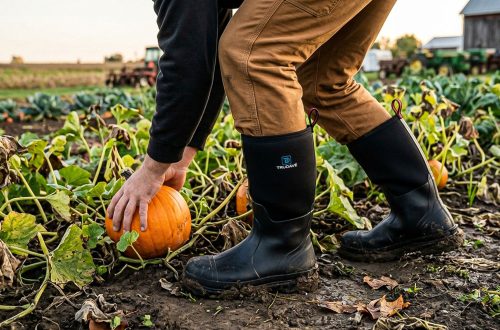
A finished bouquet may be delicate, dry, and carefully wrapped, but producing those flowers can mean hours of walking through dew-soaked rows, muddy paths, irrigation runoff, wet grass, greenhouse floors, packing sheds, coolers, and loading areas.
Many flower farms begin harvesting before the day becomes hot.
That means workers often enter the field while moisture is still sitting on:
- Leaves.
- Stems.
- Grass.
- Ground cover.
- Irrigation lines.
A typical flower-farm employee may spend the morning cutting stems, carrying buckets, checking irrigation, moving harvest carts, sorting flowers, working inside a cooler, washing buckets, packing orders, loading a delivery van, and returning to the field before the shift ends.
Footwear may encounter:
- Heavy morning dew.
- Wet grass.
- Mud.
- Irrigation runoff.
- Potting soil.
- Gravel.
- Greenhouse concrete.
- Packing-shed floors.
- Wash water.
- Floral residue.
- Cooler floors.
- Rain.
That makes footwear selection more complicated than simply choosing a traditional farm boot.
The right footwear should help keep feet dry, remain comfortable over thousands of steps, allow workers to bend and crouch easily, provide enough traction for muddy field lanes, and transition well between outdoor harvest areas and indoor packing spaces.
For many flower-farm crews, waterproof work boots offer that balance.
Why Flower Farm Workers Get Wet Before the First Bucket Is Full
Morning moisture is one of the biggest footwear challenges in flower production.
Many growers harvest early because cooler temperatures can help maintain flower quality.
But early harvesting means walking through fields while plants may still be covered with:
- Dew.
- Irrigation water.
- Overnight moisture.
Workers may brush against hundreds of wet stems during a single harvest route.
Even when the soil itself is relatively dry, repeated plant contact can soak low-cut footwear.
Mid-height waterproof boots provide better protection against this type of moisture.
Wet Leaves Can Soak Footwear Faster Than Light Rain
Light rain is obvious.
Dew is not.
A worker may look at a field and assume conditions are dry, only to discover that every plant is carrying a layer of moisture.
Repeated contact adds up quickly.
This is especially common around taller crops such as:
- Sunflowers.
- Dahlias.
- Zinnias.
- Snapdragons.
- Cosmos.
Workers moving through dense plant rows benefit from footwear that protects more than just the sole.
Flower Harvest Is a High-Movement Job
Cut-flower workers rarely stand still for long.
A typical harvest pattern may involve:
- Walking.
- Stopping.
- Cutting.
- Bending.
- Carrying.
- Turning.
- Walking again.
This can continue for hours.
Heavy footwear may become tiring.
Rigid footwear may make crouching uncomfortable.
For routine harvest work, useful features often include:
- Waterproof construction.
- Lower unnecessary weight.
- Flexible forefoot movement.
- Supportive cushioning.
- Secure heel fit.
Boots for Cut-Flower Harvest Crews
Harvest workers need footwear that performs well over long field routes.
The goal is not maximum boot height.
The goal is balanced protection.
A practical harvest boot should provide:
- Protection from wet vegetation.
- Enough tread for field soil.
- Comfortable cushioning.
- Secure fit.
- Flexible movement.
Boots for Flower Fields Covered in Morning Dew
Dew-heavy fields are one of the strongest use cases for waterproof boots.
Workers may walk through plants for hours.
Mid-height boots help prevent moisture from repeatedly contacting:
- Socks.
- Lower pant legs.
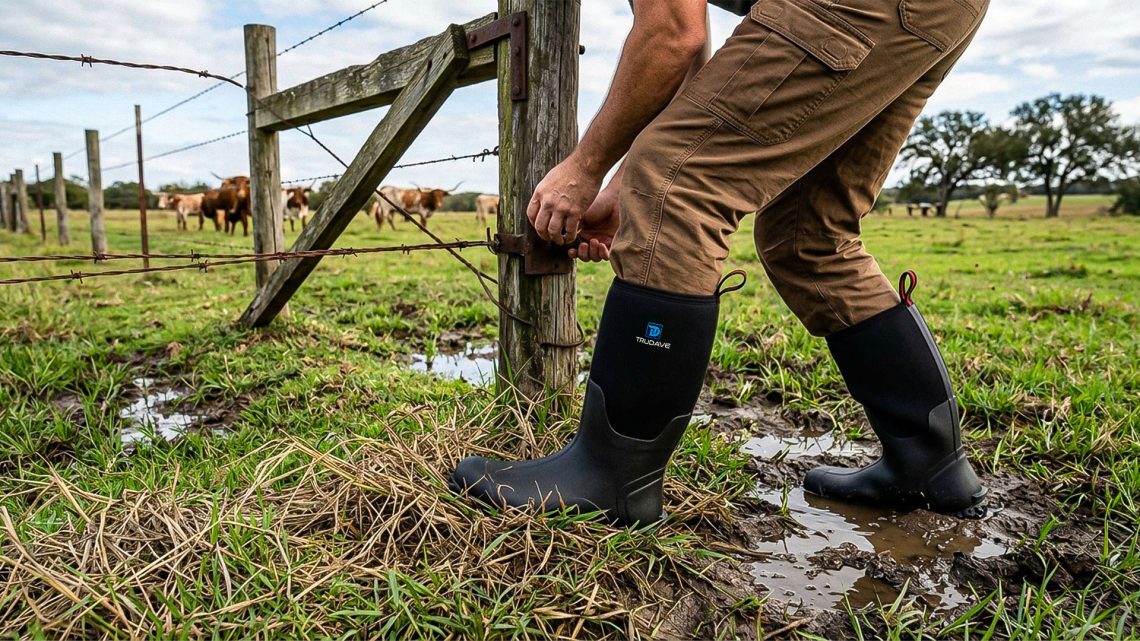
Boots for Muddy Flower Rows
Rain and irrigation can turn walking lanes into mud.
Common problem areas include:
- Row ends.
- Field entrances.
- Low spots.
- Cart routes.
Moderate mud-release tread is useful.
Choosing Tread for Flower Farm Mud
Useful outsole features include:
- Open tread channels.
- Moderate lug depth.
- Defined heel edges.
- Flexible rubber.
Extremely aggressive tread may be unnecessary unless the field is consistently very muddy.
Why Deep Agricultural Lugs Can Be Too Much
Flower-farm workers often move between:
- Soil.
- Greenhouses.
- Packing sheds.
- Vehicles.
Deep lugs may:
- Trap mud.
- Track soil indoors.
- Feel bulky on concrete.
- Reduce comfort while driving.
Moderate mixed-surface tread is often more versatile.
Boots for Clay Flower Fields
Clay soil can become sticky after rain.
It may pack tightly into narrow grooves.
Wider tread channels make soil easier to release.
Secure heel fit also matters because sticky mud can pull loose boots away from the foot.
Boots for Sandy Flower Farms
Lighter sandy soils may not require aggressive tread.
Workers may benefit more from:
- Lightweight construction.
- Strong cushioning.
- Waterproof uppers.
Boots for Raised-Bed Flower Production
Many small flower farms use raised beds with narrow walking paths.
Workers may need to move precisely between:
- Beds.
- Irrigation lines.
- Stakes.
Bulky footwear can make tight spaces more difficult.
Boots for Narrow Harvest Paths
Workers need precise foot placement.
Moderate outsole width and secure fit improve control.
Boots for No-Till Flower Farms
No-till systems may use:
- Mulch.
- Compost.
- Ground covers.
Workers need footwear that handles organic material without trapping excessive debris.
Boots for Mulched Flower Beds
Mulch can collect inside deep outsole grooves.
Moderate tread is easier to clean.
Boots for Landscape Fabric Rows
Some flower farms use ground fabric between rows.
Wet fabric can become slick.
Broad outsole contact improves stability.
Boots for Sunflower Farms
Sunflowers may grow tall and dense.
Workers may encounter:
- Heavy dew.
- Thick stems.
- Uneven ground.
Durable waterproof uppers are useful.
Boots for Dahlia Farms
Dahlias often require repeated:
- Cutting.
- Bending.
- Carrying.
Flexible footwear reduces fatigue.
Boots for Zinnia Harvest
Zinnia rows may remain wet from:
- Dew.
- Irrigation.
Mid-height waterproof boots are practical.
Boots for Tulip Farms
Tulip harvest may occur during cooler, wetter seasons.
Workers may encounter:
- Spring rain.
- Mud.
- Cold mornings.
Moderate insulation may be useful depending on climate.
Boots for Peony Farms
Peony harvest can involve heavy early-morning moisture.
Long rows make:
- Boot weight.
- Cushioning.
especially important.
Boots for Lavender Farms
Lavender operations may be drier overall, but workers may still encounter:
- Morning dew.
- Irrigation.
- Gravel.
A lighter waterproof work boot may be more appropriate than tall rubber footwear.
Boots for Specialty Flower Farms
Mixed farms may grow dozens of varieties.
That means workers can move between different:
- Plant heights.
- Soil conditions.
- Irrigation systems.
Versatile footwear becomes valuable.
Boots for Flower Farm Irrigation Crews
Cut-flower production depends heavily on consistent watering.
Workers may maintain:
- Drip tape.
- Main lines.
- Valves.
- Filters.
- Pumps.
Leaks can create localized wet areas quickly.
Boots for Drip-Line Repairs
Workers may spend considerable time:
- Kneeling.
- Crouching.
Flexible forefoot construction improves comfort.
Boots for Irrigation Valve Areas
Valve access points can become muddy.
Waterproof easy-clean footwear works well.
Boots for Sprinkler-Irrigated Flowers
Overhead irrigation can wet both:
- Plants.
- Workers.
Additional shaft coverage helps.
Boots for Pump Stations
Pump areas may contain:
- Wet concrete.
- Mechanical equipment.
- Electrical systems.
General waterproof boots are not automatically electrical safety footwear.
Electrical tasks require properly rated PPE.
Boots for Fertigation Work
Some flower farms apply nutrients through irrigation systems.
Waterproof construction does not automatically mean chemical resistance.
Workers should follow product-specific PPE requirements.
Boots for Greenhouse Flower Production
Some flower farms combine outdoor fields with:
- Greenhouses.
- High tunnels.
Workers may move between mud and hard floors during the same shift.
Boots for Greenhouse Floors
Greenhouses may contain:
- Wet concrete.
- Gravel.
- Weed mats.
Moderate easy-clean tread works well.
Boots for High Tunnels
High tunnels may stay drier than outdoor fields, but irrigation can still create wet walking areas.
Waterproof mid-height boots provide good versatility.
Boots for Greenhouse Irrigation
Frequent watering increases moisture exposure.
Workers benefit from smooth waterproof uppers.
Boots for Potting Areas
Flower farms may propagate plants in:
- Pots.
- Trays.
- Soil blocks.
Potting areas may contain:
- Peat.
- Compost.
- Potting mix.
Fine material can collect in deep tread.
Boots for Potting Crews
Workers may stand for hours on:
- Concrete.
- Gravel.
Strong cushioning matters.
Boots for Seedling Production
Propagation workers may move repeatedly between:
- Greenhouses.
- Outdoor growing areas.
Lower-weight waterproof footwear works well.
Boots for Transplanting Crews
Workers may spend long periods:
- Bending.
- Kneeling.
- Carrying trays.
Flexible boots help natural movement.
Boots for Field Planting
Planting season may combine:
- Cool weather.
- Wet soil.
- Mud.
Mid-height waterproof boots are practical.
Boots for Flower Bed Preparation
Workers may handle:
- Compost.
- Soil amendments.
- Mulch.
Supportive midsoles help during shovel work.
Boots for Compost Handling
Compost areas may remain damp.
Easy-clean waterproof uppers simplify cleanup.
Boots for Soil-Amendment Work
Workers may carry:
- Bags.
- Buckets.
Stable footing is important.
Boots for Weed-Control Crews
Flower farms often require significant weed management.
Workers may perform:
- Hand weeding.
- Mechanical cultivation.
Boots for Hand Weeding
Frequent crouching makes flexibility important.
Boots for Mechanical Cultivation
Equipment operators should prioritize:
- Pedal control.
- Moderate outsole thickness.
Boots for Herbicide or Crop-Protection Work
Waterproof boots are not automatically chemical resistant.
Workers should follow:
- Product labels.
- Farm PPE procedures.
Boots for Flower Support and Trellis Work
Some cut flowers require:
- Netting.
- Stakes.
- Trellises.
Workers may move repeatedly through tight rows.
Boots for Installing Flower Netting
Footwear should allow precise movement around:
- Stakes.
- Lines.
Boots for Stake Maintenance
Workers may handle:
- Metal stakes.
- Fasteners.
Puncture-resistant footwear may be appropriate where sharp materials are common.
Boots for Flower Harvest Buckets
Fresh-cut flowers are commonly placed in buckets filled with water.
This creates additional moisture exposure.
Workers may spill water while:
- Carrying.
- Filling.
- Moving buckets.
Boots for Bucket-Filling Areas
Waterproof easy-clean boots are practical.
Boots for Carrying Full Buckets
Full water buckets can be heavy.
Secure heel retention helps workers maintain controlled footing.
Boots for Harvest Carts
Workers may push carts loaded with:
- Buckets.
- Crates.
Strong heel support helps with pushing force.
Boots for Cart Ramps
Moderate tread improves precise contact.
Boots for Flower Washing and Conditioning Areas
After harvest, stems may be processed around:
- Water.
- Buckets.
- Wet floors.
Waterproof footwear remains useful.
Boots for Floral Conditioning Rooms
Workers may stand on hard floors while:
- Trimming.
- Sorting.
- Bundling.
Strong cushioning matters.
Boots for Flower Packing Sheds
Packing areas shift footwear needs away from mud traction.
Workers may spend hours on:
- Concrete.
- Hard-packed floors.
Priorities include:
- Cushioning.
- Lower footwear weight.
- Controlled tread.
Boots for Packing Tables
Workers may stand in one position for long periods.
Supportive midsoles help reduce fatigue.
Boots for Bouquet-Making Areas
Employees may move between:
- Buckets.
- Tables.
- Storage.
Waterproof easy-clean footwear is practical.
Boots for Wholesale Flower Packing
Commercial operations may handle large numbers of:
- Boxes.
- Buckets.
- Pallets.
Safety footwear may be appropriate.
Boots for Pallet Handling
Workers operating around:
- Pallet jacks.
- Forklifts.
may require protective toes.
Boots for Forklift Operators
Drivers should prioritize:
- Pedal control.
- Secure heel fit.
- Moderate outsole thickness.
Boots for Flower Coolers
Fresh-cut flowers are often stored in refrigerated rooms.
Workers may experience temperature changes between:
- Hot fields.
- Cold coolers.
Boots for Refrigerated Flower Storage
Temperature-appropriate socks and supportive midsoles improve comfort.
Boots for Long Cooler Shifts
Moderate insulation may be useful depending on:
- Cooler temperature.
- Time spent inside.
Boots for Loading Docks
Workers may move between:
- Coolers.
- Outdoor rain.
- Delivery trucks.
Mixed-surface waterproof boots provide good versatility.
Boots for Flower Delivery Drivers
Flower farms may deliver orders to:
- Florists.
- Markets.
- Event venues.
- Wedding designers.
Drivers may move from muddy farm lanes into customer-facing locations.
Driving Comfort Matters
Very tall rubber boots can become awkward in vehicles.
A mid-height waterproof work boot offers better versatility.
Boots for Farmers Market Flower Vendors
Direct-market flower farms may sell at:
- Outdoor markets.
- Farm stands.
Workers need footwear that remains:
- Comfortable.
- Presentable.
- Weather resistant.
Boots for Wedding Flower Delivery
Workers may transition from farm conditions to:
- Event venues.
- Pavement.
A cleaner-looking waterproof boot can work better than a heavily lugged field boot.
Boots for U-Pick Flower Farms
Some farms allow visitors to cut their own flowers.
Employees may spend long days:
- Guiding customers.
- Maintaining rows.
- Moving buckets.
- Monitoring paths.
Boots for Customer-Facing Flower Fields
Workers need:
- Comfortable waterproofing.
- Moderate field tread.
- Cleanable uppers.
Boots for Muddy Visitor Paths
Customer traffic can turn wet fields into mud quickly.
Mid-height boots are useful.
Boots for Event Parking Areas
Seasonal flower festivals may use:
- Grass fields.
Rain can create deep ruts.
Workers directing vehicles need:
- Waterproofing.
- Cushioning.
- Mud traction.
Boots for Flower Festival Staff
Workers may spend long periods on:
- Grass.
- Gravel.
- Pavement.
Mixed-surface cushioning matters.
Boots for Flower Farm Tractors
Tractors may be used for:
- Bed preparation.
- Mowing.
- Cultivation.
- Trailer work.
Boots for Tractor Operators
A structured mid-height waterproof boot provides a good balance between:
- Field traction.
- Machine control.
Boots for UTV Operators
UTVs are useful for:
- Harvest transport.
- Irrigation checks.
- Tool movement.
Moderate outsole thickness helps pedal feel.
Boots for Farm Pickup Drivers
Workers may frequently move between:
- Field.
- Packing shed.
- Market.
Driving comfort matters.
Boots for Flower Farm Mechanics
Larger operations may maintain:
- Tractors.
- UTVs.
- Pumps.
- Refrigeration equipment.
Maintenance workers may encounter:
- Oil.
- Grease.
- Hydraulic fluid.
Waterproof does not automatically mean oil resistant.
Boots for Hydraulic Repairs
Oil-resistant outsoles may be useful.
Boots for Diesel Maintenance
Fuel exposure requires task-appropriate material compatibility.
Boots for Farm Shop Work
Mechanics may spend significant time on concrete.
Structured boots with strong cushioning are practical.
Boots for Welding and Fabrication
General waterproof footwear is not automatically suitable for:
- Sparks.
- Hot metal.
Task-specific footwear may be required.
Boots for Flower Farm Road Maintenance
Farm lanes may include:
- Gravel.
- Dirt.
Workers may repair:
- Ruts.
- Drainage.
Boots for Gravel Roads
Supportive midsoles reduce discomfort from crushed stone.
Boots for Muddy Access Lanes
Rain and harvest traffic can create soft ground.
Open tread helps.
Boots for Drainage Ditches
Workers may maintain:
- Ditches.
- Culverts.
Mid-calf waterproof boots provide useful coverage.
Boots for Culvert Cleaning
Workers may encounter:
- Mud.
- Water.
- Gravel.
- Plant debris.
Ankle support and strong midsoles are useful.
Boots for Storm Cleanup
Heavy rain may cause:
- Standing water.
- Erosion.
- Downed stems.
- Mud.
Workers should approach flooded areas carefully.
Water can hide:
- Holes.
- Debris.
- Unstable ground.
Boots for Spring Flower Farm Work
Spring often means:
- Wet soil.
- Planting.
- Transplanting.
- Rain.
Waterproof footwear is especially useful.
Boots for Summer Flower Harvest
Summer harvest may be:
- Hot.
- Humid.
Workers should avoid unnecessary insulation.
Useful features include:
- Lightweight construction.
- Moisture-wicking socks.
- Moderate shaft height.
Waterproof Boots Can Still Become Damp Inside
Sweat may become the main source of moisture.
Daily drying remains important.
Boots for Fall Flower Harvest
Late-season flower farming may bring:
- Cooler rain.
- Heavy dew.
- Mud.
Waterproof footwear continues to be useful.
Boots for Frosty Flower Fields
Some growers harvest late into the season.
Moderate insulation and wool-blend socks may help during cold mornings.
Boots for Long Flower-Farm Shifts
Peak harvest may require long days.
Workers may spend hours:
- Walking.
- Bending.
- Carrying.
- Packing.
Comfort becomes critical.
Cushioning Matters Across Flower-Farm Surfaces
Workers may transition between:
- Soil.
- Gravel.
- Concrete.
- Cooler floors.
Supportive midsoles improve all-day comfort.
Boot Weight Matters
Heavy footwear adds fatigue over thousands of steps.
Heel Retention Matters in Mud
Secure fit helps prevent sticky soil from pulling boots loose.
Ankle Support Matters on Uneven Rows
Ruts, irrigation lines, and bed edges can challenge stability.
Forefoot Flexibility Helps Harvest Workers
Employees frequently:
- Crouch.
- Kneel.
- Bend.
Flexible footwear improves mobility.
Toe Room Matters During Long Harvest Days
Feet may swell.
Enough space improves comfort.
Best Socks for Flower Farm Workers
Synthetic and lightweight wool-blend socks generally perform better than cotton.
Useful characteristics include:
- Moisture wicking.
- Quick drying.
- Heel cushioning.
Lightweight Socks Work Well in Summer
Heavy socks can increase heat buildup.
Wool-Blend Socks Work Well During Cool Harvests
They help manage:
- Moisture.
- Temperature.
Spare Socks Can Be Useful
Dew or irrigation may occasionally allow moisture inside footwear.
A dry replacement pair improves comfort.
Removable Insoles Improve Daily Drying
Removable footbeds make it easier to:
- Dry footwear.
- Restore cushioning.
- Improve hygiene.
Easy-Clean Construction Is Important
Flower-farm boots may collect:
- Mud.
- Leaves.
- Plant sap.
- Petals.
- Potting soil.
Smooth waterproof uppers simplify cleaning.
How to Clean Flower Farm Work Boots
A practical routine may include:
- Remove leaves and stems.
- Brush heavy mud from tread.
- Remove potting soil.
- Rinse ordinary irrigation residue.
- Clean flower or plant sap using footwear-safe methods.
- Follow appropriate procedures after chemical exposure.
- Allow footwear to dry completely.
Plant Sap Should Be Removed Promptly
Sticky plant material can attract:
- Dust.
- Soil.
Mud Should Be Removed Before It Hardens
Dried soil can:
- Add weight.
- Hide tread wear.
How to Dry Flower Farm Boots
After cleaning:
- Remove insoles.
- Open boots fully.
- Allow natural airflow.
- Use low-temperature boot drying if approved.
Avoid excessive direct heat.
Rotating Two Pairs Can Help During Peak Harvest
Early-morning dew, irrigation, and long workdays may prevent one pair from drying fully.
Alternating footwear provides more recovery time.
When Flower Farm Boots Should Be Replaced
Replace footwear when:
- Waterproofing fails.
- Outsole tread becomes badly worn.
- Rubber cracks.
- Heel support collapses.
- Outsole separation appears.
- Puncture damage occurs.
- Cushioning becomes ineffective.
Are Rubber Boots Good for Flower Farming?
Yes.
Rubber boots are particularly practical for:
- Wet flower rows.
- Irrigation.
- Mud.
- Washdown.
Workers covering long distances may prefer lighter waterproof work boots with stronger cushioning.
How Tall Should Flower Farm Boots Be?
Mid-height boots work well for many harvesting and general farm tasks.
Mid-calf boots may be better for:
- Deep mud.
- Heavy irrigation.
- Drainage work.
- Rainy harvest conditions.
Do Flower Farm Workers Need Safety-Toe Boots?
Harvest workers may not always need them.
Protective toes may be appropriate for roles involving:
- Pallets.
- Forklifts.
- Machinery.
- Heavy material handling.
- Maintenance.
Are Waterproof Flower-Farm Boots Chemical Resistant?
Not automatically.
Fertilizers, pesticides, cleaners, fuels, and sanitation products may require specialized materials.
What Boots Work Well for Flower Packing Sheds?
Waterproof or easy-clean work boots with:
- Strong concrete cushioning.
- Moderate tread.
- Secure heel support.
are practical.
What Boots Work Well for Flower Harvest?
Lightweight waterproof boots with:
- Flexible forefoot movement.
- Secure heel fit.
- Strong cushioning.
- Moderate field traction.
work well for many harvest crews.
What Boots Work Well for Irrigation Workers?
Mid-height or mid-calf waterproof boots with:
- Open mud-release tread.
- Flexible construction.
- Easy-clean uppers.
are practical.
Common Mistakes When Choosing Flower Farm Footwear
Wearing Low Fabric Shoes Into Dew-Soaked Rows
They can become wet before the main harvest begins.
Buying Extremely Heavy Farm Boots for Cut-Flower Crews
Extra weight increases fatigue.
Wearing Boots Too Loose in Mud
Sticky soil can pull footwear off.
Choosing Deep Mud Lugs for Packing-Shed Workers
Aggressive tread is often unnecessary indoors.
Ignoring Flexibility for Harvest Workers
Cutting flowers requires repeated bending and crouching.
Ignoring Concrete Cushioning
Flower workers may spend the second half of the shift in a packing shed.
Assuming Waterproof Means Chemical Resistant
Agricultural products may require different materials.
Letting Mud and Plant Residue Build Up in Tread
Regular cleaning improves traction and footwear inspection.
Choosing Footwear Around the Real Flower-Farm Job
Different flower workers need different footwear.
For harvest crews, prioritize:
- Lightweight waterproof construction.
- Forefoot flexibility.
- Strong cushioning.
- Secure heel fit.
For irrigation workers, prioritize:
- Additional shaft coverage.
- Mud-release tread.
- Easy-clean uppers.
For planting and bed-preparation crews, prioritize:
- Strong midsoles.
- Ankle support.
- Mixed-surface traction.
For greenhouse workers, prioritize:
- Moderate hard-floor tread.
- Cushioning.
- Waterproof construction.
For packing-shed workers, prioritize:
- Strong concrete support.
- Lower weight.
- Easy-clean tread.
For delivery drivers, prioritize:
- Driving comfort.
- Weather protection.
- Presentable appearance.
For U-pick and festival employees, prioritize:
- Long-shift comfort.
- Mixed-surface traction.
- Waterproof protection.
For maintenance technicians, prioritize:
- Safety ratings.
- Oil resistance.
- Puncture protection.
- Electrical protection.
- Other task-specific features.
Workers comparing waterproof footwear from brands such as Trudave Gear should choose footwear around the actual combination of dew-covered flower rows, irrigation, mud, harvesting, greenhouses, packing sheds, coolers, deliveries, and long walking shifts involved in their job.
Frequently Asked Questions
What footwear works well for cut-flower farm workers?
Waterproof work boots with flexible construction, secure heel fit, strong cushioning, and moderate mixed-terrain tread are practical for many flower-farm jobs.
Are rubber boots good for flower farms?
Yes. Rubber boots are useful for muddy rows, irrigation work, heavy dew, rain, and washdown. Long-distance harvest workers should also consider weight and cushioning.
What boots work well in wet flower fields?
Mid-height waterproof boots with moderate mud-release tread, secure heel support, and enough flexibility for bending and harvesting work well.
What footwear is useful for flower-farm irrigation?
Waterproof boots with easy-clean uppers, open tread, flexible movement, and enough shaft coverage for wet conditions are practical.
Do flower harvest workers need tall boots?
Not always. Mid-height waterproof footwear may be enough for routine harvest work. Deeper mud and drainage tasks may require more coverage.
What boots are practical for greenhouse flower workers?
Waterproof work boots with moderate easy-clean tread, strong cushioning, flexible construction, and secure fit work well.
What footwear works well in flower packing sheds?
Work boots with strong hard-floor cushioning, moderate tread, easy-clean uppers, and safety protection where required are practical.
Do flower farm workers need safety toes?
Some pallet, forklift, loading, machinery, warehouse, and maintenance jobs may require them.
Are waterproof flower-farm boots suitable for pesticides and fertilizers?
Not automatically. Chemical resistance is separate from waterproofing, so product-specific PPE guidance should be followed.
How should flower-farm work boots be cleaned?
Remove mud, leaves, stems, petals, potting soil, and plant residue, clean tread grooves, follow procedures after chemical exposure, and allow footwear to dry fully.
Final Thoughts
Cut-flower farming combines dew-soaked rows, irrigation, mud, repetitive harvesting, buckets of water, greenhouses, packing sheds, coolers, farm markets, delivery work, and long seasonal shifts.
That variety means the most practical footwear is rarely the biggest or heaviest farm boot available.
Harvest crews need lightweight waterproof footwear with flexibility and cushioning.
Irrigation workers benefit from additional water and mud protection.
Planting crews need stronger underfoot support.
Greenhouse workers need easy-clean traction for hard surfaces.
Packing employees need comfort on concrete.
Delivery and market workers need footwear that transitions from farm lanes to customer-facing environments.
Trudave Gear offers waterproof outdoor and work footwear suited to wet grass, rain, irrigation, mud, farm roads, packing areas, and demanding agricultural work environments.
Choosing footwear around the actual flower-farm task can help workers stay drier, reduce fatigue, move more naturally through harvest rows, and remain more comfortable from the first pre-dawn flower cut to the final packed bouquet leaving the cooler at the end of the day.


You May Also Like
Spring Pasture Prep: Getting Your Ranch Ready After Winter
January Fertility Check: Preparing Pastures for Early Spring Grazing