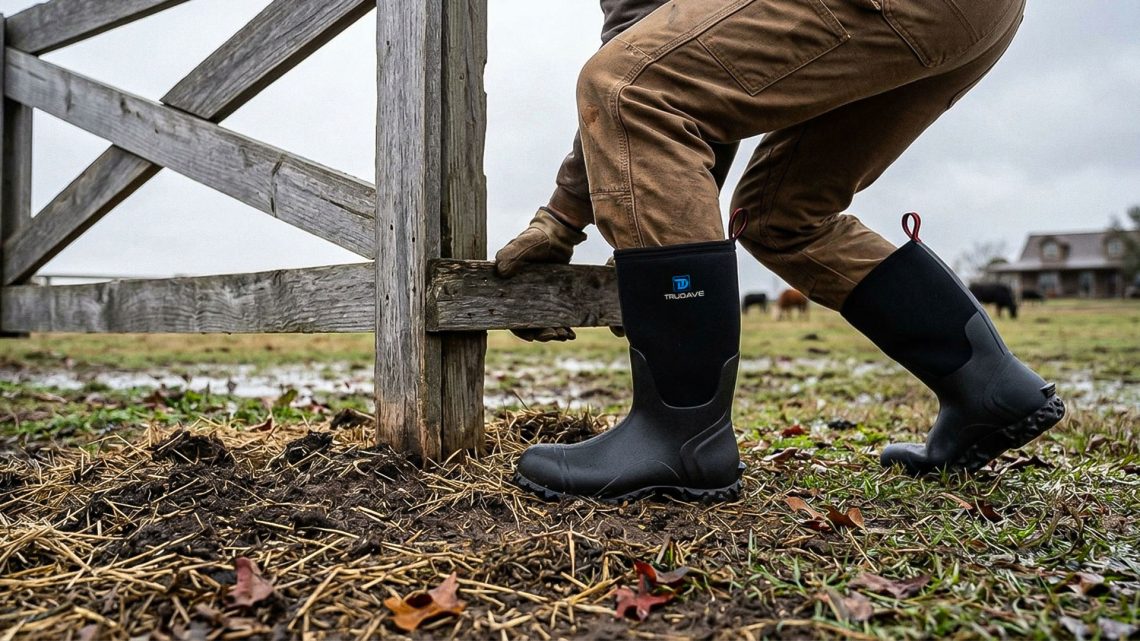
The Boot Problem Nobody Notices in Greenhouse Vegetable Production Until the Aisles Turn Wet
Commercial greenhouses look controlled compared with open-field agriculture.
There is no deep pasture mud, no flooded rice paddy, and usually no storm blowing directly across the crop.
Yet greenhouse vegetable workers spend much of their day around moisture.
Condensation may collect on structures. Irrigation systems may leak. Drainage channels can stay wet. Harvest carts move through narrow aisles. Packing areas may be washed repeatedly, and workers can transition from warm humid growing zones into cool storage rooms within minutes.
A greenhouse employee might begin the morning checking irrigation lines, inspect tomato vines, harvest cucumbers, move carts through damp aisles, repair a leaking emitter, wash tools, sort vegetables, enter a cooler, and finish the shift cleaning the packing floor.
Footwear may encounter:
- Wet concrete.
- Condensation.
- Irrigation runoff.
- Hydroponic drainage.
- Potting media.
- Plant debris.
- Mud around exterior entrances.
- Gravel service yards.
- Wash water.
- Cooler floors.
- Rain around loading docks.
That makes footwear selection more important than it first appears.
The right boot should help keep feet dry, remain comfortable on hard surfaces, allow flexible movement around plants, clean easily, and stay practical when workers move between humid growing areas, packing rooms, equipment zones, and outdoor loading areas.
For many greenhouse crews, waterproof work boots offer a useful balance.
Greenhouse Farming Is Wet Without Looking Wet
Moisture in a greenhouse often comes from several small sources rather than one dramatic event.
Workers may encounter:
- Irrigation drips.
- Leaking hoses.
- Condensation.
- Floor cleaning.
- Drainage water.
A small amount of water may not seem important.
But repeated exposure over an eight- or ten-hour shift can eventually soak ordinary work shoes.
Waterproof footwear provides more consistent protection.
Condensation Is Easy to Underestimate
Warm humid air may create moisture on:
- Pipes.
- Structural surfaces.
- Plastic coverings.
Water can drip onto:
- Walkways.
- Equipment.
Workers moving through those areas throughout the day may repeatedly step across damp floors.
Hydroponic Farms Create Their Own Footwear Problems
Hydroponic greenhouse systems depend on controlled water and nutrient delivery.
Workers may operate around:
- Drip emitters.
- Gutters.
- Return lines.
- Reservoirs.
- Pumps.
Leaks or drainage problems can create wet aisles quickly.
Footwear for Hydroponic Tomato Greenhouses
Tomato workers may spend long shifts:
- Pruning.
- Training.
- Harvesting.
- Moving carts.
The footwear needs to remain comfortable during repetitive movement.
Useful characteristics include:
- Waterproof uppers.
- Strong cushioning.
- Moderate easy-clean tread.
- Secure heel fit.
- Flexible forefoot construction.
Footwear for Greenhouse Cucumber Farms
Cucumber production may involve dense vertical plants and narrow aisles.
Workers frequently:
- Bend.
- Reach.
- Turn.
Bulky footwear can become inconvenient.
Footwear for Greenhouse Pepper Production
Pepper harvest crews may carry:
- Buckets.
- Crates.
Stable footing becomes more important when hands are occupied.
Footwear for Greenhouse Lettuce Production
Leafy-green operations may use:
- Hydroponic channels.
- Rafts.
- Benches.
Workers may spend more time on hard floors than soil.
Hard-floor cushioning becomes a major priority.
Why Greenhouse Workers Often Need Less Lug Depth
Most indoor greenhouse employees are not walking through deep field mud.
Their main surfaces may include:
- Concrete.
- Gravel.
- Weed fabric.
Extremely deep agricultural tread can be unnecessary.
Aggressive Tread Can Hold Plant Debris
Deep grooves may collect:
- Leaves.
- Growing media.
- Plant stems.
Moderate tread is easier to clean.
Hard Floors Change the Footwear Equation
Concrete provides almost no natural cushioning.
Workers may spend hours:
- Standing.
- Walking.
Thin rubber boots may keep water out but still become uncomfortable.
Supportive midsoles matter.
Cushioning Can Matter More Than Boot Height
For many greenhouse jobs, water rarely rises above the ankle.
That means a lighter waterproof boot with better cushioning may be more useful than a very tall rubber boot.
Footwear for Greenhouse Harvest Crews
Harvest workers perform repetitive movements throughout the shift.
They may:
- Walk.
- Reach.
- Bend.
- Crouch.
- Carry produce.
Flexible footwear helps.
Forefoot Flexibility Makes Repetitive Harvest Easier
Rigid boots can make constant bending more tiring.
A flexible forefoot allows more natural movement.
Boot Weight Matters
Even inside a greenhouse, workers may take thousands of steps.
Heavy footwear adds fatigue over time.
Secure Heel Fit Matters in Narrow Aisles
Workers often need precise movement around:
- Plants.
- Irrigation lines.
- Carts.
Loose footwear can make movement less predictable.
Footwear for Harvest Carts
Commercial greenhouses may use carts for:
- Picking.
- Transport.
Workers push them through long aisles.
Strong heel support helps when applying forward force.
Footwear for Cart Rails and Platforms
Some systems use:
- Raised platforms.
- Rails.
Moderate outsole thickness provides better controlled contact than oversized tread.
Footwear for Elevated Crop Work
Tall tomato and cucumber crops may require workers to use:
- Platforms.
- Lifts.
Footwear should provide secure footing while remaining easy to move in.
Equipment Safety Comes First
Boot design cannot compensate for unsafe use of elevated equipment.
Workers should follow facility procedures.
Footwear for Crop Pruning Crews
Greenhouse workers may spend hours:
- Removing leaves.
- Pruning vines.
- Training stems.
These tasks involve constant small movements.
Flexible Boots Reduce Fatigue
Workers frequently shift weight from one foot to the other.
A lighter flexible boot often feels more natural.
Footwear for Trellising Work
Greenhouse crops may rely on:
- Clips.
- Strings.
- Wires.
Workers need precise movement around narrow growing areas.
Puncture Hazards Are Separate
A thick outsole is not automatically puncture resistant.
Facilities with sharp hardware may require rated protection.
Footwear for Irrigation Maintenance
Hydroponic and greenhouse systems depend on reliable irrigation.
Workers may maintain:
- Drip lines.
- Emitters.
- Filters.
- Pumps.
- Reservoirs.
Footwear for Leaking Emitters
A single leak may create a constantly wet area.
Waterproof boots prevent repeated exposure from becoming an all-day problem.
Footwear for Drainage Channels
Workers may inspect:
- Floor drains.
- Return systems.
Mid-height waterproof boots are practical.
Footwear for Reservoir Rooms
Reservoir areas may contain:
- Wet concrete.
- Pumps.
- Electrical equipment.
General waterproof boots are not automatically electrically rated.
Electrical Work Requires Proper PPE
Workers servicing powered irrigation systems should use task-specific protection.
Footwear for Fertigation Systems
Greenhouses often deliver nutrients through irrigation.
Workers may handle concentrated fertilizers.
Waterproof Does Not Mean Chemical Resistant
Chemical resistance must be verified separately.
Workers should follow:
- Product labels.
- Safety data sheets.
- Facility PPE requirements.
Footwear for Nutrient-Mixing Rooms
Mixing areas may contain:
- Water.
- Chemical solutions.
Workers may need specialized footwear materials depending on exposure.
Footwear for Plant-Health Scouting
Crop scouts inspect plants for:
- Pest pressure.
- Disease.
- Nutrient issues.
- Irrigation problems.
They may walk long greenhouse blocks.
Lower footwear weight helps reduce fatigue.
Footwear for Biological-Control Crews
Some greenhouses use beneficial insects.
Workers may walk long aisles while releasing or monitoring biological controls.
Lightweight waterproof footwear is practical.
Footwear for Pest-Management Workers
Chemical application requires product-specific PPE.
General waterproof boots should not automatically be treated as pesticide-resistant footwear.
Footwear for Greenhouse Sanitation Crews
Controlled-environment agriculture depends heavily on cleanliness.
Workers may regularly clean:
- Floors.
- Carts.
- Tools.
- Benches.
Smooth Waterproof Uppers Are Easier to Sanitize
Highly textured materials can hold:
- Soil.
- Organic debris.
Smooth surfaces simplify cleaning.
Footwear for Washdown
Washdown may expose workers to:
- Continuous splash.
- Wet concrete.
Mid-height or mid-calf rubber boots can be useful.
Pressure Washing Requires Extra Caution
Waterproof footwear protects against ordinary spray.
It does not protect against direct high-pressure water.
Footwear for Greenhouse Floor Drains
Workers may clean:
- Trench drains.
- Floor drains.
Additional shaft coverage can help.
Footwear for Potting Areas
Some vegetable operations produce their own seedlings.
Potting rooms may contain:
- Peat.
- Coir.
- Potting mix.
These materials can collect inside outsole grooves.
Footwear for Potting Crews
Workers may stand on concrete for long periods.
Strong cushioning matters.
Footwear for Seedling Facilities
Propagation areas may be humid and wet.
Waterproof easy-clean footwear works well.
Footwear for Transplant Crews
Workers may move trays between:
- Propagation.
- Main production areas.
Lower boot weight and flexibility help.
Footwear for Growing-Media Handling
Hydroponic operations may use:
- Rockwool.
- Coco coir.
Workers may encounter damp media.
Easy-clean footwear is practical.
Footwear for Substrate Disposal
Used growing media may be wet and heavy.
Workers may need stronger outdoor-style tread around disposal areas.
Footwear for Waste Handling
Greenhouse crop residue may include:
- Leaves.
- Vines.
- Roots.
Waste areas can become messy.
Footwear for Composting Greenhouse Residue
Some farms compost plant material outdoors.
Workers may encounter:
- Mud.
- Organic debris.
More aggressive tread can be useful.
Footwear for Greenhouse Exterior Work
Workers may still perform outdoor duties around:
- Service yards.
- Water tanks.
- Loading areas.
Rain can create muddy conditions.
Footwear for Gravel Service Roads
Supportive midsoles reduce pressure from crushed stone.
Footwear for Muddy Entrances
Repeated vehicle and foot traffic can create soft ground.
Moderate open tread helps.
Footwear for Greenhouse Maintenance Crews
Commercial facilities contain substantial infrastructure.
Workers may maintain:
- Heating systems.
- Pumps.
- Fans.
- Conveyors.
- Carts.
Footwear for Mechanical Maintenance
Technicians may encounter:
- Oil.
- Grease.
Waterproofing alone does not provide oil resistance.
Footwear for Hydraulic Equipment
Some carts or lifts may use hydraulic systems.
Oil-resistant outsole properties may be useful.
Footwear for Electrical Maintenance
General waterproof boots are not automatically electrical-hazard footwear.
Workers should use appropriately rated PPE.
Footwear for Boiler or Heating Areas
Heating systems create different hazards.
General waterproof footwear is not automatically heat resistant.
Footwear for Greenhouse Construction Repairs
Workers may repair:
- Frames.
- Benches.
- Doors.
Protective-toe or puncture-resistant footwear may be appropriate.
Footwear for Harvest Packing Areas
Once vegetables leave the growing zone, they may move into:
- Sorting.
- Packing.
- Washing.
This changes footwear priorities.
Footwear for Produce Wash Lines
Wash areas may be one of the wettest parts of the facility.
Workers may stand around:
- Water.
- Produce residue.
Fully waterproof footwear is useful.
Deep Greenhouse Tread Is Usually Unnecessary Indoors
Moderate easy-clean tread provides better control on:
- Concrete.
Footwear for Sorting-Line Workers
Workers may stand for long periods.
Hard-floor cushioning becomes critical.
Footwear for Tomato Packing
Tomatoes may be packed into:
- Boxes.
- Cases.
Workers may move repeatedly between stations.
Lightweight waterproof work boots reduce fatigue.
Footwear for Cucumber Packing
Similar priorities apply:
- Cushioning.
- Easy-clean construction.
- Moderate tread.
Footwear for Pepper Packing
Workers may handle large numbers of cartons.
Protective toes may be useful in some operations.
Footwear for Palletizing Crews
Finished produce may be stacked onto pallets.
Workers may operate around:
- Pallet jacks.
- Forklifts.
Safety footwear requirements may apply.
Footwear for Forklift Operators
Drivers need:
- Pedal control.
- Moderate outsole thickness.
- Secure heel fit.
Footwear for Greenhouse Warehouses
Storage areas often mean long hours on concrete.
Supportive midsoles matter.
Footwear for Cold Storage
Fresh produce may be held in:
- Coolers.
- Refrigerated rooms.
Workers may transition from warm humid greenhouses into cold environments.
Waterproofing and Insulation Are Different Features
A waterproof boot may provide little thermal protection.
Workers spending long periods inside coolers may need additional insulation.
Socks Matter During Temperature Changes
Wool-blend socks can help manage:
- Moisture.
- Temperature.
Footwear for Loading Docks
Workers may move between:
- Packing floors.
- Outdoor loading areas.
- Refrigerated trucks.
Mixed-surface waterproof boots provide versatility.
Footwear for Produce Delivery Drivers
Drivers may transport vegetables to:
- Distribution centers.
- Retailers.
- Restaurants.
Driving comfort becomes important.
Very Tall Boots Can Be Awkward for Drivers
A mid-height waterproof boot often provides a better balance.
Footwear for Greenhouse Farm Markets
Some greenhouse operations sell directly.
Workers may move between:
- Production areas.
- Retail spaces.
Cleaner-looking waterproof footwear may be useful.
Footwear for Restaurant and CSA Packing
Workers preparing direct orders may spend most of the shift on:
- Concrete.
Lower-weight supportive footwear is practical.
Footwear for Spring Greenhouse Work
Spring may be one of the busiest periods for:
- Transplanting.
- Crop establishment.
Humidity and irrigation exposure can remain high.
Footwear for Summer Greenhouses
Warm greenhouses may become very hot.
Workers should avoid unnecessary insulation.
Useful features include:
- Lightweight construction.
- Moisture-wicking socks.
Waterproof Boots Can Become Damp From Sweat
Even perfect external waterproofing cannot prevent internal moisture from perspiration.
Daily drying remains important.
Footwear for Fall Production
Cooler outdoor conditions can create stronger temperature differences between:
- Growing areas.
- Loading docks.
Versatile waterproof footwear helps.
Footwear for Winter Greenhouses
Indoor production may continue while outdoor conditions include:
- Snow.
- Slush.
Workers moving between buildings may need additional weather protection.
Long Greenhouse Shifts Make Comfort Critical
Workers may spend many hours:
- Walking.
- Standing.
- Harvesting.
- Packing.
Footwear fatigue can build gradually.
Cushioning Is One of the Most Important Features
Hard surfaces create repetitive impact.
Supportive midsoles may be more valuable than extreme shaft height.
Boot Weight Matters
Heavy boots add unnecessary fatigue in indoor environments.
Heel Retention Matters Around Carts and Equipment
Secure fit helps workers move predictably.
Forefoot Flexibility Matters During Harvest
Workers constantly:
- Bend.
- Crouch.
- Step.
Flexible footwear helps natural movement.
Toe Room Matters During Long Shifts
Feet may swell.
Enough room improves comfort.
Socks for Greenhouse Workers
Synthetic and wool-blend socks generally perform better than cotton.
Useful characteristics include:
- Moisture wicking.
- Quick drying.
- Temperature regulation.
Lightweight Socks Are Useful in Warm Growing Areas
Heavy socks can increase heat buildup.
Wool Blends Help in Coolers
They can manage both moisture and temperature.
Spare Socks Can Be Useful
Washdown or heavy irrigation exposure may occasionally allow moisture inside footwear.
A dry pair helps.
Removable Insoles Improve Daily Drying
Removable footbeds make it easier to:
- Dry boots.
- Replace worn cushioning.
- Improve hygiene.
Easy-Clean Construction Is Important
Greenhouse boots may collect:
- Leaves.
- Soil.
- Growing media.
- Plant residue.
Smooth waterproof uppers simplify cleaning.
How to Clean Greenhouse Work Boots
A practical routine may include:
- Remove leaves and plant debris.
- Brush growing media from tread.
- Rinse ordinary dirt.
- Follow facility sanitation procedures.
- Follow chemical-specific guidance after fertilizer or cleaner exposure.
- Remove damp insoles.
- Allow footwear to dry completely.
Plant Material Should Be Removed From Tread
Leaves and stems can become trapped in outsole grooves.
Growing Media Can Pack Into Deep Tread
Moderate outsole patterns are easier to maintain.
Facility Cleaning Procedures Come First
Commercial greenhouses may have specific sanitation requirements.
Workers should follow those procedures rather than generic advice.
How to Dry Greenhouse Boots
After approved cleaning:
- Remove insoles.
- Open footwear fully.
- Allow airflow.
- Use low-temperature drying if approved.
Avoid excessive direct heat.
Rotating Two Pairs Can Help Full-Time Workers
High humidity and daily washdown may keep footwear damp.
Alternating pairs gives each boot additional drying time.
When Greenhouse Work Boots Should Be Replaced
Replace footwear when:
- Waterproofing fails.
- Rubber cracks.
- Outsole separation develops.
- Tread becomes badly worn.
- Heel support collapses.
- Chemical damage appears.
- Cushioning becomes ineffective.
- Safety components are compromised.
Are Rubber Boots Good for Greenhouse Work?
Yes.
Rubber boots are useful for:
- Wet growing areas.
- Washdown.
- Irrigation maintenance.
Workers spending long shifts on concrete should also prioritize cushioning.
Are Tall Rubber Boots Necessary in Greenhouses?
Usually not for everyday harvesting.
Mid-height waterproof boots may be lighter and more comfortable.
Mid-calf boots become more useful for:
- Heavy washdown.
- Drain maintenance.
What Footwear Works Well for Hydroponic Farms?
Waterproof work boots with strong hard-floor cushioning, moderate easy-clean tread, secure heel fit, and flexible forefoot construction are practical.
What Footwear Works Well for Greenhouse Tomato Workers?
Lightweight waterproof boots with strong cushioning, flexible movement, and controlled tread work well.
What Footwear Works Well for Greenhouse Irrigation Crews?
Waterproof boots with easy-clean uppers, moderate open tread, and enough shaft coverage for leaks and drainage work are practical.
What Footwear Works Well in Packing Rooms?
Waterproof or easy-clean work boots with strong concrete cushioning, moderate tread, secure heel support, and appropriate safety protection work well.
Do Greenhouse Workers Need Safety-Toe Boots?
Some forklift, pallet, machinery, warehouse, construction, and maintenance roles may require them.
Are Waterproof Greenhouse Boots Chemical Resistant?
Not automatically.
Nutrients, pesticides, disinfectants, oils, and cleaners may require specialized materials.
Common Mistakes When Choosing Greenhouse Footwear
Assuming Indoor Agriculture Means Dry Floors
Irrigation and condensation create constant moisture.
Buying Deep-Lug Field Boots for Indoor Aisles
Aggressive tread can hold plant debris and feel bulky.
Ignoring Concrete Cushioning
Many greenhouse employees spend nearly the entire shift on hard surfaces.
Wearing Heavy Boots for Harvest Work
Extra weight increases fatigue.
Ignoring Humidity and Sweat
Waterproof footwear can still become damp internally.
Using the Same Footwear for Every Greenhouse Role
Harvest, washdown, maintenance, and packing jobs have different requirements.
Assuming Waterproof Means Chemical Resistant
Nutrient concentrates and sanitation products may require different PPE.
Allowing Plant Debris to Build Up in Tread
Regular cleaning improves hygiene and footwear inspection.
Choosing Footwear Around the Actual Greenhouse Job
For general grow-room workers, prioritize:
- Waterproof construction.
- Strong cushioning.
- Moderate easy-clean tread.
- Secure heel fit.
For harvest crews, prioritize:
- Lower boot weight.
- Forefoot flexibility.
- Long-shift comfort.
For irrigation workers, prioritize:
- Additional water coverage.
- Easy-clean uppers.
- Controlled wet-floor traction.
For sanitation crews, prioritize:
- Waterproof construction.
- Additional shaft coverage.
- Chemical compatibility where required.
For packing workers, prioritize:
- Hard-floor cushioning.
- Moderate tread.
- Lower weight.
For cold-storage crews, prioritize:
- Temperature-appropriate insulation.
- Supportive midsoles.
For equipment operators, prioritize:
- Pedal control.
- Moderate outsole thickness.
For maintenance technicians, prioritize:
- Oil resistance.
- Electrical protection.
- Puncture resistance.
- Chemical compatibility.
- Other task-specific ratings.
Workers comparing waterproof footwear from brands such as Trudave Gear should choose footwear around the actual combination of humid greenhouse aisles, hydroponic irrigation, wet concrete, harvesting, sanitation, packing rooms, cold storage, and loading work involved in their job.
Frequently Asked Questions
What footwear works well for greenhouse vegetable workers?
Waterproof work boots with strong concrete cushioning, flexible construction, moderate easy-clean tread, and secure heel support are practical.
Are rubber boots useful in commercial greenhouses?
Yes. Rubber boots are especially useful for irrigation maintenance, washdown, drainage work, and consistently wet production areas.
What boots work well in hydroponic greenhouses?
Lightweight waterproof work boots with supportive midsoles, moderate tread, flexible forefoot movement, and easy-clean uppers work well.
Do greenhouse harvest workers need tall boots?
Usually not. Mid-height waterproof footwear is often more comfortable for everyday harvesting.
What footwear works well on wet greenhouse concrete?
Waterproof work boots with broad outsole contact, strong cushioning, moderate grooves, and secure heel support are practical.
What boots work well for greenhouse irrigation crews?
Waterproof boots with easy-clean uppers, flexible construction, and enough shaft coverage for leaks and drainage areas work well.
Do greenhouse workers need safety toes?
Some forklift, pallet, machinery, warehouse, loading, and maintenance roles may require protective-toe footwear.
Are waterproof greenhouse boots suitable for fertilizers?
Not automatically. Workers should follow PPE guidance for the specific nutrient or chemical product involved.
What footwear works well in greenhouse packing areas?
Waterproof or easy-clean work boots with hard-floor cushioning, moderate tread, secure heel fit, and task-appropriate safety protection are practical.
How should greenhouse work boots be cleaned?
Remove leaves, growing media, soil, and plant residue, clean tread grooves, follow facility sanitation and chemical-specific procedures, and allow footwear to dry completely.
Final Thoughts
Commercial greenhouse vegetable production combines humidity, irrigation, wet aisles, hydroponic systems, repetitive harvesting, hard concrete floors, sanitation, packing lines, coolers, loading docks, and long indoor work shifts.
That means greenhouse footwear should not be selected as if the worker were spending the entire day in an open muddy field.
Harvest crews need lightweight waterproof footwear with flexibility and cushioning.
Irrigation workers need stronger protection around leaks and drainage.
Sanitation crews need easy-clean waterproof construction.
Packing employees need hard-floor support.
Cold-storage workers may need additional warmth.
Equipment operators need reliable pedal control.
Maintenance technicians may require oil, electrical, puncture, chemical, or other specialized protection.
Trudave Gear offers waterproof outdoor and work footwear suited to wet floors, irrigation, washdown, rain, loading areas, and demanding agricultural environments.
Choosing footwear around the actual greenhouse job can help workers stay drier, reduce fatigue, move more naturally through narrow growing aisles, and remain more comfortable from the first irrigation inspection of the morning to the final packing-floor cleanup at the end of the shift.


You May Also Like
Mulching Mastery: How to Lock in Warmth and Moisture Before Winter
How to Prevent Blisters in Rain Boots: 10 Practical Tips for All-Day Comfort