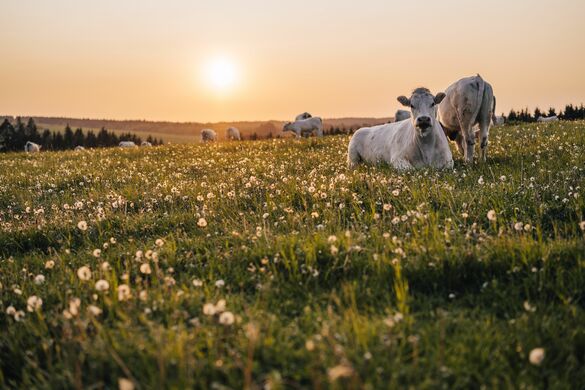
Sustainability on the Horizon: Policies and Incentives Reshaping Grazing Agriculture
As the conversation around climate change, food systems, and regenerative practices continues to heat up, grazing agriculture is entering a new era—one shaped by both opportunity and responsibility. Across the United States, ranchers and land managers are seeing a wave of sustainability-focused policies and incentives designed to reward good stewardship, improve soil health, and ensure the long-term viability of grazing operations.
From carbon markets to cost-share programs, this shift is no longer a fringe movement—it’s quickly becoming the norm. And for producers willing to adapt, sustainability isn’t just good ethics—it’s smart economics.
The Shift Toward Regenerative Grazing
For decades, grazing has been painted by some policymakers as a contributor to land degradation. But recent science, supported by boots-on-the-ground results, is flipping that narrative. Managed grazing—especially rotational and adaptive multi-paddock grazing—has proven capable of enhancing biodiversity, sequestering carbon, and increasing drought resilience.
Today’s grazing policies are focused less on limiting livestock and more on promoting holistic land management. That includes:
- Enhancing soil carbon sequestration
- Reducing erosion and runoff
- Restoring native plant diversity
- Improving water infiltration and retention
- Supporting pollinator habitat and wildlife corridors
Federal and State-Level Incentives Gaining Momentum
Let’s break down the key programs currently reshaping grazing practices across the country.
🐄 Environmental Quality Incentives Program (EQIP) – USDA NRCS
One of the biggest tools in the regenerative rancher’s toolbox, EQIP offers financial and technical assistance to implement conservation practices. This might include:
- Rotational or prescribed grazing systems
- Fencing and water infrastructure to support better paddock design
- Seeding native grasses and legumes
- Improving riparian buffers
Pro tip: EQIP contracts often span multiple years, giving producers time to implement systems at scale with real cost-share support.
🌾 Conservation Stewardship Program (CSP) – USDA NRCS
If you’ve already implemented conservation practices, CSP helps you take things further. Think of it as the “loyalty program” for good land stewards. Payments are based on performance, and include:
- Carbon sequestration
- Wildlife habitat improvement
- Soil and water conservation practices
This program is great for ranchers looking to stack ecological and economic outcomes.
💰 Carbon Markets – A New Frontier
Private carbon offset markets are starting to include soil carbon credits from grazing lands. While the rules and rates vary, the idea is simple: if your grazing practices store more carbon than they emit, you can get paid for it.
Major players in this space include:
- Indigo Ag
- Nori
- Grassroots Carbon
Keep in mind: verification and third-party auditing can be complex—but as the system matures, many believe this will become a common revenue stream for forward-thinking ranchers.
Grazing Leases Tied to Conservation Goals
Public land leases—especially on state and BLM lands—are starting to include sustainability clauses. While this might sound like more paperwork, it also opens the door to:
- Longer-term lease security
- Access to additional funding pools
- Preferential treatment for ranchers practicing regenerative methods
If you lease public land, it’s worth sitting down with your land agency rep to explore available opportunities.
Building Drought Resilience Through Incentives
Sustainability isn’t just about carbon—it’s about resilience. As weather patterns shift, drought management is front and center.
Programs that support:
- Water catchment and distribution systems
- Improved forage diversity
- Drought-tolerant pasture species
- Strategic de-stocking plans
…are all being funded and promoted across multiple state-level ag departments.
Technology, Data, and the New Grazing Landscape
As policy leans more into sustainability, data collection becomes more important. Expect to see increased incentives for:
- Soil sampling and organic matter tracking
- Forage production mapping
- Livestock movement tracking with GPS collars
- Digital grazing journals and pasture logs
Many federal and private incentive programs now include technology adoption as part of cost-share, meaning you can get financial help to modernize your grazing infrastructure.
What This Means for Ranchers: Adaptation Is Advantage
Ranchers who begin adapting now are positioning themselves for long-term viability and short-term incentives. By integrating sustainable practices, you’re not just checking boxes—you’re:
- Increasing your land’s productivity
- Reducing input costs over time
- Enhancing animal health and performance
- Opening up new revenue streams (carbon, habitat, grants)
Yes, the transition can be daunting—but support is out there, and the most successful ranches of the next decade will be the ones that blend tradition with innovation.
How to Get Started
✅ Contact Your Local NRCS Office: They’ll walk you through EQIP, CSP, and other federal support options.
✅ Map Out a 5-Year Grazing Plan: Align it with sustainability goals like soil health, water efficiency, and forage resilience.
✅ Track Your Practices: Use apps or a grazing journal to log pasture movement, forage conditions, and rainfall.
✅ Talk to Your Neighbors: Field days and rancher-led learning networks are incredible sources of inspiration and insight.
Final Thoughts
Sustainability in grazing isn’t just a buzzword anymore—it’s a horizon that’s quickly becoming reality. The policies are in place. The money is on the table. And the land is ready to respond.
As more ranchers embrace a regenerative mindset, we’re not just feeding a nation—we’re healing the land, one pasture at a time.

