Watering Smarter, Not Harder: Garden Irrigation Tips for June
June kicks off the true start of summer for most of the country, and along with longer days and rising temps comes one of the most critical chores in the garden: irrigation. Whether you’re growing vegetables, herbs, flowers, or keeping a pristine lawn, how and when you water matters more than ever this time of year.
The goal? Less guesswork, less waste, and healthier plants. So before you drag out the hose or crank up the sprinkler, let’s dive into smart irrigation strategies to keep your garden thriving all summer long.
1. Know Your Plants’ Real Needs
Not all plants drink alike. In June, your garden may contain a mix of spring holdovers, heat-loving annuals, and thirsty vegetables. Understanding who needs what can help you avoid overwatering and underwatering.
- Deep-rooted perennials (like lavender, echinacea, or black-eyed Susans) typically need water less often but benefit from deeper soaks.
- Vegetables like tomatoes, cucumbers, and squash need consistent moisture—especially as they start fruiting.
- Container plants dry out faster and usually require daily or every-other-day watering.
Pro Tip: Group plants with similar water needs together to make your irrigation efforts more efficient.
2. Water Early and With Intention
The best time to water your garden is early morning—ideally between 5 a.m. and 9 a.m.
Why?
- Watering in the morning reduces evaporation losses.
- Leaves have time to dry off during the day, lowering the risk of fungal diseases.
- Roots absorb moisture more effectively when the soil is cooler.
Avoid watering in the heat of midday or late at night when moisture can linger and promote disease.
3. Ditch the Daily Sprinkles—Water Deep Instead
Shallow, frequent watering encourages shallow root growth, which makes plants more vulnerable during dry spells. Aim for deep, infrequent watering that soaks the soil 6 to 8 inches down.
How often should you water in June?
- Established gardens: Every 3–4 days, depending on weather and soil type.
- Vegetable beds or raised beds: Every 2–3 days, possibly daily during heat waves.
- New plantings: Daily at first, then taper off to encourage root development.
4. Use the Right Tools for the Job
Smart watering starts with smart gear. Here are some tried-and-true tools that make irrigation more efficient:
- Soaker hoses: Great for flower beds and veggie rows; deliver water slowly at ground level.
- Drip irrigation systems: Ideal for precision watering in garden beds or containers.
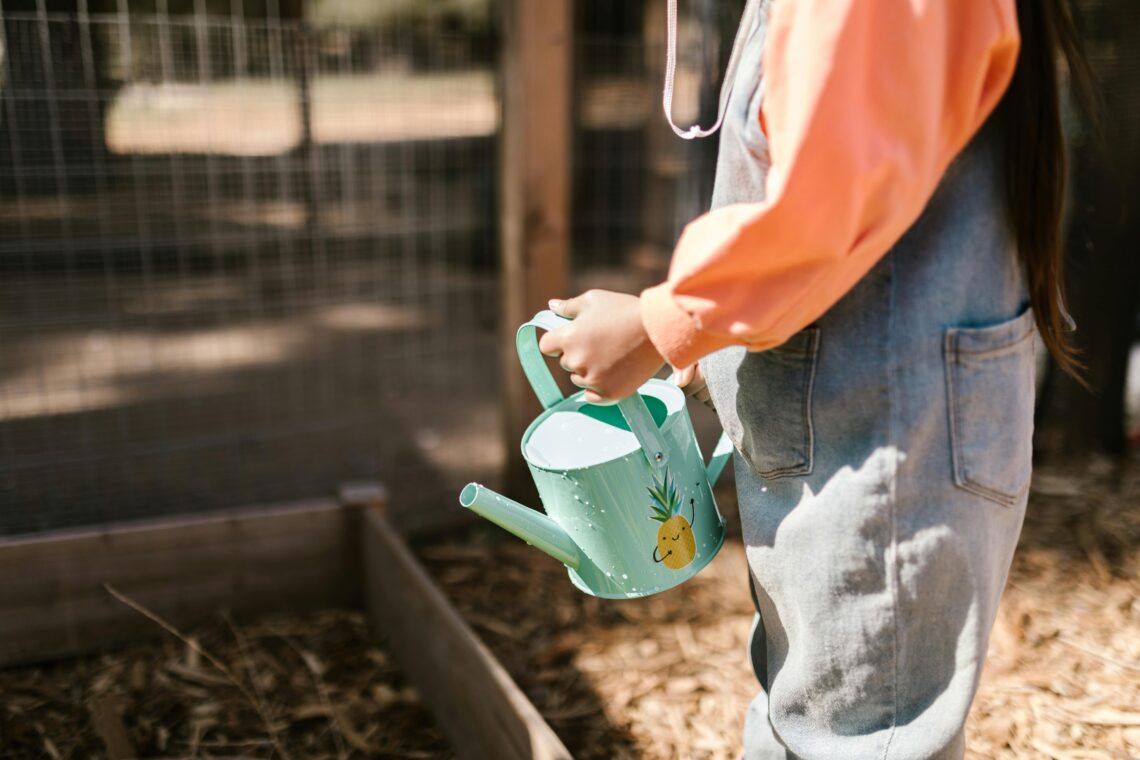
- Rain wands or watering cans: Best for targeting individual plants without over-spraying.
- Moisture meters: Affordable and surprisingly helpful for checking soil moisture depth.
Bonus: Install a rain barrel to collect water for dry spells. It’s sustainable and gentle on your wallet.
5. Mulch is Your Secret Weapon
Applying 2–3 inches of mulch (like straw, shredded leaves, bark, or compost) around your plants helps:
- Retain moisture by reducing evaporation.
- Keep roots cool as temps rise.
- Suppress weeds that compete for water.
June is the perfect time to top off your mulch layers before summer heat intensifies.
6. Don’t Forget the Lawn
If you’re maintaining a lawn, make sure your watering is seasonally smart:
- Grass needs about 1 inch of water per week, including rainfall.
- Water deeply, 1–2 times a week, instead of shallow daily sprinkles.
- Early morning is key to avoid evaporation and fungal issues.
Pro Tip: Step on your lawn—if the grass doesn’t spring back, it’s probably time to water.
7. Watch the Weather—and Adjust Accordingly
Use June’s weather patterns to your advantage. If you’ve had a few days of rain, hold off on watering. On the flip side, if temps suddenly spike or winds pick up, your garden may dry out faster than usual.
Install a smart irrigation controller or use weather apps to help adjust your schedule based on real-time conditions.
Final Thoughts: Efficiency Equals Abundance
June sets the tone for your summer harvest and blooms. By watering smart—not just often—you’ll grow stronger roots, reduce disease, conserve resources, and enjoy a thriving garden that can handle the heat ahead.
So instead of letting the hose run wild, take a few minutes this week to audit your system, time your watering right, and focus on what your plants truly need. Your garden—and your water bill—will thank you.