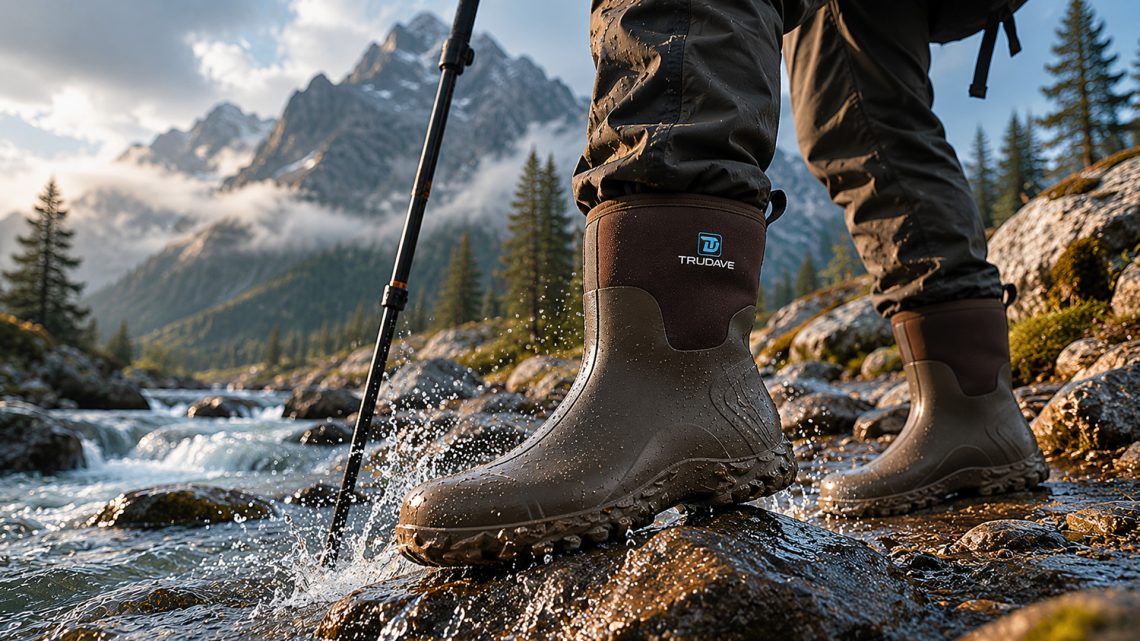
5 Common Care Mistakes That Are Killing Your Rain Boots—and How Trudave Boots Are Built to Survive Them
Introduction: The Slow Death of a Good Boot
Every spring, the scene repeats itself in mudrooms and garages across America. A pair of rain boots, purchased with optimism just a year or two ago, is pulled from a dark corner. The rubber is cracked at the toe crease. The tread is worn smooth. The interior smells like something crawled in and died. The boots that were supposed to last for seasons are headed to the landfill, and their owner is left wondering what went wrong.
Here’s the uncomfortable truth: most rain boots don’t die from overuse. They die from neglect and well-intentioned care mistakes. Drying them next to a roaring wood stove after a snowy walk. Letting salt and mud bake onto the rubber in the sun. Stuffing them, still damp, into an uninsulated garage in July. These are the silent killers of rain boots, and they claim far more victims than any rock or thorn ever could.
The good news is that a well-made boot—one constructed from premium, vulcanized natural rubber and designed with replaceable components—is remarkably resilient. Trudave Gear builds its entire rain boot lineup to withstand the kind of real-world abuse that happens when life gets busy. But even the toughest boot benefits from a few simple habits that take almost no time at all. Here are the five most common ways people accidentally destroy their rain boots, and how Trudave’s materials and design help you avoid each one.
1. Mistake #1: Drying Wet Boots with Intense Heat
You come in from shoveling snow or walking the dog in a downpour. Your boots are soaked and cold. The most natural thing in the world is to place them next to the wood stove, the radiator, or the heating vent to speed up drying for the next trip out. Never do this. Heat is the mortal enemy of rubber. It breaks down the polymer cross-links created during vulcanization, the chemical process discovered by Charles Goodyear that gives rubber its strength and flexibility. A boot that’s routinely dried by a fire or a heater will become brittle, crack at the flex points, and lose its waterproof seal years before its time.
How Trudave Helps: Trudave rain boots are made from premium, vulcanized natural rubber that is inherently more resistant to heat damage than the cheap PVC found in budget boots. But they still rely on you to let them air dry at room temperature. The removable EVA insoles in every Trudave boot—from the flexible BloomBoot to the insulated HeatHold—are a critical part of this. After a wet day, pull the insoles out and let them dry separately. Stuff the boots loosely with crumpled newspaper to wick moisture from the interior, and stand them upright in a well-ventilated spot away from any direct heat source. They’ll be dry by morning without any damage to the rubber.
2. Mistake #2: Letting Salt, Mud, and Manure Bake On
A quick walk through salted winter streets or a morning of mucking out stalls leaves a corrosive cocktail on your boots. Salt crystals work their way into microscopic pores in the rubber, expanding and contracting with temperature changes until those pores become cracks. Manure and mud are often acidic and, when left to dry on the surface, slowly eat away at the rubber’s protective outer layer. Kicking off your boots and letting that grime sit for days—or worse, leaving it to harden in direct sun—is a recipe for premature cracking and a degraded waterproof seal.
How Trudave Helps: The non-porous, vulcanized rubber shell on Trudave boots doesn’t absorb salt or chemicals the way a cheaper PVC boot does, giving you a crucial window for easy cleaning. The self-cleaning deep lugs on the GardenStride and AquaGuard are designed to eject mud as you walk, so there’s less to clean in the first place. The best habit is a 30-second rinse with a garden hose or sink sprayer as soon as you come inside. For stubborn grime, a soft brush and mild soap are all you need. This is especially critical for the industrial-grade AquaGuard, whose chemical-resistant rubber can handle fuel and hydraulic fluid—but only if those contaminants are rinsed away before they have a chance to act.
3. Mistake #3: Folding the Tops Down and Cramming Them in a Closet
Tall rain boots take up space, and the temptation to fold the soft neoprene or rubber shaft down over itself to make them fit on a shoe rack is real. Resist it. Folding the shaft creates a permanent crease at the fold point. Over time, that crease weakens, cracks, and becomes the first place water sneaks through. Cramming boots under a pile of other gear or storing them in a freezing, sweltering garage subjects the rubber to constant stress and temperature swings that age it prematurely.
How Trudave Helps: The neoprene uppers on the BloomBoot, HeatHold, and MudFlex are flexible but have excellent memory—they want to hold their shape if they’re stored correctly. Trudave boots are designed to be stored upright. For the taller models, you can use a rolled-up piece of cardboard or an empty plastic bottle inside the shaft to help them hold their form without creasing. Keeping them in a cool, dark, dry closet inside the house—not the uninsulated garage—will protect the rubber from the extreme temperature swings that cause it to expand, contract, and crack.
4. Mistake #4: Using Bleach, Acetone, or Harsh Degreasers to Clean Them
A filthy boot covered in stubborn stains might tempt you to reach for a powerful solvent. Bleach will kill the mold. Acetone will cut through that weird sticky stuff. Oven cleaner… well, you get the idea. These chemicals are catastrophic for rubber. They strip away the natural oils and plasticizers that keep vulcanized rubber flexible and waterproof, leaving behind a stiff, brittle shell that will crack in no time. Even harsh dish soaps with degreasers can be damaging with repeated use.
How Trudave Helps: Trudave’s vulcanized natural rubber has a dense, non-porous surface that stains find hard to grip. For almost every mess—mud, salt, manure—plain water and a soft brush are sufficient. For oil-based stains or persistent grime, a simple paste of baking soda and a tiny bit of mild dish soap (applied for 10 minutes and then rinsed) will lift the stain without damaging the rubber. The removable insoles make it easy to deep-clean the interior with mild soap and water or an enzymatic cleaner without exposing the rubber shell to anything harsh. With Trudave boots, aggressive chemicals are almost never necessary.
5. Mistake #5: Ignoring Small Cracks and Punctures
Every boot eventually gets a small cut from a sharp rock, a piece of glass, or just the repeated stress of flexing at the toe crease. These tiny breaches are not a death sentence for a premium boot—but they become one if you ignore them. A hairline crack that could have been sealed in five minutes with a $7 tube of adhesive will slowly widen with every step until it’s an inch-long gash that lets water gush in.
How Trudave Helps: Vulcanized natural rubber bonds exceptionally well with flexible repair adhesives like Shoe Goo or Aquaseal. Because a Trudave boot is a single, homogenous material with no fabric lining to rot or separate layers to shift, a repair is simple, permanent, and almost invisible. Keep a small repair kit (adhesive, alcohol wipes, a bit of sandpaper) in your mudroom. The moment you spot a crack or a puncture, clean the area, rough it lightly, apply the adhesive, and let it cure for 24 hours. The boot will be as waterproof as the day you bought it. This is a level of repairability that cheap PVC boots simply don’t offer—they’re designed for the landfill, while a Trudave boot is designed for a long, fixable life.
The 2-Minute Post-Wear Routine That Prevents All of This
Avoiding these five mistakes sounds like a lot of rules, but in practice, they boil down to a routine that takes less than two minutes and quickly becomes a habit. Here’s the Trudave care protocol in its entirety:
- Rinse: Blast the boots with a hose or sink sprayer to remove mud, salt, and grime.
- Scrub if needed: For stuck-on muck, a quick pass with a soft brush and mild soap.
- Dry smart: Pull the insoles out, stuff the boots with newspaper, and stand them upright in a shaded, room-temperature spot. Never apply heat.
- Store right: Keep them in a cool, dark closet, not a hot garage or a frozen shed.
- Inspect: Once a month, flex the toe area and check for small cracks. Fix them immediately.
That’s it. Two minutes after a wet, muddy day, and your Trudave boots will reward you with five, six, or even seven seasons of dry, comfortable service.
Conclusion: A Boot That Forgives
Life is messy. Sometimes you’ll forget to rinse your boots. Sometimes they’ll sit in the car for a day. Sometimes you’ll be too exhausted to do anything but kick them off and collapse. Trudave Gear builds its rain boots for those moments, too. The vulcanized natural rubber, the replaceable EVA insoles, the self-cleaning tread, and the chemical-resistant compounds are all engineered to be tough and forgiving. But when you pair that durable foundation with just a little bit of consistent care, the result is a boot that can outlast the trends, the seasons, and the storms—a reliable partner for a lifetime of outdoor work.
Don’t let a simple care mistake cut that life short. Treat your Trudave boots with respect, and they’ll keep your feet dry and comfortable for more seasons than you ever expected.
To explore the full lineup of resilient, easy-care Trudave Gear rain boots, visit trudavegear.com.


You May Also Like
Best Boots for Horse Barn Work: A Practical Guide for Stalls, Paddocks, and Long Days at the Stable
Protecting Perennials: The Right Way to Mulch Before the Hard Freeze