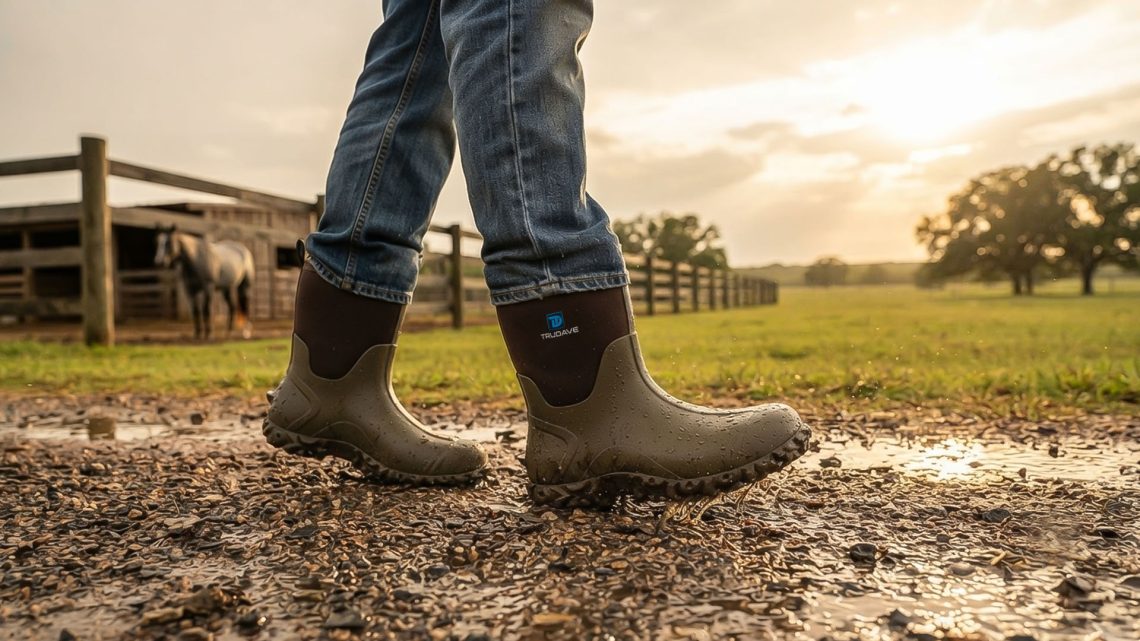
How to Keep Your Feet Warm in Rain Boots Without Sweating
Rain boots can keep water away from your feet, but waterproof protection does not automatically guarantee warmth.
Many hunters, anglers, farmers, and outdoor workers have experienced cold feet inside rubber boots even when their socks remain completely dry.
Others have the opposite problem.
They wear thick socks and heavily insulated boots, begin sweating during the first hour, and later discover that the trapped moisture makes their feet feel colder.
Keeping feet warm in rain boots requires balance.
You need enough insulation to slow heat loss, but not so much that your feet overheat and sweat.
You also need enough space inside the boots to maintain circulation, because tight footwear can make cold feet worse.
The right combination of boot insulation, sock material, fit, moisture management, and activity level can help your feet remain comfortable during cold-weather hunting, fishing, farm work, and everyday outdoor chores.
This guide explains how to keep your feet warm in rain boots without creating excessive sweat, pressure, or discomfort.
Why Do Feet Get Cold in Rain Boots?
Feet can become cold inside rain boots for several reasons.
The most obvious cause is low temperature.
Rubber does not provide much insulation by itself unless the boot includes a thermal lining, neoprene, foam, or another insulating material.
Cold ground can also draw heat away from your feet through the outsole.
However, temperature is only part of the problem.
Cold feet in rain boots may also result from:
- Wet or sweaty socks.
- Poor circulation.
- Boots that are too tight.
- Insufficient insulation.
- Standing still for long periods.
- Thin outsoles.
- Inappropriate sock materials.
- Boots that are too large.
- Wearing the wrong boots for the activity.
Understanding the cause helps you choose the right solution.
Adding more socks does not always make feet warmer.
In some situations, it can make the problem worse.
1. Choose the Right Level of Boot Insulation
Insulation is one of the most important factors in cold-weather footwear.
Rain boots may be:
- Uninsulated.
- Lightly insulated.
- Neoprene-lined.
- Fleece-lined.
- Foam-insulated.
- Designed for severe winter conditions.
The correct insulation level depends on temperature and activity.
A hunter sitting still in a blind for several hours needs more insulation than a farm worker who remains active throughout the day.
An angler standing on a cold boat deck may also need more underfoot insulation than someone walking continuously through wet fields.
More insulation is not always better.
Heavily insulated boots can cause overheating during active use.
Once your socks become damp from sweat, your feet may feel cold when your activity level decreases.
Choose insulation for the conditions you experience most often rather than the coldest possible day of the year.
2. Wear Moisture-Wicking Socks
Sock material plays a major role in temperature control.
Cotton socks absorb moisture and dry slowly.
When cotton becomes wet from sweat, it loses much of its ability to keep your feet comfortable.
Moisture-wicking socks made from wool blends or synthetic fibers can perform better in waterproof boots.
These materials help move moisture away from the skin and may continue providing insulation when slightly damp.
Good cold-weather boot socks should:
- Fit smoothly.
- Extend above the boot collar.
- Manage moisture.
- Provide appropriate cushioning.
- Avoid bulky seams.
- Match the boot fit.
Merino wool blends are popular among hunters and outdoor workers because they help regulate temperature and control moisture.
Synthetic socks can also work well, especially for active users who need fast-drying materials.
3. Do Not Wear Too Many Socks
Wearing multiple thick socks seems like an obvious way to stay warm.
However, too many sock layers can compress your feet inside the boots.
Compression reduces circulation.
Reduced circulation can make your toes feel colder even when the footwear contains more insulation.
Excess sock thickness can also increase sweating and create pressure points.
A better approach is to use one properly fitted, high-quality cold-weather sock.
Some users may benefit from a thin liner sock underneath, but the boot must have enough interior space.
Your toes should move freely.
The socks should not feel compressed.
If your feet feel numb or tightly squeezed, the footwear system is working against you.
4. Make Sure the Boots Are Not Too Tight
Tight rain boots are a common cause of cold feet.
Cold-weather footwear needs enough interior volume for socks and natural circulation.
When boots compress the toes or sides of the feet, blood flow may decrease.
This makes it harder for the body to keep the feet warm.
A properly fitted cold-weather rain boot should provide:
- Comfortable toe movement.
- Enough room for winter socks.
- No painful pressure around the instep.
- A secure but not restrictive heel fit.
- Stable footing without excessive sliding.
Do not automatically buy a full size larger.
Oversized boots can allow excessive movement and cause blisters.
The goal is enough room for warmth and circulation without losing stability.
5. Keep Your Feet Dry From the Inside
Waterproof boots prevent outside moisture from entering, but they also reduce ventilation.
Sweat can accumulate inside the boot.
Once the interior becomes damp, the moisture can cool your feet during periods of inactivity.
To manage internal moisture:
- Wear moisture-wicking socks.
- Avoid excessive insulation during active work.
- Change damp socks during long outings.
- Remove boots during extended breaks when practical.
- Dry the boots completely after use.
- Remove insoles to improve airflow.
- Use a low-temperature boot dryer.
Hunters may benefit from carrying an extra pair of socks.
Changing into dry socks before sitting for several hours can make a significant difference.
6. Use Insulated Insoles
Cold can enter through the bottom of the boot.
Standing on frozen soil, metal boat decks, snow, or cold concrete can draw heat away from your feet.
Insulated insoles create an additional barrier between your feet and the ground.
Different insole materials may include:
- Felt.
- Wool.
- Foam.
- Reflective layers.
- Synthetic insulation.
Insoles can also improve cushioning and support.
However, adding thick insoles reduces interior space.
Make sure they do not make the boots too tight.
Test the complete footwear system with your normal socks before wearing it for a full day.
7. Match Sock Thickness to Activity Level
Active users generate more body heat.
A hunter walking several miles to a stand may become warm quickly.
A farmer carrying feed or repairing equipment may also generate substantial heat.
Stationary users generate less heat.
This means the same sock and boot combination may feel comfortable while walking but inadequate while sitting still.
For active cold-weather use, medium-weight socks may provide enough warmth without causing excessive sweat.
For stationary use, heavier socks and more insulation may be appropriate.
Think about the coldest and least active part of your day.
That is often when footwear warmth matters most.
8. Warm Your Boots Before Putting Them On
Starting with cold boots makes it harder for your feet to become comfortable.
Boots stored in an unheated garage, truck bed, porch, or shed can be extremely cold before you put them on.
Whenever possible, store cold-weather boots indoors.
Allow them to reach room temperature before use.
Warm boots reduce the amount of body heat required to heat the footwear interior.
Do not place rubber boots directly against a heater, fireplace, radiator, or other intense heat source.
Excessive heat can damage waterproof materials.
Room-temperature warming is safer.
9. Dry Boots Completely Between Uses
Boots that feel dry on the outside may still contain moisture in the lining, insulation, or insole.
Wearing damp boots the next morning almost guarantees colder feet.
After each use:
- Remove the insoles.
- Open the boot shafts.
- Place the boots in a ventilated area.
- Use a low-temperature boot dryer if needed.
- Allow enough time for complete drying.
Avoid sealing damp boots inside vehicles, storage containers, or equipment bags.
Moisture can also create odor and shorten the useful life of the interior materials.
10. Keep the Rest of Your Body Warm
The body protects vital organs during cold exposure.
When your core temperature drops, blood flow to the hands and feet may decrease.
This means cold feet are not always caused by footwear alone.
Wearing appropriate layers on your torso, head, and legs can help your entire body maintain warmth.
Cold-weather outdoor clothing may include:
- Moisture-wicking base layers.
- Insulating mid-layers.
- Wind-resistant outerwear.
- Waterproof pants.
- Gloves.
- Warm headwear.
Keeping your core warm can improve comfort in your feet and hands.
How to Keep Feet Warm in Rain Boots While Hunting
Hunting presents a difficult combination of movement and inactivity.
You may walk through fields or forests, generate sweat, and then sit still for several hours.
This change in activity level often causes cold feet.
A practical hunting strategy is to avoid overheating during the walk.
Wear moisture-wicking socks.
Use insulation appropriate for the temperature.
Slow down if necessary to reduce sweating.
If your socks become damp, change them before settling into a stand or blind.
Hunters should also consider:
- Insulated insoles.
- Waterproof outer construction.
- Adequate toe room.
- Traction.
- Boot weight.
- Length of stationary periods.
- Expected temperature.
Outdoor footwear brands such as Trudave Gear offer waterproof boots designed for hunting, fishing, and wet-weather outdoor use. When comparing options, consider how much time you spend walking versus sitting still.
The best cold-weather hunting boot balances warmth, waterproofing, mobility, and moisture management.
How to Keep Feet Warm While Duck Hunting
Duck hunting often combines cold temperatures, water, mud, and long periods of inactivity.
These conditions make insulation especially important.
Tall waterproof boots or waders may be necessary depending on water depth.
For standard rain boots, look for:
- Reliable waterproof construction.
- Cold-weather insulation.
- Room for wool-blend socks.
- Stable footing in mud.
- Thick midsoles or insulated insoles.
Avoid standing directly on frozen or cold metal surfaces when possible.
A foam pad or insulated platform can reduce heat loss through the ground.
How to Keep Feet Warm While Fishing
Cold-weather anglers may stand on boat decks, docks, riverbanks, or frozen ground for extended periods.
Underfoot insulation becomes particularly important.
Waterproof deck boots can keep feet dry, but uninsulated models may feel cold during winter fishing.
Consider:
- Insulated boots.
- Thermal insoles.
- Wool-blend socks.
- Dry spare socks.
- Footwear that fits without compression.
- Regular movement to improve circulation.
Boat anglers should also prioritize wet-surface traction.
Warmth should not come at the expense of safety.
How to Keep Feet Warm During Farm Work
Farm work often involves high activity.
Heavily insulated boots may become too warm while lifting, walking, cleaning, or working around livestock.
For active outdoor work, lighter insulation combined with moisture-wicking socks may provide better comfort.
Farm workers should also dry boots thoroughly between shifts.
Daily use does not always allow enough drying time.
Rotating between two pairs of boots can help each pair dry completely.
Why Do Feet Sweat in Rain Boots During Winter?
Sweating in winter boots usually occurs because the footwear system traps more heat than the body needs.
Possible causes include:
- Excessive insulation.
- Too many socks.
- High activity levels.
- Non-breathable materials.
- Warm indoor conditions before going outside.
- Poor moisture management.
Sweat becomes a problem when activity decreases.
Moisture inside the sock and lining begins to cool.
The result is a cycle of overheating followed by cold feet.
To reduce sweat:
- Use lighter socks during active work.
- Choose insulation appropriate for activity.
- Avoid wearing winter boots indoors for long periods.
- Change damp socks.
- Dry boots fully.
- Reduce unnecessary layers.
Are Neoprene Rain Boots Warm?
Neoprene can provide useful insulation.
It traps small amounts of air within the material and reduces heat transfer.
The warmth depends partly on neoprene thickness.
Thicker neoprene generally provides more insulation but may also retain more heat during active use.
Many hunting boots combine rubber lower sections with neoprene uppers.
This design provides waterproof protection, flexibility, and warmth.
However, neoprene alone does not determine overall boot temperature.
Lining, insole, outsole thickness, fit, and sock choice also matter.
Are Rubber Boots Warm Enough for Winter?
Basic uninsulated rubber boots may not be warm enough for extended winter use.
Rubber provides waterproof protection but limited thermal insulation.
Uninsulated rubber boots may work for short outdoor chores when temperatures are moderate.
For long periods in cold conditions, consider insulated rain boots or add appropriate socks and insoles.
Avoid assuming that thick rubber automatically means a warm boot.
Check the insulation and intended temperature range.
Should Winter Rain Boots Fit Loose?
Winter rain boots should provide slightly more room than tightly fitted everyday shoes.
You need space for socks and natural circulation.
However, boots should not be so loose that the heel moves excessively.
Too much movement can cause blisters and reduce walking stability.
The correct fit provides:
- Free toe movement.
- Comfortable sock space.
- Stable heel positioning.
- No pressure on the sides of the feet.
- No forward sliding.
Fit becomes especially important in mud and uneven terrain.
Can Foot Warmers Be Used in Rain Boots?
Disposable or rechargeable foot warmers may provide additional heat.
However, they should be used carefully.
Some products are designed to sit above or below the toes.
Others fit inside insoles.
Always follow the manufacturer’s safety instructions.
Do not use warmers that create uncomfortable pressure or excessive heat.
People with reduced foot sensation, circulation problems, diabetes, or other medical concerns should seek professional guidance before using heated footwear products.
Foot warmers should supplement appropriate boots and socks rather than replace them.
Common Mistakes That Make Feet Colder
Wearing Cotton Socks
Cotton retains moisture and may stay damp for long periods.
Wearing Boots That Are Too Tight
Tight footwear reduces circulation and compresses insulation.
Using Too Many Sock Layers
More layers can create pressure and sweating.
Starting With Damp Boots
Moisture in the lining or insole quickly reduces warmth.
Choosing Too Much Insulation
Overheating can lead to sweating and later cooling.
Ignoring Underfoot Heat Loss
Cold ground and metal surfaces draw heat through the outsole.
Letting Your Core Become Cold
The body may reduce blood flow to the extremities.
How to Choose Warm Rain Boots
When shopping for cold-weather waterproof boots, evaluate the complete design.
Look for:
- Appropriate insulation.
- Waterproof construction.
- Enough room for winter socks.
- Insulated or removable insoles.
- Stable heel support.
- Reliable traction.
- Durable outsole construction.
- Correct boot height.
- Manageable weight.
- Comfortable flexibility.
Consider your real activity.
Stationary hunters need different warmth than active farm workers.
Boat anglers need different traction than people walking through deep mud.
If you are comparing waterproof outdoor footwear, Trudave Gear provides boot options for hunting, fishing, wet terrain, and changing weather conditions.
Choose boots based on temperature, terrain, walking distance, activity level, and how long you remain stationary.
Frequently Asked Questions
Why are my feet cold in rubber boots?
Rubber boots may lack insulation, fit too tightly, contain damp socks, or allow heat loss through the outsole.
What socks keep feet warm in rain boots?
Wool-blend and moisture-wicking synthetic socks generally perform better than cotton during cold outdoor activities.
Should I wear two pairs of socks in rain boots?
A thin liner sock and a suitable outer sock can work, provided the boots have enough room. Two thick pairs may reduce circulation.
Are insulated rain boots necessary?
Insulated rain boots are useful during cold-weather hunting, fishing, farm work, and extended outdoor exposure. They may be unnecessary for mild weather or highly active use.
How do I stop my feet from sweating in rubber boots?
Use moisture-wicking socks, reduce excessive insulation, dry boots completely, and match your sock thickness to your activity level.
Do tight boots make feet colder?
Yes. Tight boots can restrict circulation and compress insulating materials.
Can I add insulated insoles to rain boots?
Yes, provided the additional thickness does not make the boots too tight.
Are neoprene boots warmer than regular rubber boots?
Neoprene boots are generally warmer than uninsulated rubber boots, although overall warmth depends on the entire construction.
Final Thoughts
Keeping feet warm in rain boots is not simply a matter of wearing the thickest socks available.
Warmth depends on balance.
You need enough insulation to reduce heat loss.
You need enough room to maintain circulation.
You need moisture-wicking socks to control sweat.
You need dry boots at the beginning of the day.
You also need footwear designed for your activity and weather conditions.
Hunters who walk and then sit need to manage sweat before becoming stationary.
Anglers standing on cold decks need underfoot insulation.
Farm workers may need lighter insulation because they remain active.
The correct footwear system should keep your feet warm without making them wet from sweat.
For hunters, anglers, farmers, and outdoor workers facing rain, mud, cold ground, and changing weather, Trudave Gear offers waterproof outdoor boots designed for practical use in demanding conditions.
Choose the correct insulation, maintain enough toe room, wear moisture-wicking socks, and dry your boots completely after every use.
These simple steps can help keep your feet warmer, drier, and more comfortable throughout the coldest part of the outdoor season.


You May Also Like
Mulch Magic: Locking In Soil Warmth for Winter Gardens

How January Ground Conditions Change Lying Time and Rest Quality