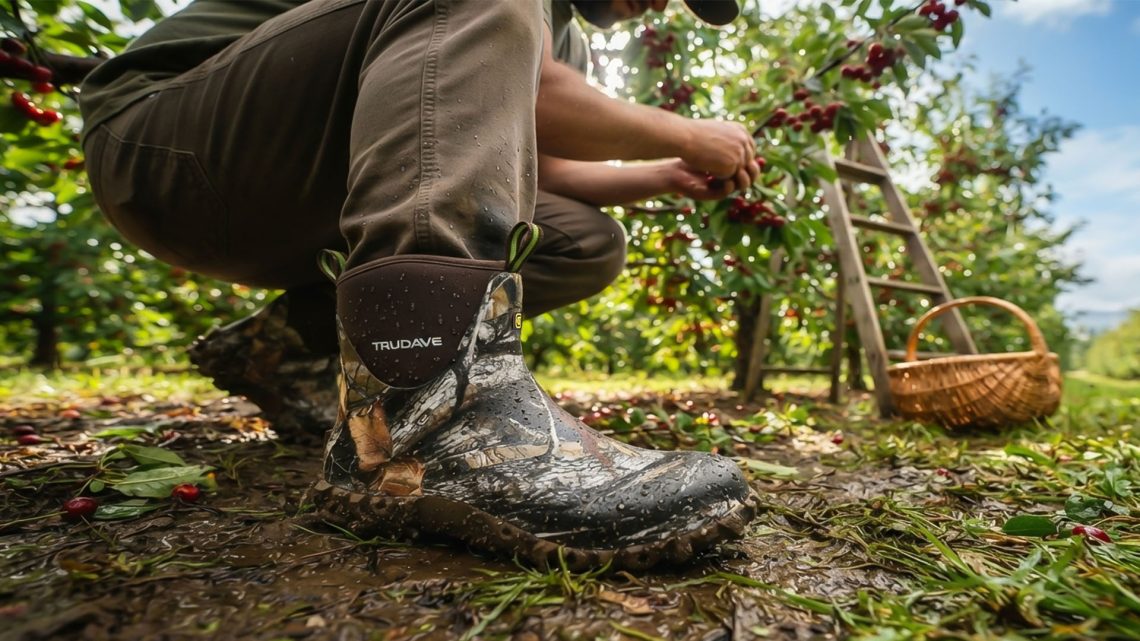
Can You Hike in Rain Boots? When They Work and When They Don’t
Rain boots seem like an obvious choice for a wet trail.
They are waterproof, easy to clean, and often tall enough to protect your lower legs from mud, puddles, wet grass, and shallow water.
For short walks through saturated ground, rain boots can work very well.
However, traditional rubber boots are not always designed for long-distance hiking, steep terrain, rocky trails, or extended climbs.
They may provide less ankle support, less cushioning, and less precise heel control than lace-up hiking boots.
The result is that rain boots can be excellent in the right conditions and uncomfortable or unstable in the wrong ones.
The answer to whether you can hike in rain boots depends on five main factors:
- Trail distance.
- Terrain.
- Mud and water depth.
- Boot construction.
- Your personal fit and comfort.
This guide explains when rain boots are suitable for hiking, when waterproof hiking boots are a better choice, and which footwear features matter most on wet outdoor trails.
Can You Hike in Rain Boots?
Yes, you can hike in rain boots under certain conditions.
Rain boots work best for:
- Short hikes.
- Flat or gently rolling terrain.
- Muddy trails.
- Wet grass.
- Shallow standing water.
- Marshy access paths.
- Hunting property.
- Farm and woodland trails.
- Low-speed outdoor walks.
They are less suitable for:
- Long-distance hiking.
- Steep mountain trails.
- Rocky terrain.
- Technical climbs.
- High-speed movement.
- Heavy backpacking.
- Trails requiring strong ankle support.
The main issue is not waterproofing.
Rain boots usually perform well at keeping outside water away from your feet.
The issue is walking performance.
Traditional pull-on rubber boots are built differently from hiking footwear.
Why Rain Boots Can Work Well on Wet Trails
Rain boots have several advantages in wet outdoor environments.
Reliable Waterproof Protection
A molded rubber shell creates a strong physical barrier against water.
Rain boots can handle repeated contact with puddles, mud, wet grass, and shallow water better than many ordinary shoes.
Greater Shaft Height
Tall and mid-calf rain boots protect more of the lower leg.
This is useful when walking through soaked vegetation or muddy sections where water may rise above ankle height.
Easy Cleaning
Mud can usually be rinsed from rubber footwear with water and a soft brush.
This makes rain boots practical for trails that would heavily stain leather or fabric boots.
Fewer Exposed Seams
Traditional molded rain boots often have fewer vulnerable seams than multi-panel hiking footwear.
This can improve performance during continuous moisture exposure.
Protection From Mud and Debris
Tall shafts can help prevent mud, seeds, grass, and shallow water from entering from above.
These advantages explain why hunters, farmers, anglers, and outdoor workers frequently wear rubber boots on rough, wet ground.
Why Rain Boots May Be Uncomfortable for Hiking
Waterproof protection is only one part of trail footwear.
Hiking requires repeated impact, stable foot positioning, flexibility, and support.
Traditional rain boots may have several limitations.
Limited Ankle Support
Pull-on rain boots do not usually wrap tightly around the ankle.
The foot and lower leg may move more freely inside the shaft.
This can reduce stability on uneven terrain.
Heel Slip
A small amount of heel movement is normal in many rubber boots.
During a long hike, repeated heel slip can create friction and blisters.
Minimal Cushioning
Basic rain boots may use thin factory insoles and simple midsoles.
This may feel acceptable on soft mud but uncomfortable on hard or rocky ground.
Higher Weight
Tall rubber boots can be heavier than hiking footwear.
Mud may also collect around the outsole, increasing the effective weight.
Reduced Breathability
Rubber does not allow much moisture vapor to escape.
Feet can become sweaty, especially during active walking.
Less Precise Fit
Lace-up hiking boots allow users to adjust pressure around the heel, ankle, and midfoot.
Pull-on boots offer fewer fit adjustments.
These limitations become more important as distance and terrain difficulty increase.
Rain Boots vs Waterproof Hiking Boots
Rain boots and waterproof hiking boots solve different problems.
Rain Boots Are Better For:
- Deep mud.
- Wet grass.
- Standing water.
- Marshy trails.
- Short outdoor walks.
- Farm access roads.
- Hunting property.
- Easy cleaning.
- Quick entry and removal.
Waterproof Hiking Boots Are Better For:
- Long-distance walking.
- Steep slopes.
- Rocky terrain.
- Backpacking.
- Technical trails.
- Ankle support.
- Foot stability.
- Adjustable fit.
- Mixed wet and dry terrain.
The correct choice depends on which challenge dominates the hike.
If the trail is flat but extremely muddy, rain boots may be ideal.
If the trail is rocky and steep with only occasional wet sections, waterproof hiking boots usually provide better control.
Are Rubber Boots Good for Short Hikes?
Rubber boots can be very good for short hikes.
A properly fitted pair may work well for walks of a few miles on relatively flat terrain.
Short wet-weather hikes commonly include:
- Checking trail cameras.
- Scouting hunting land.
- Walking around campsites.
- Reaching fishing locations.
- Inspecting fences.
- Exploring marsh edges.
- Walking through fields.
- Managing rural property.
For these activities, the waterproof protection and easy cleaning of rubber boots can outweigh the lack of advanced hiking support.
Comfort still depends on fit, cushioning, and outsole design.
Are Rain Boots Good for Long Hikes?
Traditional rain boots are usually not the best choice for long hikes.
Walking many miles increases the impact of small fit problems.
Minor heel movement can become a blister.
Basic cushioning can create foot fatigue.
Extra boot weight can become noticeable after thousands of steps.
Long-distance hikers often benefit from:
- Secure lacing.
- Structured heel cups.
- Supportive midsoles.
- Lightweight materials.
- Breathable waterproof membranes.
- Better ankle control.
Some modern rubber hunting boots include improved cushioning and support.
These designs may perform better than basic rain boots.
However, they should still be evaluated carefully before an extended trip.
Never wear new boots for the first time on a long hike.
Can You Hike in Tall Rain Boots?
Tall rain boots provide excellent protection from mud, water, and wet vegetation.
They can work well on:
- Flooded fields.
- Marshy paths.
- Wet hunting property.
- Muddy farm trails.
- Tall grass.
- Short woodland walks.
However, tall shafts can restrict ankle and calf movement.
They may feel warmer and heavier.
The shaft may also contact the back of the knee during steep climbing or deep bending.
Tall rain boots are most useful when environmental protection matters more than mobility.
Can You Hike in Mid-Calf Rain Boots?
Mid-calf rain boots often provide a better balance for casual hiking.
They offer more coverage than ankle boots while remaining lighter and less restrictive than knee-high footwear.
Mid-calf boots can work well for:
- Short muddy trails.
- Wet campsites.
- Fishing access paths.
- Outdoor chores.
- Light hunting walks.
- Wet parks and woodland areas.
They are easier to put on and remove.
However, they provide less protection in deep water and tall wet vegetation.
Can You Hike in Ankle Rain Boots?
Ankle rain boots can work for easy trails and wet urban walks.
They provide good mobility and are usually lighter than taller designs.
They are useful for:
- Shallow puddles.
- Light mud.
- Maintained trails.
- Wet sidewalks.
- Campsites.
- Short walks after rain.
Their main limitation is shaft height.
Mud, water, and debris can enter more easily from above.
Low boots are not ideal for deep mud or saturated vegetation.
What Terrain Is Best for Hiking in Rain Boots?
Rain boots perform best on soft, wet, relatively flat ground.
Suitable terrain includes:
- Muddy fields.
- Marsh edges.
- Wet grass.
- Soft forest trails.
- Farm roads.
- Flooded access paths.
- Shallow stream crossings.
- Low-gradient hunting trails.
They are less suitable for:
- Loose rock.
- Scree.
- Steep descents.
- Sharp stone.
- Technical mountain trails.
- Narrow exposed paths.
- Long dry sections.
A tall rubber boot with limited ankle control can feel unstable when the foot must repeatedly adapt to angled rock.
Are Rain Boots Safe on Rocky Trails?
Rain boots can be used on occasional rocks, but they are not always ideal for extended rocky terrain.
The risks include:
- Reduced ankle support.
- Limited ground feel.
- Heel movement.
- Outsole damage.
- Poor stability on angled surfaces.
- Faster foot fatigue.
Some rubber hunting boots use structured midsoles and aggressive outsoles.
These may perform better than casual rain boots.
Still, lace-up waterproof hiking or hunting boots generally provide better control on rocky ground.
Are Rain Boots Good for Muddy Trails?
Yes.
Muddy trails are one of the strongest use cases for rain boots.
A waterproof rubber upper keeps mud and water away from the feet.
Tall shafts provide additional coverage.
Smooth outer materials are easy to rinse.
For muddy trail use, look for:
- Deep, widely spaced lugs.
- Secure heel fit.
- Manageable weight.
- Appropriate boot height.
- Flexible forefoot construction.
- Comfortable insoles.
Mud creates suction.
Loose-fitting boots may be pulled from your feet.
Fit is especially important.
Are Rain Boots Good for Stream Crossings?
Rain boots can work for shallow stream crossings when the water remains well below the boot opening.
Move slowly.
Check the depth before stepping.
Water can quickly enter from above if the stream is deeper than expected.
Submerged rocks may also be slippery.
Rain boots are not a replacement for waders or water-specific footwear in deeper or faster-moving water.
Never cross fast water based only on the height of your boots.
Current strength, footing, and water depth are more important than waterproof footwear.
Are Rain Boots Good for Hiking in Snow?
Insulated rain boots can work for short snow walks.
They provide waterproof protection and keep slush away from the feet.
However, standard rain boots may provide limited traction on packed snow and ice.
For winter trails, consider:
- Insulation.
- Outsole grip.
- Snow depth.
- Ice exposure.
- Toe room.
- Sock thickness.
- Ankle support.
Winter hiking boots are usually better for long distances and steep snowy terrain.
Traction devices may be necessary on ice.
Can Rain Boots Cause Blisters While Hiking?
Yes.
Blisters can develop because of:
- Heel slip.
- Damp socks.
- Heat.
- Poor fit.
- Long walking distances.
- Weak insoles.
- Excessive boot movement.
To reduce blister risk:
- Wear moisture-wicking socks.
- Use properly fitted boots.
- Test footwear before long trips.
- Upgrade basic insoles.
- Protect hot spots early.
- Keep the interior dry.
- Avoid oversized boots.
A small fit problem becomes more serious as hiking distance increases.
What Socks Should You Wear With Rain Boots for Hiking?
Choose moisture-wicking socks made from wool blends or synthetic materials.
Avoid heavy cotton socks for long outdoor walks because cotton holds moisture and dries slowly.
Sock thickness should match:
- Temperature.
- Boot fit.
- Walking distance.
- Insulation.
- Personal comfort.
Medium-weight socks work well for many conditions.
Cold-weather hikers may prefer thicker socks, but the boots must have enough space to avoid compression.
Carry a spare pair during longer outings.
Do You Need Insoles for Hiking in Rain Boots?
Supportive insoles can improve rain boot comfort.
Many basic rain boots use simple removable footbeds.
Better insoles may provide:
- Arch support.
- Heel stability.
- Cushioning.
- Shock absorption.
- Reduced interior movement.
Choose insoles that do not make the boot too tight.
Test them indoors before hiking.
An insole cannot fully correct a boot with the wrong shape or size.
What Outsole Is Best for Hiking in Rain Boots?
The ideal outsole depends on terrain.
For mud, look for deep, open lugs.
For wet grass, multidirectional tread and a defined heel are useful.
For mixed trails, look for a balanced pattern that provides grip without collecting too much mud.
For rocks, flexible rubber compounds and stable contact matter.
Outdoor brands such as Trudave Gear offer waterproof boots designed for hunting, fishing, rain, mud, and demanding outdoor conditions.
When comparing footwear for trail use, evaluate the outsole, fit, support, weight, cushioning, and boot height rather than focusing only on waterproof construction.
Can Hunting Boots Replace Hiking Boots?
Waterproof hunting boots can perform well on many trails.
They are often designed for mud, wet vegetation, cold weather, and uneven outdoor terrain.
However, hunting boots vary widely.
Rubber hunting boots may prioritize waterproofing and scent control.
Lace-up hunting boots may provide support similar to hiking boots.
Heavily insulated hunting boots may feel too warm and heavy for active hiking.
Choose based on:
- Terrain.
- Distance.
- Weather.
- Insulation.
- Weight.
- Support.
- Water exposure.
No footwear category is automatically best for every outdoor activity.
Rain Boots for Hiking With a Heavy Backpack
Rain boots are generally less suitable for hiking with a heavy pack.
A backpack increases load on the feet and ankles.
It also raises the consequences of poor balance.
Loaded hiking usually benefits from:
- Better ankle structure.
- Secure lacing.
- Strong midsoles.
- Stable heel positioning.
- Predictable outsole performance.
Waterproof hiking or backpacking boots are usually a safer choice for heavy loads.
Rain boots may still be suitable for short, flat approaches through deep mud.
How Far Can You Comfortably Hike in Rain Boots?
There is no universal distance.
Comfort depends on:
- Boot design.
- Fit.
- Foot shape.
- Cushioning.
- Terrain.
- Weather.
- Walking speed.
- Sock choice.
- Previous experience.
Some users may feel comfortable for several miles.
Others may develop heel irritation after less than one mile.
Start with a short walk.
Gradually increase distance.
Do not assume waterproof boots are suitable for an all-day hike simply because they feel comfortable in the yard.
How to Test Rain Boots Before a Hike
Test new footwear indoors and on short outdoor walks.
Wear the socks you plan to use.
Walk on stairs.
Try slopes.
Squat and bend your knees.
Pay attention to heel movement.
Check whether your toes slide forward.
Walk for at least 20 to 30 minutes.
Then inspect your feet for:
- Redness.
- Hot spots.
- Pressure marks.
- Numbness.
- Sock bunching.
- Heel irritation.
Correct problems before attempting a longer trail.
Common Mistakes When Hiking in Rain Boots
Choosing Boots Only Because They Are Waterproof
Waterproofing does not guarantee support or comfort.
Wearing Boots That Are Too Large
Oversized boots create heel slip and instability.
Ignoring Trail Difficulty
Flat muddy trails and rocky mountain trails require different footwear.
Wearing Cotton Socks
Cotton traps moisture and can increase friction.
Using New Boots on a Long Hike
Untested footwear can create painful problems far from the trailhead.
Carrying a Heavy Pack
Traditional rain boots may not provide enough support for loaded hiking.
Ignoring Outsole Wear
Worn tread reduces traction on wet ground.
Choosing Too Much Insulation
Heavily insulated boots can cause overheating during active movement.
When Should You Wear Rain Boots Instead of Hiking Boots?
Rain boots may be the better choice when:
- Mud is deep.
- Water exposure is continuous.
- The trail is short.
- Terrain is relatively flat.
- Wet grass is tall.
- Easy cleaning matters.
- You are checking hunting property.
- You are walking to a fishing location.
- You expect shallow standing water.
When Should You Choose Waterproof Hiking Boots?
Waterproof hiking boots are usually better when:
- The hike is long.
- Terrain is rocky.
- Slopes are steep.
- Ankle support matters.
- You are carrying a backpack.
- Trail conditions are mixed.
- Walking comfort is more important than tall water protection.
- You need adjustable lacing.
- The route includes long dry sections.
How to Choose Rain Boots for Trail Use
Look for rain boots with:
- Secure heel retention.
- Supportive insoles.
- Comfortable toe room.
- Manageable weight.
- Flexible forefoot movement.
- Appropriate shaft height.
- Terrain-specific tread.
- Waterproof construction.
- Durable reinforcement.
- Enough space for outdoor socks.
For hunters, anglers, property owners, and outdoor workers comparing waterproof footwear, Trudave Gear provides boot options designed for wet terrain, mud, rain, and practical outdoor field use.
Choose footwear based on the trail rather than relying only on the product category.
Frequently Asked Questions
Are rain boots good for hiking?
Rain boots can work well for short, flat, muddy, and wet hikes. They are generally less suitable for long, steep, or rocky trails.
Can you hike long distances in rubber boots?
Some supportive rubber boots may handle moderate distances, but waterproof hiking boots usually provide better support, adjustability, and cushioning for long hikes.
Are rain boots better than hiking boots for mud?
Rain boots often provide better coverage in deep mud. Hiking boots usually provide better support on steep or rocky terrain.
Can you hike in tall rubber boots?
Yes, especially on short, flat, wet trails. Tall boots may feel heavy and restrictive on long or technical hikes.
Do rain boots provide ankle support?
Most pull-on rain boots provide less ankle support than lace-up hiking boots.
What socks should I wear with rain boots for hiking?
Wear moisture-wicking wool-blend or synthetic socks that fit smoothly and match the temperature.
Can I wear rain boots on rocky trails?
They can handle occasional rocks, but lace-up hiking boots usually provide better stability on extended rocky terrain.
Are hunting boots good for hiking?
Many hunting boots work well for hiking, but weight, insulation, support, and construction vary significantly between models.
Can you hike through streams in rain boots?
Only when the water is shallow, slow, and well below the boot opening. Rain boots are not suitable for deep or fast-moving water.
Final Thoughts
You can hike in rain boots, but the footwear must match the trail.
Rain boots are a practical choice for short walks through mud, wet grass, shallow water, marshy ground, hunting property, farms, and fishing access paths.
They provide simple waterproof protection and are easy to clean.
Their limitations become more noticeable on long, steep, rocky, or technical trails.
Traditional rain boots may provide less ankle support, less cushioning, more heel movement, and greater heat buildup than waterproof hiking boots.
Before choosing footwear, consider distance, terrain, water depth, boot weight, outsole traction, and personal fit.
For short, wet, muddy routes, rain boots may be exactly what you need.
For long-distance or technical hiking, waterproof lace-up boots are usually the better choice.
Trudave Gear offers waterproof outdoor boots designed for hunting, fishing, rain, mud, and demanding field conditions.
Choose your footwear based on the real trail ahead, not simply on whether the product is labeled waterproof.


You May Also Like

Gardener’s Patience: Why Waiting for Warm Soil Pays Off

Building Compost Piles: Turning Fall Waste Into Spring Fertility