Best Boots for Horse Barn Work: A Practical Guide for Stalls, Paddocks, and Long Days at the Stable
Horse barn work puts footwear through a demanding mix of mud, manure, wet bedding, concrete aisles, gravel, standing water, and long hours on your feet.
A typical morning may include feeding, filling water buckets, turning horses out, cleaning stalls, moving hay, checking fences, and walking through a muddy paddock before most people have started their day.
The same boots may then be worn while carrying equipment, pushing wheelbarrows, washing floors, handling feed, and moving between indoor and outdoor surfaces.
Ordinary rain boots may keep water out, but they often lack the support and stability needed for daily stable work.
Traditional riding boots are designed for use in the saddle and may not be the best choice for cleaning stalls or walking through deep mud.
The best boots for horse barn work should combine waterproof protection, secure fit, easy cleaning, reliable traction, supportive cushioning, and enough flexibility for bending, lifting, and walking.
This guide explains how to choose practical waterproof boots for horse barns, paddocks, stalls, turnout areas, feed rooms, and everyday equestrian farm work.
Why Horse Barn Work Requires Specialized Footwear
Horse farms include several very different surfaces.
Workers may move across:
- Concrete barn aisles.
- Rubber stall mats.
- Gravel.
- Wet grass.
- Muddy paddocks.
- Manure.
- Wood shavings.
- Sand arenas.
- Metal trailer ramps.
- Wash stalls.
- Frozen ground.
A boot that performs well on one surface may struggle on another.
Deep mud tread can collect bedding and feel unstable on smooth concrete.
A flat outsole may work inside the barn but provide limited grip in a muddy turnout area.
Horse barn boots must provide balanced performance across changing conditions.
They also need to remain predictable around large animals.
Loose, unstable, or slippery footwear can make ordinary tasks more difficult and increase risk when a horse moves unexpectedly.
Waterproof Protection Matters Every Day
Horse care continues in rain, snow, mud, and wet weather.
Even on a clear day, workers may encounter water from:
- Wash stalls.
- Water troughs.
- Leaking buckets.
- Hose use.
- Wet bedding.
- Morning dew.
- Muddy gates.
- Snowmelt.
- Puddles around barns.
- Saturated paddocks.
Water-resistant leather may handle brief moisture.
Repeated exposure can eventually soak seams and require significant maintenance.
Fully waterproof rubber or molded boots are often more convenient for wet barn chores.
Look for footwear designed for continuous moisture rather than casual rainy-day use.
Barn Boots Are Not the Same as Riding Boots
One of the most important distinctions on a horse farm is the difference between barn footwear and riding footwear.
Riding boots are designed to interact safely with stirrups.
They usually have:
- A defined heel.
- A relatively smooth outsole.
- A shape appropriate for riding.
- Less bulky tread.
Barn boots are designed for chores such as:
- Cleaning stalls.
- Feeding.
- Turnout.
- Paddock work.
- Washing equipment.
- Moving hay.
- Fence checks.
Heavy rubber barn boots with wide or aggressive soles may not be appropriate for riding.
Bulky tread can interfere with stirrup release.
Use footwear designed specifically for riding when mounted.
Change into waterproof work boots for wet, muddy, or manure-heavy chores.
Task-specific footwear is safer than trying to make one pair handle every activity.
Rubber Boots vs Leather Work Boots for Horse Farms
Both footwear types can be useful around horses.
Rubber Horse Barn Boots
Rubber boots work well in wet and dirty conditions.
Advantages include:
- Reliable waterproofing.
- Easy manure removal.
- Protection in muddy paddocks.
- Fast entry and removal.
- Tall shaft options.
- Minimal exterior maintenance.
They are especially practical for:
- Stall cleaning.
- Turnout during rain.
- Wash stalls.
- Mud season.
- Wet bedding.
- Water-trough maintenance.
Potential disadvantages include:
- Limited breathability.
- Heat buildup.
- Less ankle adjustment.
- Possible heel movement.
- Basic cushioning in inexpensive models.
Leather Work Boots
Leather boots may provide:
- Better ankle support.
- More precise fit.
- Greater breathability.
- Better stability on dry or uneven ground.
- Improved comfort for long walking distances.
However, they require more cleaning and conditioning.
Manure, urine, mud, and water should not remain on leather for long periods.
Many horse owners keep waterproof rubber boots for barn chores and leather boots for dry property work.
Choose the Right Boot Height
Boot height affects coverage, comfort, heat, and mobility.
Ankle-Height Waterproof Boots
These can work for:
- Feed rooms.
- Dry barn aisles.
- Equipment sheds.
- Light chores.
- Short trips outside.
They are easy to move in but provide limited protection from mud, wet bedding, and wash water.
Mid-Calf Barn Boots
Mid-calf boots offer a practical balance.
They are suitable for:
- Daily feeding.
- General stall work.
- Moderate mud.
- Turnout.
- Water-bucket chores.
- Walking between barns.
They are usually lighter and cooler than full-height rubber boots.
Tall Rubber Barn Boots
Tall boots provide more protection during:
- Deep mud.
- Heavy rain.
- Wash-stall work.
- Muddy paddocks.
- Snowmelt.
- Wet manure.
- Flooded areas.
The tallest boot is not always the most comfortable option.
Choose enough shaft height to keep contamination and water out without creating unnecessary weight or heat.
Best Boots for Cleaning Horse Stalls
Stall cleaning involves repeated walking, bending, pushing, lifting, and standing on hard surfaces.
Boots should provide:
- Waterproof or moisture-resistant construction.
- Stable heel fit.
- Supportive cushioning.
- Easy-clean outsoles.
- Protection from wet bedding.
- Enough flexibility for squatting.
- Secure footing on mats and concrete.
Manure and shavings can pack into deep tread.
A moderately aggressive outsole with open channels may be easier to clean than a complex mud-only pattern.
The boot should also remain stable while pushing a wheelbarrow or handling a manure fork.
Best Boots for Muddy Paddocks
Mud season can turn turnout areas into deep, sticky ground.
The best paddock boots should include:
- Tall or mid-calf waterproof construction.
- Deep, widely spaced lugs.
- Secure heel retention.
- A defined heel.
- Flexible shaft material.
- Manageable weight.
Mud creates suction.
Loose boots may remain in the ground while your foot lifts inside.
A stable fit is essential.
Avoid stepping into mud near gates without checking depth and footing.
High-traffic areas may conceal holes, rocks, broken boards, or frozen ruts.
Best Boots for Feeding Horses
Feeding often requires movement between feed rooms, barns, paddocks, and storage areas.
The ideal feeding boot should provide:
- Easy entry.
- Comfortable walking.
- Moderate waterproof coverage.
- Good traction.
- Low or moderate weight.
- Secure fit.
Extremely tall boots may feel bulky when carrying feed buckets or climbing into utility vehicles.
Mid-calf waterproof work boots often provide enough protection for routine feeding while remaining convenient.
Best Boots for Horse Turnout
Turning horses out and bringing them back in requires controlled movement around gates and animals.
Footwear should not feel loose or unstable.
Look for:
- Secure heel positioning.
- Grip on wet grass and mud.
- Flexible forefoot movement.
- Enough cushioning for repeated walking.
- Appropriate boot height.
- Reliable waterproofing.
Gate areas often become the muddiest part of a paddock.
Aggressive traction and a stable heel are especially valuable there.
Best Boots for Wash Stalls
Wash stalls are consistently wet.
Soap, water, hair, mud, and smooth flooring can create slippery conditions.
Boots for wash-stall use should provide:
- Fully waterproof construction.
- Flexible slip-resistant rubber.
- Good surface contact.
- Water-dispersing tread.
- Secure heel fit.
- Easy cleaning.
Extremely deep lugs may not provide the best grip on smooth floors.
A balanced wet-surface outsole is often more suitable.
No boot is completely slip-proof.
Keep floors clear and move carefully around horses during washing.
Best Boots for Barn Aisles and Concrete
Standing and walking on concrete for hours can create foot fatigue.
Concrete does not absorb impact.
Look for boots with:
- Cushioned midsoles.
- Removable insoles.
- Arch support.
- Heel cushioning.
- Stable foot positioning.
- Enough forefoot width.
Thin, flat rain-boot insoles may become uncomfortable during a full day at the barn.
A replaceable supportive footbed can significantly improve comfort.
Comfort for Long Days at the Stable
Horse owners and barn employees may spend most of the day on their feet.
Long-term comfort depends on more than soft padding.
The boot should provide a stable platform.
Important comfort features include:
- Appropriate toe room.
- Support beneath the arch.
- Secure heel fit.
- Moderate boot weight.
- Shock absorption.
- Flexible forefoot movement.
- Moisture control.
- Replaceable insoles.
Very soft foam may compress quickly.
A good midsole should cushion impact while maintaining structure throughout the day.
Choose a Secure Fit Around the Heel
Pull-on boots often allow some heel movement.
A small amount is normal.
Excessive slipping can lead to:
- Blisters.
- Instability.
- Foot fatigue.
- Difficulty walking through mud.
- Reduced control around horses.
The heel should rise only slightly during normal movement.
The boot should not feel as though it is falling away from your foot.
Look for shaped heel cups and supportive ankle construction.
Avoid buying oversized boots merely to make them easier to put on.
Make Sure the Toe Box Has Enough Space
Feet may swell after hours of standing and walking.
The toe box should provide enough room for natural movement.
Your toes should not touch the front.
The sides of your feet should not feel compressed.
At the same time, excessive space can cause forward sliding.
A good fit provides:
- Comfortable forefoot width.
- Enough room for work socks.
- No pressure on the little toe.
- Stable positioning.
- Space for normal swelling.
People with wide feet should choose dedicated wide sizes or naturally broad boot designs.
Boot Weight Matters More Than It Seems
Barn work involves constant small movements.
Workers carry buckets, push carts, climb steps, turn, bend, and walk between buildings.
Heavy boots make every task slightly harder.
Tall shafts, thick rubber, safety toes, aggressive outsoles, and insulation all add weight.
Choose the lightest boot that still provides the protection required for your environment.
Lightweight does not mean flimsy.
The goal is durable construction without unnecessary bulk.
Traction for Wet Grass
Wet pasture grass can be extremely slippery, especially on slopes.
Look for:
- Multidirectional tread.
- A defined heel.
- Moderate or deep lugs.
- Flexible outsole rubber.
- Stable foot positioning.
Take shorter steps on wet slopes.
Avoid sudden turns.
Traction helps, but careful movement remains important.
Traction for Mud and Manure
Mud and manure require open tread patterns.
Closely spaced grooves can fill quickly and create a smooth surface underneath.
Look for:
- Wide lug spacing.
- Deep channels.
- Self-cleaning tread shapes.
- A strong heel edge.
- Durable outsole compounds.
Clean the tread regularly.
Packed debris adds weight and reduces grip.
Are Safety-Toe Boots Necessary Around Horses?
Safety-toe footwear can provide protection during equipment, feed, and maintenance tasks.
However, no boot can fully protect the foot from the weight of a horse.
Protective toes may be useful around:
- Heavy feed bags.
- Machinery.
- Trailers.
- Workshops.
- Equipment repair.
- Construction projects.
Steel toes add weight and may transfer cold.
Composite toes may be lighter and less conductive.
Choose protective footwear based on workplace hazards and requirements.
Do not rely on a safety toe as permission to stand carelessly around a horse’s feet.
Good handling and positioning remain essential.
Can You Wear Steel-Toe Boots While Handling Horses?
Steel-toe boots are used by some barn workers.
Others prefer nonmetallic protective footwear or regular work boots.
The correct choice depends on the work environment and personal preference.
A steel toe may protect against dropped tools and equipment.
It cannot eliminate the risk of a horse stepping higher on the foot or ankle.
The boot should still provide flexibility, stable footing, and a secure fit.
Summer Horse Barn Boots
Summer barn work creates heat and moisture challenges.
Choose boots with:
- Uninsulated construction.
- Lightweight linings.
- Removable insoles.
- Moderate shaft height.
- Moisture-wicking socks.
- Quick-drying interiors.
Tall rubber boots can trap heat.
Wear only as much coverage as the task requires.
Change damp socks during long days when practical.
Allow boots to dry completely overnight.
Winter Horse Barn Boots
Winter horse care may involve cold concrete, frozen mud, snow, slush, and long periods outdoors.
Winter boots may need:
- Waterproof construction.
- Insulation.
- Thick midsoles.
- Traction for snow and mud.
- Room for warm socks.
- Flexible cold-weather materials.
Boots should not compress the feet.
Tight footwear can reduce circulation and make toes colder.
Oversized boots can create heel slip.
The correct fit provides warmth without sacrificing stability.
Best Socks for Horse Barn Work
Cotton absorbs sweat and dries slowly.
Wool-blend and synthetic work socks usually perform better.
Choose socks that:
- Wick moisture.
- Fit without bunching.
- Extend above the boot opening.
- Provide heel and forefoot cushioning.
- Match the weather.
- Avoid bulky seams.
Use lightweight socks during summer.
Medium or heavyweight socks may be appropriate during winter when the boot has enough room.
How to Clean Horse Barn Boots
Mud, manure, urine, bedding, and hair should be removed regularly.
A simple cleaning routine includes:
- Rinse the exterior before debris dries.
- Brush the outsole.
- Use mild soap when necessary.
- Follow barn biosecurity procedures.
- Remove damp insoles.
- Dry the boots with airflow.
- Store only when fully dry.
Use dedicated barn-cleaning tools.
Do not clean heavily contaminated boots in food-preparation or household areas.
How to Remove Manure and Bedding From Boot Tread
Rinse the outsole as soon as possible.
Use a stiff nonmetallic brush to clean between the lugs.
Wood shavings and straw can become tightly packed.
Avoid sharp metal tools that may damage the sole.
An open tread pattern is easier to maintain than narrow, complicated grooves.
Clean tread improves both traction and hygiene.
Horse Farm Biosecurity and Footwear
Footwear can carry manure, soil, bacteria, fungi, and other biological material between stalls, barns, paddocks, and properties.
Horse farms may use:
- Dedicated barn boots.
- Visitor boot covers.
- Wash stations.
- Approved disinfectants.
- Separate footwear for quarantine areas.
- Cleaning protocols between facilities.
Remove visible organic material before disinfection.
Disinfectants are less effective when manure and mud remain on the boot.
Follow veterinarian, facility, and product instructions.
Replace cracked boots that can no longer be cleaned effectively.
How to Prevent Barn Boot Odor
Odor develops from sweat, damp insoles, manure contamination, and poor drying.
To reduce odor:
- Wear clean moisture-wicking socks.
- Remove insoles after use.
- Rinse contamination promptly.
- Dry the interior completely.
- Rotate between pairs.
- Use activated-charcoal inserts after drying.
- Replace worn insoles.
- Store boots in a ventilated area.
Do not rely on fragrance sprays to hide odor.
The source of moisture and contamination must be removed.
How to Dry Horse Barn Boots
Even fully waterproof boots can become damp inside from sweat.
After work:
- Remove the insoles.
- Wipe visible moisture.
- Open the shafts.
- Direct a fan toward the openings.
- Use a low-temperature boot dryer when approved.
- Avoid radiators, fireplaces, and direct high heat.
High heat can harden rubber, damage adhesives, and shorten footwear life.
Daily barn workers may benefit from keeping two pairs in rotation.
How Long Should Horse Barn Boots Last?
Lifespan depends on:
- Daily hours of use.
- Concrete exposure.
- Mud.
- Cleaning methods.
- Chemical exposure.
- Storage.
- Rubber quality.
- Outsole wear.
- Worker weight.
- Walking distance.
Daily-use boots may wear faster than occasional rain footwear.
Inspect regularly for:
- Cracks.
- Leaks.
- Smooth tread.
- Sole separation.
- Damaged lining.
- Compressed insoles.
- Unstable heel structure.
Waterproofing is not the only factor.
A worn outsole or collapsed footbed can make otherwise dry boots unsuitable for work.
When Should Barn Boots Be Replaced?
Replace horse barn boots when:
- Water enters repeatedly.
- Tread becomes dangerously worn.
- Cracks continue spreading.
- The sole separates.
- The heel no longer feels stable.
- Cushioning has collapsed.
- The lining cannot be cleaned.
- Odor remains after proper care.
- The boot has become uncomfortable or unpredictable.
Keep a backup pair available during mud season and winter.
Common Mistakes When Buying Horse Barn Boots
Using Riding Boots for Every Chore
Riding footwear is not always ideal for mud, manure, and wash stalls.
Riding in Bulky Work Boots
Wide or aggressive soles may not release safely from stirrups.
Buying Casual Rain Boots
Light-duty boots may lack support and durable traction.
Choosing Boots Too Large
Oversized footwear creates heel slip and instability.
Buying Maximum Insulation for Year-Round Use
Heavy insulation causes summer overheating.
Ignoring Concrete Cushioning
Hard barn aisles require support and shock absorption.
Choosing a Mud-Only Outsole
Extremely deep lugs may feel unstable on smooth floors.
Leaving Manure on Boots
Organic residue creates odor and reduces hygiene.
Storing Boots While Damp
Moisture encourages odor, mold, and lining deterioration.
How to Choose the Best Boots for Horse Barn Work
Before buying, think about your actual daily routine.
Ask:
How much time do I spend in stalls?
How muddy are the paddocks?
Do I work on concrete?
Will I use the boots in wash stalls?
How many hours will I wear them?
Do I need a safety toe?
Do I operate tractors or utility vehicles?
What temperatures do I face?
Will these boots ever be used for riding?
Then compare:
- Waterproof construction.
- Boot height.
- Heel stability.
- Toe room.
- Outsole traction.
- Cushioning.
- Weight.
- Insulation.
- Removable insoles.
- Ease of cleaning.
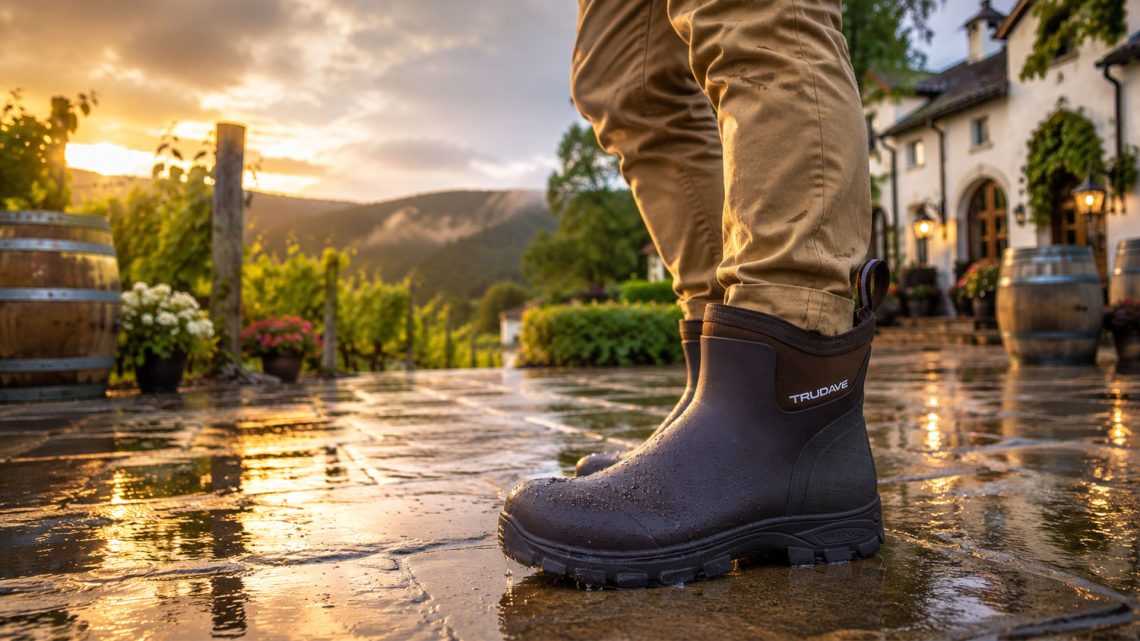
For horse owners, stable workers, ranch hands, and agricultural workers comparing waterproof footwear, Trudave Gear offers boots designed for rain, mud, wet fields, livestock environments, and demanding outdoor work.
Choose footwear based on the chores you perform rather than expecting riding boots or casual rain boots to solve every barn problem.
Frequently Asked Questions
What are the best boots for horse barn work?
The best horse barn boots are waterproof, easy to clean, comfortable for long wear, stable on wet concrete, and equipped with traction for mud and paddocks.
Are rubber boots good for cleaning horse stalls?
Yes. Rubber boots resist moisture, manure, and wet bedding and are easy to rinse after stall cleaning.
Can you ride horses in rubber barn boots?
Bulky rubber boots with wide or aggressive soles may not be appropriate for stirrups. Use footwear designed for riding when mounted.
How tall should horse barn boots be?
Mid-calf boots work well for general chores. Tall boots provide more protection in deep mud, wash stalls, and wet paddocks.
Are steel-toe boots good for horse farms?
They may help with equipment and feed-handling hazards but cannot fully protect against a horse’s weight. Choose based on workplace requirements and tasks.
What tread is best for horse barns?
A balanced outsole with wet-floor contact and enough open tread for mud is ideal for workers moving between barns and paddocks.
How do you clean manure from barn boots?
Rinse visible material, brush the outsole, use mild soap or an approved cleaner, and follow facility biosecurity procedures.
Why do horse barn boots smell?
Sweat, damp insoles, manure, urine, and storing boots before drying can all create odor.
Should horse barn boots be insulated?
Insulation is useful in winter. Uninsulated boots are generally more comfortable for summer and active barn work.
How often should barn boot insoles be replaced?
Replace them when they become flat, uneven, cracked, permanently smelly, or no longer supportive.
Final Thoughts
Horse barn work requires footwear that can move from concrete aisles to muddy paddocks, stalls to wash areas, and feeding chores to fence checks without becoming unstable or uncomfortable.
The best barn boots provide reliable waterproof protection, secure heel fit, supportive cushioning, easy-clean construction, and an outsole that works across wet hard surfaces and soft ground.
Tall rubber boots are useful for deep mud, wash stalls, wet paddocks, and heavy barn cleaning.
Mid-calf waterproof boots often provide better mobility for feeding, turnout, utility-vehicle use, and general chores.
Riding should still be done in footwear designed for safe use with stirrups.
Trudave Gear offers waterproof outdoor boots designed for rain, mud, farms, ranches, livestock environments, and demanding daily work.
Choose boots according to the surfaces you cross, the chores you perform, and the number of hours you spend on your feet.
The right pair should help you move more confidently, clean up faster, and remain more comfortable from morning feeding through the final barn check.


You May Also Like
How to Fix the Most Common Grazing Mistake This Time of Year
The Winter Garden Reset: Cleaning Beds and Prepping for Spring Growth