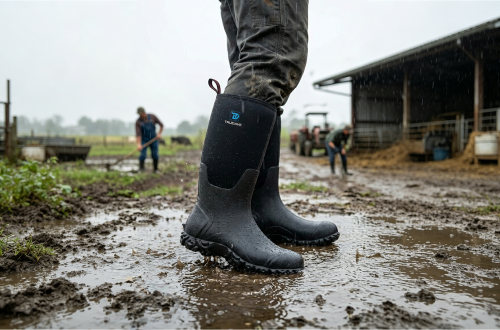
Best Boots for Goat Farm Work: Waterproof Footwear for Muddy Pens, Wet Pasture, Milking, and Kidding Season
Goat farming can be hard on footwear.
A typical workday may begin with walking through wet grass to check the herd, feeding goats, cleaning pens, inspecting fences, maintaining water systems, moving animals, helping during kidding season, and working around milking or washdown areas.
By the end of the day, boots may be covered with mud, manure, hay, bedding, water, and feed residue.
Conditions can change quickly.
A pasture that feels firm in the morning may become muddy after rain. A barn aisle may become slippery after washing. Areas around water troughs and feeders can remain wet long after the rest of the farm dries.
Ordinary shoes are not designed for this environment.
Basic rain boots may keep water out, but many lack the cushioning, heel retention, traction, and support required for long livestock shifts.
The best boots for goat farm work should provide dependable waterproof protection, secure heel retention, practical mud and wet-floor traction, supportive cushioning, manageable weight, and easy-clean construction.
This guide explains how to choose practical footwear for goat farmers, dairy goat operations, meat goat farms, kidding crews, barn workers, ranch hands, and anyone spending long days around livestock, mud, wet grass, and agricultural equipment.
Why Goat Farming Is Hard on Boots
Goat farms combine pasture work, barn work, fencing, animal handling, feeding, and seasonal livestock care.
Workers may regularly move across:
- Muddy pens.
- Wet pasture.
- Gravel lanes.
- Concrete barn floors.
- Bedding.
- Manure.
- Hay.
- Milking areas.
- Water troughs.
- Loading ramps.
- Rocky ground.
- Steep slopes.
- Feed rooms.
- Washdown areas.
Each surface creates different footwear demands.
Mud requires open tread.
Wet grass requires lateral grip.
Concrete requires broad outsole contact.
Rocky pasture requires stable support.
Long barn shifts require cushioning.
A useful goat-farm boot should work across several surfaces rather than being designed only for deep mud.
Waterproof Protection Matters Every Day
Goat farmers regularly encounter water even when it is not raining.
Moisture may come from:
- Morning dew.
- Rain.
- Wet pasture.
- Water troughs.
- Leaking drinkers.
- Barn washdown.
- Milking-area cleaning.
- Mud.
- Snowmelt.
- Wet bedding.
- Drainage areas.
Water-resistant shoes may be adequate for short dry chores.
For workers spending hours around livestock, fully waterproof footwear is generally more practical.
Smooth rubber or molded uppers are also easier to clean after contact with manure, mud, milk residue, bedding, and feed.
Rubber Boots vs Waterproof Lace-Up Work Boots
Both styles can be useful on goat farms.
Rubber Goat Farm Boots
Rubber boots are practical for wet and dirty conditions.
Advantages include:
- Fully waterproof construction.
- Easy cleaning.
- Minimal water absorption.
- Good mud protection.
- Fast entry and removal.
- Mid-calf and tall shaft options.
- Simple maintenance.
They work well for:
- Pen cleaning.
- Muddy pasture.
- Kidding areas.
- Milking rooms.
- Water trough checks.
- Manure cleanup.
- Rainy feeding rounds.
- General barn chores.
Potential disadvantages include:
- Less ankle adjustment.
- Possible heel movement.
- Limited cushioning in basic models.
- Heat buildup.
- Reduced stability on steep or rocky ground.
Waterproof Lace-Up Farm Boots
Waterproof lace-up boots may provide:
- Better ankle support.
- Stronger heel retention.
- More precise fit.
- Better comfort for long pasture routes.
- Improved stability on uneven ground.
- Better equipment control.
- More protection around fencing and tools.
They may be better for:
- Fence repair.
- Long pasture inspections.
- Rocky goat country.
- Tractor operation.
- Equipment maintenance.
- Loading.
- Property work.
Many goat farmers use rubber boots inside wet barns and muddy pens while keeping supportive waterproof lace-up boots for longer outdoor chores.
Choosing the Right Boot Height
Boot height affects mud protection, heat, mobility, and weight.
Ankle-Height Waterproof Boots
Useful for:
- Dry barns.
- Feed rooms.
- Equipment buildings.
- Short inspections.
- Gravel yards.
They provide limited protection from wet grass and deep pen mud.
Mid-Calf Goat Farm Boots
Mid-calf boots are often the most versatile option for:
- Feeding.
- Barn cleaning.
- General pasture checks.
- Kidding season.
- Moderate mud.
- Wet grass.
- Milking areas.
They provide useful coverage without excessive bulk.
Tall Rubber Boots
Tall boots are useful for:
- Deep mud.
- Heavy rain.
- Standing water.
- Snowmelt.
- Drainage work.
- High wet vegetation.
- Heavy washdown.
Choose the lowest boot height that safely handles the actual conditions.
Best Boots for Muddy Goat Pens
Goat pens often become muddy around high-traffic areas such as:
- Gates.
- Feeders.
- Water troughs.
- Shelters.
- Barn entrances.
- Handling areas.
Suitable boots should provide:
- Wide lug spacing.
- Open tread channels.
- Flexible rubber.
- Defined heel braking.
- Secure heel retention.
- Easy-clean construction.
Mud creates suction.
Loose boots may remain stuck while the worker’s heel moves upward inside.
A properly fitted boot is especially important in deep livestock mud.
Best Boots for Wet Goat Pasture
Pasture workers may walk through:
- Morning dew.
- Rain-soaked grass.
- Tall vegetation.
- Soft ground.
- Hills.
- Rocky areas.
Suitable boots should provide:
- Waterproof construction.
- Multidirectional tread.
- Flexible outsole rubber.
- Broad ground contact.
- Secure heel support.
- Comfortable cushioning.
Very deep mud tread is not always necessary.
A balanced tread generally performs better when workers move between grass, gravel, soil, and barn surfaces.
Best Boots for Kidding Season
Kidding season can involve long hours and frequent trips between barns, pens, and pasture.
Workers may need to:
- Check does.
- Assist births.
- Move newborn kids.
- Replace bedding.
- Carry supplies.
- Clean pens.
- Work overnight.
- Walk through spring mud.
Suitable boots should provide:
- Waterproof construction.
- Secure heel fit.
- Flexible movement.
- Easy-clean uppers.
- Moderate insulation when needed.
- Good wet-floor traction.
- Supportive cushioning.
Workers may kneel or bend frequently during kidding.
Flexible mid-calf boots are often more comfortable than very stiff tall boots.
Best Boots for Kidding Pens
Kidding pens may contain:
- Straw.
- Manure.
- Wet bedding.
- Cleaning water.
- Concrete.
- Feed residue.
Suitable footwear should provide:
- Waterproof uppers.
- Moderate tread.
- Secure heel retention.
- Flexible forefoot movement.
- Easy-clean materials.
- Comfortable cushioning.
Very deep tread may collect large amounts of straw and manure.
A simpler outsole can be easier to maintain.
Best Boots for Dairy Goat Farms
Dairy goat operations add milking and sanitation work to normal livestock chores.
Workers may move between:
- Barns.
- Milking parlors.
- Holding areas.
- Wash stations.
- Pasture.
- Feed areas.
Suitable boots should provide:
- Fully waterproof construction.
- Wet-floor traction.
- Easy-clean surfaces.
- Secure heel support.
- Supportive cushioning.
- Moderate tread.
The best dairy-goat boot should work on both barn concrete and muddy outdoor areas.
Best Boots for Goat Milking Parlors
Milking parlors may contain:
- Water.
- Milk residue.
- Cleaning solution.
- Manure.
- Wet concrete.
- Rubber mats.
Suitable boots should provide:
- Broad outsole contact.
- Flexible rubber.
- Moderate tread depth.
- Waterproof construction.
- Secure heel retention.
- Comfortable footbeds.
Deep outdoor mud lugs may provide less contact on smooth parlor floors.
A balanced wet-floor outsole is often better.
Best Boots for Meat Goat Farms
Meat goat operations may involve larger pasture areas and frequent livestock handling.
Workers may need to:
- Move herds.
- Check fences.
- Maintain shelters.
- Feed animals.
- Load trailers.
- Inspect pasture.
Suitable boots should provide:
- Waterproof protection.
- Long-walk comfort.
- Stable slope traction.
- Durable uppers.
- Secure ankle support.
- Moderate weight.
Waterproof lace-up work boots may be especially useful for large pasture operations.
Best Boots for Goat Barn Work
Barn workers may spend hours:
- Feeding.
- Cleaning.
- Moving animals.
- Replacing bedding.
- Checking water.
- Maintaining pens.
Suitable footwear should provide:
- Waterproof construction.
- Stable hard-floor traction.
- Supportive cushioning.
- Secure heel fit.
- Moderate tread.
- Easy cleaning.
A deep field boot may be less comfortable on concrete.
Mixed-surface performance matters.
Best Boots for Manure Cleanup
Goat manure, wet bedding, and organic material can collect in outsole tread.
Suitable footwear should provide:
- Smooth waterproof uppers.
- Moderate open tread.
- Easy-clean channels.
- Secure heel fit.
- Nonabsorbent exterior materials.
Complex tread patterns may trap bedding and manure.
Simple agricultural outsole designs are often easier to rinse.
Best Boots for Feeding Goats
Feeding rounds may involve carrying:
- Hay.
- Grain.
- Minerals.
- Feed bags.
- Buckets.
Workers may move between barns, sheds, and outdoor feeding areas.
Suitable boots should provide:
- Waterproof protection.
- Comfortable walking support.
- Secure heel retention.
- Moderate tread.
- Manageable weight.
- Durable uppers.
Heavy footwear can increase fatigue during repeated feeding rounds.
Best Boots for Hay Handling
Hay handling may involve:
- Bales.
- Barn lofts.
- Pallets.
- Trailers.
- Concrete.
- Gravel.
Suitable footwear should provide:
- Stable outsole contact.
- Secure heel retention.
- Durable uppers.
- Protective toes where needed.
- Good cushioning.
Mud should be removed before workers climb ladders or enter loft areas.
Best Boots for Water Trough Maintenance
Goat water areas can become muddy quickly.
Workers may need to:
- Clean troughs.
- Check valves.
- Repair hoses.
- Replace fittings.
- Remove algae.
- Check heaters.
Suitable boots should provide:
- Fully waterproof construction.
- Mud-release tread.
- Durable toe areas.
- Secure heel fit.
- Appropriate shaft height.
- Easy-clean surfaces.
Winter trough work may also require insulation.
Best Boots for Goat Fence Repair
Goats are known for testing fences, so fence maintenance can be frequent.
Workers may handle:
- Wire fencing.
- Electric fence.
- Posts.
- Staples.
- Gates.
- Hand tools.
- Rocks.
- Mud.
Suitable boots should provide:
- Waterproof protection.
- Strong ankle support.
- Durable uppers.
- Secure heel retention.
- Stable mixed-surface traction.
- Puncture-resistant features where required.
A thick-looking sole does not automatically provide puncture protection.
Best Boots for Brushy Goat Pasture
Goats are often raised on land with brush, weeds, shrubs, and uneven ground.
Workers may encounter:
- Thorns.
- Sticks.
- Rocks.
- Roots.
- Tall weeds.
- Wet vegetation.
Suitable footwear should provide:
- Durable sidewalls.
- Waterproof uppers.
- Abrasion resistance.
- Secure ankle support.
- Stable traction.
- Protective toe areas.
Light garden boots may wear quickly in brushy terrain.
Best Boots for Rocky Goat Farms
Some goat operations use rocky or hilly land.
Suitable footwear should provide:
- Durable outsole rubber.
- Stable midsoles.
- Strong ankle support.
- Secure heel retention.
- Comfortable cushioning.
- Protective toe areas.
Thin rubber boots may become uncomfortable after long periods on rocks.
Best Boots for Steep Goat Pasture
Steep pasture places extra stress on the ankle and heel.
Suitable boots should provide:
- Strong heel retention.
- Lateral support.
- Multidirectional tread.
- Defined heel braking.
- Stable outsole edges.
- Waterproof protection.
Loose rubber boots can shift during sidehill walking.
Waterproof lace-up work boots are often better for steep terrain.
Best Boots for Goat Handling Areas
Handling systems may include:
- Alleys.
- Gates.
- Sorting pens.
- Chutes.
- Holding areas.
Workers need footwear that allows controlled movement.
Suitable boots should provide:
- Secure heel fit.
- Stable lateral support.
- Waterproof construction.
- Moderate tread.
- Flexible movement.
- Durable uppers.
Loose boots can reduce control when workers need to move quickly around livestock.
Best Boots for Loading Goats
Loading areas may include:
- Mud.
- Gravel.
- Concrete.
- Metal ramps.
- Trailer floors.
- Manure.
Suitable footwear should provide:
- Stable hard-surface traction.
- Secure heel retention.
- Waterproof construction.
- Good lateral support.
- Moderate tread.
- Protective toes where appropriate.
Mud should be cleaned from soles before workers step onto smooth trailer surfaces whenever possible.
Best Boots for Goat Trailers
Trailer floors may become slippery from:
- Manure.
- Bedding.
- Water.
- Mud.
- Rain.
Suitable boots should provide:
- Broad outsole contact.
- Flexible rubber.
- Moderate tread.
- Secure heel positioning.
- Stable foot control.
Very deep field tread may not be ideal on flat trailer floors.
Best Boots for Hoof-Trimming Work
Goat hoof care may involve repeated kneeling, bending, and animal restraint.
Suitable footwear should provide:
- Flexible movement.
- Secure heel fit.
- Waterproof uppers.
- Moderate tread.
- Comfortable cushioning.
- Durable toe areas.
Bulky boots can make close animal handling less comfortable.
Best Boots for Goat Show and Fair Work
Show-goat operations may require workers to move between:
- Barns.
- Wash racks.
- Gravel.
- Grass.
- Trailers.
- Concrete showgrounds.
Suitable footwear should provide:
- Waterproof uppers.
- Presentable appearance.
- Stable hard-floor traction.
- Moderate tread.
- Comfortable cushioning.
- Easy-clean construction.
A versatile lower-profile waterproof work boot may be more practical than a deep-mud farm boot.
Best Boots for Winter Goat Chores
Winter conditions may include:
- Snow.
- Slush.
- Frozen mud.
- Cold rain.
- Icy barn entrances.
- Water trough work.
Suitable winter boots may need:
- Waterproof construction.
- Light or moderate insulation.
- Flexible cold-weather rubber.
- Thick midsoles.
- Room for warm socks.
- Secure heel retention.
Too much insulation can cause sweating during active chores.
Best Boots for Spring Goat Farm Mud
Spring mud is especially challenging around gates, barns, feeders, and water troughs.
Useful footwear features include:
- Fully waterproof shafts.
- Wide-spaced tread.
- Flexible rubber.
- Secure heel fit.
- Easy-clean construction.
Mid-calf or tall rubber boots are especially practical during spring thaw.
Best Boots for Summer Goat Farming
Summer creates heat and sweat challenges.
Suitable footwear should prioritize:
- Uninsulated construction.
- Lightweight materials.
- Moderate shaft height.
- Moisture-wicking socks.
- Removable insoles.
- Easy drying.
Tall rubber boots may become uncomfortable during long pasture checks.
Use them when mud and water actually require the added coverage.
Best Boots for Fall Goat Farm Work
Fall may involve:
- Wet grass.
- Mud.
- Rain.
- Cooler mornings.
- Fence work.
- Winter preparation.
A versatile fall boot should provide:
- Waterproof construction.
- Moderate tread.
- Supportive cushioning.
- Secure heel fit.
- Light insulation when necessary.
Traction in Goat Pen Mud
Suitable tread should provide:
- Wide spacing.
- Open channels.
- Flexible rubber.
- Defined heel edges.
- Secure heel retention.
Mud and manure packed into outsole grooves reduce traction.
Clean tread regularly.
Traction on Wet Grass
Useful features include:
- Multidirectional tread.
- Flexible rubber.
- Broad ground contact.
- Stable heel support.
- Moderate lug depth.
A balanced outsole is usually more useful than an extreme mud-only tread.
Traction on Wet Concrete
Wet concrete may appear in:
- Milking areas.
- Barn aisles.
- Wash stations.
- Loading zones.
- Feed rooms.
Suitable boots should provide:
- Broad outsole contact.
- Flexible rubber.
- Water-dispersing channels.
- Moderate tread depth.
- Stable heel construction.
Manure, milk residue, soap, and mud can all reduce traction.
Traction on Gravel Farm Roads
Workers walking gravel routes should look for:
- Durable outsole rubber.
- Stable midsoles.
- Supportive cushioning.
- Secure heel fit.
- Moderate tread.
Thin rubber boots may become uncomfortable after long walking distances.
Comfort for Long Goat Farm Shifts
Goat farmers may spend hours:
- Walking.
- Feeding.
- Cleaning.
- Milking.
- Checking kids.
- Maintaining fencing.
- Moving animals.
- Carrying supplies.
Comfort depends on:
- Cushioned midsoles.
- Supportive removable insoles.
- Stable heel cups.
- Appropriate arch support.
- Flexible forefoot movement.
- Enough toe room.
- Moderate boot weight.
Basic waterproofing alone does not make a good livestock work boot.
When comparing waterproof farm footwear from brands such as Trudave Gear, evaluate traction, cushioning, support, weight, fit, and cleanability together.
Heel Retention Matters
Excessive heel movement may cause:
- Blisters.
- Hot spots.
- Foot fatigue.
- Poor balance.
- Difficulty in mud.
- Reduced slope control.
- Less stability around animals.
Pull-on rubber boots may allow slight movement, but the foot should remain secure.
Avoid oversized footwear.
Boot Weight Matters
Goat workers may cover large areas during pasture checks.
Heavy boots increase fatigue.
Weight may increase because of:
- Tall shafts.
- Thick rubber.
- Safety toes.
- Heavy insulation.
- Aggressive tread.
- Reinforcement.
Choose the lightest boot that still provides sufficient protection.
Best Socks for Goat Farm Work
Cotton socks absorb moisture and dry slowly.
Wool-blend and synthetic work socks generally perform better.
Choose socks that:
- Wick moisture.
- Cushion pressure areas.
- Fit without bunching.
- Extend above the boot collar.
- Match the temperature.
- Dry efficiently.
Spare socks can be useful during wet kidding or pasture work.
Do Goat Farmers Need Safety-Toe Boots?
Safety toes may be appropriate around:
- Heavy gates.
- Tractors.
- Feed pallets.
- Trailers.
- Equipment.
- Tools.
- Loading areas.
The correct choice depends on actual workplace hazards.
Waterproof construction does not automatically mean safety rated.
Puncture and Abrasion Resistance
Goat farms may contain:
- Fence wire.
- Nails.
- Staples.
- Sharp branches.
- Broken boards.
- Metal gates.
- Equipment debris.
Workers exposed to puncture hazards should choose properly rated footwear.
A thick-looking outsole is not automatically puncture resistant.
Chemical and Disinfectant Exposure
Goat farms may use:
- Disinfectants.
- Milking-area cleaners.
- Detergents.
- Veterinary products.
- Hoof treatments.
- Fuel.
- Oil.
- Equipment fluids.
Waterproof boots are not automatically resistant to every chemical.
Workers should follow product labels and check material compatibility when needed.
Goat Farm Biosecurity
Footwear can move:
- Mud.
- Manure.
- Bedding.
- Soil.
- Organic material.
- Livestock pathogens.
Some farms may use:
- Dedicated barn boots.
- Kidding-area footwear.
- Visitor boot covers.
- Disinfection stations.
- Quarantine-area boots.
Visible manure and mud should generally be removed before disinfectant is applied.
Follow farm-specific veterinary and biosecurity procedures.
Easy-Clean Boot Design
Useful goat-farm boot features include:
- Smooth waterproof uppers.
- Limited exposed fabric.
- Open tread channels.
- Simple lug shapes.
- Removable insoles.
- Few decorative seams.
- Nonabsorbent materials.
Complex tread can trap manure, hay, bedding, and mud.
Simple construction is easier to maintain.
How to Clean Goat Farm Boots
A practical cleaning routine includes:
- Remove heavy mud, manure, hay, and bedding.
- Rinse the exterior.
- Brush outsole channels.
- Wash with an approved cleaner when required.
- Follow farm disinfection procedures where appropriate.
- Inspect for cracks and cuts.
- Remove damp insoles when possible.
- Dry boots completely.
- Store them in a ventilated area.
Regular cleaning helps maintain traction and control odor.
How to Remove Manure and Bedding
Use:
- Running water.
- A stiff nonmetallic brush.
- A blunt plastic scraper.
- A designated boot-cleaning station.
Brush away loose hay and bedding before rinsing.
Pay special attention to heel and forefoot tread channels.
How to Dry Waterproof Goat Farm Boots
After wet work:
- Remove insoles.
- Open shafts or loosen laces.
- Wipe visible moisture.
- Direct airflow inside.
- Use a low-temperature boot dryer when approved.
- Avoid strong direct heat.
High temperatures may damage rubber, adhesives, waterproof membranes, and liners.
How to Prevent Goat Farm Boot Odor
Odor may come from:
- Sweat.
- Manure.
- Wet bedding.
- Mud.
- Milk residue.
- Incomplete drying.
Reduce odor by:
- Wearing moisture-wicking socks.
- Cleaning boots regularly.
- Removing insoles.
- Drying interiors completely.
- Rotating footwear.
- Replacing worn footbeds.
- Storing boots with airflow.
Cleaning and drying are more effective than covering odor with fragrance.
How Long Should Goat Farm Boots Last?
Boot lifespan depends on:
- Walking distance.
- Mud exposure.
- Concrete use.
- Manure exposure.
- Milking-area work.
- Fence maintenance.
- Chemical contact.
- Cleaning habits.
- Material quality.
- Outsole wear.
Inspect boots regularly for:
- Cracks.
- Leaks.
- Worn tread.
- Sole separation.
- Cuts.
- Chemical damage.
- Collapsed cushioning.
- Unstable heel support.
A boot may remain waterproof while losing the support or traction required for safe farm work.
When Should Goat Farm Boots Be Replaced?
Replace footwear when:
- Water repeatedly enters.
- Tread becomes badly worn.
- Cracks spread.
- The outsole separates.
- Heel support becomes unstable.
- Cushioning collapses.
- Chemical damage appears.
- The boot no longer feels secure on wet or uneven terrain.
Keep backup footwear available during kidding season and prolonged wet weather.
Common Mistakes When Buying Goat Farm Boots
Buying Casual Rain Boots for Full Workdays
Light-duty footwear may lack support and durability.
Choosing Boots Too Large
Loose boots increase heel movement and perform poorly in mud.
Buying Deep Mud Lugs for Milking Areas
Aggressive tread may provide less contact on wet concrete and collect manure.
Ignoring Rocky Pasture Support
Goat farms often use rougher terrain than other livestock operations.
Choosing Too Much Insulation
Heavy winter boots can become uncomfortable during active chores.
Ignoring Kidding-Season Flexibility
Workers may need to bend and kneel frequently.
Assuming Waterproof Means Safety Rated
Toe and puncture protection require specific construction.
Drying Boots With High Heat
Strong heat can damage waterproof materials.
How to Choose the Best Boots for Goat Farm Work
Before purchasing, consider the actual operation.
Ask:
Are goats mainly pasture-raised or barn-housed?
Is the farm dairy, meat, fiber, or mixed production?
How muddy do pens become?
Is kidding done indoors or outdoors?
How much rocky or steep terrain is present?
Do workers use a milking parlor?
How often is fencing repaired?
Are safety toes required?
How cold are winter conditions?
How many hours are spent walking?
Then compare:
- Waterproof construction.
- Boot height.
- Mud traction.
- Wet-grass traction.
- Wet-floor traction.
- Heel retention.
- Cushioning.
- Boot weight.
- Safety features.
- Ease of cleaning.
For goat farmers, dairy goat workers, kidding crews, ranch hands, and agricultural professionals comparing waterproof footwear, Trudave Gear offers boots designed for rain, mud, wet grass, barns, farms, ranches, and demanding livestock work.
Choose footwear based on pasture terrain, pen conditions, kidding duties, milking areas, fencing work, climate, and hours spent on your feet.
Frequently Asked Questions
What are the best boots for goat farm work?
The best goat-farm boots are waterproof, securely fitted, comfortable for long shifts, easy to clean, and equipped with traction for mud, wet grass, barn floors, gravel, and livestock areas.
Are rubber boots good for goat farms?
Yes. Rubber boots are practical for muddy pens, kidding areas, manure cleanup, milking rooms, wet grass, and water trough maintenance.
How tall should goat farm boots be?
Mid-calf boots are versatile for most daily chores. Tall boots provide additional protection in deep mud, heavy rain, standing water, and snowmelt.
What boots are best for kidding season?
Waterproof boots with secure heel retention, flexible movement, easy-clean construction, moderate insulation, and good wet-floor traction are practical for kidding work.
What tread is best for muddy goat pens?
Open tread with wide lug spacing, defined heel edges, and flexible rubber helps release mud and maintain traction.
What boots are best for rocky goat farms?
Supportive waterproof lace-up work boots with strong ankle support, secure heel retention, durable outsoles, and cushioning are often better for rocky terrain.
Are deep mud boots good inside goat barns?
Not always. Aggressive tread may collect bedding and manure and provide less contact on smooth concrete.
Do goat farm workers need safety-toe boots?
Safety toes may be appropriate around gates, tractors, trailers, feed pallets, equipment, and maintenance work.
Are waterproof boots resistant to disinfectants and milking cleaners?
Not automatically. Material compatibility should be checked for the specific cleaner or disinfectant used.
How do you clean manure and hay from rubber boots?
Brush away loose material, rinse the exterior, scrub the outsole channels, follow any required sanitation procedure, and dry the boots completely.
Final Thoughts
Goat farming requires footwear that can handle muddy pens, wet pasture, kidding season, milking areas, manure, barn floors, fencing, rocky terrain, trailers, winter weather, and long livestock shifts.
The best boots provide dependable waterproof protection, secure heel retention, practical mixed-surface traction, supportive cushioning, manageable weight, and construction that is easy to clean.
Mid-calf rubber boots are a strong choice for feeding, kidding, manure cleanup, wet pens, milking areas, water trough maintenance, and everyday barn chores.
Tall waterproof boots provide additional protection during deep mud, spring thaw, heavy rain, drainage work, and standing water.
Supportive waterproof lace-up boots may be better for rocky pasture, steep slopes, fencing, equipment use, long livestock checks, trailer work, and mixed dry-wet terrain.
Trudave Gear offers waterproof outdoor and work boots designed for rain, mud, wet grass, barns, farms, ranches, and demanding livestock environments.
Choose footwear based on pasture terrain, pen conditions, milking work, kidding duties, fencing, weather, safety requirements, and hours spent on your feet.
Reliable goat farm boots should help workers stay drier, maintain better footing, reduce fatigue, and remain more comfortable from the first feeding round in the morning to the final herd check at the end of the day.


You May Also Like
Best Boots for Cranberry Bog Work: Waterproof Footwear for Flooded Fields, Muddy Dikes, and Harvest Season
I Just Want Dry Feet — How to Stop Overthinking Waterproof Boots and Actually Pick the Right Pair