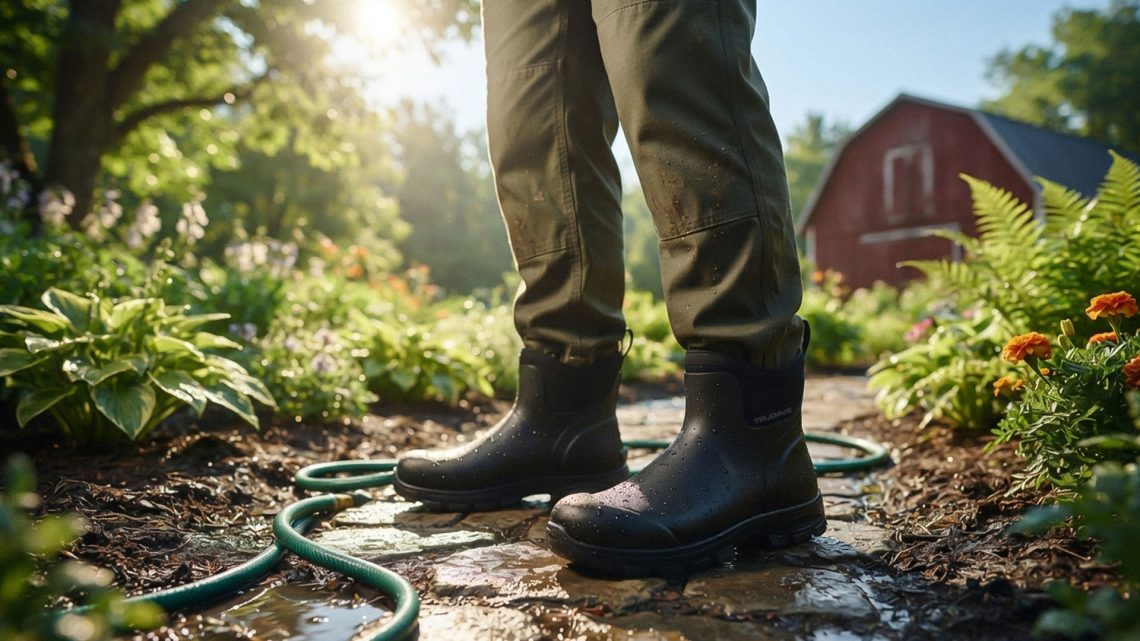
Best Boots for Oyster Farming, Tidal Flats, and Shellfish Harvesting
Oyster farming is not ordinary farm work.
Instead of walking crop rows or working inside a barn, shellfish growers may spend their days moving between tidal flats, boats, floating cages, docks, muddy shorelines, sorting tables, and cold coastal water.
That creates a very different footwear problem.
A boot used on an oyster farm may need to handle thick marine mud in the morning, wet aluminum boat decks at midday, crushed shells in the afternoon, and cold saltwater before the shift ends.
For that reason, choosing footwear for oyster farming should start with the actual environment rather than simply looking for a generic pair of waterproof work boots.
The right footwear needs to balance water protection, mud security, wet-surface grip, easy cleaning, durability, and enough comfort for long harvesting days.
Oyster Farming Footwear Has a Different Job to Do
Oyster growers may work around:
- Tidal flats.
- Estuaries.
- Mud bottoms.
- Salt marsh edges.
- Floating cages.
- Oyster racks.
- Boats.
- Barges.
- Docks.
- Sorting sheds.
- Wash stations.
- Refrigerated storage.
These environments create challenges rarely found together in ordinary farm work.
One moment a worker may be sinking several inches into soft mud.
The next moment that same worker may climb onto a smooth boat deck covered with saltwater.
A boot that performs well in only one of those situations may become inconvenient or unsafe in another.
The Biggest Footwear Problem on Oyster Farms: Mud Suction
Marine mud can grip footwear aggressively.
Anyone who has walked across a soft tidal flat knows the feeling: the foot moves upward, but the boot wants to stay in the mud.
This suction becomes more noticeable when boots are:
- Too large.
- Too loose around the heel.
- Very heavy.
- Extremely tall.
- Poorly fitted around the ankle.
For workers who regularly walk tidal flats, secure heel retention is one of the most important features to consider.
A boot does not need to fit like a hiking shoe, but it should not allow the heel to lift dramatically every time the worker takes a step.
Why Ordinary Rain Boots Often Struggle in Tidal Flats
Cheap rain boots may seem like the obvious choice because they are waterproof.
The problem is that many casual models are designed for:
- Gardening.
- Short walks.
- Light rain.
- Occasional puddles.
They may not provide enough:
- Underfoot support.
- Heel control.
- Outsole durability.
- Mud traction.
- Protection from sharp shells.
A worker spending an entire day harvesting oysters needs footwear designed for repeated professional use rather than occasional wet-weather wear.
Saltwater Changes What Workers Should Look For
Saltwater is harsh on equipment.
Oyster farm footwear may be exposed to salt every day through:
- Tidal water.
- Boat spray.
- Wet ropes.
- Cages.
- Dock surfaces.
- Washdown operations.
Smooth rubber or molded waterproof materials are useful because they do not absorb seawater easily and can be rinsed after work.
Hardware also matters.
Boots with exposed metal components may require more maintenance in marine environments because salt accelerates corrosion.
Simple construction can be an advantage.
Best Boot Height for Oyster Harvesting
There is no single ideal boot height for every shellfish farm.
The right choice depends on water depth and harvesting method.
Mid-Calf Boots
Mid-calf waterproof boots can work well when employees mainly stay on:
- Docks.
- Boats.
- Shallow shoreline areas.
- Processing spaces.
- Firm tidal edges.
They are lighter and easier to move in than very tall boots.
Knee-High Rubber Boots
Knee-high boots are often more practical for:
- Tidal flats.
- Shallow flooded areas.
- Muddy oyster beds.
- Shoreline harvesting.
- Cage maintenance.
They provide useful protection from splashing and soft mud.
Hip Boots or Waders
Standard boots stop being the right tool when water consistently reaches above the shaft.
Hip boots or chest waders may be more appropriate for:
- Deeper oyster beds.
- Extended water entry.
- Channel crossings.
- Cage work farther offshore.
Workers should choose protection based on actual water depth rather than trying to stretch ordinary boots beyond their intended use.
Boots for Walking Oyster Beds
Walking oyster beds can be difficult because workers may encounter several hazards at once.
The surface may include:
- Soft mud.
- Shell fragments.
- Rocks.
- Water.
- Marine vegetation.
- Uneven racks.
A suitable outsole should provide enough structure to prevent workers from feeling every sharp shell underfoot.
At the same time, the sole should remain flexible enough for natural movement.
Very thin recreational rain boots may become uncomfortable when workers repeatedly step on shell-covered surfaces.
Sharp Shells Make Outsole Durability Important
Broken oyster shells can have sharp edges.
Workers may step around:
- Crushed shells.
- Shell piles.
- Processing waste.
- Gravel mixed with shells.
- Rack hardware.
A rugged outsole is therefore more useful than a lightweight garden-style sole.
However, workers should not assume that a thick sole automatically provides certified puncture resistance.
If puncture protection is required for the job, choose footwear specifically rated for that hazard.
Traction on Marine Mud
Marine mud behaves differently from dry agricultural soil.
It can be:
- Extremely soft.
- Sticky.
- Fine-grained.
- Waterlogged.
- Deep enough to cover outsole lugs.
Tread that works well should allow mud to escape instead of packing into every groove.
Useful characteristics include:
- Open tread channels.
- Defined heel edges.
- Moderate-to-deep lugs.
- Flexible rubber.
- Sufficient spacing between tread blocks.
A tread pattern that becomes completely filled with mud behaves more like a smooth sole.
Traction on Oyster Boat Decks
Boat decks require almost the opposite approach.
Extremely deep field lugs are not always ideal on flat wet surfaces.
Workers on boats may need:
- Broad outsole contact.
- Flexible rubber.
- Water-dispersing grooves.
- Stable heel positioning.
- Clean tread.
Mud carried from the shore onto a boat deck can dramatically reduce traction.
Workers should remove excess mud before climbing aboard whenever practical.
Boots for Floating Oyster Cages
Floating cage systems require workers to move around:
- Boats.
- Floating structures.
- Wet ropes.
- Cage frames.
- Dock edges.
Bulky footwear can make these tasks more difficult.
Workers who spend more time on floating equipment than in deep mud may prefer a lighter waterproof boot with better deck traction.
The ideal boot depends on where most of the shift actually takes place.
Boots for Bottom-Culture Oyster Farms
Bottom-culture farms may require much more walking through tidal mud.
In these operations, workers should prioritize:
- Secure heel fit.
- Adequate shaft height.
- Mud-release tread.
- Durable outsole construction.
- Easy-clean waterproof materials.
Weight becomes especially important because every step through soft mud requires additional effort.
Boots for Oyster Rack Systems
Rack-and-bag oyster farms often involve moving between shallow water and structured growing areas.
Workers may handle:
- Metal racks.
- Mesh bags.
- Clips.
- Lines.
- Boats.
- Muddy pathways.
Suitable footwear should provide:
- Stable footing.
- Durable sidewalls.
- Waterproof protection.
- Enough ankle control.
- Good traction on both mud and hard surfaces.
Boots for Oyster Cage Maintenance
Cage maintenance may include:
- Flipping cages.
- Replacing hardware.
- Checking lines.
- Cleaning growth.
- Moving gear.
Workers may spend significant time bending, lifting, and balancing.
Footwear should therefore allow enough ankle movement for these repetitive tasks.
An overly rigid boot may become tiring during long maintenance shifts.
Oyster Harvesting in Cold Weather
Shellfish work frequently continues during cold coastal conditions.
Workers may face:
- Cold seawater.
- Wind.
- Rain.
- Winter tides.
- Frozen docks.
- Chilled mud.
Cold protection is not only about insulation.
Underfoot insulation also matters because cold water and mud can pull heat away from the feet.
Workers may benefit from:
- Thicker midsoles.
- Moderate insulation.
- Wool-blend socks.
- Enough room for circulation.
- Flexible rubber that stays usable in low temperatures.
Boots that are too tight can make cold feet feel worse.
Oyster Farming in Warm Weather
Summer creates the opposite problem.
Tall rubber boots can become hot quickly.
For warmer conditions, workers may prefer:
- Uninsulated construction.
- Lighter materials.
- Moisture-wicking socks.
- Removable insoles.
- Boots that can dry completely between shifts.
The best summer oyster boot should remain waterproof without becoming unnecessarily heavy.
Boots for Oyster Docks
Dock workers may spend more time on hard surfaces than in mud.
Typical surfaces include:
- Wet wood.
- Aluminum.
- Concrete.
- Composite decking.
- Metal ramps.
For dock-focused work, workers should prioritize wet-surface grip and cushioning rather than extreme mud tread.
A balanced outsole is often more useful than a deep agricultural lug pattern.
Boots for Aluminum Boats
Aluminum workboats can become slippery when covered with:
- Saltwater.
- Marine debris.
- Mud.
- Algae.
- Oyster residue.
Suitable footwear should provide broad, flexible contact with the deck.
Workers should also keep outsole grooves clean because even good tread loses effectiveness when filled with mud and shells.
Boots for Oyster Sorting Areas
After harvesting, oysters may be sorted and graded.
Workers may spend hours around:
- Sorting tables.
- Conveyors.
- Baskets.
- Water.
- Shell debris.
- Concrete.
These workers often need more cushioning than field crews because hard floors create repeated impact.
A waterproof boot with supportive midsoles and removable insoles can be more comfortable for long sorting shifts.
Boots for Oyster Washing Stations
Oyster washing creates constant water exposure.
Workers may deal with:
- Hoses.
- Spray.
- Shell debris.
- Mud.
- Wet concrete.
- Cleaning products.
A practical washing-station boot should be:
- Fully waterproof.
- Easy to rinse.
- Stable on wet floors.
- Comfortable enough for standing.
- Free from unnecessary absorbent fabric.
Boots for Shellfish Packing Facilities
Packing areas may involve:
- Boxes.
- Ice.
- Pallets.
- Water.
- Cold temperatures.
- Forklifts.
Suitable footwear should balance:
- Waterproofing.
- Hard-floor comfort.
- Wet-surface grip.
- Secure heel fit.
- Protective features where required.
Workers who never enter tidal flats may not need the same boot as a harvesting crew.
Boots for Cold Rooms and Refrigerated Storage
Oysters are often stored in chilled environments.
Workers moving into refrigeration areas may experience:
- Cold concrete.
- Moist floors.
- Condensation.
- Temperature changes.
A thicker midsole can improve comfort.
Moderate insulation may be useful for workers who spend extended periods in cold storage.
Boots for Oyster Loading Crews
Loading shellfish may involve:
- Crates.
- Baskets.
- Pallets.
- Trucks.
- Forklifts.
- Wet ramps.
Workers carrying heavy containers need secure footing.
Protective-toe footwear may be appropriate depending on workplace requirements and material-handling hazards.
Boots for Shellfish Farm Forklift Operators
Forklift operators should prioritize pedal control and stable footing.
Very tall, bulky rubber boots may be less comfortable for repeated machine operation.
A lower-profile waterproof work boot may be more practical for employees who spend most of their shift:
- Driving.
- Loading pallets.
- Entering cold rooms.
- Working around concrete.
Boots for Coastal Farm Roads
Some oyster farms include gravel or shell-covered access roads.
These surfaces can be hard on thin rubber soles.
Workers regularly walking these routes should look for:
- Supportive midsoles.
- Durable outsoles.
- Stable heel construction.
- Comfortable cushioning.
Shell Debris Can Make Cleaning Difficult
Oyster shells break into fragments that can become trapped in outsole channels.
After work, inspect the tread for:
- Shell pieces.
- Mud.
- Rope fibers.
- Seaweed.
- Gravel.
Removing debris helps maintain traction and reduces the chance of carrying sharp shell fragments into boats or buildings.
How Saltwater Affects Boot Maintenance
Salt should not be allowed to build up indefinitely on footwear.
A basic post-shift routine can include:
- Rinse boots with fresh water.
- Remove marine mud.
- Brush shell fragments from the tread.
- Inspect the upper for cuts.
- Check outsole edges.
- Remove insoles if wet.
- Allow boots to dry with airflow.
Regular freshwater rinsing is especially important for footwear used around saltwater every day.
Do Not Dry Marine Work Boots With Excessive Heat
High heat can damage:
- Rubber.
- Adhesives.
- Liners.
- Waterproof membranes.
- Insulation.
Instead, allow airflow through the boot and use a low-temperature dryer if the manufacturer allows it.
Oyster Mud Odor and Boot Hygiene
Marine mud can produce strong odors.
Odor becomes worse when boots remain damp between shifts.
A better routine includes:
- Rinsing after use.
- Removing organic debris.
- Drying the interior.
- Rotating socks.
- Removing washable insoles.
- Storing boots in a ventilated area.
Masking odor with fragrance does not replace cleaning.
Biofouling and Marine Debris
Oyster farm gear may collect:
- Algae.
- Barnacles.
- Mud.
- Seaweed.
- Shell residue.
- Organic material.
Boots with complex seams and deep decorative areas may be harder to clean.
Simple waterproof construction can reduce maintenance time.
Why Boot Fit Matters More in Tidal Mud
On firm ground, a slightly loose boot may only feel annoying.
In tidal mud, the same loose fit can become a serious comfort problem.
Every step may cause:
- Heel lift.
- Foot movement.
- Friction.
- Increased effort.
Look for a fit that keeps the foot secure without restricting circulation.
Toe Room Still Matters
Workers should not solve heel movement by choosing boots that are too small.
The toes need enough room for:
- Natural movement.
- Thick socks in cold conditions.
- Swelling during long shifts.
The best fit combines secure heel control with comfortable toe space.
Boot Weight and Tidal Walking
Weight matters more when every step involves lifting the foot through mud.
Heavy footwear may increase fatigue in:
- Calves.
- Ankles.
- Hips.
- Lower back.
Workers who walk tidal flats for hours should avoid unnecessary weight.
Choose enough protection for the job without automatically selecting the heaviest available boot.
Do Oyster Farm Workers Need Safety-Toe Boots?
Safety toes may be appropriate around:
- Pallets.
- Oyster cages.
- Forklifts.
- Heavy baskets.
- Processing machinery.
- Dock equipment.
- Loading operations.
However, not every tidal-flat harvesting task requires the same protection.
Footwear should match the hazards identified by the farm.
Are Steel-Toe Boots Good Around Saltwater?
Steel-toe boots can be appropriate when required, but saltwater environments may increase maintenance demands if metal components are exposed.
Composite safety toes may be another option where they meet required standards.
The important point is to choose certified protection based on actual workplace needs.
Puncture Protection Around Oyster Shells
Sharp shells can cut lightweight soles.
Workers exposed to concentrated shell debris may want footwear with:
- Durable outsole construction.
- Reinforced underfoot protection.
- Puncture-resistant certification where required.
Do not assume normal rubber boots provide certified puncture resistance.
Chemical Exposure on Oyster Farms
Workers may encounter:
- Fuel.
- Oil.
- Boat fluids.
- Cleaning products.
- Sanitizers.
Waterproof rubber is not automatically resistant to every chemical.
Check material compatibility with the products used in the operation.
Slip Resistance Is Not One Universal Rating
A boot that performs well in mud may not perform equally well on:
- Aluminum.
- Wet wood.
- Concrete.
- Fiberglass.
- Shell-covered surfaces.
That is why oyster workers should select tread based on where they spend most of the day.
When Two Pairs of Boots Make More Sense
Some shellfish operations involve environments that are too different for one boot to handle perfectly.
A worker may benefit from keeping:
- Tall rubber boots for tidal flats.
- Lower waterproof deck or work boots for boats and processing areas.
This can improve comfort and reduce the amount of mud transferred into clean workspaces.
What to Look for in a Tidal-Flat Boot
For workers spending most of the day in mud, prioritize:
- Waterproof construction.
- Secure heel fit.
- Appropriate shaft height.
- Mud-release tread.
- Durable outsole.
- Moderate weight.
- Easy cleaning.
What to Look for in a Boat-Focused Oyster Boot
For workers primarily on boats and docks, prioritize:
- Wet-deck traction.
- Broad outsole contact.
- Waterproof construction.
- Flexible movement.
- Lightweight comfort.
- Nonabsorbent materials.
What to Look for in a Processing-Facility Boot
For indoor sorting and packing, prioritize:
- Wet-concrete grip.
- Cushioning.
- Waterproof uppers.
- Secure heel support.
- Easy sanitation.
- Appropriate safety-toe protection.
Choosing Boots for Mixed Oyster Farm Duties
Workers who move between mud, boats, and buildings need a compromise.
Look for:
- Moderate mud lugs rather than extreme tread.
- Good wet-surface contact.
- Secure fit.
- Waterproof construction.
- Enough cushioning for concrete.
- Manageable weight.
For workers comparing waterproof outdoor footwear from brands such as Trudave Gear, the most important step is matching the boot to actual tidal, dock, and farm conditions rather than focusing only on appearance or maximum boot height.
When Oyster Farm Boots Should Be Replaced
Replace boots when you notice:
- Repeated leaks.
- Deep cuts.
- Outsole separation.
- Excessively worn tread.
- Cracked rubber.
- Unstable heel support.
- Damage from shell edges.
- Reduced wet-surface grip.
Marine work is hard on footwear, and continuing to use badly worn boots can create unnecessary risk.
Frequently Asked Questions
What are the best boots for oyster farm work?
The best oyster farm boots are fully waterproof, securely fitted, durable enough for shell-covered surfaces, and equipped with traction appropriate for tidal mud, boats, docks, and processing areas.
Are rubber boots good for oyster farming?
Yes. Rubber boots are especially practical for tidal flats, muddy oyster beds, shoreline harvesting, cage maintenance, and saltwater exposure.
How tall should oyster farm boots be?
Knee-high boots work well for many shallow tidal areas. Mid-calf boots may be better for boats and docks, while deeper water may require hip boots or waders.
What tread is best for tidal-flat mud?
Open tread channels with enough spacing to release marine mud are useful. Secure heel retention is also important because tidal mud creates strong suction.
What boots are best for oyster boats?
Waterproof boots with flexible rubber, broad outsole contact, clean tread, and good wet-deck traction are generally more practical than extremely aggressive mud boots.
Are oyster shells dangerous for boot soles?
Sharp shell fragments can damage lightweight soles. Workers around concentrated shell debris should choose durable footwear and certified puncture protection where required.
Do oyster farm workers need steel-toe boots?
Some loading, processing, cage-handling, and equipment jobs may require safety-toe footwear. The correct protection depends on workplace hazards.
Should oyster farmers rinse boots after saltwater exposure?
Yes. Freshwater rinsing helps remove salt, mud, shell residue, and organic debris after work.
Can the same boots be used on tidal flats and boats?
Yes, but there is usually a compromise. Very aggressive mud tread may be less comfortable on boat decks, while deck-focused tread may be less effective in deep mud.
Are waders better than boots for oyster harvesting?
Waders are more appropriate when workers regularly enter water deeper than standard boot shafts.
Final Thoughts
Oyster farming demands footwear that can handle conditions very different from ordinary agricultural work.
Tidal mud creates suction.
Sharp shells test outsole durability.
Saltwater demands easy-clean waterproof materials.
Boats and docks require reliable wet-surface grip.
Processing areas require cushioning and stable traction on concrete.
For workers spending most of the day in tidal flats, tall rubber boots with secure heel retention and mud-release tread are often the most practical choice.
For boat crews, lighter waterproof footwear with stronger deck traction may work better.
For sorting, packing, and loading teams, supportive waterproof work boots can provide better hard-floor comfort and equipment control.
Trudave Gear offers waterproof footwear designed for demanding wet outdoor environments, making it relevant for workers comparing options for shellfish farms, coastal harvesting, docks, mud, and marine agricultural work.
The right oyster farm boots should not simply keep water out.
They should help workers move confidently between mud, saltwater, boats, cages, docks, and processing areas throughout a long coastal workday.


You May Also Like
The Rain Boot You Actually Need: A Decision Guide for Real Life
Best Boots for Sod Farm Work: Waterproof Footwear for Wet Turf, Muddy Fields, Irrigation, and Loading
