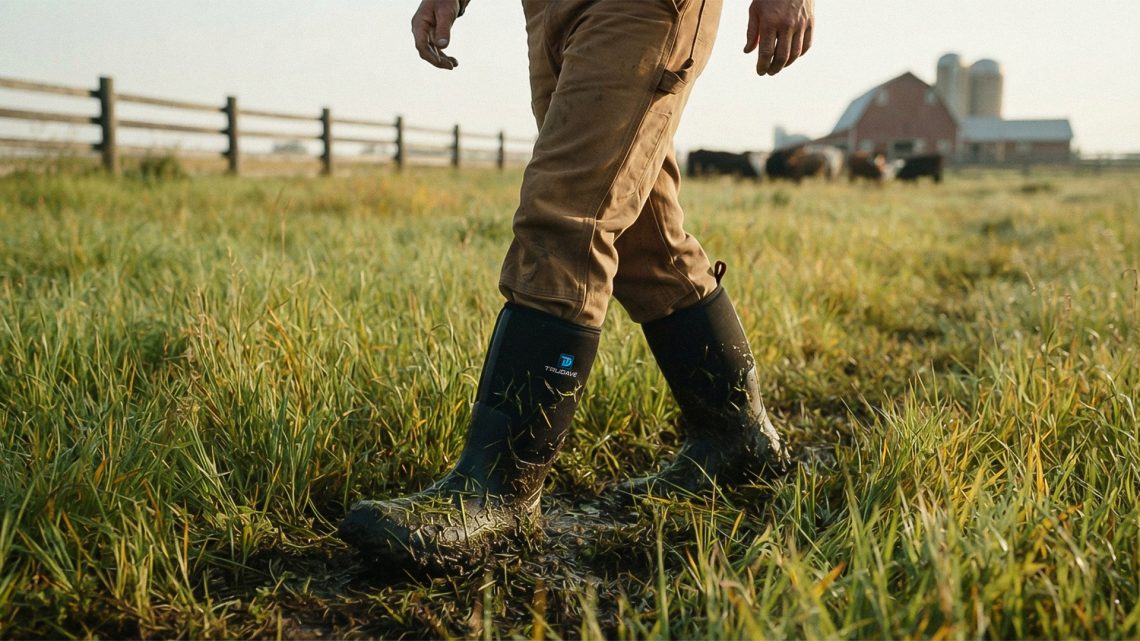
Best Boots for Airport Ground Crew and Ramp Work
Airport ground operations take place in one of the most exposed work environments in transportation.
Ramp agents, baggage handlers, aircraft service crews, fueling teams, and ground-support workers may spend hours outside on open pavement with little protection from weather.
A normal shift can involve:
- Rain-soaked concrete.
- Standing water.
- Jet blast.
- Baggage carts.
- Aircraft stairs.
- Belt loaders.
- Fueling areas.
- Deicing fluid.
- Snow.
- Slush.
- Service roads.
- Night operations.
The best boots for airport ground crew need to do much more than survive bad weather.
They should provide waterproof protection, secure footing on hard surfaces, enough flexibility for constant climbing and bending, good underfoot support, and appropriate protection for workers moving around heavy equipment.
Airport Ramp Work Is Mostly Hard-Surface Work
Unlike farm or landscaping jobs, ramp crews spend most of the day on:
- Concrete.
- Asphalt.
- Metal steps.
- Rubberized equipment platforms.
That changes what makes a good outsole.
Deep agricultural lugs are usually unnecessary.
Airport workers generally benefit more from:
- Broad outsole contact.
- Flexible rubber.
- Moderate tread.
- Stable heel edges.
- Hard-floor cushioning.
The boot should grip wet pavement without becoming bulky.
Rain Can Soak Ramp Workers Quickly
Airport ramps are wide open.
There may be no shelter between:
- Aircraft.
- Baggage carts.
- Service vehicles.
- Operations buildings.
Workers may be exposed to rain for hours.
Water can enter footwear through:
- Fabric uppers.
- Seams.
- Low collars.
Fully waterproof boots are especially practical for crews who remain outside during active weather.
Low-Cut Shoes Are Often Not Enough in Heavy Rain
Even if a shoe is waterproof, water can still enter over the top.
Ramp workers may step through:
- Deep puddles.
- Runoff.
- slush.
- standing water around drains.
Mid-height waterproof boots provide more protection without the bulk of knee-high rubber footwear.
Why Mid-Height Boots Work Well on Airport Ramps
Mid-height boots offer a useful balance of:
- Weather protection.
- ankle support.
- mobility.
- vehicle pedal control.
- hard-floor comfort.
They are usually more practical than tall rubber boots for workers who repeatedly climb into equipment.
Boots for Ramp Agents
Ramp agents may perform several tasks during one aircraft turnaround.
They may:
- Guide aircraft.
- Load baggage.
- Move carts.
- Connect ground equipment.
- Place cones.
- Handle wheel chocks.
Footwear should provide:
- Secure heel fit.
- stable hard-surface traction.
- waterproof protection.
- good cushioning.
- moderate weight.
Baggage Handling Requires Constant Movement
Baggage handlers frequently:
- Bend.
- Lift.
- twist.
- kneel.
- climb into baggage compartments.
Rigid tall boots can make these movements uncomfortable.
A supportive waterproof work boot with flexible forefoot movement is often more practical.
Boots for Belt Loader Operators
Belt loader crews move repeatedly between:
- Ramp pavement.
- Machine platforms.
- Aircraft cargo doors.
Footwear should provide controlled contact on metal and rubber surfaces.
Useful features include:
- Moderate outsole thickness.
- secure heel retention.
- flexible ankle movement.
- stable tread.
Boots for Aircraft Cargo Holds
Cargo areas may require workers to crawl or kneel.
Bulky boots can interfere with movement.
A lower-profile waterproof safety boot is often more comfortable.
Safety-Toe Boots for Ground Crews
Airport workers may be exposed to:
- Baggage carts.
- containers.
- aircraft equipment.
- loaders.
- heavy bags.
- ground support equipment.
Safety-toe footwear may be appropriate or required depending on the role and employer rules.
Composite vs Steel Safety Toes
Both may be suitable when properly rated.
Selection may depend on:
- Weight.
- temperature.
- company requirements.
- worker preference.
Comfort matters because ramp crews may take thousands of steps per shift.
Boots for Aircraft Marshallers
Marshallers spend significant time standing and walking outside.
They need footwear that provides:
- Waterproof protection.
- good hard-surface traction.
- cushioning.
- stable heel support.
They generally do not need extreme mud tread.
Night Ramp Work Changes Footwear Comfort
Airport operations continue overnight.
Temperatures may drop significantly after sunset.
Workers may spend long periods on cold pavement.
Thicker midsoles and appropriate insulation can improve comfort.
Concrete Pulls Heat From the Feet
Cold concrete can make feet feel colder even when air temperatures are moderate.
Workers may benefit from:
- Supportive midsoles.
- insulated footbeds.
- moderate boot insulation.
Boots for Aircraft Fueling Crews
Fueling employees may work around:
- Hoses.
- fueling trucks.
- aircraft wings.
- wet pavement.
Footwear should provide:
- Stable heel fit.
- hard-surface traction.
- waterproof construction.
- appropriate resistance to workplace substances where required.
Waterproof Does Not Mean Fuel Resistant
A boot that keeps water out is not automatically resistant to:
- Aviation fuel.
- oil.
- hydraulic fluid.
Workers should choose materials appropriate to their actual exposure and workplace PPE requirements.
Boots for Deicing Crews
Deicing operations create one of the wettest and coldest ramp environments.
Workers may encounter:
- Deicing fluid.
- snow.
- slush.
- ice.
- cold water.
- ladders.
- elevated equipment.
Footwear needs to remain waterproof and supportive in cold conditions.
Deicing Fluid Changes Traction
Deicing areas may become slick.
No ordinary outsole completely eliminates risk.
Workers should follow:
- Facility procedures.
- Equipment-area housekeeping.
- Approved footwear requirements.
Material compatibility with deicing chemicals should also be checked.
Boots for Winter Airport Operations
Winter ramps may contain:
- Snow.
- ice.
- slush.
- road salt.
- deicing residue.
Suitable footwear may need:
- Waterproof construction.
- moderate insulation.
- cold-flexible rubber.
- thicker midsoles.
- room for warm socks.
Ice Requires Separate Traction Controls
No standard work boot makes ice safe.
Some airports may use:
- Deicing.
- surface treatment.
- approved traction aids.
Workers should follow employer policies.
Boots for Snow Removal Crews
Airport maintenance teams may operate:
- Plows.
- sweepers.
- blowers.
- utility vehicles.
Their footwear should allow:
- Pedal control.
- stable vehicle entry.
- enough cold protection for outside inspections.
Bulky winter boots can interfere with machinery controls.
Boots for Aircraft Stairs
Ground crews may climb aircraft stairs repeatedly.
Footwear should provide:
- Secure heel retention.
- defined heel edges.
- moderate tread.
- stable stair contact.
Mud-style tread is unnecessary.
Boots for Jet Bridge Support Staff
Jet bridge areas may combine:
- Indoor floors.
- wet exterior pavement.
- metal platforms.
Workers need versatile footwear that transitions well between environments.
Boots for Ground Power Unit Crews
Workers connecting ground power may move around:
- Cables.
- equipment carts.
- wet pavement.
The boot should allow precise foot placement around hoses and cables.
Boots for Air-Start and Ground Equipment Technicians
Ground-support equipment technicians may work around:
- Engines.
- generators.
- compressors.
- hydraulic systems.
They may need more industrial footwear than ordinary ramp staff.
Useful features may include:
- Safety toes.
- oil-resistant outsoles.
- stronger ankle support.
- waterproof construction.
Boots for Tow Tractor Operators
Tow tractor drivers need precise pedal feel.
Useful footwear characteristics include:
- Moderate outsole thickness.
- secure heel fit.
- flexible ankle movement.
- stable step traction.
Tall rubber boots may be inconvenient.
Boots for Pushback Crews
Pushback operations require quick movement around aircraft and towing equipment.
Workers need a secure, stable boot that does not feel loose.
Boots for Baggage Cart Crews
Workers may climb on and off carts repeatedly.
Cushioning and easy movement matter more than aggressive tread.
Boots for Cargo Warehouse Transitions
Some ramp workers move between outdoor operations and indoor cargo areas.
Their footwear needs to work on:
- Concrete.
- warehouse floors.
- wet ramp pavement.
A balanced outsole is more useful than specialized outdoor tread.
Boots for Cargo Pallet Work
Cargo crews may handle:
- Pallets.
- containers.
- freight.
- forklifts.
Safety-toe protection may be appropriate.
Underfoot support is also important during long warehouse periods.
Boots for Forklift Operators
Forklift operators need:
- Good pedal control.
- secure heel positioning.
- moderate outsole thickness.
- stable vehicle-step contact.
Very bulky waterproof boots may not be ideal.
Boots for Aircraft Lavatory Service Crews
Lavatory service work creates a different sanitation environment.
Workers may encounter:
- Water.
- waste systems.
- hoses.
- wet pavement.
Footwear should be fully waterproof and easy to clean.
Sanitation Matters for Service Footwear
Smooth molded uppers may be easier to sanitize than fabric-heavy boots.
Workers should follow company hygiene procedures.
Boots for Potable Water Service Crews
Water-service workers may handle hoses and wet areas around aircraft.
Waterproof mid-height boots are practical because repeated hose work can create heavy splash.
Boots for Catering Ramp Crews
Catering workers move between:
- Trucks.
- aircraft doors.
- loading platforms.
- ramps.
They need secure footing and stable vehicle-step contact.
Boots for Aircraft Cleaning Crews
Aircraft cleaning may involve both cabin and ramp environments.
Bulky boots may be uncomfortable inside aircraft cabins.
A lower-profile waterproof work boot may offer better mobility.
Boots for Cabin Service Workers
Workers may move between wet outdoor pavement and dry interior floors.
Moderate tread helps reduce debris tracking indoors.
Boots for Airport Service Roads
Service roads may include:
- Asphalt.
- concrete.
- gravel.
- rainwater.
Workers walking long routes need cushioning and durable outsoles.
Gravel Around Remote Airport Areas
Some maintenance zones may contain crushed stone.
Thin rain boots can feel harsh on gravel.
Supportive midsoles improve comfort.
Boots for Airfield Maintenance Crews
Airfield maintenance workers may repair:
- Lighting.
- signage.
- drainage.
- pavement.
- grass areas.
They may need more rugged mixed-surface footwear than standard ramp workers.
Boots for Runway Light Maintenance
Workers may encounter:
- Wet grass.
- concrete.
- gravel.
- mud.
Supportive waterproof lace-up boots often work well for this mixed environment.
Boots for Airport Drainage Work
Airports have extensive drainage systems.
Workers may need to inspect:
- Ditches.
- culverts.
- drains.
- retention areas.
These jobs may justify taller waterproof boots with more open tread.
One Airport May Require Several Boot Types
A large airport may employ:
- Ramp agents.
- baggage handlers.
- fuelers.
- maintenance teams.
- deicing crews.
- cargo workers.
The best footwear differs significantly by role.
Summer Airport Ramp Work
Summer pavement can become extremely hot.
Heavy insulated boots are usually unnecessary.
Workers should prioritize:
- Uninsulated construction.
- lightweight support.
- moisture-wicking socks.
- removable insoles.
Heat From Pavement Matters
Dark asphalt absorbs heat.
Thicker midsoles can help reduce direct heat transfer from the ground.
Waterproof Boots Can Trap Sweat
During hot weather, internal moisture may come from perspiration rather than rain.
Drying and sock choice become important.
Best Socks for Ramp Workers
Synthetic and wool-blend socks generally work better than cotton.
Useful features include:
- Moisture wicking.
- heel cushioning.
- secure fit.
- quick drying.
Cushioning Is Critical on Airport Concrete
Ramp workers spend almost all day on hard surfaces.
Supportive midsoles may reduce fatigue in:
- Feet.
- knees.
- hips.
- lower back.
Removable Insoles Help With Long-Term Comfort
Replaceable footbeds make it easier to maintain cushioning over time.
They also help boots dry after wet shifts.
Boot Weight Matters More Than It Seems
Ramp crews may walk miles during a shift.
Heavy boots increase fatigue.
Choose only as much shaft height, insulation, and protection as the job requires.
Heel Retention Helps During Quick Movement
Ground crews may need to move quickly around aircraft.
Loose heel fit can cause:
- Friction.
- unstable steps.
- slower movement.
A secure fit matters.
Easy-Clean Construction Is Useful on the Ramp
Boots may collect:
- Deicing residue.
- mud.
- fuel-area dirt.
- road salt.
- grease.
Smooth waterproof uppers are easier to wipe and rinse.
How to Clean Airport Work Boots
A practical routine may include:
- Remove surface dirt.
- Rinse salt and deicing residue.
- Brush outsole grooves.
- Clean chemical contamination according to workplace guidance.
- Inspect for cracks.
- Remove damp insoles.
- Dry footwear completely.
Road Salt Should Be Removed Regularly
Salt buildup may affect:
- Leather.
- seams.
- metal hardware.
- outsole edges.
Freshwater rinsing helps.
How to Dry Ramp Work Boots
After wet shifts:
- Remove insoles.
- open the boots fully.
- allow airflow.
- use low-temperature drying if approved.
Avoid strong direct heat.
Rotating Two Pairs Can Help Shift Workers
Airport operations may involve consecutive wet shifts.
Keeping a second pair allows footwear more time to dry.
This can improve comfort and longevity.
When Airport Work Boots Should Be Replaced
Replace footwear when:
- Waterproofing fails.
- tread becomes smooth.
- outsole separation develops.
- heel support collapses.
- safety toe damage occurs.
- chemical deterioration appears.
- cushioning becomes ineffective.
Common Mistakes When Buying Airport Ground Crew Boots
Choosing Deep Mud Tread for Ramp Work
Airport pavement needs broad hard-surface contact.
Buying Casual Rain Boots for Full Shifts
They often lack enough cushioning and support.
Choosing Boots Too Tall for Equipment Operators
Extra shaft height can reduce pedal comfort.
Ignoring Winter Slush
Low footwear may allow water over the collar.
Wearing Boots Too Loose
Fast ramp movement requires secure heel fit.
Assuming Waterproof Means Fuel Resistant
Aviation fluids require separate material compatibility.
Ignoring Hard-Floor Cushioning
Concrete fatigue is a major issue.
Choosing Excessive Insulation
Ramp workers may move constantly and overheat.
How to Choose the Best Boots for Airport Ground Crew
Start with the employee’s actual role.
For ramp agents, prioritize:
- Waterproof protection.
- hard-surface traction.
- cushioning.
- secure fit.
- moderate weight.
For baggage handlers, prioritize:
- Flexible movement.
- safety protection where required.
- heel stability.
- all-day comfort.
For fueling crews, prioritize:
- Appropriate fluid resistance.
- waterproofing.
- stable ramp traction.
For deicing teams, prioritize:
- Cold-weather waterproofing.
- chemical compatibility.
- winter traction.
- adequate insulation.
For equipment operators, prioritize:
- Pedal control.
- moderate outsole thickness.
- stable machine steps.
For airfield maintenance, prioritize:
- Mixed-surface traction.
- stronger ankle support.
- weather protection.
Workers comparing waterproof work footwear from brands such as Trudave Gear should select boots based on the actual combination of rain, ramp pavement, machinery, baggage handling, winter weather, and safety requirements involved in the job.
Frequently Asked Questions
What are the best boots for airport ground crew?
The best airport ground crew boots are waterproof, supportive, comfortable on concrete, securely fitted, and equipped with hard-surface traction suitable for wet ramps and equipment areas.
Are rubber boots good for airport ramp workers?
They can work during heavy rain, slush, and deicing operations, but supportive waterproof work boots are usually more practical for all-day ramp and equipment work.
How tall should airport work boots be?
Mid-height boots are versatile for most ramp duties. Higher waterproof boots may be useful for winter slush and heavy weather operations.
What boots are best for baggage handlers?
Flexible waterproof work boots with cushioning, secure heel retention, and appropriate safety protection are practical.
Do ramp workers need safety-toe boots?
Many baggage, cargo, equipment, and maintenance jobs may require safety-toe footwear depending on employer rules.
What boots are best for deicing crews?
Waterproof cold-weather boots with chemical compatibility, secure fit, stable traction, and appropriate insulation are useful.
Are deep-lug work boots good for airport ramps?
Usually not. Moderate tread with broad pavement contact is more practical.
Are waterproof boots resistant to jet fuel?
Not automatically. Workers should verify compatibility with aviation fuels and other fluids.
What boots are best for winter airport work?
Waterproof mid-height boots with cold-flexible outsoles, moderate insulation, and stable slush traction are practical.
How should airport work boots be cleaned?
Remove dirt, rinse road salt and deicing residue, clean tread grooves, follow workplace guidance for chemical exposure, and dry footwear completely.
Final Thoughts
Airport ground operations combine wet pavement, heavy equipment, baggage handling, aircraft stairs, fuel areas, winter slush, deicing, concrete, and long outdoor shifts.
The best footwear depends on the worker’s role.
Ramp agents need supportive waterproof boots with strong hard-surface comfort.
Baggage handlers need flexibility and protection.
Fueling crews may require specialized material resistance.
Deicing teams need more cold-weather and chemical consideration.
Equipment operators need reliable pedal control.
Airfield maintenance crews may need more rugged mixed-surface traction.
Trudave Gear offers waterproof outdoor and work footwear suited to rain, wet pavement, industrial environments, cold weather, and demanding daily work.
Choosing footwear according to the actual airport job can help workers stay drier, reduce fatigue, improve footing, and remain more comfortable from the first aircraft turnaround of the morning to the final overnight departure.

You May Also Like
Best Boots for Car Wash Workers and Auto Detailers: Footwear for Wet Concrete, Pressure Washing, Soap, and Long Shifts

Cold Season Calving: How to Prepare Pens and Protect Newborns