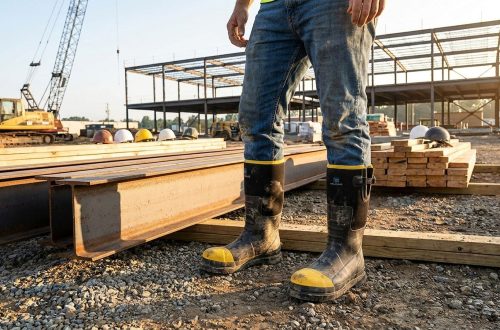
Best Boots for Landfill and Waste Transfer Station Work
Landfill work is one of the few jobs where the ground can change almost every hour.
A worker may begin the morning on compacted gravel, walk across a muddy tipping area, inspect stormwater drainage, climb onto heavy equipment, enter a wet transfer building, cross a truck scale, and finish the shift around waste containers or leachate-control infrastructure.
Footwear may be exposed to:
- Deep mud.
- Standing water.
- Wet concrete.
- Gravel.
- Compacted waste.
- Rain.
- Snow.
- Leachate.
- Broken packaging.
- Sharp debris.
- Truck traffic.
- Heavy equipment.
That makes ordinary rain boots a poor match for many waste-management jobs.
The best boots for landfill and transfer-station work should combine waterproof protection, secure heel fit, durable outsole construction, mixed-surface traction, all-day support, and protective features appropriate to the hazards of the site.
Landfills Are Mixed-Surface Workplaces
A landfill is rarely one continuous field of mud.
Workers may move between:
- Tipping faces.
- Gravel access roads.
- Concrete maintenance areas.
- Truck scales.
- Drainage channels.
- Equipment yards.
- Transfer buildings.
- Storage areas.
- Gas-management infrastructure.
Each surface creates a different footwear requirement.
Deep mud favors open tread.
Concrete favors broad outsole contact.
Gravel requires cushioning and outsole durability.
Heavy equipment requires controlled foot movement.
The ideal landfill boot must balance all of these conditions.
Mud Is Still One of the Biggest Challenges
Rain can quickly change landfill roads and working faces.
Heavy truck traffic may turn exposed soil into:
- Deep ruts.
- Sticky clay.
- Soft shoulders.
- Standing water.
Workers getting in and out of vehicles may step directly into mud.
A useful mud-oriented outsole should have:
- Open channels.
- Moderate-to-deep lugs.
- Defined heel edges.
- Enough spacing to release soil.
Why Loose Boots Perform Poorly in Landfill Mud
Sticky mud creates suction.
When footwear is oversized, the foot rises while the boot may remain trapped in the ground.
That can lead to:
- Heel movement.
- Blisters.
- Extra fatigue.
- Reduced balance.
- A boot being pulled partially off.
Secure heel retention matters more in landfill mud than many workers expect.
Clay Soil Requires Easy-Release Tread
Some landfill sites contain heavy clay.
Wet clay can pack into narrow outsole channels until the tread becomes almost smooth.
For clay-heavy environments, simple lug shapes and wider channels are often easier to maintain than complex tread patterns.
Boots for the Active Tipping Face
The active working face is one of the most demanding parts of a landfill.
Workers may be around:
- Waste trucks.
- compactors.
- loaders.
- loose debris.
- uneven surfaces.
Footwear may need more protection here than in administrative or scale-house areas.
Useful features can include:
- Waterproof construction.
- durable uppers.
- strong midsoles.
- secure ankle support.
- safety toes where required.
- puncture-resistant protection where required.
Sharp Debris Is a Serious Consideration
Landfill workers may encounter:
- Nails.
- Wire.
- broken wood.
- metal fragments.
- glass.
- screws.
- sharp plastic.
A thick-looking rubber outsole is not automatically puncture resistant.
Workers exposed to sharp debris should use footwear specifically rated for puncture hazards when required by the workplace.
Safety-Toe Boots for Landfill Workers
Protective toes may be appropriate around:
- Dumpsters.
- compactors.
- heavy tools.
- loaders.
- containers.
- transfer equipment.
Requirements vary by role.
Waterproof construction alone does not make a boot safety rated.
Boots for Waste Transfer Stations
Transfer stations create a different environment from open landfills.
Workers may spend much more time on:
- Concrete.
- Tipping floors.
- ramps.
- metal platforms.
- loading areas.
These surfaces usually require less mud tread and more hard-floor comfort.
A supportive waterproof work boot with moderate tread may be more practical than a deep-lug field boot.
Wet Tipping Floors Need Broad Contact
Transfer-station floors may become wet from:
- Rain carried in by trucks.
- Washdown.
- leaking containers.
- cleaning.
- stormwater.
On concrete, workers generally benefit from:
- Flexible outsole rubber.
- broad contact zones.
- moderate grooves.
- stable heel support.
Waste Residue Can Change Traction
Small amounts of loose material may collect on transfer floors.
This can include:
- Paper.
- plastic.
- dirt.
- organic residue.
Good housekeeping is essential.
No outsole performs well when loose waste forms a layer between the boot and the floor.
Boots for Transfer-Station Washdown
Cleaning crews may use:
- Hoses.
- Scrubbers.
- Pressure washers.
- Cleaning products.
Workers assigned to washdown often need more shaft coverage than employees who primarily operate equipment.
Mid-calf waterproof boots can provide a good balance.
Pressure Washing Requires Separate Safety Procedures
Waterproof boots protect against ordinary splash.
They do not protect the foot from direct high-pressure water.
Workers should never direct a pressure-washer nozzle toward their own feet or body.
Boots for Truck Scale Operators
Scale-house workers may spend much of the day indoors but still walk outside to inspect:
- Loads.
- Trucks.
- Scale platforms.
- Gate areas.
A lower-profile waterproof work boot may be more comfortable than tall rubber footwear.
Scale Platforms Can Become Slippery
Truck scales may collect:
- Rain.
- Mud.
- Tire debris.
- Snow.
Moderate mixed-surface tread is practical for these areas.
Boots for Spotters and Traffic Controllers
Spotters may spend many hours outside directing trucks.
They may walk across:
- Gravel.
- Mud.
- Concrete.
- Packed soil.
Footwear should emphasize:
- Walking comfort.
- waterproof protection.
- secure heel fit.
- stable mixed-surface traction.
Boots for Landfill Equipment Operators
Heavy equipment may include:
- Compactors.
- Bulldozers.
- Loaders.
- Excavators.
- Water trucks.
Operators need boots that work both on the ground and inside machinery.
Very bulky tall rubber boots may reduce:
- Pedal feel.
- ankle mobility.
- comfort during long driving periods.
Supportive waterproof work boots are often more practical.
Boots for Compactor Operators
Landfill compactors have high steps and large cabs.
Workers should prioritize:
- Stable step contact.
- moderate outsole thickness.
- secure heel retention.
- durable construction.
Mud should be removed from tread before climbing when practical.
Boots for Loader Operators
Loader drivers may frequently step out onto:
- Mud.
- Gravel.
- Waste-covered surfaces.
Mixed-surface waterproof boots are useful.
Boots for Dozer Operators
Dozer operators may work long shifts inside equipment but need rugged footwear when inspecting the site or machine.
Boot weight should be balanced against required protection.
Boots for Landfill Mechanics
Maintenance workers may service:
- Loaders.
- compactors.
- pumps.
- trucks.
- hydraulic systems.
These employees often need more industrial footwear.
Useful features may include:
- Safety toes.
- oil-resistant outsoles.
- ankle support.
- waterproof construction.
- puncture protection where required.
Hydraulic Fluid and Wastewater Are Different Hazards
Waterproofing does not automatically provide resistance to:
- Hydraulic oil.
- fuel.
- grease.
- solvents.
Maintenance workers should choose materials suitable for actual exposure.
Boots for Fueling Areas
Heavy equipment fueling zones may combine:
- Gravel.
- Mud.
- Fuel residue.
Workers should confirm outsole and upper compatibility with petroleum products.
Boots for Leachate Collection Areas
Landfills generate leachate as water moves through waste material.
Workers may inspect:
- Pipes.
- Pumps.
- Tanks.
- Sumps.
- drainage structures.
These areas can be wet and muddy.
Footwear should be selected according to site-specific contamination and chemical requirements.
Waterproof Does Not Mean Leachate-Protective
General waterproof boots should not automatically be treated as protection from all contaminated liquids.
Actual PPE requirements depend on:
- Site conditions.
- Waste stream.
- Chemical hazards.
- Employer procedures.
Boots for Leachate Pump Maintenance
Technicians may work around:
- Wet concrete.
- Mud.
- Pumps.
- Piping.
A supportive waterproof safety boot may be more practical than a simple rain boot.
Boots for Landfill Gas System Maintenance
Modern landfills may use gas collection systems.
Workers may inspect:
- Gas wells.
- Piping.
- Blowers.
- Flare equipment.
They may walk across uneven capped landfill surfaces.
Supportive waterproof boots with good ankle control are useful.
Uneven Ground Is Common on Landfill Caps
Closed or capped areas may appear smooth from a distance but still contain:
- Settlement.
- Small depressions.
- Vegetation.
- Drainage features.
Secure ankle support improves control.
Boots for Stormwater Inspections
Landfills often contain extensive stormwater systems.
Workers may inspect:
- Swales.
- Ditches.
- Retention ponds.
- Culverts.
- Sediment basins.
These tasks may involve wet grass, mud, and slopes.
Mid-calf waterproof boots with good lateral stability work well.
Boots for Retention Pond Banks
Sloped pond banks can become slippery.
Workers should look for:
- Secure heel retention.
- stable outsole edges.
- moderate-to-deep tread.
- waterproof uppers.
Boots for Culvert Cleaning
Culvert work may involve:
- Mud.
- standing water.
- gravel.
- debris.
More open tread may be useful.
Boots for Erosion Repair
Landfill workers may restore areas damaged by stormwater using:
- Soil.
- rock.
- erosion mats.
- vegetation.
Supportive waterproof boots help on soft slopes.
Boots for Landfill Roads
Unpaved haul roads may contain:
- Crushed rock.
- compacted soil.
- mud.
- potholes.
Workers walking along these roads need more underfoot protection than basic rain boots provide.
Gravel Can Be Hard on Thin Soles
Coarse aggregate transfers impact directly to the foot.
Supportive midsoles and durable outsoles improve comfort.
Boots for Tire Cleaning Areas
Some sites use wheel-wash systems to reduce dirt leaving the facility.
Workers maintaining these systems may encounter:
- Water.
- Mud.
- Sediment.
Waterproof mid-calf boots are practical.
Boots for Litter-Control Crews
Wind can carry light waste beyond the active disposal area.
Litter crews may walk:
- Fields.
- Fencelines.
- Ditches.
- Grass.
Their footwear needs better walking comfort than maximum industrial bulk.
Fenceline Work Can Hide Hazards
Tall vegetation may conceal:
- Wire.
- holes.
- sharp debris.
Supportive boots with durable uppers are useful.
Boots for Windy Landfill Conditions
Landfills are often exposed.
Strong wind may affect balance while workers carry tools or collect litter.
Secure-fitting footwear helps workers maintain better control.
Boots for Recycling Transfer Areas
Facilities may also handle:
- Cardboard.
- Metal.
- Plastics.
- Construction materials.
The hazard profile changes depending on the material stream.
Metal recycling areas may require more puncture and impact protection.
Boots for Construction and Demolition Waste Facilities
C&D waste may contain:
- Nails.
- Lumber.
- Metal.
- Concrete fragments.
- Wire.
Workers in these areas should give particular attention to:
- Puncture resistance.
- safety toes.
- durable uppers.
Boots for Green-Waste Facilities
Yard-waste operations may handle:
- Branches.
- leaves.
- mulch.
- compost.
Workers may encounter more organic mud and less industrial debris.
A waterproof outdoor work boot with moderate tread may be sufficient.
Boots for Composting Areas
Some waste facilities operate composting systems.
Workers may move through:
- Wet organic material.
- Mud.
- Concrete.
- Equipment areas.
Open tread and easy-clean construction are useful.
Boots for Mulch and Wood Waste
Wood chips can shift underfoot.
Very deep lugs do not necessarily improve stability.
Broad outsole contact and secure heel fit matter more.
Boots for Household Hazardous Waste Support Areas
Some waste-management sites handle separate hazardous-material streams.
These environments may require specialized chemical-resistant PPE.
General waterproof boots should not be assumed suitable.
Chemical Resistance Is Separate From Waterproofing
Workers may encounter:
- Solvents.
- oils.
- cleaning chemicals.
- unknown liquids.
Boot material must be chosen according to actual chemical hazards.
Boots for Rainy Landfill Conditions
Rain changes almost every part of a landfill.
Workers may face:
- Deeper mud.
- Standing water.
- Soft shoulders.
- Slippery equipment steps.
This is when fully waterproof construction becomes especially valuable.
Boots for Snowy Landfills
Cold-climate sites may operate through:
- Snow.
- Slush.
- Frozen mud.
- Ice.
Suitable footwear may need:
- Waterproof construction.
- moderate insulation.
- cold-flexible rubber.
- thicker midsoles.
Frozen Mud Can Be Hard and Uneven
Ruts that were soft during the day may freeze overnight.
Workers need stable outsole edges and ankle support.
Ice Requires Separate Traction Measures
No ordinary work boot completely eliminates ice risk.
Sites may use:
- Deicing.
- Approved traction devices.
- Surface maintenance.
Boots for Summer Landfill Work
Summer sites can become hot.
Heavy insulated rubber boots may be uncomfortable.
Workers should prioritize:
- Uninsulated construction.
- manageable boot weight.
- moisture-wicking socks.
- removable insoles.
Heat and Waterproof Footwear
Waterproof boots can trap perspiration.
Internal moisture may become a comfort issue even during dry weather.
Best Socks for Landfill Workers
Synthetic and wool-blend socks generally perform better than cotton.
Look for:
- Moisture wicking.
- heel cushioning.
- quick drying.
- secure fit.
Boot Weight Matters Over Large Sites
Landfills may cover hundreds of acres.
Workers may walk significant distances between:
- Roads.
- wells.
- drainage systems.
- equipment.
Heavy footwear increases fatigue.
Cushioning Matters on Gravel and Concrete
Workers may spend part of the day in soft soil and the rest on hard surfaces.
A supportive midsole helps with both.
Heel Retention Matters in Mud and on Equipment
A secure heel improves control when moving between:
- Sticky soil.
- ladders.
- steps.
- slopes.
Toe Room Matters During Long Shifts
Feet may swell during long workdays.
The boot should provide enough toe room without becoming loose overall.
Removable Insoles Are Useful
Replaceable footbeds make it easier to:
- Dry footwear.
- maintain cushioning.
- improve hygiene.
- customize support.
Easy-Clean Construction Saves Time
Landfill boots may collect:
- Mud.
- dust.
- plastic fragments.
- organic material.
Smooth waterproof uppers simplify cleanup.
How to Clean Landfill Work Boots
Site procedures should always come first.
A general routine may include:
- Remove large debris.
- Brush mud from tread.
- Rinse the exterior when appropriate.
- Follow contamination procedures for exposed footwear.
- Inspect for punctures or cuts.
- Remove damp insoles.
- Dry boots completely.
Avoid Bringing Site Contamination Home
Footwear used around active waste areas may need to remain at work.
Workers should follow employer hygiene policies for:
- Cleaning.
- storage.
- changing footwear.
Tread Inspection Is Especially Important
Workers should regularly check grooves for:
- Metal.
- glass.
- wire.
- nails.
- sharp plastic.
A buried sharp object may damage the outsole or create a hazard later.
How to Dry Waterproof Landfill Boots
After cleaning:
- Remove insoles.
- open the boots.
- allow airflow.
- use low-temperature drying when approved.
Avoid excessive direct heat.
Rotating Two Pairs Can Improve Comfort
Workers exposed to rain and mud day after day may benefit from alternating pairs.
This gives each pair more time to dry.
When Landfill Work Boots Should Be Replaced
Replace footwear when:
- Waterproofing fails.
- tread becomes badly worn.
- puncture damage appears.
- outsole separation develops.
- heel support collapses.
- chemical damage occurs.
- protective components are compromised.
Common Mistakes When Buying Landfill Work Boots
Buying Casual Rain Boots for Active Waste Areas
They may lack enough protection and support.
Choosing Deep Mud Boots for Transfer-Station Floors
Indoor concrete needs broader outsole contact.
Ignoring Puncture Hazards
Landfill debris can contain nails, wire, and sharp metal.
Wearing Boots Too Loose
Mud suction and equipment steps require secure heel control.
Assuming Waterproof Means Chemical Resistant
Waste sites may involve substances that require specialized PPE.
Choosing Extremely Heavy Boots for Vehicle Operators
Excess bulk can reduce pedal comfort.
Ignoring Gravel Cushioning
Thin rubber soles can become uncomfortable on haul roads.
Continuing to Use Damaged Boots
Cuts and cracks can compromise both waterproofing and sanitation.
How to Choose the Best Boots for Landfill Work
Start with the worker’s primary responsibility.
For active tipping-face crews, prioritize:
- Rugged waterproof construction.
- mud traction.
- secure heel fit.
- protective ratings.
- durable outsoles.
For transfer-station workers, prioritize:
- Hard-floor traction.
- cushioning.
- moderate tread.
- easy cleaning.
For equipment operators, prioritize:
- Pedal control.
- stable equipment steps.
- secure heel positioning.
- weather protection.
For landfill gas and environmental technicians, prioritize:
- Long-distance walking comfort.
- ankle support.
- mixed-terrain traction.
- waterproofing.
For drainage crews, prioritize:
- More shaft coverage.
- mud-release tread.
- slope stability.
For mechanics, prioritize:
- Safety features.
- oil resistance where needed.
- ankle support.
- durable construction.
Workers comparing waterproof work footwear from brands such as Trudave Gear should select boots based on the actual mix of mud, gravel, waste debris, concrete, equipment, rain, and protective requirements involved in their role.
Frequently Asked Questions
What are the best boots for landfill work?
The best landfill boots are waterproof, durable, securely fitted, supportive on mixed terrain, and equipped with appropriate protection for mud, gravel, sharp debris, and heavy-equipment areas.
Are rubber boots good for landfill workers?
Yes, especially for rain, mud, drainage work, and washdown. Workers around sharp waste or heavy equipment may need more protective safety footwear.
How tall should landfill work boots be?
Mid-height or mid-calf boots are versatile for many jobs. Taller boots may be useful for deep mud, standing water, stormwater work, and washdown.
What boots are best for waste transfer stations?
Waterproof work boots with broad hard-floor contact, cushioning, moderate tread, secure heel support, and easy-clean materials are practical.
Do landfill workers need puncture-resistant boots?
Some landfill and transfer-station jobs may require puncture protection because of nails, wire, glass, and sharp debris.
Do landfill workers need safety-toe boots?
Many active-face, maintenance, container-handling, recycling, and equipment jobs may require safety-toe footwear.
Are waterproof boots safe around landfill leachate?
Not automatically. General waterproofing should not be treated as protection against all contaminated liquids or chemicals.
What boots are best for landfill equipment operators?
Supportive waterproof work boots with moderate outsole thickness, secure heel fit, stable machine-step traction, and appropriate protective ratings are practical.
What boots work best in landfill mud?
Waterproof boots with open tread channels, moderate-to-deep lugs, secure heel retention, and easy-clean construction are useful.
How should landfill work boots be cleaned?
Remove debris, brush mud from tread, follow workplace contamination procedures, inspect for sharp objects or damage, and allow footwear to dry completely.
Final Thoughts
Landfill and waste transfer work combines deep mud, sharp debris, gravel roads, wet concrete, heavy machinery, drainage systems, rain, snow, and contaminated work zones.
That means the best footwear depends heavily on the employee’s role.
Active tipping-face crews need rugged waterproof safety footwear with stronger mud and debris protection.
Transfer-station employees need better hard-floor cushioning and moderate tread.
Equipment operators need precise pedal control.
Environmental and gas-system technicians need comfortable mixed-terrain walking support.
Drainage teams may require taller waterproof boots.
Maintenance workers may need additional puncture, impact, oil, or chemical protection.
Trudave Gear offers waterproof outdoor and work footwear suited to rain, mud, gravel, maintenance, and demanding outdoor work environments.
Choosing footwear according to the actual waste-management task can help workers stay drier, maintain better footing, reduce fatigue, and move more confidently from the first truck arriving at the scale to the final site inspection at the end of the shift.


You May Also Like
Best Boots for Crop Farm Work: A Practical Guide for Muddy Fields, Irrigation, and Long Agricultural Workdays

Winter Pest Patrol: Hidden Insects and Rodents You Should Watch For