Best Boots for Seafood Processing and Fish Packing Work
Seafood processing plants combine water, ice, cold temperatures, wet concrete, fish residue, stainless-steel equipment, sanitation, loading docks, freezers, and long production shifts.
A seafood worker may begin the day unloading iced fish, move through a wet receiving room, work beside a filleting or trimming line, handle crates, cross a washdown area, enter cold storage, and finish the shift cleaning equipment and floors.
Footwear may encounter:
- Wet concrete.
- Fish slime.
- Melted ice.
- Saltwater.
- Cleaning water.
- Seafood residue.
- Stainless-steel platforms.
- Floor drains.
- Cold-room floors.
- Plastic crates.
- Loading docks.
- Sanitation chemicals.
That makes footwear one of the most important pieces of everyday equipment in seafood production.
The best boots for seafood processing workers should provide dependable waterproofing, secure traction on wet hard surfaces, easy-clean construction, enough cushioning for long concrete shifts, and suitable protection for workers handling crates, machinery, pallets, knives, ice, and sanitation equipment.
Seafood Plants Are Constantly Wet
Water is used throughout fish and seafood processing.
Workers may encounter moisture from:
- Ice melting.
- Product washing.
- Equipment cleaning.
- Floor washdown.
- Fish rinsing.
- Drainage.
- Cold-room condensation.
Even well-designed processing areas may stay wet for much of the shift.
Fully waterproof footwear is usually more practical than ordinary work shoes.
Fish Residue Makes Flooring More Difficult
Seafood processing floors may contain small amounts of:
- Fish oil.
- Slime.
- Scales.
- Water.
- Ice.
These materials can change traction quickly.
No footwear eliminates the need for regular cleanup, but workers benefit from outsoles designed for wet hard surfaces.
Deep Outdoor Tread Is Usually Not Ideal
Seafood plants are not muddy farm environments.
Most workers spend time on:
- Concrete.
- Coated floors.
- Tile.
- Metal platforms.
Very deep agricultural lugs may:
- Trap seafood residue.
- Hold scales.
- Be harder to sanitize.
- Feel awkward on stairs.
Moderate, easy-clean tread is usually more practical.
Boots for Fish Receiving Areas
Fish may arrive by:
- Truck.
- Boat.
- Refrigerated container.
Receiving workers may handle:
- Iced product.
- Crates.
- Pallets.
Floors often become wet quickly.
Useful footwear should provide:
- Full waterproofing.
- Secure heel fit.
- Strong cushioning.
- Easy-clean uppers.
Boots for Iced Seafood Handling
Ice is used extensively to keep fish cold.
Workers may stand around:
- Crushed ice.
- Meltwater.
- Cold concrete.
Waterproof boots help prevent cold water from reaching socks.
Ice Can Change Floor Traction
Loose ice may move underfoot.
Workers should avoid assuming that tread alone can make scattered ice safe.
Frequent housekeeping is essential.
Boots for Fish Sorting Crews
Seafood may be sorted by:
- Species.
- Size.
- Quality.
- Weight.
Workers may stand for long periods beside conveyors or tables.
Cushioning becomes especially important.
Boots for Fish Grading Lines
Employees may make thousands of short steps and turns.
A secure heel fit reduces internal foot movement.
Boots for Filleting Areas
Fish processing may involve:
- Knives.
- Cutting tables.
- Conveyors.
- Wet floors.
Workers need stable footing.
Footwear Is Only One Part of Knife Safety
Cutting jobs require broader:
- PPE.
- Training.
- Workstation safety.
Ordinary waterproof boots should not be treated as cut-resistant protection.
Boots for Trimming Stations
Workers may stand nearly in one place for hours.
Supportive midsoles can reduce fatigue.
Boots for Fish Cleaning Areas
Fish may be:
- Gutted.
- Rinsed.
- Trimmed.
These jobs create constant water exposure.
Mid-height or mid-calf waterproof boots work well.
Boots for Scale Removal
Fish scales may accumulate around processing equipment.
They can become packed inside complicated tread patterns.
Simple grooves are easier to rinse.
Boots for Shellfish Processing
Seafood plants may process:
- Shrimp.
- Crab.
- Lobster.
- Shellfish.
Sharp shell fragments can create additional hazards.
Ordinary Rubber Does Not Guarantee Puncture Protection
Workers exposed to sharp shells may need footwear with additional sole or upper protection.
Boots for Crab Processing
Crab-processing areas may combine:
- Water.
- Shell fragments.
- Ice.
- Hard floors.
Durable waterproof footwear is practical.
Boots for Shrimp Processing
Shrimp plants may involve:
- Sorting.
- Washing.
- Peeling.
- Packing.
Employees may spend entire shifts around wet equipment.
Boots for Oyster Processing
Oyster shells can be extremely sharp.
Workers should use footwear suited to actual puncture and cut risks.
Boots for Shell Washing
Shellfish cleaning may involve heavy hose use.
More shaft coverage may help.
Boots for Fish Packing Lines
Finished seafood may be packed into:
- Boxes.
- Bags.
- Trays.
- Containers.
Packaging workers may spend more time on hard floors.
Hard-Floor Cushioning Matters
A waterproof boot can still become uncomfortable if the midsole is too thin.
Workers should prioritize:
- Shock absorption.
- Heel cushioning.
- Supportive footbeds.
Boots for Seafood Boxing Areas
Packed product may be heavy.
Protective-toe footwear may be appropriate.
Boots for Crate Handling
Plastic seafood crates may be:
- Wet.
- Heavy.
- Stacked.
Workers need stable heel support.
Boots for Palletizing Crews
Finished boxes may be loaded onto pallets.
Workers may operate around:
- Pallet jacks.
- Forklifts.
- Wrapping machines.
Safety-toe boots may be required.
Boots for Forklift Operators
Forklift drivers need footwear that provides:
- Good pedal control.
- Secure heel fit.
- Stable machine-step contact.
Very thick outsoles may reduce pedal feel.
Boots for Seafood Freezers
Cold storage creates additional footwear demands.
Workers may enter areas with:
- Frozen floors.
- Cold concrete.
- Low temperatures.
Moderate insulation may improve comfort.
Boots for Refrigerated Rooms
Workers who move in and out of coolers may benefit from:
- Thicker midsoles.
- Moisture-managing socks.
- Waterproof uppers.
Cold Concrete Can Increase Foot Fatigue
Underfoot insulation matters even when workers are not exposed to snow.
Boots for Freezer Workers
Longer freezer exposure may require specialized insulated footwear.
The correct level depends on:
- Temperature.
- Exposure duration.
- Facility requirements.
Ice Buildup Requires Separate Controls
No ordinary work boot completely eliminates slip hazards on ice.
Facilities may need:
- Floor treatment.
- Ice removal.
- Approved traction devices.
Boots for Blast Freezer Areas
Very low temperatures require footwear designed specifically for cold conditions.
General rain boots may not provide enough insulation.
Boots for Fish Freezing Lines
Workers may transition between:
- Wet processing floors.
- Cold storage.
Waterproof insulated work boots can be useful when appropriate.
Boots for Seafood Cold Rooms
Cold rooms can remain damp from condensation.
Waterproof construction prevents moisture from reaching socks.
Boots for Seafood Washdown Crews
Sanitation teams may clean:
- Floors.
- Cutting tables.
- Conveyors.
- Crates.
- Walls.
These jobs often involve heavy water exposure.
More Shaft Coverage Helps During Washdown
Mid-calf rubber boots are especially practical for splash-heavy cleaning.
Boots for Hose Work
Workers may pull long hoses through processing rooms.
Footwear should allow:
- Side steps.
- Backward steps.
- Quick repositioning.
Secure heel retention improves control.
Boots for Pressure Washing
Some plants use pressure-washing equipment.
Waterproof footwear protects against ordinary splash.
It does not protect against direct high-pressure spray.
Boots for Foam Cleaning
Sanitation systems may apply foam to floors and equipment.
Foam may temporarily reduce surface traction.
Controlled movement remains essential.
Boots for Sanitizer Areas
Seafood plants may use approved:
- Sanitizers.
- Detergents.
- Cleaning chemicals.
Waterproof Does Not Mean Chemical Resistant
This distinction is important.
A rubber or waterproof boot may not be compatible with every concentrated cleaning product.
Workers should follow:
- SDS guidance.
- Product labels.
- Facility PPE policies.
Boots for Chemical Mixing Areas
Workers handling concentrated sanitation products may require specialized chemical-resistant boots.
General waterproof work boots may not be sufficient.
Boots for Floor Drain Cleaning
Seafood processing facilities use extensive drainage.
Workers may clean:
- Drains.
- Grates.
- Channels.
These areas may collect:
- Scales.
- Organic material.
- Ice.
- Packaging debris.
Easy-Clean Tread Helps Sanitation
Simple outsole patterns are easier to inspect and clean.
Boots for Drainage Crews
More shaft height may help where shallow standing water is common.
Boots for Seafood Byproduct Areas
Processing may produce:
- Fish trimmings.
- Bones.
- Shells.
- Organic waste.
Workers may need waterproof easy-clean footwear.
Boots for Fish Waste Handling
Organic waste areas may be extremely wet.
Footwear should provide:
- Full waterproofing.
- Moderate tread.
- Durable uppers.
Boots for Byproduct Bins
Large waste bins may involve:
- Forklifts.
- Pallet equipment.
- Heavy containers.
Protective toes may be appropriate.
Boots for Fish Meal Facilities
Some seafood byproducts may be processed into:
- Fish meal.
- Fish oil.
These operations may have different:
- Oil.
- Heat.
- Mechanical hazards.
Task-specific PPE should guide footwear selection.
Waterproof Does Not Mean Oil Resistant
Fish oils or machinery lubricants may affect some outsole compounds.
Workers should verify material compatibility.
Boots for Seafood Loading Docks
Processing plants regularly receive raw product and ship finished seafood.
Dock workers may encounter:
- Wet pavement.
- Rain.
- Ice.
- Metal dock plates.
- Pallets.
Mixed-surface waterproof safety boots are practical.
Boots for Refrigerated Truck Loading
Workers may move between:
- Cold trailers.
- Wet docks.
- Warehouse floors.
Moderate insulation and stable hard-surface traction help.
Boots for Seafood Truck Drivers
Drivers need footwear that balances:
- Pedal control.
- Weather protection.
- Dock traction.
Mid-height waterproof work boots are usually more practical than tall rubber boots.
Boots for Dock-to-Plant Workers
Facilities near ports may require employees to transition between:
- Outdoor docks.
- Indoor processing.
A versatile waterproof boot is useful.
Boots for Fishing Vessel Unloading
Workers may unload seafood directly from boats.
They may encounter:
- Saltwater.
- Ice.
- Wet decks.
- Crates.
Deck-oriented waterproof boots can be useful.
Boots for Wet Marine Docks
Workers who spend significant time outside may need stronger wet-deck traction.
Boots for Saltwater Exposure
Salt residue should be rinsed from footwear with fresh water when appropriate.
Boots for Seafood Auction Areas
Some ports or markets operate seafood auctions.
Workers may stand for long periods on:
- Wet concrete.
- Cold floors.
Cushioning matters.
Boots for Fish Markets
Wholesale fish markets may combine:
- Ice.
- Water.
- Concrete.
- Cart traffic.
Easy-clean waterproof boots are practical.
Boots for Retail Seafood Departments
Workers may spend more time around:
- Refrigerated counters.
- Back rooms.
- Wet cleaning areas.
Lower-profile waterproof work boots may be sufficient.
Boots for Seafood Market Cleaning
Closing sanitation may create substantial water exposure.
Mid-height waterproof boots work well.
Boots for Fish Counter Employees
Employees who move between customer areas and back rooms may prefer footwear that is:
- Clean-looking.
- Lightweight.
- Waterproof.
Boots for Seafood Warehouse Workers
Frozen and refrigerated warehouses involve long walking routes.
Supportive midsoles are important.
Boots for Order Pickers
Workers may walk thousands of steps on cold concrete.
Footwear should provide:
- Cushioning.
- Temperature protection.
- Secure heel fit.
Boots for Pallet Jack Operators
Moderate outsole thickness improves equipment control.
Boots for Conveyor Workers
Seafood products may move through automated lines.
Workers may stand beside conveyors for long periods.
Boots for Metal Platforms
Moderate tread provides better step and platform contact than deep field lugs.
Boots for Industrial Stairs
Secure heel support improves controlled climbing.
Boots for Ladder Work
Workers may access:
- Tanks.
- Storage racks.
- Equipment.
Very bulky rubber boots can make rung placement harder.
Boots for Seafood Plant Mechanics
Processing facilities contain:
- Conveyors.
- Pumps.
- Compressors.
- Refrigeration systems.
- Motors.
Maintenance technicians may need industrial footwear.
Boots for Mechanical Rooms
Workers may encounter:
- Oil.
- Grease.
- Wet concrete.
More structured waterproof safety boots work well.
Boots for Refrigeration Technicians
Cold-system maintenance may involve:
- Mechanical.
- Electrical.
- Refrigerant hazards.
Footwear is only one element of required PPE.
Boots for Electrical Maintenance
Waterproof boots are not automatically electrically protective.
Electrical tasks require appropriately rated protection.
Boots for Conveyor Maintenance
Workers may need:
- Safety toes.
- Stable ladder contact.
- Durable uppers.
Boots for Hydraulic Equipment
Some material-handling machinery may use hydraulic systems.
Oil-resistant footwear may be useful.
Boots for Welding and Fabrication
Standard waterproof boots are not automatically suitable around:
- Sparks.
- Hot metal.
- Welding work.
Task-specific footwear is required.
Boots for Boiler and Hot-Water Areas
Seafood plants may use hot water for cleaning or processing.
General waterproof footwear may not provide adequate heat protection.
Boots for Steam Areas
Steam can cause serious burns.
Workers should use appropriate PPE rather than relying on ordinary rubber footwear.
Boots for Seafood Cooking Plants
Some facilities cook:
- Crab.
- Shrimp.
- Lobster.
- Other seafood.
Heat exposure changes footwear requirements.
Boots for Cooker Areas
Workers may encounter:
- Hot water.
- Steam.
- Wet floors.
Specialized heat-appropriate waterproof footwear may be required.
Boots for Cooling Areas
Cooked seafood may move through cooling systems.
Floors may remain wet.
Boots for Canning Plants
Seafood canning operations involve:
- Water.
- Processing equipment.
- Metal packaging.
Hard-floor support remains important.
Boots for Canning-Line Workers
Workers may stand long hours beside machinery.
Moderate tread and cushioning work well.
Boots for Retort Areas
Retort processing involves heat and pressure.
Task-specific PPE requirements should guide footwear.
Boots for Smokehouse Seafood Plants
Some facilities smoke fish.
Production conditions may be:
- Warm.
- Damp.
- Greasy.
Workers may need oil-resistant footwear in addition to waterproofing.
Boots for Fish Oil Processing
Oil exposure may change the ideal outsole material.
Waterproofing alone is not enough.
Boots for Aquaculture Processing Plants
Farmed fish may be processed in facilities similar to wild-catch operations.
Workers may handle:
- Live fish.
- Tanks.
- Water.
- Ice.
Fully waterproof boots remain practical.
Boots for Live-Fish Receiving
Tank and transfer areas may have heavy splash.
More shaft coverage helps.
Boots for Fish Hatchery Packing Areas
Some hatcheries pack live fish for transport.
Workers may move around:
- Tanks.
- Pumps.
- Wet concrete.
Waterproof mid-height boots work well.
Boots for Seafood Quality-Control Workers
Quality-control employees may move between:
- Laboratories.
- Processing floors.
- Cold rooms.
A lower-profile waterproof safety boot can be versatile.
Boots for Sampling Areas
Workers may stand beside wet processing lines while collecting samples.
Easy-clean construction helps.
Boots for Food-Safety Inspectors
Inspectors may cover large facilities.
Lightweight waterproof footwear reduces fatigue.
Boots for Seafood Laboratories
Lab spaces may require cleaner footwear and less aggressive tread.
Boots for Outdoor Seafood Yards
Some facilities have outdoor:
- Crate storage.
- Ice systems.
- Utility areas.
Workers may encounter:
- Rain.
- Gravel.
- Mud.
Mixed-surface tread becomes useful.
Boots for Gravel Service Yards
Thin rubber boots may become uncomfortable on coarse stone.
Supportive midsoles help.
Boots for Rainy Coastal Plants
Facilities near ports may experience frequent wet weather.
Waterproof construction is especially useful for workers moving outside regularly.
Boots for Snowy Seafood Facilities
Cold-region plants may add:
- Snow.
- Slush.
- Ice.
Loading and receiving workers may need moderate insulation.
Boots for Slush
Mid-height or mid-calf waterproof boots help prevent water entry.
Ice Requires Separate Controls
No ordinary boot completely eliminates ice risk.
Approved traction measures may be required.
Boots for Hot-Weather Seafood Plants
Even refrigerated operations may have warmer utility or warehouse areas.
Workers should avoid unnecessarily heavy insulation when not required.
Waterproof Boots Can Still Become Damp Inside
Sweat may create internal moisture.
Daily drying remains important.
Boots for Long Seafood Processing Shifts
Production periods can involve extended shifts.
Workers may spend many hours:
- Standing.
- Walking.
- Lifting.
- Turning.
Comfort becomes increasingly important.
Boot Weight Matters
Heavy footwear can increase fatigue over thousands of steps.
Cushioning Is Critical on Concrete
Processing workers may spend almost the entire shift on hard floors.
Supportive midsoles can make a major difference.
Heel Retention Matters on Wet Floors
A secure heel helps the foot move with the boot during quick direction changes.
Forefoot Flexibility Helps With Production Work
Workers may:
- Crouch.
- Bend.
- Push carts.
- Step over hoses.
The boot should flex naturally.
Toe Room Matters During Long Shifts
Feet may swell.
Enough front space improves comfort.
Best Socks for Seafood Processing Workers
Synthetic and wool-blend socks generally perform better than cotton.
Useful characteristics include:
- Moisture wicking.
- Quick drying.
- Temperature regulation.
- Heel cushioning.
Spare Socks Can Be Useful
Heavy washdown or splash may occasionally allow water over the boot collar.
A dry replacement pair can improve comfort.
Removable Insoles Improve Daily Drying
Replaceable footbeds allow workers to:
- Dry footwear.
- Restore cushioning.
- Improve hygiene.
- Adjust support.
Easy-Clean Construction Is Essential
Seafood boots may collect:
- Fish residue.
- Scales.
- Ice.
- Organic material.
- Cleaning foam.
Smooth waterproof uppers simplify sanitation.
How to Clean Seafood Processing Work Boots
A practical routine may include:
- Remove scales and organic debris.
- Brush tread channels.
- Rinse ordinary seafood residue.
- Follow facility sanitation procedures.
- Follow PPE guidance after chemical exposure.
- Remove damp insoles.
- Allow boots to dry completely.
Fish Residue Should Be Removed Promptly
Organic material becomes harder to clean once dried.
Tread Should Be Inspected Frequently
Check for:
- Shell fragments.
- Glass.
- Metal.
- Packaging debris.
How to Dry Seafood Work Boots
After cleaning:
- Remove insoles.
- Open the boots fully.
- Allow airflow.
- Use low-temperature drying if approved.
Avoid strong direct heat.
Rotating Two Pairs Can Help Full-Time Workers
Daily washdown and cold-room moisture may prevent one pair from drying fully.
Alternating boots provides additional drying time.
When Seafood Processing Boots Should Be Replaced
Replace footwear when:
- Waterproofing fails.
- Tread becomes smooth.
- Rubber cracks.
- Outsole separation develops.
- Chemical damage appears.
- Puncture damage occurs.
- Heel support collapses.
- Safety components are compromised.
Do Seafood Processing Workers Need Safety-Toe Boots?
Some roles may require protective toes around:
- Seafood crates.
- Pallets.
- Forklifts.
- Packaging equipment.
- Loading docks.
Requirements depend on the job.
Do Seafood Workers Need Puncture-Resistant Boots?
Puncture protection may be useful around:
- Shellfish.
- Broken glass.
- Sharp packaging.
- Maintenance debris.
Are Rubber Boots Good for Seafood Processing?
Yes. Rubber boots are especially practical for:
- Wet processing floors.
- Washdown.
- Fish receiving.
- Sanitation.
- Ice-handling areas.
Workers should also consider cushioning and safety requirements.
Common Mistakes When Buying Seafood Processing Boots
Buying Cheap Rain Boots for Full-Time Plant Work
They may lack enough cushioning for concrete.
Choosing Deep Mud Boots for Indoor Processing Floors
Aggressive tread is harder to sanitize and unnecessary on most plant surfaces.
Wearing Boots Too Loose on Wet Floors
Secure heel fit improves control.
Ignoring Cold-Floor Comfort
Cold concrete can fatigue feet quickly.
Choosing Very Tall Boots for Forklift Drivers
Pedal control may become less comfortable.
Assuming Waterproof Means Chemical Resistant
Sanitation products may require specialized footwear.
Ignoring Shell or Glass Puncture Hazards
Some processing roles need additional sole protection.
Letting Fish Scales and Organic Residue Build Up in Tread
Debris makes sanitation harder and may reduce floor contact.
How to Choose the Best Boots for Seafood Processing Work
Start with the worker’s primary responsibilities.
For processing-line workers, prioritize:
- Full waterproofing.
- Hard-floor cushioning.
- Moderate easy-clean tread.
- Secure heel fit.
For fish receiving crews, prioritize:
- More waterproof coverage.
- Cold-floor comfort.
- Durable construction.
For sanitation workers, prioritize:
- Mid-calf coverage.
- Easy-clean materials.
- Appropriate chemical compatibility.
For shellfish workers, prioritize:
- Puncture protection where required.
- Durable uppers.
- Stable wet-floor contact.
For cold-storage employees, prioritize:
- Insulation appropriate to temperature.
- Strong cushioning.
- Waterproof construction.
For forklift and warehouse workers, prioritize:
- Pedal control.
- Safety protection.
- Moderate outsole thickness.
For maintenance technicians, prioritize:
- Safety ratings.
- Oil resistance where required.
- Puncture, electrical, or heat protection appropriate to the actual task.
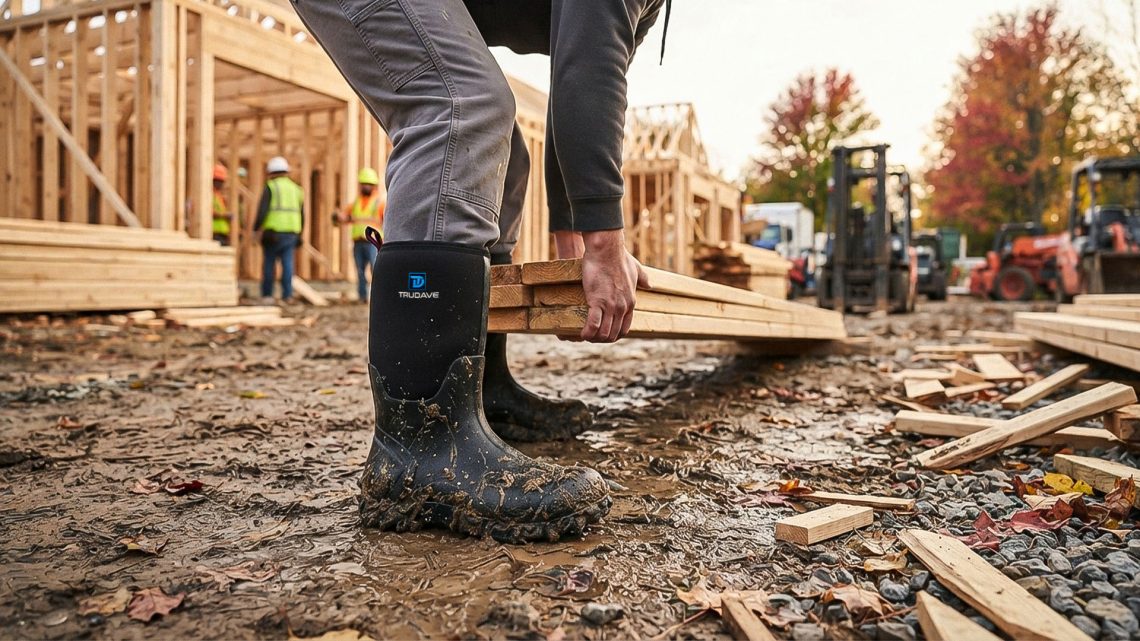
Workers comparing waterproof footwear from brands such as Trudave Gear should choose boots according to the actual combination of wet concrete, fish residue, ice, cold rooms, washdown, loading operations, and long seafood-production shifts involved in their work.
Frequently Asked Questions
What are the best boots for seafood processing work?
The best seafood-processing boots are fully waterproof, easy to clean, comfortable on concrete, securely fitted, and equipped with traction suitable for wet food-processing floors.
Are rubber boots good for fish processing plants?
Yes. Rubber boots are particularly practical for fish receiving, processing lines, washdown, sanitation, ice handling, and other wet production jobs.
How tall should seafood processing boots be?
Mid-height or mid-calf boots are versatile for most wet processing roles. Taller boots may be useful for heavy washdown and high-splash areas.
What boots are best for wet fish-processing floors?
Waterproof boots with flexible rubber, broad outsole contact, moderate grooves, strong cushioning, and secure heel support are practical.
Are deep-lug boots good inside seafood plants?
Usually not. Deep outdoor tread can trap fish residue, scales, and organic material and may feel less stable on concrete and metal platforms.
Do seafood processing workers need safety-toe boots?
Some crate-handling, forklift, warehouse, loading, maintenance, and packaging jobs may require protective-toe footwear.
Do seafood workers need puncture-resistant boots?
Some shellfish, glass-bottle, warehouse, or maintenance roles may benefit from puncture-resistant footwear.
Are waterproof seafood boots resistant to sanitation chemicals?
Not automatically. Workers should verify compatibility with the specific cleaners and sanitizers used.
What boots are best for seafood freezer workers?
Waterproof boots with insulation appropriate to the temperature, supportive midsoles, secure fit, and traction suitable for cold hard floors are practical.
How should seafood processing boots be cleaned?
Remove scales and organic residue, clean tread grooves, follow facility sanitation procedures, inspect for sharp debris, and allow the footwear to dry completely.
Final Thoughts
Seafood processing and fish packing combine wet concrete, fish residue, ice, cold rooms, washdown, crates, forklifts, shellfish, sanitation, loading docks, and long shifts on hard floors.
The best footwear depends on the worker’s actual role.
Processing employees need waterproof boots with strong concrete cushioning and easy-clean tread.
Receiving crews benefit from additional cold and water protection.
Sanitation workers may need more shaft coverage and chemical compatibility.
Shellfish workers may require puncture protection.
Cold-storage employees need appropriate insulation.
Forklift and warehouse workers need reliable equipment control.
Maintenance technicians may require additional oil, electrical, heat, or task-specific safety protection.
Trudave Gear offers waterproof deck and work footwear suited to wet floors, washdown, cold conditions, seafood handling, loading areas, and demanding marine-related work environments.
Choosing footwear according to the actual seafood-processing task can help workers stay drier, reduce fatigue, maintain better footing, simplify sanitation, and remain more comfortable from the first iced seafood shipment arriving before sunrise to the final production-floor washdown after the last packed order enters cold storage.


You May Also Like

The Hidden Pasture Spots That Feed Livestock During Dry Spring Patches
Protecting Perennials: The Right Way to Mulch Before the Hard Freeze