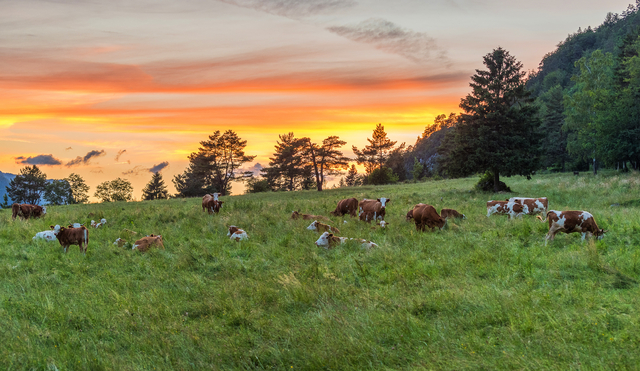
What Cold Nights and Warm Days Mean for Early Pasture Growth
Across much of the United States, late winter and early spring bring a familiar pattern to ranchers and livestock producers: cold nights followed by mild, sunny afternoons. While this temperature swing may feel like a sign that grazing season is right around the corner, the reality beneath the soil surface is more complex.
Understanding how cold nights and warm days affect early pasture growth can help ranchers protect root systems, prevent overgrazing, and set up stronger forage production for the entire season.
The Illusion of “Early Green-Up”
One of the biggest misconceptions in early spring pasture management is assuming that visible green grass equals active, sustainable growth.
Warm daytime temperatures—especially when paired with strong sunlight—stimulate chlorophyll production. Grass blades begin to green up quickly, giving the appearance that pastures are ready for grazing.
However, cold nighttime temperatures often slow or completely pause root development.
This creates a situation where:
- Top growth appears active
- Root systems remain weak or semi-dormant
- Carbohydrate reserves are still limited
- True forage recovery hasn’t fully begun
Grazing too early during this phase can stress plants before they regain strength.
Soil Temperature Matters More Than Air Temperature
Air temperature fluctuates dramatically between day and night in early spring. But soil temperature changes much more slowly.
Grass roots begin sustained growth when soil temperatures consistently reach approximately 40–50°F, depending on species.
When daytime highs reach 60°F or higher but nighttime lows drop into the 20s or 30s, soil temperatures often remain below optimal growth thresholds.
This means:
- Photosynthesis may begin during warm afternoons
- Root expansion remains limited
- Nutrient uptake stays restricted
- Growth stalls each night
Pastures may look active above ground but remain fragile below the surface.
Carbohydrate Reserves Are Still Recovering
During winter dormancy, perennial grasses rely on stored carbohydrates in their roots to survive.
Early spring growth depends heavily on these reserves.
When cold nights interrupt consistent growth, plants repeatedly draw from stored energy without fully replenishing it.
If livestock graze during this vulnerable phase:
- Leaf area is removed too early
- Energy reserves are depleted
- Root mass can shrink
- Long-term pasture productivity declines
Allowing grasses to rebuild carbohydrate reserves before grazing protects yield for the entire growing season.
Freeze-Thaw Cycles Stress Root Systems
Cold nights often lead to freeze-thaw cycles in the soil.
These cycles can:
- Lift shallow roots toward the surface
- Create soil heaving
- Increase vulnerability to hoof damage
- Reduce root-to-soil contact
When livestock are turned out during muddy or partially frozen conditions, hoof pressure can damage already stressed plants.
Soil compaction during this time limits oxygen flow and reduces long-term root development.
Protecting pastures during freeze-thaw conditions is critical.
Warm Days Increase Top Growth—But Only Temporarily
Sunny afternoons accelerate leaf growth through photosynthesis. This is why pastures often appear greener and taller after several warm days.
However, if nighttime temperatures continue dropping significantly, plant growth becomes inconsistent.
Instead of steady, sustained development, grass experiences:
- Stop-and-start growth cycles
- Uneven tillering
- Delayed root establishment
This inconsistency weakens plant resilience.
True grazing readiness requires consistent growth over multiple weeks—not just a few warm afternoons.
Cool-Season Grasses Respond Differently
Many U.S. pastures rely on cool-season grasses such as:
- Fescue
- Orchardgrass
- Timothy
- Kentucky bluegrass
These species are well adapted to early spring conditions. They begin growing at lower temperatures than warm-season grasses.
However, even cool-season varieties require stable soil temperatures for strong root expansion.
Warm days encourage leaf emergence, but root systems lag behind until nighttime lows moderate.
This lag is where most early-season pasture mistakes occur.
When Is Pasture Truly Ready for Grazing?
Visual appearance alone is not enough to determine grazing readiness.
Producers should look for:
- Consistent soil temperatures above 45–50°F
- Grass height reaching recommended grazing levels (often 6–8 inches for many cool-season grasses)
- Strong root anchoring (plants resist pulling easily)
- Firm soil conditions that reduce compaction risk
- Steady growth over at least 2–3 weeks
Turning livestock out too early can reduce seasonal yield by up to 30% in some pastures.
Patience during this window pays long-term dividends.
The Risk of Early Grazing During Wet Conditions
Cold nights often slow evaporation, keeping soils saturated longer.
Wet soils combined with hoof traffic lead to:
- Soil compaction
- Root damage
- Reduced oxygen availability
- Delayed regrowth
- Long-term productivity loss
Even if grass appears green, saturated ground signals caution.
Waiting until soils dry sufficiently helps preserve pasture structure.
Managing Livestock Nutrition During This Transition
While pastures may look tempting, forage quality and quantity are often insufficient during early spring swings.
Livestock nutritional demands remain high—especially for:
- Lactating cows
- Growing calves
- Replacement heifers
Supplemental hay or feed may still be necessary until pastures establish strong, consistent growth.
Reducing feed too early can result in weight loss and lower overall performance.
Microclimates Create Uneven Growth
Not all parts of a pasture warm equally.
Areas that warm faster include:
- North-facing slopes
- Dark soil sections
- Sheltered zones protected from wind
- Well-drained areas
Meanwhile, low-lying or shaded sections may lag weeks behind.
Observing these microclimates helps producers manage grazing timing more precisely.
Rotational grazing systems are particularly effective during this phase.
Why Patience Protects Summer Productivity
Early spring sets the tone for the entire grazing season.
If grasses are grazed before roots fully activate:
- Tillering decreases
- Plant density declines
- Weeds gain competitive advantage
- Summer production suffers
Allowing grass to establish strong roots during cold-night cycles ensures:
- Higher forage yields
- Improved drought resilience
- Stronger regrowth after grazing
- Better long-term pasture health
Short-term patience leads to long-term gain.
Monitoring Soil Temperature Is a Smart Investment
Simple soil thermometers can provide valuable insight during spring transitions.
Checking soil temperature at 2–4 inches depth in the morning offers a more accurate reading of growth readiness than relying on daytime air temperatures.
Tracking these readings over time helps identify when consistent growth truly begins.
Data-driven decisions reduce costly mistakes.
Final Thoughts: Cold Nights Slow What Warm Days Start
Cold nights and warm days create a misleading picture in early spring pasture management.
While sunlight and mild afternoons stimulate visible greening, root systems often remain in recovery mode beneath the surface.
Sustainable early pasture growth depends on consistent soil warming—not just daytime highs.
By monitoring soil conditions, protecting root reserves, and resisting the urge to graze too soon, ranchers can safeguard pasture productivity for the entire season.
In early spring, what happens below ground matters far more than what appears above it.


You May Also Like
When Not to Turn Cattle Out: Reading Pasture Readiness in Spring
The Spring Water Source Check Many Ranchers Forget