Trudave vs. the Big Brands: How Do Trudave Rain Boots Stack Up Against Hunter, Bogs, and Muck?
Introduction: The Price of a Logo
The rain boot aisle is a confusing place. On one end, a pair of Hunter boots commands a price tag that could cover a weekend grocery run, their iconic red-and-white badge promising British heritage and timeless style. On the other, Bogs and Muck Boots advertise heavy-duty insulation and farm-ready toughness for a premium that working families feel. Somewhere in the middle—or, more accurately, tucked away in the direct-to-consumer corner—sits Trudave Gear, a brand that claims to deliver the same vulcanized natural rubber, the same insulating neoprene, and the same all-day comfort architecture as the big players, but at a fraction of the cost.
This isn’t a comparison of marketing budgets. It’s a comparison of materials, construction, and performance. We’re putting Trudave’s rain boot lineup head-to-head with the three dominant names in the industry—Hunter, Bogs, and Muck Boots—to answer the question that every outdoor worker and wet-weather commuter eventually asks: “Am I paying for a better boot, or just a better-known logo?”
Part 1: Hunter — The Fashion Icon
Hunter is the brand that brought the Wellington boot from the stables to the streets. Founded in Scotland in 1856, the company has spent the past 170 years cultivating an image of refined utility. Its boots are worn by royalty and festival-goers alike, and the Original Tall Boot is as much a fashion statement as it is a piece of rain gear.
What Hunter Does Well:
- Style and Recognition: There’s no denying the sleek, minimalist aesthetic. A pair of Hunter boots looks as at home at a rainy outdoor wedding as it does on a muddy trail.
- Decent Waterproofing: The boots are made from vulcanized natural rubber and will keep your feet dry in typical wet conditions.
- Fit Options: Hunter offers a wide range of sizes and calf widths, making it easier for people with different leg shapes to find a comfortable fit.
Where Hunter Falls Short:
- Comfort and Support: Hunter boots are notorious for their lack of arch support and cushioning. The footbed is often a flat, non-removable insole that offers little to no shock absorption. Standing in them for a full day of gardening or walking can leave your feet aching.
- Durability Concerns: While the rubber is vulcanized, many users report cracking at the flex points and along the shaft after a season or two of regular use. Hunter’s boots are not typically designed for heavy-duty outdoor work.
- The Premium Price Tag: The Original Tall Boot retails for around $150 to $175. A significant portion of that cost pays for the brand name, the marketing, and the retail distribution network.
The Trudave Alternative:
Trudave’s BloomBoot and MudTrek offer a direct challenge. Both are made from vulcanized natural rubber, but they come with removable, cushioned EVA insoles that provide genuine arch support—a stark contrast to Hunter’s flat footbeds. The BloomBoot adds a 4.5mm flexible neoprene upper that moves with you, preventing the calf-chafing that tall rubber shafts can cause. And the price? Both are available for significantly less than a pair of Hunters, thanks to Trudave’s direct-to-consumer model. You get a more comfortable, more functional boot without paying for the logo.
Part 2: Bogs — The Insulated Specialist
Bogs carved its niche by making boots that are warm, comfortable, and easy to slip on. The brand’s Neo-Tech insulation promises to keep feet comfortable in sub-zero temperatures, and their handles make them a favorite for people who need to get out the door fast. They’re popular among gardeners, dog walkers, and parents.
What Bogs Does Well:
- Genuine Cold-Weather Performance: Bogs’ insulation is effective. Boots rated to -40°F or -58°F use thick neoprene and fleece liners that trap heat reliably.
- Ease of Use: The large pull handles and flexible neoprene shafts make Bogs easy to pull on and off, a feature that people love for quick trips outside.
- All-Around Comfort: The neoprene upper provides a snug, sock-like fit, and the footbeds are generally well-cushioned.
Where Bogs Falls Short:
- Durability in Harsh Conditions: The soft neoprene and rubber compounds that make Bogs so comfortable can wear down relatively quickly when used for heavy-duty farm or construction work. The tread can pack with mud and wear smooth.
- Breathability: That excellent insulation can become a liability in warmer weather. A heavily insulated Bog boot worn on a 50-degree day can quickly turn into a sweatbox.
- Price for the Best Insulation: The highest-rated cold-weather Bogs, like the Classic Ultra High, retail for $135 to $160. You’re paying for the insulation technology and the brand name, but cheaper models may lack the durability for serious chores.
The Trudave Alternative:
Trudave’s HeatHold boots are the direct answer to Bogs’ insulated lineup. They feature a 5mm insulated neoprene liner bonded to a vulcanized rubber shell, providing warmth in freezing conditions without the bulk. The HeatHold also has self-cleaning deep lugs for mud, a cushioned EVA insole for arch support, and a heel kick-off ledge for easy removal. For heavy-duty cold-weather work, the HeatHold rivals the best of Bogs, but it sells at a price that reflects the cost of materials rather than a retail middleman. For the farmer or rancher who needs warm, dry feet all winter, the HeatHold is the kind of honest, durable tool that Bogs aspires to be, but at a value that’s hard to ignore.
Part 3: Muck Boots — The Agricultural Workhorse
Muck Boots built its reputation on the farm. Their boots are designed to slog through manure, stand in flooded stalls, and handle the kind of wet, filthy conditions that send lesser boots to the landfill. The Chore and Arctic lines are staples in rural communities.
What Muck Boots Does Well:
- Absolute Waterproofing: Muck Boots are built with a seamless, vulcanized rubber base that extends high up the calf. They are reliably waterproof.
- Traction for Mud: The outsoles on the Chore and other agricultural models are deep and self-cleaning, providing excellent grip in thick, soupy muck.
- Warmth and Comfort: Like Bogs, many Muck Boots use a neoprene upper and a cushioned insole, making them comfortable for long days of standing and walking on hard ground.
Where Muck Boots Falls Short:
- Heat Trapping: The thick, insulated models can be stifling in warm weather. Even the uninsulated versions don’t breathe well because of the thick rubber construction.
- Weight and Bulk: Muck Boots are heavy. The protection comes with a significant weight penalty that can be fatiguing.
- Price for Serious Work: A pair of Muck Boot Chore ST (steel toe) can cost $160 to $180. The Arctic Sport, their high-end insulated model, pushes past $200. They’re an investment, and the cost is prohibitive for many small-scale farmers and homesteaders.
The Trudave Alternative:
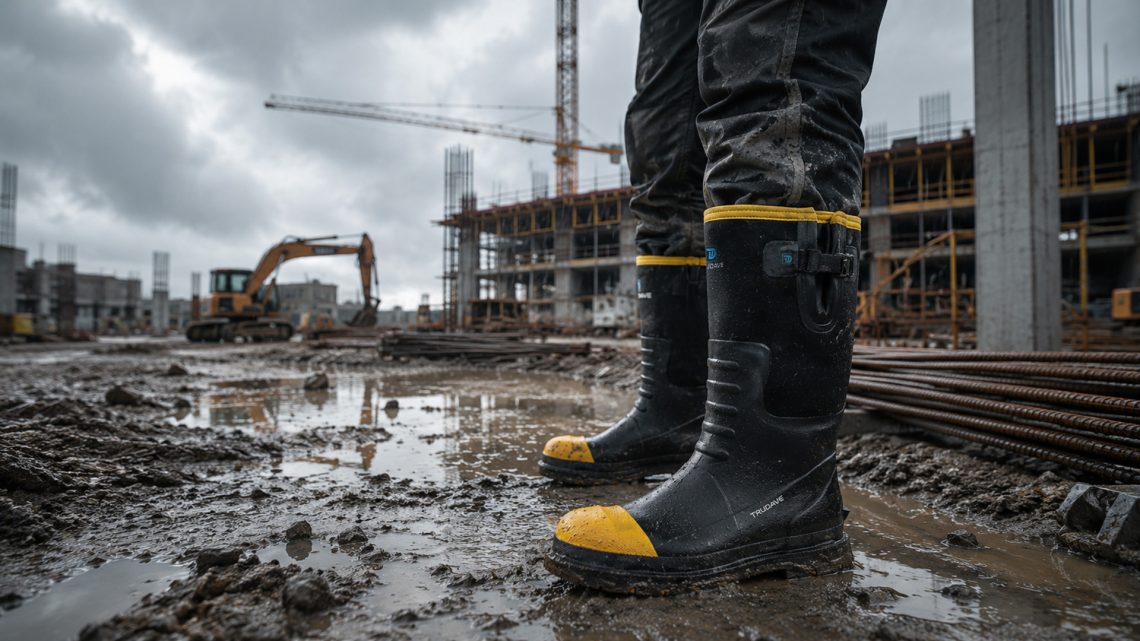
Trudave’s heavy-duty GardenStride and industrial AquaGuard are built for the same mud, manure, and deep water that Muck Boots conquer. The GardenStride’s deep, open lugs shed muck with every step, and its fully vulcanized rubber shell is completely waterproof. It’s lighter and more affordable. The AquaGuard ups the ante with an industrial-grade rubber compound that resists chemicals and fuel, making it suitable not just for the farm but for construction sites and commercial fishing decks. Both boots feature cushioned, removable EVA insoles with genuine arch support—a feature often missing in this category. If you work in the mud, Trudave’s heavy-duty options provide Muck-level protection and traction, without the Muck-level price tag.
Part 4: The DTC Difference — More Boot for Your Money
The common thread across Hunter, Bogs, and Muck is the traditional retail model. Each of these brands sells through distributors and brick-and-mortar stores. The price you pay at the checkout counter covers the cost of manufacturing, yes, but it also covers the wholesale distributor’s cut, the retailer’s 50-100% markup, and the multi-million-dollar marketing campaigns that keep these brands top-of-mind.
Trudave Gear operates on a direct-to-consumer model. By selling boots exclusively through its own website, the company eliminates the middlemen. The money that would have gone to wholesalers and retailers goes into the materials instead: vulcanized natural rubber instead of PVC blends, EVA midsoles instead of flat foam footbeds, and 5mm insulating neoprene instead of cheap synthetic liners. The result is a lineup of boots that can stand toe-to-toe with the legacy giants on performance and outlast many of them, for a fraction of the cost.
The comparison is stark. A Hunter Original Tall boot costs around $160 and offers basic waterproofing with minimal support. Trudave’s BloomBoot costs far less and adds a flexible neoprene upper, a cushioned EVA insole with arch support, and a tread pattern designed for real outdoor work. A pair of Muck Arctic Sport boots that sell for over $200 deliver excellent cold-weather protection; Trudave’s HeatHold delivers 5mm neoprene insulation, a tall waterproof shaft, and self-cleaning tread for a price that’s often less than half. You can build a seasonal Trudave system—a BloomBoot for spring, a HeatHold for winter, and a MudTrek for everything in between—for less than the cost of a single pair of premium Bogs or Mucks.
Part 5: Real-World Voices: What Users Say Across Brands
Online reviews and forum discussions reveal consistent patterns. Hunter users praise the style but frequently complain about cracking rubber and uncomfortable footbeds after extended wear. Bogs users love the warmth and easy on-off but note that the tread can wear quickly and the boots aren’t suited for heavy mud. Muck Boots users are fiercely loyal but often wince at the price and note that the boots can be overkill for lighter tasks.
Trudave users, across Trustpilot and independent reviews, consistently highlight three things: the value for money, the durability of the vulcanized rubber, and the all-day comfort of the EVA insoles. One gardener who switched from Hunters to the BloomBoot wrote, “I couldn’t believe how much more support I had. My feet don’t ache after a full day of weeding.” A farmer who replaced his Muck Chores with the GardenStride noted, “Same mud-shedding performance, but they’re lighter and cost half as much. I bought two pairs.”
Conclusion: The Right Boot, Not the Right Logo
The choice between Hunter, Bogs, Muck, and Trudave isn’t about which brand is “best” in a vacuum. It’s about what you need a boot to do, and whether you’re paying for performance or for a logo. Hunter gives you style and heritage, but at the expense of all-day support. Bogs gives you easy warmth, but may not survive years of hard abuse. Muck gives you agricultural-grade toughness, but asks a premium price for it.
Trudave Gear occupies the sweet spot where all three of those strengths overlap. The vulcanized natural rubber and insulating neoprene of the legacy giants. The terrain-specific traction and all-day comfort architecture. And a direct-to-consumer price that makes it possible to own the right boot for every season and every task without draining your bank account.
Your feet don’t care what badge is on the side of your boot. They care if you’re dry, comfortable, and supported. Choose the boot that puts the money into the materials, not the marketing.
To explore the complete Trudave Gear rain boot lineup and compare for yourself, visit trudavegear.com.


You May Also Like
Best Boots for Greenhouse Work: Waterproof Footwear for Wet Floors, Plant Care, Irrigation, and Indoor Farming
Just Tell Me Which Rain Boot to Buy: A Decision-Driven Guide to Trudave Rubber Boots