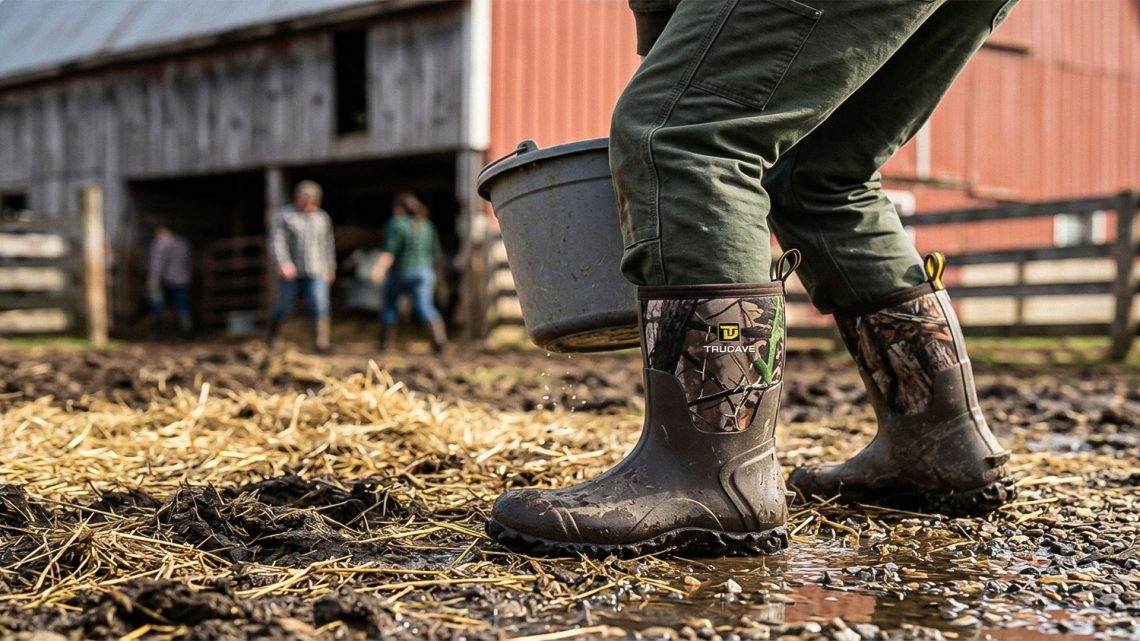
Best Boots for Ready-Mix Concrete Plant and Washout Work
Ready-mix concrete plants combine some of the roughest conditions found in industrial outdoor work.
Employees may move between aggregate piles, batching equipment, mixer trucks, washout areas, gravel yards, wet concrete, muddy access roads, loading zones, and maintenance shops during the same shift.
Water is used constantly.
Truck drums and chutes are rinsed.
Production areas are cleaned.
Rain mixes with cement dust and aggregate.
Washout zones may remain wet throughout the day.
That means footwear may encounter:
- Water.
- Mud.
- Gravel.
- Cement slurry.
- Wet concrete.
- Sand.
- Crushed stone.
- Truck washout runoff.
- Rain.
- Mechanical fluids.
- Hard concrete floors.
The best boots for concrete plant work should combine reliable waterproof protection, durable underfoot support, stable traction on mixed surfaces, secure heel retention, and appropriate protection for workers operating around heavy machinery and cementitious materials.
Concrete Plant Work Is a Mixed-Surface Job
A ready-mix plant is rarely one consistent walking surface.
Workers may move between:
- Compacted gravel.
- Concrete pads.
- Mud.
- Aggregate stockpiles.
- Steel stairs.
- Maintenance shops.
- Washout zones.
That makes a single-purpose outsole less practical.
A deep mud boot may work well in a soft yard but feel awkward on metal stairs.
A flat industrial sole may work well indoors but struggle in wet aggregate areas.
The most useful footwear usually balances outdoor traction with hard-surface stability.
Waterproofing Is Important Even on Dry Days
Concrete plants use water continuously.
Workers may be exposed during:
- Mixer washout.
- Chute cleaning.
- Equipment rinsing.
- Yard cleanup.
- Dust-control operations.
Even when the weather is dry, footwear can become wet from plant operations.
Fully waterproof boots are more practical than simple water-resistant work shoes.
Wet Cement Creates More Than a Moisture Problem
Fresh concrete and cement slurry can be highly alkaline.
Direct prolonged skin contact can cause chemical burns.
For workers exposed to wet cement, footwear should be selected according to workplace PPE requirements.
A boot that is waterproof from rain should not automatically be assumed suitable for prolonged cement exposure.
Waterproof Does Not Mean Cement Resistant
This distinction matters.
Boot materials may react differently to:
- Wet cement.
- Cement slurry.
- Cleaning products.
Workers should use footwear intended for the actual exposure and follow employer safety procedures.
Boots for Mixer Truck Washout
Truck washout is one of the wettest tasks in ready-mix operations.
Workers may deal with:
- Water.
- Cement residue.
- Slurry.
- Gravel.
- Wet concrete.
Suitable footwear should provide:
- Full waterproofing.
- Easy-clean uppers.
- Enough shaft coverage.
- Stable wet-surface traction.
Boot Height Matters in Washout Areas
Mid-calf or knee-high waterproof boots may be more practical than low footwear when splash is constant.
The correct height depends on:
- Washout design.
- Water depth.
- Splash exposure.
- Worker mobility needs.
Boots for Chute Cleaning
Mixer chutes may be washed repeatedly.
Workers may stand on:
- Wet gravel.
- Concrete.
- Slurry-covered surfaces.
A stable outsole and secure heel fit are especially important.
Slurry Can Reduce Traction Quickly
Fine cement residue mixed with water can form a slick coating.
No ordinary outsole makes contaminated surfaces completely safe.
Housekeeping and washout design remain critical.
Boots for Batch Plant Operators
Batch plant workers may move between:
- Control areas.
- Stairs.
- Platforms.
- Equipment zones.
They need footwear that provides precise movement around industrial structures.
Very bulky rubber boots may not be ideal for constant stair climbing.
Boots for Plant Stairs and Platforms
Metal steps may become wet from:
- Rain.
- Dust-control water.
- Washdown.
Workers need:
- Secure heel retention.
- Moderate outsole thickness.
- Stable edge contact.
Boots for Aggregate Areas
Concrete production uses:
- Sand.
- Gravel.
- Crushed stone.
Workers inspecting stockpiles or conveyors may walk over rough aggregate.
Thin rain boots provide very little underfoot protection.
Aggregate Is Hard on Outsoles
Sharp crushed stone can wear soft outsole rubber quickly.
Look for:
- Durable tread compounds.
- Strong midsoles.
- Stable heel cups.
Boots for Sand Piles
Sand shifts differently from gravel.
Extremely deep lugs may dig unnecessarily.
Broad outsole contact can make walking more efficient.
Boots for Crushed Stone Areas
Coarse aggregate requires more underfoot structure.
Workers may benefit from a stiffer supportive sole.
Boots for Conveyor Inspection
Plants may use conveyor systems to move aggregate.
Maintenance workers may inspect:
- Rollers.
- Belts.
- Guards.
- Transfer points.
Footwear should provide reliable footing on gravel and industrial platforms.
Boots for Loader Operators
Wheel loaders are common at concrete plants.
Operators may spend much of the shift inside the cab but still step onto:
- Gravel.
- Mud.
- Aggregate.
A supportive waterproof safety boot is usually more practical than an oversized rubber boot.
Pedal Control Matters
Very thick or flexible rubber soles may reduce equipment control.
Operators generally benefit from moderate outsole thickness and secure heel positioning.
Boots for Skid Steer Operators
Skid steers may be used for:
- Cleanup.
- Material movement.
- Yard maintenance.
Workers repeatedly getting in and out need footwear that performs on both machinery and rough ground.
Boots for Ready-Mix Drivers
Mixer drivers often move between:
- Truck cabs.
- Construction sites.
- Concrete yards.
- Washout areas.
Their boots need to work for driving and outdoor work.
Driving Comfort Matters
Tall rigid rubber boots may become uncomfortable during long routes.
A supportive mid-height waterproof work boot may provide a better balance.
Boots for Construction-Site Deliveries
Drivers may arrive at sites containing:
- Mud.
- Rebar.
- Gravel.
- Fresh concrete.
- Temporary access roads.
Additional safety protection may be required.
Boots for Muddy Access Roads
Heavy trucks can turn unpaved plant roads into deep mud.
Useful outsole features include:
- Open channels.
- Defined heel edges.
- Moderate-to-deep lugs.
- Secure heel fit.
Mud Suction Makes Loose Boots Worse
Sticky ground can grip the boot.
If footwear is oversized, the heel may lift while the boot remains trapped.
Secure fit reduces this problem.
Boots for Rainy Concrete Plants
Rain mixes with:
- Cement dust.
- Sand.
- Soil.
- Aggregate fines.
The result can be extremely messy ground.
Fully waterproof boots become especially useful.
Cement Dust and Rain Can Create Paste-Like Residue
Workers should clean footwear promptly after wet shifts.
Allowing residue to harden makes cleaning much more difficult.
Boots for Plant Cleanup Crews
Cleanup may involve:
- Shovels.
- Hoses.
- Sweepers.
- Skid steers.
Workers need durable footwear that handles both debris and water.
Shovel Work Requires Strong Midsoles
Repeatedly pressing on a shovel can be uncomfortable in thin footwear.
A structured midsole provides better support.
Boots for Concrete Spill Cleanup
Spilled concrete may need to be removed before it hardens.
Workers should follow proper PPE procedures.
General waterproof footwear may not provide sufficient protection against prolonged wet cement exposure.
Boots for Washdown Crews
Plant washdown may involve:
- Hoses.
- Water.
- Slurry.
- Wet stairs.
More waterproof shaft coverage can be useful.
Pressure Washing Safety
Some facilities may use pressure washers.
Waterproof boots do not protect feet from direct high-pressure spray.
Workers should keep high-pressure nozzles away from the body.
Boots for Washout Pits
Washout pits may contain:
- Water.
- Cement residue.
- Aggregate.
- Mud.
Workers should avoid entering pits unless procedures allow it and appropriate PPE is provided.
Deeper Slurry Requires Specialized PPE
Ordinary work boots should not be pushed beyond their intended protective height or chemical compatibility.
Boots for Recycled Concrete Water Systems
Some plants recover washout water.
Workers may maintain:
- Pumps.
- Settling systems.
- Tanks.
- Pipes.
These areas combine wet floors with mechanical equipment.
Boots for Settling Ponds
Workers inspecting settling areas may encounter:
- Soft sediment.
- Mud.
- Sloped banks.
Secure lateral support matters.
Boots for Water-Recycling Pumps
Pump maintenance may require more structured safety footwear than routine yard work.
Boots for Cement Silos
Workers may inspect areas around:
- Silos.
- Fill pipes.
- Conveyors.
Conditions may be relatively dry but dusty.
A waterproof safety boot still provides versatility.
Cement Dust Should Be Removed Regularly
Fine powder can work into:
- Tread.
- Seams.
- Hardware.
Regular cleaning reduces buildup.
Boots for Dust-Control Crews
Plants may spray water to control airborne dust.
This can make roads and yards unexpectedly wet.
Mixed-surface traction becomes important.
Boots for Maintenance Mechanics
Concrete plants rely on:
- Conveyors.
- Mixers.
- Loaders.
- Trucks.
- Pumps.
Maintenance technicians may encounter:
- Oil.
- Grease.
- Hydraulic fluid.
- Wet concrete.
They often need more industrial footwear.
Waterproof Does Not Mean Oil Resistant
Mechanical workers should verify outsole and upper compatibility with:
- Lubricants.
- Hydraulic fluids.
- Fuel.
Boots for Hydraulic Maintenance
Loader and truck hydraulic systems may leak.
Appropriate oil-resistant footwear may be useful.
Boots for Mixer Maintenance
Plant mixers contain heavy mechanical components.
Safety-toe footwear may be required.
Boots for Electrical Maintenance
Batch plants contain substantial electrical systems.
Waterproof boots are not automatically electrically protective.
Task-specific PPE requirements come first.
Boots for Welding and Fabrication
Concrete plants may perform repairs involving:
- Welding.
- Cutting.
- Fabrication.
Standard waterproof boots are not automatically suitable for hot-metal hazards.
Workers should use appropriate protective footwear.
Safety-Toe Boots for Concrete Plant Workers
Protective toes may be appropriate around:
- Aggregate equipment.
- Mixer trucks.
- Concrete blocks.
- Tools.
- Mechanical components.
Many plants require safety footwear.
Composite vs Steel Toes
Both may provide protection when properly rated.
The right option depends on:
- Employer requirements.
- Worker preference.
- Weight.
- Environmental conditions.
Puncture Hazards in Concrete Yards
Workers may encounter:
- Wire.
- Nails.
- Broken pallets.
- Metal fragments.
A thick outsole is not automatically puncture resistant.
Boots for Rebar Areas
Construction-site deliveries may place drivers near:
- Rebar.
- Formwork.
- Fasteners.
Appropriate puncture-resistant footwear may be required.
Boots for Block and Precast Support Areas
Some facilities may also handle:
- Concrete blocks.
- Precast products.
Workers need strong impact protection.
Boots for Pallet Areas
Pallets may contain:
- Broken boards.
- Nails.
Durable protective footwear is useful.
Boots for Concrete Testing Technicians
Quality-control workers may collect:
- Samples.
- Slump tests.
- Cylinders.
They may move between lab areas and the wet plant yard.
A waterproof safety boot with moderate mixed-surface tread is practical.
Boots for Slump Testing
Fresh concrete exposure is possible during testing.
Footwear should meet workplace protection requirements.
Boots for Concrete Cylinder Handling
Test cylinders become heavy.
Protective-toe footwear may be appropriate.
Boots for Laboratory Transitions
Workers entering cleaner indoor spaces should remove heavy mud and cement residue from footwear.
Boots for Truck Scale Areas
Ready-mix plants may use truck scales.
Workers may encounter:
- Gravel.
- Wet steel.
- Mud.
- Concrete.
Moderate mixed-surface tread works well.
Boots for Dispatch Yard Workers
Employees moving between office and plant areas may prefer lower-profile waterproof safety boots.
Boots for Loading Zones
Loading areas may have heavy truck traffic and wet surfaces.
Footwear should provide strong heel support and visible durability.
Boots for Fueling Areas
Mixer trucks and loaders require fuel.
Workers may encounter:
- Diesel.
- Oil.
- Wet pavement.
Material resistance matters.
Boots for Admixture Areas
Concrete plants may use chemical admixtures.
Footwear requirements depend on the specific products involved.
Waterproof does not automatically mean chemical resistant.
Chemical PPE Should Be Product-Specific
Workers should consult:
- SDS information.
- Employer procedures.
- Product requirements.
Boots for Winter Concrete Plants
Cold-weather production may continue through:
- Snow.
- Slush.
- Ice.
- Frozen mud.
Workers may need waterproof insulated boots.
Frozen Aggregate Yards
Gravel and mud may freeze into uneven hard surfaces.
Supportive ankle construction helps.
Boots for Slush
Slush easily enters low footwear.
Mid-height or mid-calf waterproof boots are useful.
Ice Requires Separate Traction Measures
No ordinary work boot completely eliminates slipping on ice.
Approved traction devices may be necessary.
Boots for Summer Concrete Plants
Summer yards can become extremely hot.
Heavy insulated boots are usually a poor choice.
Workers should prioritize:
- Uninsulated construction.
- Manageable weight.
- Moisture-wicking socks.
Heat From Concrete and Gravel
Hard surfaces can become very hot in direct sun.
Supportive midsoles help isolate the foot from ground heat.
Waterproof Boots Can Still Become Damp Inside
During summer, perspiration may be the primary moisture source.
Proper drying is essential.
Best Socks for Concrete Plant Workers
Synthetic and wool-blend socks generally perform better than cotton.
Useful features include:
- Moisture wicking.
- Heel cushioning.
- Quick drying.
- Secure fit.
Boot Weight Matters During Yard Work
Workers may take thousands of steps over rough surfaces.
Heavy boots increase fatigue.
The lightest footwear that still meets safety requirements is usually preferable.
Cushioning Matters on Concrete and Aggregate
Workers move constantly between:
- Hard concrete.
- Sharp gravel.
- Mud.
A strong supportive midsole improves comfort.
Heel Retention Matters in Mud
Sticky ground amplifies poor fit.
Secure heels reduce internal movement.
Ankle Support Matters on Aggregate
Loose stone creates uneven foot angles.
Supportive uppers improve control.
Forefoot Flexibility Helps With Climbing and Shoveling
Workers often:
- Kneel.
- Climb.
- Dig.
- Step onto equipment.
Footwear should flex naturally without feeling unstable.
Removable Insoles Improve Daily Comfort
Removable footbeds allow workers to:
- Dry footwear.
- Replace worn cushioning.
- Improve hygiene.
- Adjust support.
Easy-Clean Construction Is Essential
Concrete plant boots may collect:
- Cement.
- Sand.
- Mud.
- Aggregate dust.
- Slurry.
Smooth waterproof uppers simplify cleanup.
How to Clean Concrete Plant Work Boots
A practical routine may include:
- Remove loose aggregate.
- Brush away cement dust.
- Rinse wet mud or residue where appropriate.
- Follow workplace procedures after wet concrete exposure.
- Clean tread channels.
- Inspect for cracks or punctures.
- Dry footwear completely.
Remove Cement Residue Before It Hardens
Once cementitious material cures on the boot, it becomes much more difficult to remove.
Prompt cleaning helps preserve footwear.
Avoid Harsh Improvised Chemicals
Strong cleaners may damage:
- Rubber.
- Adhesives.
- Waterproof membranes.
Follow manufacturer care instructions.
How to Dry Concrete Work Boots
After wet work:
- Remove insoles.
- Open the boots fully.
- Allow airflow.
- Use low-temperature drying if approved.
Avoid excessive direct heat.
Rotating Two Pairs Can Help Wet-Yard Crews
Rainy periods and constant washout may keep boots damp.
Alternating footwear gives each pair additional drying time.
When Concrete Plant Boots Should Be Replaced
Replace footwear when:
- Waterproofing fails.
- Tread becomes badly worn.
- Cement damage cracks the upper.
- Outsole separation appears.
- Heel support collapses.
- Puncture damage occurs.
- Safety components are compromised.
Common Mistakes When Buying Concrete Plant Boots
Buying Cheap Rain Boots for Full-Time Plant Work
They may lack support and safety protection.
Choosing Deep Farm Lugs for Every Plant Role
Operators and platform workers may need more balanced tread.
Wearing Boots Too Loose in Mud
Heel movement increases fatigue.
Ignoring Aggregate Cushioning
Sharp stone is hard on thin soles.
Choosing Tall Rubber Boots for Drivers
Bulky shafts may reduce driving comfort.
Assuming Waterproof Means Wet-Cement Resistant
Cement exposure requires specific PPE considerations.
Ignoring Oil and Hydraulic Exposure
Maintenance crews may need additional material resistance.
Letting Cement Residue Harden on Footwear
Hardened buildup can damage materials and tread performance.
How to Choose the Best Boots for Concrete Plant Work
Start with the employee’s primary job.
For washout crews, prioritize:
- Full waterproofing.
- More shaft coverage.
- Easy-clean construction.
- Wet-surface traction.
For batch plant workers, prioritize:
- Secure stair contact.
- Supportive midsoles.
- Moderate outsole thickness.
- Safety protection.
For aggregate-yard crews, prioritize:
- Durable outsoles.
- Ankle support.
- Gravel cushioning.
- Mud capability.
For mixer drivers, prioritize:
- Pedal control.
- Secure heel fit.
- Waterproof construction.
- Mixed-surface traction.
For mechanics, prioritize:
- Safety toes.
- Oil resistance where required.
- Strong ankle support.
- Durable construction.
For quality-control technicians, prioritize:
- Waterproof safety footwear.
- Concrete and gravel comfort.
- Easy-clean surfaces.
Workers comparing waterproof footwear from brands such as Trudave Gear should select boots according to the actual combination of wet yards, aggregate, concrete slurry, machinery, driving, and washout duties involved in their job.
Frequently Asked Questions
What are the best boots for concrete plant work?
The best concrete plant boots are waterproof, supportive on gravel and concrete, securely fitted, durable, and equipped with the safety features required for the worker’s role.
Are rubber boots good for ready-mix plants?
Yes. Rubber boots can be useful for washout, wet yards, heavy rain, and slurry exposure when the boot material is suitable for the workplace hazards involved.
How tall should concrete plant boots be?
Mid-height boots are practical for many workers. Mid-calf or knee-high boots may be more useful for heavy washout and high-splash tasks.
What boots are best for concrete truck washout?
Fully waterproof boots with easy-clean uppers, enough shaft coverage, stable wet-surface traction, and suitable material resistance are practical.
Are deep mud boots good for concrete plants?
They are useful in muddy yards but may be less practical on metal stairs, truck pedals, hard concrete, and industrial platforms.
Do ready-mix workers need safety-toe boots?
Many concrete plants require safety-toe footwear around heavy machinery, aggregate, trucks, and materials.
Do concrete workers need puncture-resistant boots?
Puncture protection may be appropriate where workers encounter nails, wire, broken pallets, rebar, or construction debris.
Are waterproof boots safe around wet concrete?
Not automatically. Wet cement can create chemical hazards, and workers should use footwear appropriate to the actual exposure and employer requirements.
What boots are best for mixer truck drivers?
Supportive waterproof safety boots with moderate outsole thickness, secure heel retention, gravel traction, and good pedal control are practical.
How should concrete plant boots be cleaned?
Remove aggregate and cement dust, clean wet residue before it hardens, follow workplace procedures for cement exposure, inspect the footwear, and allow it to dry completely.
Final Thoughts
Ready-mix concrete plant work combines water, cement slurry, gravel, mud, heavy equipment, truck washout, aggregate, hard concrete, rain, and industrial maintenance.
The best footwear depends on the employee’s actual role.
Washout crews need waterproof boots with more splash coverage and easy-clean surfaces.
Batch plant workers need stable stair and platform traction.
Aggregate-yard crews benefit from strong midsoles and durable outsoles.
Mixer drivers need footwear that balances outdoor protection with pedal control.
Mechanics may require additional oil resistance and safety features.
Quality-control technicians need versatile footwear that can move between wet concrete, gravel, and indoor testing areas.
Trudave Gear offers waterproof outdoor and work footwear suited to rain, mud, gravel, industrial yards, maintenance, and demanding outdoor work environments.
Choosing footwear according to the actual concrete-plant task can help workers stay drier, reduce fatigue, maintain better footing, and remain more comfortable from the first mixer truck loaded in the morning to the final washout cycle after production ends.


You May Also Like

Micro-Forage Management: Maximizing Small Patches of High-Quality Grass
Best Boots for Pumpkin Farm Work: Waterproof Footwear for Muddy Fields, Wet Vines, Fall Harvest, and U-Pick Farms