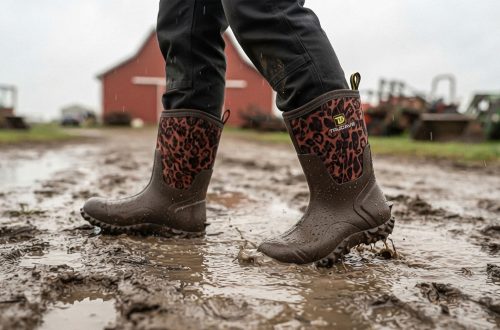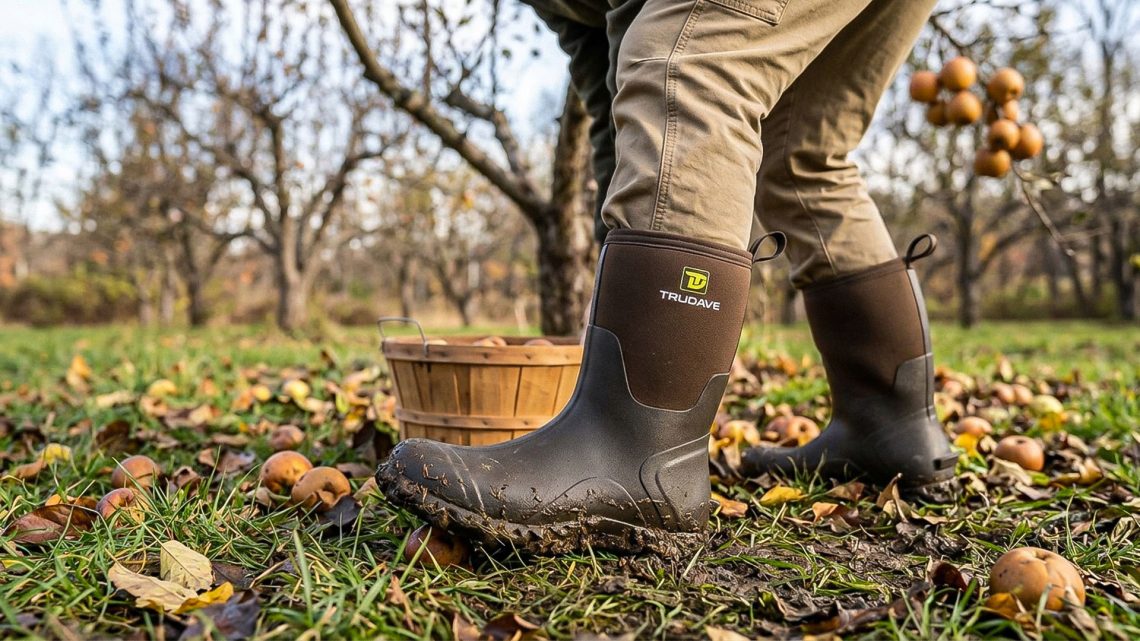
Rain, Resin, and Rutted Hillsides: What Christmas Tree Farm Crews Ask of Their Work Boots
Christmas tree farming creates a footwear environment that changes dramatically throughout the year.
During the growing season, workers may spend long days mowing between rows, controlling weeds, pruning trees, inspecting irrigation, repairing fences, and walking across uneven ground.
When harvest season arrives, the work becomes faster, wetter, colder, and far more physical.
Workers may cut trees, drag them across muddy slopes, operate tractors, load trailers, shake loose needles, bale trees, manage customer parking areas, work on retail lots, and continue through rain, frost, slush, or early snow.
Footwear may encounter:
- Wet grass.
- Mud.
- Tree resin.
- Needles.
- Branches.
- Loose soil.
- Gravel.
- Rutted hillsides.
- Rain.
- Frost.
- Snow.
- Slush.
- Trailer decks.
- Retail pavement.
That makes footwear selection particularly important.
The most practical boots for Christmas tree farm crews should help keep feet dry, provide stable traction on wet and uneven terrain, stay securely fitted when mud creates suction, remain comfortable during long walking and carrying shifts, and offer enough flexibility for bending, climbing, cutting, loading, and customer-facing work.
For many tree-farm workers, waterproof work boots provide a strong balance between weather protection, outdoor traction, and all-day comfort.
Christmas Tree Farms Are Often Built on Challenging Terrain
Christmas tree farms are not always flat.
Many are located on:
- Hillsides.
- Rolling fields.
- Uneven rural ground.
Workers may spend the day walking:
- Uphill.
- Downhill.
- Across slopes.
That makes ankle support and secure heel fit especially important.
A loose boot may feel acceptable on level ground but become uncomfortable when the foot repeatedly shifts inside the boot on a slope.
Rain Changes Tree-Farm Ground Quickly
A field that feels firm in the morning may become soft after several hours of rain.
Workers may encounter:
- Muddy rows.
- Water-filled ruts.
- Slippery grass.
- Soft field entrances.
Waterproof footwear becomes particularly useful during fall harvest because workers often cannot simply stop when conditions become wet.
Wet Grass Can Soak Low Footwear Before the Mud Even Starts
Many tree farms maintain grass or low vegetation between rows.
That ground cover may hold:
- Morning dew.
- Rain.
Workers may brush through wet vegetation for hours.
Low-cut work shoes can become damp quickly.
Mid-height waterproof boots provide much better coverage.
Everyday Footwear for Christmas Tree Farm Workers
Routine duties may include:
- Tree inspection.
- Pruning.
- Mowing.
- Irrigation checks.
- Weed management.
- Fence repair.
- Harvest preparation.
Useful footwear characteristics include:
- Waterproof construction.
- Secure heel retention.
- Supportive midsoles.
- Moderate-to-aggressive outdoor tread.
- Flexible forefoot movement.
- Durable uppers.
Why Boot Weight Matters on Tree Farms
Workers may cover large areas on foot.
Heavy footwear becomes noticeable after thousands of steps.
The goal is enough protection without adding unnecessary:
- Weight.
- Height.
- Insulation.
Workers should match the boot to actual conditions rather than automatically choosing the largest available farm boot.
Footwear for Muddy Christmas Tree Rows
The ground between trees can become difficult after rain.
Workers may encounter:
- Sticky soil.
- Deep footprints.
- Tractor ruts.
Open tread channels help release mud.
Choosing Tread for Tree-Farm Mud
Useful outsole features include:
- Wide channels.
- Moderate-to-deep lugs.
- Defined heel edges.
- Flexible rubber.
The tread should provide grip without becoming excessively bulky for equipment operation.
Why Maximum Lug Depth Is Not Always Necessary
Christmas tree workers frequently transition between:
- Fields.
- Tractors.
- Trailers.
- Trucks.
- Retail lots.
Extremely aggressive tread may:
- Hold mud.
- Add weight.
- Reduce pedal feel.
- Track soil into customer areas.
Moderate mixed-terrain tread can be more versatile.
Mud Suction Makes Fit Important
Soft soil can grip the outside of the boot strongly.
If footwear fits too loosely, workers may experience:
- Heel lift.
- Internal rubbing.
- Partial pull-off.
Secure heel retention matters.
Footwear for Clay Tree Farms
Wet clay can pack into outsole grooves quickly.
Once the tread fills, the boot may become:
- Heavy.
- Smoother.
- More difficult to clean.
Wide tread spacing helps release sticky soil.
Footwear for Sandy or Loamy Tree Farms
Better-draining soil may require less aggressive tread.
Workers may benefit more from:
- Lightweight construction.
- Strong cushioning.
- Waterproof uppers.
Footwear for Sloped Tree Rows
Hillsides create constant changes in foot angle.
Workers may spend hours walking:
- Sideways across slopes.
- Downhill while carrying equipment.
Ankle support becomes more important.
Heel Retention Helps on Descents
When walking downhill, the foot naturally shifts forward.
A secure boot helps reduce excessive movement.
Underfoot Support Matters on Uneven Ground
Tree fields may contain:
- Roots.
- Stones.
- Holes.
- Ruts.
Thin rubber footwear may not provide enough support for long shifts.
Footwear for Tree Pruning Crews
Christmas trees require regular shaping.
Workers may use:
- Hand pruners.
- Shearing tools.
They may walk row after row throughout the day.
Flexible Footwear Helps During Pruning
Workers frequently:
- Step around trees.
- Bend.
- Reach.
A flexible forefoot improves movement.
Durable Uppers Matter Around Branches
Tree branches and needles may repeatedly contact footwear.
Durable outer materials help reduce everyday abrasion.
Footwear for Tree Shearing Crews
Some workers use specialized shearing tools to shape trees.
These crews may work through:
- Wet vegetation.
- Uneven slopes.
Secure outdoor footwear is useful.
Powered Cutting Requires Task-Specific Protection
General waterproof work boots are not automatically suitable for every powered cutting task.
Workers should follow equipment-specific PPE requirements.
Footwear for Mowing Between Tree Rows
Grass maintenance is common on tree farms.
Workers may use:
- Tractors.
- Riding mowers.
Machine operators need good pedal control.
Boots for Tractor Operators
A structured mid-height waterproof boot generally provides a good balance between:
- Field traction.
- Driving comfort.
Very tall loose rubber boots may feel awkward around pedals.
Footwear for UTV and ATV Crews
Utility vehicles may be used for:
- Scouting.
- Tool transport.
- Harvest support.
Moderate outsole thickness improves foot-control feel.
Footwear for Irrigation Crews
Young Christmas trees may require irrigation depending on the farm and climate.
Workers may maintain:
- Drip lines.
- Pumps.
- Valves.
Leaks can create localized mud.
Boots for Irrigation Repairs
Workers may need to:
- Kneel.
- Crouch.
Flexible waterproof footwear helps.
Pump-Station Footwear
Workers may encounter:
- Wet concrete.
- Mechanical systems.
- Electrical equipment.
Waterproof construction is not automatically electrical protection.
Electrical tasks require properly rated PPE.
Footwear for Weed-Control Crews
Workers may perform:
- Hand weeding.
- Mechanical control.
Chemical tasks require product-specific footwear.
Waterproof Does Not Automatically Mean Chemical Resistant
Fertilizers, herbicides, and other agricultural products may require specialized PPE materials.
Workers should follow product labels and farm procedures.
Footwear for Fence Maintenance
Tree farms often maintain perimeter fences.
Workers may handle:
- Wire.
- Posts.
- Fasteners.
Puncture Protection Is a Separate Feature
A thick outsole is not automatically puncture resistant.
Workers regularly exposed to sharp hardware may need rated protection.
Footwear for Gate Areas
Vehicle traffic can make gates particularly muddy.
Open tread is useful.
Footwear for Harvest Preparation
Before Christmas tree harvest begins, farms may prepare:
- Roads.
- Staging areas.
- Loading zones.
- Retail areas.
Workers may transition between outdoor field work and more developed surfaces.
Mixed-terrain footwear becomes useful.
Harvest Season Changes Everything
Christmas tree harvest is physically demanding and highly seasonal.
Workers may spend long days:
- Cutting.
- Dragging.
- Carrying.
- Shaking.
- Baling.
- Loading trees.
Weather may include:
- Rain.
- Cold wind.
- Frost.
- Snow.
This is one of the strongest use cases for waterproof outdoor footwear.
Footwear for Tree Cutting Crews
Workers cutting trees may move constantly between:
- Soft soil.
- Branches.
- Stumps.
They need stable footing.
Chainsaw Protection Is a Separate Requirement
Ordinary waterproof boots are not chainsaw-resistant by definition.
Where chainsaw work requires protective footwear, workers should use properly rated equipment.
Footwear for Hand-Saw Crews
Even manual cutting work requires:
- Secure footing.
- Ankle support.
Workers may kneel or crouch around tree bases.
Flexible construction helps.
Footwear for Dragging Christmas Trees
Once a tree is cut, it may need to be moved to:
- A road.
- A collection point.
Dragging trees changes worker balance.
Secure Heel Fit Matters When Pulling
Workers may lean forward and apply continuous force.
Heel support helps keep the foot stable.
Tree Branches Can Hide Uneven Ground
Workers dragging trees may not always see:
- Holes.
- Roots.
- Ruts.
Ankle support is useful.
Footwear for Carrying Trees
Smaller trees may be carried.
When both hands are occupied, workers need predictable footing.
Footwear for Tree Collection Crews
Some farms use:
- Tractors.
- Wagons.
- UTVs.
to collect harvested trees.
Workers may repeatedly step between:
- Mud.
- Metal platforms.
Mixed-surface tread works well.
Footwear for Christmas Tree Shaker Areas
Tree shakers remove:
- Loose needles.
- Debris.
Workers may stand around machinery and hard surfaces.
Hard-Floor Cushioning Matters
Workers who spend long periods around processing equipment may need more underfoot support than workers who remain in soft fields.
Footwear for Tree Baling Crews
Trees are often wrapped in netting for:
- Transport.
- Customer convenience.
Baling crews may handle heavy, awkward trees repeatedly.
Protective Toes May Be Useful
Workers around:
- Baling machines.
- Heavy trees.
- Equipment.
may need safety footwear depending on workplace requirements.
Footwear for Baling Stations
Workers may stand on:
- Concrete.
- Packed gravel.
Supportive midsoles are useful.
Footwear for Loading Trailers
Harvested trees may be loaded onto:
- Flatbeds.
- Trailers.
- Trucks.
Workers may climb repeatedly.
Moderate Tread Helps on Trailer Decks
Extremely deep mud lugs may feel bulky on:
- Flat metal.
- Wooden surfaces.
A balanced outsole provides more controlled contact.
Footwear for Truck Loading Crews
Workers may operate around:
- Heavy trees.
- Straps.
- Trailers.
Structured footwear helps.
Footwear for Delivery Drivers
Christmas tree farms may deliver wholesale trees to:
- Retail lots.
- Garden centers.
- Markets.
Drivers may move between:
- Muddy farms.
- Truck cabs.
- Pavement.
A mid-height waterproof boot provides good versatility.
Driving Comfort Matters
Very tall rubber boots may become uncomfortable during long transport routes.
Footwear for Wholesale Christmas Tree Yards
Wholesale staging areas may combine:
- Gravel.
- Mud.
- Pallets.
- Trucks.
Waterproof mixed-terrain boots are practical.
Footwear for Retail Christmas Tree Lots
Retail workers face a different environment.
They may spend hours on:
- Gravel.
- Pavement.
- Grass.
- Snow.
Customer-Facing Workers Still Need Weather Protection
Retail employees may work outdoors in:
- Rain.
- Cold.
- Slush.
Cleanable waterproof boots offer good versatility.
Cushioning Matters on Pavement
Unlike farm soil, pavement provides little natural shock absorption.
Workers standing for long shifts should prioritize supportive midsoles.
Footwear for Tree-Lot Carrying Crews
Workers may help customers:
- Carry trees.
- Load vehicles.
Secure footing is important when vision is partially blocked by branches.
Footwear for Vehicle Loading
Workers may step between:
- Curbs.
- Pavement.
- Trailer areas.
Moderate tread works well.
Footwear for Tree Netting and Wrapping
Retail operations may wrap trees before loading them onto vehicles.
Workers may spend hours standing beside:
- Baling equipment.
Comfort becomes important.
Footwear for Customer Parking Areas
Temporary parking may be located on:
- Grass.
- Dirt.
Rain can turn these areas into deep mud.
Mid-height or mid-calf waterproof boots can be useful.
Footwear for Muddy Holiday Events
Some Christmas tree farms offer:
- Hayrides.
- Food.
- Seasonal attractions.
Customer traffic can quickly damage wet ground.
Workers may need reliable mud traction.
Footwear for Farm Market Staff
Employees may move between:
- Outdoor trees.
- Retail buildings.
Cleaner-looking waterproof work boots transition more easily between environments.
Footwear for Wreath and Garland Production
Some tree farms use branches to make:
- Wreaths.
- Garland.
Workers may spend more time indoors or under shelter.
Footwear for Wreath-Making Areas
Workers may stand on:
- Concrete.
Strong cushioning matters.
Tree Resin Can Make Footwear Sticky
Resin may transfer from:
- Branches.
- Tools.
Smooth uppers are easier to clean than highly textured surfaces.
Footwear for Christmas Tree Farm Mechanics
Larger farms may maintain:
- Tractors.
- UTVs.
- Baling equipment.
- Trucks.
Maintenance workers may encounter:
- Oil.
- Grease.
- Hydraulic fluid.
Waterproof Does Not Mean Oil Resistant
Oil resistance is a separate footwear property.
Footwear for Hydraulic Repairs
Workers may benefit from oil-resistant outsoles.
Footwear for Diesel Maintenance
Fuel exposure requires task-appropriate materials.
Footwear for Welding and Fabrication
General waterproof boots are not automatically suitable around:
- Sparks.
- Hot metal.
Specialized footwear may be required.
Footwear for Equipment Washdown
Farm equipment can collect:
- Mud.
- Needles.
- Branch debris.
Waterproof boots are useful during cleaning.
Pressure Washing Requires Extra Caution
Waterproof footwear protects against normal splash.
It does not protect against direct high-pressure spray.
Footwear for Gravel Farm Roads
Christmas tree farms may have long rural access roads.
Supportive midsoles reduce discomfort from crushed stone.
Footwear for Muddy Harvest Roads
Truck and tractor traffic can create:
- Deep ruts.
- Mud.
Open tread helps.
Footwear for Drainage Work
Farms may maintain:
- Ditches.
- Culverts.
Mid-calf waterproof boots provide useful additional coverage.
Footwear for Culvert Cleaning
Workers may encounter:
- Mud.
- Water.
- Leaves.
- Gravel.
Supportive midsoles and ankle stability help.
Footwear for Storm Cleanup
Tree farms may experience:
- Wind damage.
- Broken branches.
- Fallen trees.
- Mud.
Workers should select footwear appropriate for the actual hazards.
Chainsaw Cleanup Requires Specialized Protection
Ordinary farm boots should not automatically be treated as chainsaw PPE.
Footwear for Fall Rain
Harvest season often overlaps with wet weather.
Workers may encounter weeks where the ground never fully dries.
Waterproofing becomes particularly important.
Footwear for Frosty Mornings
Cold mornings may create:
- Frost.
- Wet grass.
Moderate insulation and wool-blend socks can help.
Footwear for Snowy Christmas Tree Farms
Some farms harvest in snow.
Workers may deal with:
- Snow-covered rows.
- Slush.
Mid-calf waterproof boots provide useful additional coverage.
Ice Requires Separate Traction Measures
No ordinary work boot eliminates the risk of ice.
Approved traction aids may be needed.
Footwear for Cold Rain
Cold rain can make inadequate footwear uncomfortable quickly.
Waterproofing plus temperature-appropriate socks is important.
Too Much Insulation Can Also Be a Problem
Workers who are highly active while dragging and carrying trees may overheat in excessively insulated boots.
The right balance depends on:
- Weather.
- Activity level.
Long Holiday-Season Shifts Make Comfort Critical
Peak season can mean extended workdays.
Workers may spend hours:
- Walking.
- Carrying.
- Cutting.
- Loading.
- Standing.
Comfort matters just as much as waterproofing.
Cushioning Matters Across Tree-Farm Surfaces
Workers may move between:
- Grass.
- Mud.
- Gravel.
- Concrete.
- Pavement.
- Trailer decks.
Supportive midsoles provide more consistent comfort.
Boot Weight Matters
Heavy boots add fatigue during physical harvest work.
Heel Retention Matters in Mud
Secure fit helps prevent soft ground from pulling footwear loose.
Ankle Support Matters on Hillsides
Uneven slopes make stability more important.
Forefoot Flexibility Helps Harvest Workers
Employees frequently:
- Bend.
- Kneel.
- Drag.
- Climb.
Flexible footwear improves movement.
Toe Room Matters in Cold Weather
Workers may wear thicker socks.
Enough room is useful, but the boot should not become loose.
Socks for Christmas Tree Farm Workers
Synthetic and wool-blend socks generally perform better than cotton.
Useful characteristics include:
- Moisture wicking.
- Quick drying.
- Temperature regulation.
- Heel cushioning.
Wool-Blend Socks Work Well During Harvest
Cold, wet weather makes moisture and temperature management important.
Lightweight Socks May Work Better During Warm Fall Days
Weather can vary significantly through harvest season.
Spare Socks Can Be Useful
Heavy rain or snow may occasionally allow moisture inside footwear.
A dry replacement pair can improve comfort.
Removable Insoles Improve Drying
Removable footbeds make it easier to:
- Dry boots.
- Improve hygiene.
- Replace worn cushioning.
Easy-Clean Construction Is Important
Christmas tree farm boots may collect:
- Mud.
- Needles.
- Leaves.
- Resin.
- Grass.
Smooth waterproof uppers simplify maintenance.
How to Clean Christmas Tree Farm Work Boots
A practical routine may include:
- Remove needles and leaves.
- Brush heavy mud from tread.
- Remove branch debris.
- Clean resin using footwear-safe methods.
- Rinse ordinary dirt.
- Remove damp insoles.
- Allow footwear to dry completely.
Pine and Fir Needles Should Be Cleared From Tread
Needles can collect inside outsole channels.
Regular cleaning helps preserve usable traction.
Resin Should Be Removed Carefully
Tree resin can be sticky.
Workers should use cleaning methods appropriate for the boot material.
Mud Should Be Removed Before It Hardens
Dried mud can:
- Add weight.
- Hide tread wear.
How to Dry Tree-Farm Boots
After cleaning:
- Remove insoles.
- Open boots fully.
- Allow airflow.
- Use low-temperature drying if approved.
Avoid excessive direct heat.
Rotating Two Pairs Can Help During Harvest
Wet weather and long shifts may prevent a single pair from drying fully.
Alternating footwear gives each pair more recovery time.
When Christmas Tree Farm Boots Should Be Replaced
Replace footwear when:
- Waterproofing fails.
- Rubber cracks.
- Tread becomes badly worn.
- Outsole separation develops.
- Heel support collapses.
- Puncture damage occurs.
- Cushioning becomes ineffective.
- Safety components are compromised.
Are Rubber Boots Good for Christmas Tree Farming?
Yes.
Rubber boots are especially useful for:
- Rain.
- Mud.
- Wet grass.
- Snowmelt.
Workers covering long distances should also consider cushioning and overall weight.
Do Christmas Tree Workers Need Tall Boots?
Not always.
Mid-height waterproof work boots are often enough for:
- Wet grass.
- Routine field work.
Mid-calf boots may be more useful in:
- Deep mud.
- Snow.
- Heavy rain.
What Footwear Works Well for Christmas Tree Harvest?
Waterproof work boots with:
- Secure heel fit.
- Ankle support.
- Mud-release tread.
- Strong cushioning.
are practical.
What Footwear Works Well on Hilly Tree Farms?
Waterproof boots with:
- Ankle support.
- Secure heel retention.
- Moderate-to-aggressive outdoor tread.
- Strong midsoles.
are useful.
What Footwear Works Well for Retail Christmas Tree Lots?
Waterproof work boots with:
- Strong pavement cushioning.
- Moderate tread.
- Weather protection.
- Cleanable uppers.
are practical.
Do Christmas Tree Farm Workers Need Safety-Toe Boots?
Some jobs involving:
- Loading.
- Machinery.
- Trailers.
- Baling.
- Maintenance.
may require protective toes.
Are Waterproof Tree-Farm Boots Chainsaw Resistant?
Not automatically.
Chainsaw work may require specially rated forestry footwear.
Are Waterproof Christmas Tree Boots Chemical Resistant?
Not automatically.
Agricultural products, fuels, oils, and cleaners may require specialized materials.
Common Mistakes When Choosing Christmas Tree Farm Footwear
Wearing Low Fabric Shoes Through Wet Tree Rows
They can become soaked quickly.
Buying Extremely Heavy Boots for Harvest Crews
Extra weight increases fatigue.
Wearing Boots Too Loose in Mud
Soft soil can pull them off.
Choosing Maximum Mud Tread for Tractor Drivers
Pedal control may suffer.
Ignoring Hill-Side Stability
Ankle support matters on slopes.
Assuming Waterproof Means Chainsaw Resistant
Cut protection is a separate safety feature.
Ignoring Pavement Cushioning on Retail Lots
Customer-facing crews may stand for hours on hard surfaces.
Letting Resin, Needles, and Mud Build Up
Regular cleaning makes footwear easier to inspect and maintain.
Choosing Footwear Around the Actual Christmas Tree Job
For general field crews, prioritize:
- Waterproof construction.
- Mixed-terrain tread.
- Ankle support.
- Strong cushioning.
For pruning and scouting workers, prioritize:
- Lower boot weight.
- Flexible movement.
- Long-distance comfort.
For harvest crews, prioritize:
- Secure heel fit.
- Durable waterproof uppers.
- Mud traction.
- Strong midsoles.
For tree-dragging crews, prioritize:
- Heel stability.
- Ankle support.
- Underfoot protection.
For tractor and UTV operators, prioritize:
- Pedal control.
- Moderate outsole thickness.
For baling and loading crews, prioritize:
- Stable mixed-surface traction.
- Safety toes where required.
For delivery drivers, prioritize:
- Driving comfort.
- Weather protection.
For retail-lot workers, prioritize:
- Hard-floor cushioning.
- Waterproof construction.
- Moderate tread.
For maintenance and powered-cutting workers, prioritize:
- Appropriate safety ratings.
- Oil resistance.
- Puncture protection.
- Cut protection where required.
- Other task-specific features.
Workers comparing waterproof footwear from brands such as Trudave Gear should choose footwear around the actual combination of wet tree rows, muddy hillsides, cutting, dragging, tractors, loading, retail lots, rain, snow, and long seasonal shifts involved in their job.
Frequently Asked Questions
What footwear works well for Christmas tree farm workers?
Waterproof work boots with ankle support, secure heel fit, strong cushioning, and mixed-terrain tread are practical for many tree-farm jobs.
Are rubber boots good for Christmas tree farms?
Yes. Rubber boots are useful for rain, mud, wet grass, and snowy harvest conditions.
What boots work well for cutting Christmas trees?
Supportive waterproof boots with secure fit and outdoor traction are practical, but powered cutting tasks may require specialized cut-resistant footwear.
What footwear is useful for dragging Christmas trees?
Waterproof boots with strong heel retention, ankle support, supportive midsoles, and stable outdoor tread work well.
What boots work well on muddy tree-farm hillsides?
Mid-height or mid-calf waterproof boots with secure heel support, ankle stability, and open mud-release tread are practical.
Do Christmas tree workers need insulated boots?
It depends on temperature and activity level. Moderate insulation may help in cold weather, while overly insulated footwear can become uncomfortable during heavy physical work.
What footwear works well on Christmas tree retail lots?
Waterproof boots with strong pavement cushioning, moderate tread, weather protection, and easy-clean uppers are useful.
Do Christmas tree farm workers need safety toes?
Some loading, machinery, baling, trailer, and maintenance jobs may require protective-toe footwear.
Are waterproof farm boots suitable for chainsaw work?
Not automatically. Chainsaw work may require dedicated forestry footwear with appropriate cut protection.
How should Christmas tree farm boots be cleaned?
Remove mud, needles, leaves, branch debris, and resin using footwear-safe methods, clean outsole channels, remove damp insoles, and allow the boots to dry fully before the next shift.
Final Thoughts
Christmas tree farming combines wet grass, muddy hillsides, uneven terrain, pruning, cutting, dragging, tractors, trailers, baling stations, loading areas, retail lots, rain, frost, snow, and long seasonal workdays.
That variety means the most practical footwear depends heavily on the worker’s actual role.
Field crews need waterproof protection and mixed-terrain traction.
Pruning workers benefit from lighter, flexible footwear.
Harvest crews need ankle support, secure heel retention, and dependable mud traction.
Equipment operators need reliable pedal control.
Baling and loading workers may require additional safety protection.
Delivery drivers need comfortable waterproof footwear that works inside a truck.
Retail-lot employees need strong cushioning for pavement and weather protection for outdoor shifts.
Workers using chainsaws or performing maintenance may require specialized cut, puncture, oil, electrical, or other task-specific protection.
Trudave Gear offers waterproof outdoor and work footwear suited to wet grass, rain, mud, farm roads, snow, loading areas, and demanding seasonal outdoor work.
Choosing footwear around the actual Christmas tree farm job can help workers stay drier, reduce fatigue, maintain better footing, and remain more comfortable from the first wet hillside inspection of the morning to the final customer tree loaded onto a vehicle after dark.


You May Also Like
Best Boots for Airport Ground Crew and Ramp Work
Cold-Season Grazing: Rotating Pastures for Maximum Survival