Article Title: The Rain Boot Flowchart: Stop Guessing and Find Your Perfect Match in 60 Seconds
Article Content:
It’s a classic scene. You’re standing in the aisle, holding two different pairs of boots. One is tall and rubbery. The other is shorter and looks more like a sneaker. Both claim to be “waterproof.” Both have “non-slip” soles. One costs $60, the other $120. You have no idea which one to buy, so you pick the one that looks cooler or is on sale.
And a few months later, you‘re standing in the rain with wet, cold feet, wondering what went wrong.
This is the rain boot paralysis. And it’s why you need a flowchart, not another review.
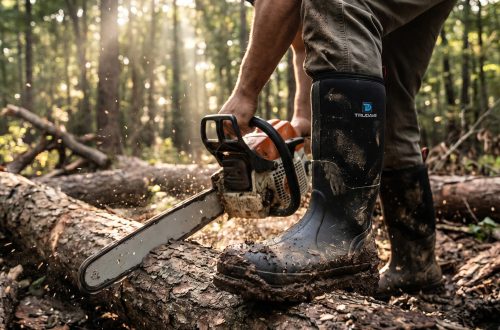
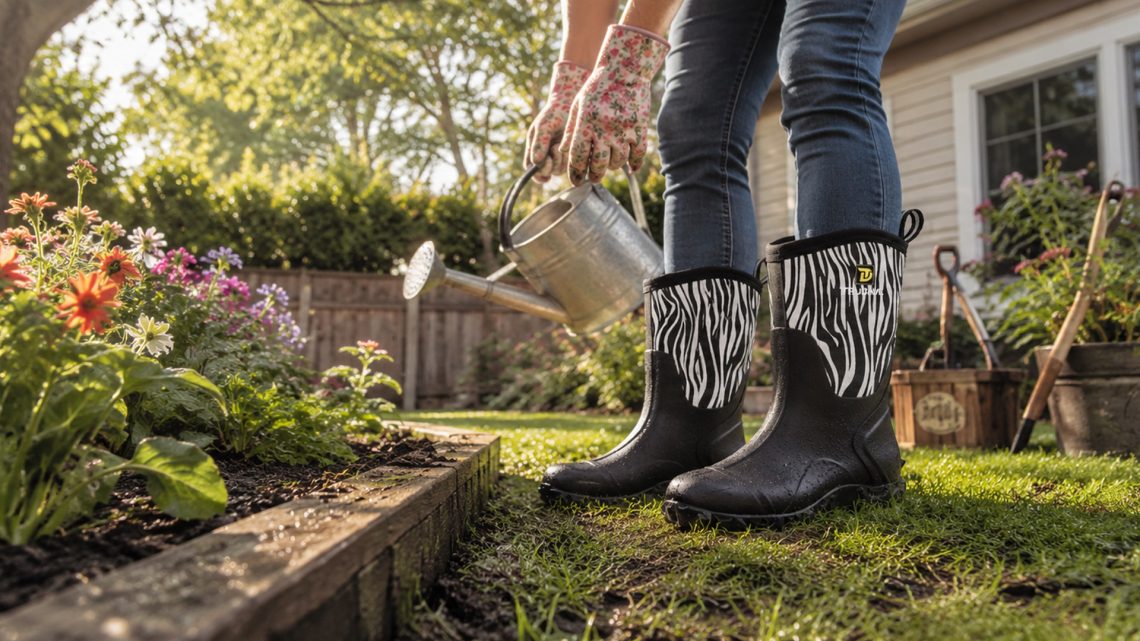
Instead of reading another generic list of features, let‘s use your actual life to figure out which boot you need. This is a decision tree that takes 60 seconds, cuts through the marketing hype, and lands you on the right Trudave rain boot for your specific outdoor life.
⚠️ Disclosure: This article is based on product specifications and verified customer feedback. Our goal is to provide a practical, decision-oriented guide, not a sales pitch.
Start Here: Step 1 — What’s Your Element?
The most important question isn’t about the boot‘s features. It’s about you. Your body heat and your work style dictate your needs more than the weather report.
Q1: When you‘re outside, are you mostly standing still or moving around?
- I’m moving (walking the dog, gardening, hauling tools, walking the property). → Proceed to Step 2A.
- I’m standing still (checking fence lines, waiting for a dog, manning a booth, standing in a barn). → Proceed to Step 2B.
Q2A: If you‘re moving, what’s the ground like?
- Mud, grass, and dirt. → Proceed to Step 3A.
- Wet concrete, driveways, and slick job sites. → Proceed to Step 3B.
Q2B: If you‘re standing still, what’s the temperature?
- Cool to cold (under 50°F). → Proceed to Step 3C.
- Warm (over 50°F) or you just run hot. → Proceed to Step 3D.
Step 2A: The Active Mover’s Guide
If you‘re always moving, your body is a furnace. The boot’s job is to protect you from the elements without trapping your own heat.
The Mud, Grass, and Dirt Scenario (Step 3A)
You need a boot that sheds mud, breathes, and lets you move freely. A tall, thick neoprene boot will overheat you and feel heavy.
Your match: Trudave MudTrek Series.
Why it fits: The MudTrek is built for this. The self-cleaning lug outsole sheds dirt as you walk, preventing you from dragging heavy clods of mud. The neoprene shaft provides enough warmth for a cool morning but breathes well enough that you won‘t get swamp foot. It’s lightweight and flexible enough to handle a brisk walk or a day of yard work.
The Wet Concrete and Job Site Scenario (Step 3B)
You need a boot that grips a smooth, wet surface. Deep mud lugs won‘t help you here. You need a flatter outsole with razor siping (tiny channels that squeegee water away). You also want something tough enough to handle the hazards of a worksite.
Your match: Trudave AquaGuard or DryFlow Series.
Why it fits: These boots are industrial-grade. They feature non-slip rubber outsoles designed for wet floors and slick surfaces. They offer 100% waterproofing, cushioned insoles for all-day standing, and a tough rubber shell that resists cuts and scrapes. The AquaGuard is a great generalist, while the DryFlow offers even more heavy-duty protection for construction or factory work.
Step 2B: The Static Standee‘s Guide
If you’re standing still, your body isn‘t generating much heat. You need the boot to do the work for you.
The Cold Weather (Under 50°F) Scenario (Step 3C)
You need serious insulation. A thin, uninsulated boot will leave your feet numb and miserable within an hour.
Your match: Trudave HeatHold Series or 6mm Neoprene Series.
Why it fits: The HeatHold (5mm neoprene) provides excellent warmth for most cold-weather chores. The 6mm Neoprene Series is your go-to for brutal, sub-freezing conditions where you need maximum insulation. Both trap your body heat like a wetsuit, keeping your feet warm even when you‘re not moving. The 6mm boots also feature a steel shank for added puncture protection if you’re working around the barn or on a worksite.
The Warm Weather (Over 50°F) or “I Run Hot” Scenario (Step 3D)
If you‘re standing still in warm weather, you don’t need insulation. You need a breathable shell that will keep water and mud out without turning your feet into a sweatbox.
Your match: Trudave HuntGuard Series.
Why it fits: The HuntGuard is an ankle-height, uninsulated boot made from waterproof rubber. It‘s easy to put on and take off, doesn’t hold in excess heat, and has a non-slip sole for stable footing. It‘s perfect for standing on a wet dock, running a power washer, or doing light gardening on a warm, rainy day.
The Final Check: The “Where Will You Wear It?” Test
You’ve found your match. Now ask yourself one final question:
“Where will these boots go when I‘m done working?”
If you’re walking from a muddy field straight into a clean car or house, choose a boot with a smooth rubber exterior. The MudTrek and AquaGuard series are designed to rinse clean in seconds with a garden hose. This is the “no-mud-tracking” perk that turns a good boot into a great one for many people.
The Flowchart Decision: Your Action Plan
Here‘s your cheat sheet:
- Active + Mud/Dirt → MudTrek
- Active + Wet Concrete/Jobsites → AquaGuard or DryFlow
- Still + Cold (under 50°F) → HeatHold or 6mm Neoprene
- Still + Warm (over 50°F) → HuntGuard
The One Overlooked Feature: The Steel Shank
If you look at the flow chart and find yourself in the “jobsites” or “cold” categories, pay close attention to the bottom of the boot. Does it have a steel shank? This piece of metal embedded in the sole provides crucial support and puncture protection. It stops nails, thorns, and sharp rocks from punching through the sole. The 6mm Neoprene and DryFlow series are built with this feature, making them excellent choices for rigorous work environments.
Important note: A steel shank is for underfoot puncture protection, not a certified steel toe. If your job requires ASTM-certified safety footwear, you should verify the specific model’s certifications before purchase.
Why This Flowchart Beats a Generic Review
Most reviews are written from the perspective of the reviewer, not the reader. They assume everyone hunts the same deer or fishes the same lake. That‘s why they don’t work.
This flowchart works because it asks you the right questions: Are you hot or cold? Are you moving or standing? Are you on mud or concrete? It matches your reality to a specific product, giving you a decision that‘s backed by product logic, not marketing hype.
You don‘t need to be a gear expert to buy the right boot. You just need to know yourself. This framework helps you do exactly that.
Now go outside and get to work—with the right boot on your feet.


You May Also Like

Planning Next Year: Winter Garden Strategies for a Strong Start in Spring
Soil Health Checkup: Testing and Tuning Before the Thaw Arrives