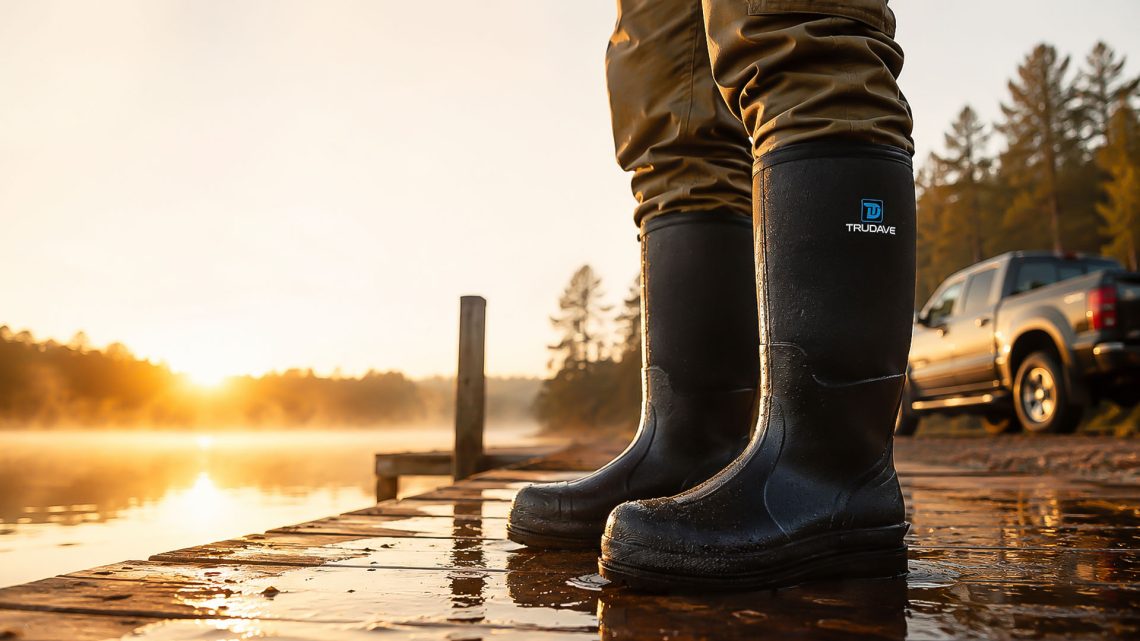
Best Rain Boots for Wide Feet: How to Find a Comfortable Fit That Actually Works
Finding comfortable rain boots can be frustrating when you have wide feet.
Many waterproof boots provide enough length but feel tight across the forefoot, squeeze the toes, or create uncomfortable pressure around the instep.
Buying a larger size may seem like the easiest solution.
Unfortunately, increasing boot length does not always provide the additional width you need.
Oversized rain boots can create excessive heel movement, cause blisters, reduce walking stability, and make it more difficult to move through mud.
The same problem applies to people with wide calves.
A boot may fit comfortably around the foot but feel painfully tight around the lower leg.
For hunters, anglers, farmers, outdoor workers, and anyone who spends long hours in wet environments, proper fit is more than a comfort issue.
The right rain boots should provide enough room for natural foot movement while remaining secure during walking, climbing, standing, and moving through muddy terrain.
This guide explains how to choose rain boots for wide feet, wide calves, and high-volume feet without sacrificing waterproof protection, traction, or stability.
Why Are Rain Boots Difficult to Fit for Wide Feet?
Rain boots are constructed differently from athletic shoes and many lace-up boots.
Traditional rubber boots use molded waterproof construction.
The shape of the boot is largely fixed.
You cannot loosen laces around the forefoot or adjust the fit across the instep.
Rubber may become slightly more flexible with use, but you should not expect the foot area to stretch significantly.
This means the shape of the boot must match the shape of your foot from the beginning.
People with wide feet may experience pressure around:
- The ball of the foot.
- The outside edge of the foot.
- The little toe.
- The big toe joint.
- The instep.
- The ankle.
- The heel.
A boot that is long enough may still be too narrow.
This is why choosing rain boots based only on your normal shoe size can create problems.
What Does Wide Fit Mean in Rain Boots?
Footwear width describes the amount of space available across the foot.
However, width is only one measurement.
Two people with the same foot width may require different boots because of differences in:
- Toe shape.
- Instep height.
- Foot volume.
- Heel width.
- Arch shape.
- Calf circumference.
Some manufacturers offer dedicated wide sizes.
Others design certain models with naturally wider toe boxes and higher-volume interiors.
When shopping for waterproof boots, look beyond the size number.
Review the manufacturer’s size chart, product measurements, customer fit information, and available width options.
Measure Both Feet Before Buying Rain Boots
Many people have one foot that is slightly larger than the other.
Measure both feet.
Base your footwear choice on the larger foot.
Measure your feet near the end of the day.
Feet can swell after several hours of standing and walking.
Use the socks you normally wear with your rain boots.
For hunting and cold-weather use, this may mean measuring while wearing medium-weight or heavyweight outdoor socks.
Measure:
- Foot length.
- Forefoot width.
- Circumference around the widest part of the foot.
- Instep circumference when possible.
- Calf circumference for tall boots.
Compare these measurements with the manufacturer’s sizing information.
Do not assume all footwear brands use identical dimensions.
Look for a Wide Toe Box
The toe box is one of the most important areas for people with wide feet.
A narrow or pointed toe box compresses the toes.
This can create discomfort during long outdoor activities.
A wider, rounded toe box allows the toes to spread more naturally.
Look for enough space to move your toes without excessive sliding.
A good toe box should provide:
- Comfortable toe movement.
- No pressure on the little toe.
- No compression around the big toe joint.
- Enough room for appropriate socks.
- Stable forward positioning.
Avoid buying excessively long boots just to create more width.
Extra length can cause the foot to slide forward and backward.
Pay Attention to Instep Volume
Some people have wide feet because the forefoot is broad.
Others have high-volume feet with a higher instep.
The instep is the upper portion of the foot between the toes and ankle.
Pull-on rain boots can be difficult for people with high insteps.
The foot may struggle to pass through the ankle opening even when the boot feels comfortable after it is on.
Look for boots with:
- Flexible ankle construction.
- Wider entry openings.
- Stretchable neoprene sections.
- Pull handles.
- Appropriate interior volume.
If you need to force your foot aggressively into the boot, the shape may not be appropriate.
Do Not Automatically Size Up
Sizing up is one of the most common mistakes people with wide feet make.
A longer boot may provide slightly more width.
However, it can also create:
- Heel slipping.
- Blisters.
- Reduced stability.
- Forward sliding.
- Difficulty walking through mud.
- Poor control on uneven terrain.
Look for footwear designed with additional width instead of automatically choosing a longer size.
If the manufacturer does not offer wide sizing, compare the actual interior shape of different models.
Some boots naturally provide more forefoot space.
How Should Rain Boots Fit Wide Feet?
Rain boots for wide feet should feel comfortable without excessive compression.
Your toes should move naturally.
The sides of your feet should not feel squeezed.
The instep should not experience painful pressure.
The heel should remain reasonably stable.
A small amount of heel movement can be normal in pull-on rubber boots.
However, the foot should not slide dramatically with every step.
Walk for at least 15 to 30 minutes indoors before deciding whether the fit is correct.
Pay attention to:
- Toe pressure.
- Heel movement.
- Instep tightness.
- Side pressure.
- Sock bunching.
- Foot numbness.
- Overall stability.
Fit problems often become more noticeable after extended wear.
Wide Feet vs Wide Calves: They Are Not the Same Problem
Wide feet and wide calves require different footwear features.
A person may have narrow feet and large calves.
Another person may have wide feet and average calves.
Do not assume a wide-calf boot automatically provides more room in the foot area.
Wide-calf rain boots use larger shaft openings.
Wide-fit rain boots provide additional space around the foot.
Some boots provide both.
Always check product measurements.
How to Measure Your Calves for Tall Rain Boots
Wear the pants or clothing you normally use outdoors.
Stand naturally.
Measure the widest part of your calf.
Add enough room for comfort and movement.
Hunters may tuck pants into their boots.
Farm workers may wear heavier work pants.
Cold-weather users may wear base layers.
Consider these clothing layers when comparing shaft measurements.
A boot that is too tight around the calf may:
- Restrict movement.
- Trap excessive heat.
- Become difficult to remove.
- Create pressure.
- Prevent proper layering.
A shaft that is excessively wide may allow water, mud, seeds, and debris to enter more easily.
Are Neoprene Rain Boots Better for Wide Calves?
Neoprene uppers can provide additional flexibility around the calf.
This can make rubber-neoprene hybrid boots comfortable for people who need more upper-shaft flexibility.
Neoprene can stretch more than thick molded rubber.
However, flexibility does not guarantee unlimited space.
Check the maximum calf circumference recommended by the manufacturer.
The lower rubber portion of the boot must still fit the foot correctly.
Best Rain Boots for Wide Feet and Hunting
Hunters with wide feet need more than additional toe room.
Hunting footwear should provide:
- Waterproof construction.
- Secure heel positioning.
- Comfortable forefoot width.
- Traction.
- Appropriate insulation.
- Durable materials.
- Stable movement through mud.
- Enough room for outdoor socks.
Boot weight also matters.
A heavy boot that fits well may still become tiring after several miles.
Cold-weather hunters should avoid wearing extremely thick socks inside boots that are already tight.
Compressed feet can reduce circulation and make cold conditions feel worse.
Outdoor brands such as Trudave Gear offer waterproof boots designed for hunting, fishing, mud, rain, and demanding outdoor environments.
When comparing footwear, evaluate the actual shape, fit, traction, insulation, and intended use of each boot instead of choosing based only on the labeled size.
Best Rain Boots for Wide Feet and Fishing
Fishing footwear should remain comfortable during long periods of standing and walking.
Anglers with wide feet should look for:
- A roomy toe box.
- Stable heel fit.
- Comfortable cushioning.
- Wet-surface traction.
- Waterproof construction.
- Easy-to-clean materials.
Boat anglers may prefer shorter waterproof boots.
Shore anglers crossing mud and wet grass may need taller footwear.
The correct boot height depends on the environment.
Foot width should be evaluated separately.
Best Rain Boots for Wide Feet and Farm Work
Farm workers may wear waterproof boots for many hours.
Foot swelling can increase during long workdays.
Boots that feel slightly tight in the morning may become painful later.
Wide-foot farm boots should provide enough room for natural swelling without becoming unstable.
Look for:
- Wide toe boxes.
- Supportive insoles.
- Durable outsoles.
- Easy cleaning.
- Secure heel fit.
- Appropriate shaft width.
Daily users should also monitor insole wear.
Collapsed cushioning can change the way the foot sits inside the boot and create new pressure points.
Best Rain Boots for High Instep Feet
People with high insteps may struggle to put on pull-on boots.
Look for footwear with:
- Flexible ankle sections.
- Stretchable upper materials.
- Wider entry openings.
- Pull tabs.
- Removable insoles.
Removing the insole temporarily can help determine whether interior volume is the problem.
However, wearing boots without appropriate insoles may reduce comfort and support.
If the foot cannot enter the boot easily, consider a different design rather than forcing the material.
Can Insoles Help Wide Feet?
Insoles can improve cushioning and support, but they do not create additional width.
Thick insoles may actually reduce interior space.
People with wide feet should choose low-volume insoles when additional support is needed.
Avoid using thick aftermarket insoles unless the boot has enough room.
Test the complete footwear system indoors.
Pay attention to pressure around the forefoot and instep.
Can Rain Boots Stretch for Wide Feet?
Most rubber rain boots do not stretch significantly.
The material may soften slightly with use.
Neoprene sections can provide more flexibility.
However, tight rubber around the forefoot should not be expected to expand enough to solve a serious fit problem.
Do not buy uncomfortable boots expecting them to become dramatically wider.
Choose footwear that feels comfortable from the beginning.
What Socks Are Best for Wide Feet in Rain Boots?
Sock thickness affects fit.
Heavy socks take up more interior space.
For warm weather, lightweight moisture-wicking socks may provide enough comfort.
For cold weather, medium or heavyweight wool-blend socks may be appropriate.
Avoid wearing socks so thick that they compress your feet.
Look for socks with:
- Smooth toe seams.
- Moisture management.
- Appropriate cushioning.
- Enough stretch.
- Correct sizing.
Socks that are too small can compress the toes even when the boots fit correctly.
Should Wide Rain Boots Feel Loose?
Wide rain boots should provide additional space across the foot without feeling unstable.
Width and overall looseness are not the same thing.
A well-designed wide boot can provide:
- Additional forefoot space.
- Stable heel positioning.
- Appropriate length.
- Secure walking performance.
An oversized regular-width boot may feel loose everywhere.
This is not a substitute for proper wide sizing.
How to Prevent Heel Slip in Wide Rain Boots
Some wide-foot users experience heel slip because the forefoot is broad while the heel is relatively narrow.
This foot shape can be difficult to fit.
Several adjustments may help:
- Supportive insoles.
- Heel grips.
- Cushioned socks.
- Boots with shaped heel cups.
- Ankle-support structures.
Avoid correcting severe heel slip with extremely thick socks.
The footwear should remain comfortable across the forefoot.
If the heel continues moving dramatically, a different boot shape may be necessary.
Are Wide Rain Boots Better for Long Walking Distances?
Wide boots are better for long distances only when the user actually needs additional width.
Properly fitted footwear can reduce pressure and improve comfort.
However, long-distance performance also depends on:
- Weight.
- Cushioning.
- Heel stability.
- Flexibility.
- Outsole traction.
- Foot support.
- Terrain.
A wide rain boot with poor support may still become uncomfortable after several miles.
Hunters and outdoor workers covering long distances should evaluate the complete footwear design.
Common Mistakes When Buying Rain Boots for Wide Feet
Buying a Larger Size Instead of a Wider Boot
Extra length creates instability without guaranteeing enough width.
Ignoring the Instep
A wide forefoot does not always mean the boot has enough vertical volume.
Confusing Wide Calf With Wide Foot
These are different measurements.
Assuming Rubber Will Stretch
Most rubber footwear does not expand significantly.
Trying Boots With the Wrong Socks
Always use the socks you expect to wear outdoors.
Ignoring Heel Movement
A roomy toe box is not useful if the heel slides excessively.
Keeping Boots That Cause Numbness
Numbness, tingling, or painful pressure are signs that the footwear does not fit correctly.
How to Choose the Best Rain Boots for Wide Feet
Before buying waterproof boots, consider your complete foot shape.
Measure both feet.
Check width.
Consider instep height.
Measure your calves for tall boots.
Think about sock thickness.
Evaluate the terrain.
Consider walking distance.
Check insulation requirements.
Look for footwear that provides enough room without excessive movement.
For hunters, anglers, farmers, and outdoor workers comparing waterproof footwear, Trudave Gear offers boot options designed for wet environments and practical outdoor use.
Review product measurements, sizing information, intended use, traction, insulation, and construction before choosing your next pair.
Frequently Asked Questions
What are the best rain boots for wide feet?
The best rain boots for wide feet provide a roomy toe box, appropriate forefoot width, enough instep volume, stable heel positioning, and suitable traction for the intended environment.
Should I size up in rain boots if I have wide feet?
Not automatically. A larger size adds length and may create heel slip. Look for wide sizing or naturally wider boot designs.
Do rubber boots stretch for wide feet?
Most rubber boots do not stretch significantly. Neoprene sections may provide additional flexibility.
Are wide-calf rain boots also wide in the foot?
Not necessarily. Calf circumference and foot width are separate measurements.
How much toe room should wide rain boots have?
Your toes should move comfortably without the foot sliding excessively inside the boot.
Why do rain boots hurt the sides of my feet?
The boot may be too narrow, too tight around the instep, or shaped differently from your foot.
Can insoles make rain boots wider?
No. Insoles usually reduce interior volume. Low-volume insoles may improve support without taking up excessive space.
Are neoprene boots good for wide calves?
Neoprene uppers can provide more flexibility, but users should still check the manufacturer’s calf measurements.
Should rain boots feel tight when new?
No. Rubber footwear should feel comfortable when purchased because most designs do not stretch significantly.
Final Thoughts
Finding rain boots for wide feet requires more than buying a larger size.
Length, width, instep volume, heel shape, calf circumference, and sock thickness all affect fit.
Start by measuring both feet.
Choose a wide toe box.
Pay attention to the instep.
Check heel movement.
Measure your calves when buying tall boots.
Most importantly, do not expect tight rubber footwear to stretch enough to become comfortable.
For hunters, anglers, farmers, and outdoor workers, properly fitted waterproof boots can improve comfort, stability, and long-term performance.
Trudave Gear offers waterproof outdoor footwear designed for wet terrain, mud, hunting, fishing, and demanding outdoor conditions.
Compare available options based on actual measurements, foot shape, terrain, temperature, and intended use.
The right rain boots should provide enough room where your feet need it without sacrificing the secure fit required for walking, working, and moving through challenging outdoor environments.


You May Also Like

Water Systems in Fall: Preventing Freeze Before It Starts

Seed Sorting Season: Planning Your Early Spring Garden Now