Best Rain Boots for Slippery Surfaces: How to Choose Better Traction for Wet Conditions
Wet conditions do more than make your feet uncomfortable.
They can make ordinary surfaces unexpectedly dangerous.
A concrete walkway covered with rain, a muddy farm path, a wet boat ramp, or a grassy hill can become difficult to cross when your footwear does not provide enough traction.
For hunters, anglers, farmers, landscapers, outdoor workers, and homeowners, choosing rain boots with the right outsole is just as important as choosing waterproof construction.
A boot can keep your feet completely dry and still perform poorly if the sole slides on wet ground.
The best rain boots for slippery surfaces should provide a stable fit, an outsole designed for the terrain, enough flexibility for natural movement, and a tread pattern that can maintain contact with wet or loose ground.
However, no single outsole works equally well on every surface.
Deep lugs may perform well in mud but feel less stable on smooth concrete.
Flat siped soles may grip wet boat decks but clog quickly in sticky soil.
This guide explains how rain boot traction works and how to choose waterproof footwear for wet concrete, muddy fields, slippery grass, boat ramps, farms, hunting property, and other challenging outdoor environments.
Why Are Wet Surfaces So Slippery?
Water reduces friction between the outsole and the ground.
On smooth surfaces, a thin layer of water can prevent the sole from making full contact.
On mud, the ground itself moves beneath the foot.
Wet grass can create a slick layer between the boot and the soil.
Algae, leaves, oil, fish residue, and organic material can make the problem even worse.
Common slippery outdoor surfaces include:
- Wet concrete.
- Mud.
- Rain-soaked grass.
- Boat decks.
- Wooden docks.
- Metal ramps.
- Moss-covered rocks.
- Clay soil.
- Wet leaves.
- Farm floors.
- Tile around entryways.
- Snow and slush.
Each surface requires a slightly different traction strategy.
This is why the phrase “non-slip rain boots” should not be treated as a guarantee that one pair will perform equally well everywhere.
What Makes a Rain Boot Slip Resistant?
Slip resistance depends on several parts of the outsole design.
The most important factors include:
- Rubber compound.
- Tread depth.
- Lug spacing.
- Surface contact area.
- Heel shape.
- Flexibility.
- Water channels.
- Overall boot stability.
The outsole must be able to deform slightly and maintain contact with the ground.
It must also move water, mud, and debris away from the contact area.
A hard, smooth sole may last a long time but provide limited grip on wet surfaces.
A softer rubber compound may improve traction but wear faster.
The best design balances grip, durability, and the intended environment.
1. Match the Tread Pattern to the Surface
The tread pattern is the visible design on the bottom of the boot.
Different patterns serve different purposes.
Deep Lugs for Mud
Deep, widely spaced lugs can penetrate soft soil and provide grip in mud.
The open spaces allow mud to release instead of remaining packed under the sole.
Siped Soles for Wet Hard Surfaces
Sipes are thin cuts in the outsole.
They create additional edges that can help move water away and improve contact with wet concrete, docks, and boat decks.
Multidirectional Tread for Mixed Terrain
Multidirectional tread provides grip during forward movement, side steps, climbing, and descending.
This design is useful for hunting, farm work, and uneven outdoor ground.
Defined Heels for Slopes
A clear heel edge can help reduce sliding while walking downhill.
This is especially useful on wet grass, muddy slopes, and trails.
Choose tread based on the surface you encounter most often.
2. Look for the Right Rubber Compound
Not all outsole rubber feels the same.
Some compounds are harder and more durable.
Others are softer and provide better grip on wet surfaces.
A softer rubber outsole may conform more effectively to small surface irregularities.
This can improve traction on wet concrete, rocks, and hard ground.
However, softer rubber may wear more quickly during frequent use on pavement.
Harder compounds may last longer but feel less secure on slick surfaces.
Product descriptions may refer to:
- Slip-resistant rubber.
- High-traction rubber.
- Oil-resistant outsoles.
- Non-marking rubber.
- Wet-surface grip.
- Flexible outsole compounds.
These descriptions can be useful, but the outsole design and intended use should still be evaluated carefully.
3. Choose Enough Surface Contact
Deep tread is not always better.
On smooth surfaces, an outsole with extremely aggressive lugs may have less total contact with the ground.
This can make the boot feel unstable on wet concrete, tile, or metal.
Boat and deck boots often use flatter outsole designs with fine channels or siping.
These soles place more rubber against the surface while moving water away.
Mud boots use deeper lugs because the sole needs to penetrate soft ground.
The best outsole depends on whether the ground is hard or loose.
4. Pay Attention to Heel Stability
Traction does not depend only on the outsole.
The foot must remain stable inside the boot.
Excessive heel movement can make slippery conditions more dangerous.
If your foot slides inside the footwear while the outsole stays in place, balance becomes more difficult.
A stable rain boot should provide:
- Secure heel positioning.
- Appropriate length.
- Comfortable width.
- Minimal forward sliding.
- Stable ankle movement.
- Enough room for normal socks.
Pull-on rain boots naturally allow some movement.
However, the boot should not feel as though it is separating from your foot with every step.
5. Consider Boot Flexibility
A completely rigid outsole may not adapt well to uneven ground.
Some flexibility allows the sole to bend and maintain contact during walking.
Too much flexibility can reduce support.
The correct balance depends on the activity.
For boat decks and flat surfaces, flexible footwear may feel comfortable and responsive.
For hunting, farm work, and rocky ground, additional structure may improve stability.
Evaluate:
- Forefoot flexibility.
- Midsole support.
- Ankle structure.
- Outsole thickness.
- Overall boot weight.
A good boot should bend where the foot naturally bends without collapsing under pressure.
Best Rain Boots for Wet Concrete
Wet concrete may look safe, but it can become extremely slick.
The risk increases when the surface contains:
- Oil.
- Dirt.
- Algae.
- Soap.
- Fish residue.
- Farm waste.
- Smooth sealant.
For wet concrete, look for outsoles with:
- High surface contact.
- Flexible rubber.
- Fine tread.
- Water channels.
- Siping.
- Stable heel design.
Extremely deep mud lugs may not provide the best performance on smooth concrete.
Workers moving between muddy ground and hard surfaces may need a balanced tread pattern rather than an aggressive mud-only sole.
Best Rain Boots for Slippery Mud
Mud requires deeper tread and better heel retention.
The outsole needs to penetrate the surface.
Wide tread spacing helps release sticky soil.
A defined heel can improve control on slopes.
Mud boots should also remain securely attached to the feet.
Deep mud creates suction that can pull loose footwear downward.
Look for:
- Deep lugs.
- Open tread channels.
- Secure heel fit.
- Tall waterproof construction.
- Manageable weight.
- Stable ankle support.
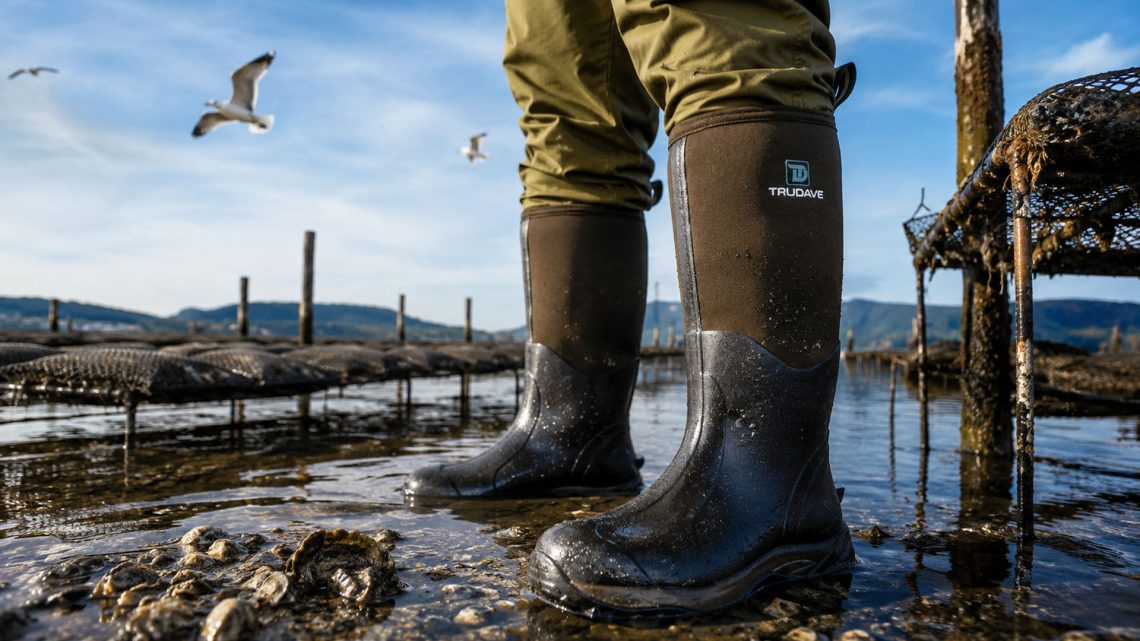
Outdoor brands such as Trudave Gear offer waterproof boots designed for hunting, fishing, mud, rain, and demanding field conditions.
When comparing options, look beyond waterproofing and evaluate whether the outsole matches the surfaces you regularly cross.
Best Rain Boots for Wet Grass
Wet grass is slippery because the vegetation moves between the boot and the soil.
The risk becomes greater on hills and uneven ground.
For wet grass, look for:
- Multidirectional tread.
- A defined heel.
- Moderate to deep lugs.
- Stable fit.
- Flexible forefoot movement.
Move carefully when descending grassy slopes.
Even good footwear cannot fully eliminate the risk of slipping when the ground is saturated.
Best Rain Boots for Boat Decks
Boat decks require a very different outsole from muddy fields.
The surface is usually hard and wet.
Aggressive lugs can reduce contact area and collect debris.
Deck boots often use:
- Siped soles.
- Flat contact patterns.
- Non-marking rubber.
- Flexible construction.
- Water-dispersing channels.
Anglers should also consider fish slime, bait residue, and fuel or oil contamination.
Regularly clean the outsole because residue can reduce traction.
Short waterproof deck boots may provide better mobility than tall hunting boots for many boat-based activities.
Best Rain Boots for Wooden Docks
Wooden docks can become extremely slippery when wet.
Moss, algae, and weathered surfaces increase the risk.
Look for an outsole with flexible rubber and enough edges to maintain grip.
Avoid running or making sudden turns.
Use handrails when available.
Inspect docks before stepping onto areas that appear green, dark, or heavily saturated.
Even high-traction boots may slide on algae-covered wood.
Best Rain Boots for Farms
Farm environments can include mud, concrete, manure, feed, water, oil, and smooth indoor floors.
A farm boot needs versatile traction.
An aggressive mud outsole may perform well outdoors but feel unstable inside a barn.
A flat outsole may work on concrete but clog in fields.
Farm users should consider where they spend most of the day.
A balanced tread pattern may be the best option when moving frequently between surfaces.
Other useful features include:
- Easy-clean rubber.
- Secure heel fit.
- Waterproof construction.
- Durable outsoles.
- Comfortable cushioning.
- Support for long periods of standing.
Best Rain Boots for Hunting
Hunters encounter mixed terrain.
A single trip may involve wet grass, mud, leaves, roots, slopes, and shallow water.
Hunting rain boots should provide:
- Multidirectional traction.
- Stable heel positioning.
- Waterproof construction.
- Appropriate shaft height.
- Manageable weight.
- Durable outsole material.
- Comfortable cushioning.
Mountain and rocky terrain may require more ankle support than traditional pull-on rubber boots provide.
For flat wetlands, fields, and muddy hunting property, rubber hunting boots can work well.
The best option depends on the terrain rather than the hunting category alone.
Are “Non-Slip” Rain Boots Completely Slip-Proof?
No.
The term non-slip usually means that the footwear is designed to improve traction under certain conditions.
It does not mean the boots cannot slide.
Performance can change because of:
- Surface contamination.
- Worn tread.
- Packed mud.
- Oil.
- Ice.
- Algae.
- Improper fit.
- Fast movement.
- Steep slopes.
- Carrying heavy equipment.
Use cautious walking technique even when wearing high-traction footwear.
How to Read Slip-Resistance Claims
Some work footwear may be tested under specific slip-resistance standards.
However, not every rain boot is tested in the same way.
Product pages may use terms such as:
- Slip resistant.
- Oil resistant.
- Wet traction.
- Non-slip outsole.
- High-grip rubber.
Check whether the claim refers to a specific environment.
Oil-resistant footwear is not automatically ideal for mud.
Mud-focused tread is not automatically best for wet tile.
Choose footwear designed for the surfaces you actually encounter.
Why Deep Tread Can Still Slip
Deep tread helps in soft soil, but it does not guarantee grip.
Mud can pack between the lugs.
The sole may become smooth underneath.
Hard rubber can also slide on wet concrete.
The boot may fit poorly and move around the foot.
Traction depends on the complete system.
Regularly inspect and clean the outsole.
How to Keep Rain Boot Tread Working Properly
Packed debris reduces traction.
After use, inspect the outsole.
Remove:
- Mud.
- Grass.
- Small stones.
- Fish residue.
- Manure.
- Leaves.
- Ice.
- Gravel.
Rinse the boots.
Use a brush to clean deep channels.
Avoid using sharp metal tools that may cut the outsole.
Allow the footwear to dry naturally.
When Should You Replace Rain Boots Because of Worn Tread?
Rain boots should be replaced when the tread no longer provides reliable traction.
Warning signs include:
- Lugs worn nearly flat.
- Uneven heel wear.
- Smooth forefoot areas.
- Cracks in the outsole.
- Sole separation.
- Hard or brittle rubber.
- Repeated slipping in familiar conditions.
Outsole wear may occur before the waterproof upper fails.
For people working around wet surfaces, worn tread is a safety concern.
Do not continue using boots simply because they still keep water out.
Does Boot Weight Affect Stability?
Heavy boots can feel stable when standing still, but they may increase fatigue during walking.
Fatigue can reduce foot control and balance.
Very light boots may improve mobility but provide less structure.
Choose a weight appropriate for the activity.
Hunters walking long distances should avoid unnecessary bulk.
Farm workers standing on concrete may value cushioning and stability.
Boat anglers may prioritize lightweight flexibility.
Does Boot Height Affect Traction?
Boot height does not directly determine outsole grip.
However, tall boots can affect movement and balance.
A stiff tall shaft may restrict ankle motion.
A heavy upper can increase fatigue.
Shorter boots may improve mobility.
Tall boots provide greater protection from water and mud.
Choose height based on exposure while evaluating traction separately.
Can Insoles Improve Stability on Slippery Surfaces?
Supportive insoles may improve foot positioning and reduce interior movement.
They can help the boot feel more stable.
However, insoles do not change the outsole’s grip.
Use insoles to improve fit, cushioning, and support.
Do not rely on them to correct worn tread or an inappropriate outsole design.
How to Walk More Safely on Slippery Ground
Footwear helps, but movement technique matters.
Take shorter steps.
Keep your center of gravity over your feet.
Avoid sudden turns.
Place the whole foot down carefully.
Use handrails and walking supports when available.
Move slowly downhill.
Test unstable surfaces before shifting your full weight.
Avoid carrying more equipment than you can control safely.
Hunters should take extra care when handling firearms on slippery terrain.
Common Mistakes When Buying Rain Boots for Traction
Choosing the Deepest Tread for Every Surface
Deep lugs can be useful in mud but less effective on hard, wet surfaces.
Ignoring Rubber Flexibility
A hard outsole may provide poor wet-surface contact.
Assuming “Non-Slip” Means Slip-Proof
Every outsole has limits.
Ignoring Fit
A foot sliding inside the boot reduces control.
Keeping Boots With Worn Tread
Waterproof uppers do not compensate for smooth outsoles.
Failing to Clean the Sole
Packed mud and residue reduce grip.
Buying Boots Based Only on Appearance
Tread pattern and outsole material matter more than styling.
How to Choose the Best Rain Boots for Slippery Surfaces
Before purchasing, identify the surfaces you encounter most frequently.
Ask yourself:
Do I walk mainly on mud or concrete?
Do I work around boats or farms?
Do I cross hills?
Is oil or organic residue common?
Do I need tall waterproof protection?
How far do I walk?
How often will I wear the boots?
Do I move between indoor and outdoor surfaces?
Then evaluate:
- Tread pattern.
- Rubber compound.
- Heel design.
- Lug spacing.
- Siping.
- Fit.
- Boot flexibility.
- Weight.
- Waterproof construction.
For hunters, anglers, farmers, landscapers, and outdoor workers comparing wet-weather footwear, Trudave Gear provides waterproof boot options designed for practical use in rain, mud, wet grass, fishing environments, and demanding outdoor conditions.
Choose the outsole based on the terrain where traction matters most.
Frequently Asked Questions
What are the best rain boots for slippery surfaces?
The best rain boots use an outsole designed for the specific surface, provide stable heel positioning, fit securely, and maintain enough flexibility to contact the ground properly.
Are deep lugs better for traction?
Deep lugs are useful in mud and soft soil. They may not provide the best grip on wet concrete, decks, or tile.
What sole is best for wet concrete?
Flexible rubber, fine tread, water channels, and siping can improve contact on wet concrete.
Are rain boots safe on ice?
Standard rain boots may provide limited traction on ice. Specialized winter footwear, traction devices, or ice-specific soles may be necessary.
Why do my mud boots slip on concrete?
Aggressive lugs reduce surface contact, and hard rubber compounds may slide on smooth wet ground.
Are deck boots good for mud?
Deck boot soles are usually designed for hard wet surfaces. They may not provide enough penetration or mud release for deep, soft terrain.
How do I know when rain boot tread is worn out?
Replace boots when the lugs become flat, heel wear becomes uneven, cracks appear, or traction noticeably decreases.
Can I improve the grip of old rain boots?
Cleaning the outsole can restore some traction when debris is the problem. Severely worn or hardened soles should be replaced.
Final Thoughts
The best rain boots for slippery surfaces are not defined by one tread pattern.
Mud requires deep, open lugs.
Wet concrete benefits from flexible rubber and more surface contact.
Boat decks need water-dispersing channels and siping.
Wet grass requires multidirectional grip and a stable heel.
Choose footwear based on the surface where you spend the most time.
Inspect the outsole regularly.
Remove packed debris.
Replace boots when the tread becomes smooth or uneven.
Pay attention to fit because traction begins with control inside the footwear.
For hunters, anglers, farmers, landscapers, and outdoor workers facing rain, mud, wet decks, slippery fields, and changing terrain, Trudave Gear offers waterproof boots designed for practical outdoor use.
The right outsole cannot remove every risk, but it can provide better stability, more confidence, and safer movement when the ground becomes wet.


You May Also Like
Best Boots for Christmas Tree Farm Work: Waterproof Footwear for Mud, Wet Grass, Slopes, and Winter Harvest

Fall Orchard Care: Pruning, Mulching, and Pest Control Essentials