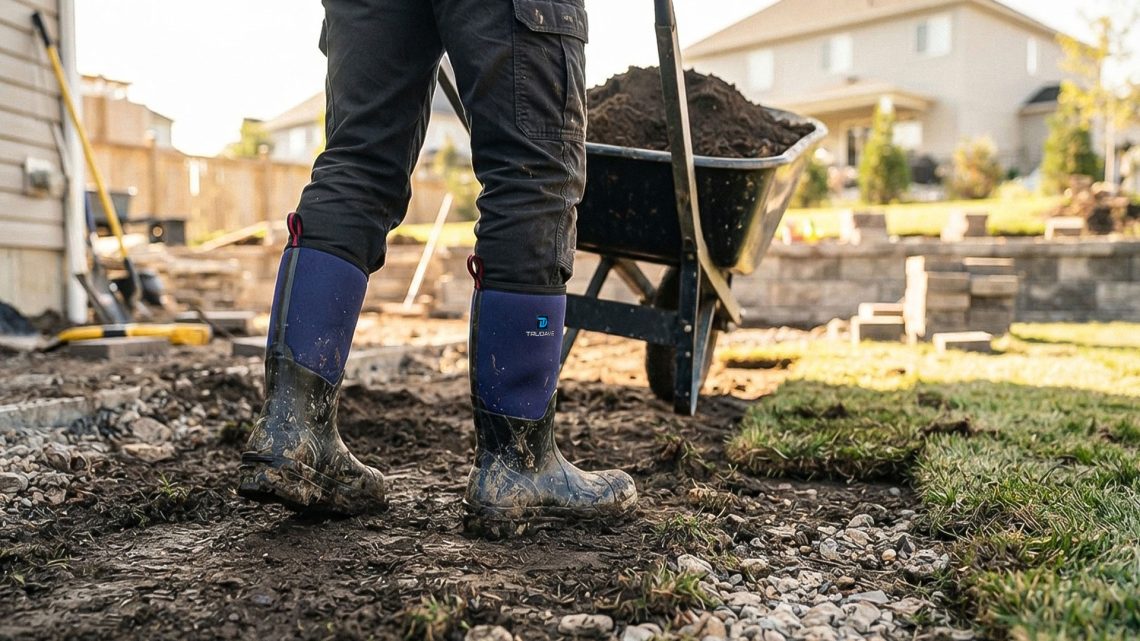
Best Boots for Landscape Construction and Hardscape Work
Landscape construction is one of the most varied outdoor jobs a worker can have.
A single project may involve digging irrigation trenches, moving gravel, laying pavers, installing retaining walls, spreading mulch, setting edging, placing sod, and walking repeatedly between wet soil and hard finished surfaces.
That means footwear has to handle much more than grass and mud.
Landscape crews may work across:
- Wet soil.
- Clay.
- Gravel.
- Crushed stone.
- Sand.
- Concrete.
- Pavers.
- Mulch.
- Irrigation trenches.
- Sod.
- Slopes.
- Rainy construction areas.
The best boots for landscape construction should combine waterproof protection, strong underfoot support, stable traction on mixed surfaces, secure heel retention, and enough durability for digging, lifting, pushing wheelbarrows, and working around heavy materials.
Landscape Construction Is Different From Routine Lawn Care
Routine grounds maintenance may involve mowing, trimming, or irrigation checks.
Landscape construction often includes heavier physical work.
Workers may handle:
- Pavers.
- Stone.
- Timbers.
- Soil.
- Gravel.
- Concrete materials.
- Tools.
- Machinery.
That means footwear usually needs more structure and durability.
A lightweight garden boot may work for planting, but not for a full hardscape installation.
Waterproofing Matters on New Job Sites
New landscape projects rarely have perfect drainage.
Workers may arrive after rain and find:
- Soft soil.
- muddy access routes.
- standing water.
- saturated trenches.
Even on dry days, irrigation testing can create wet areas.
Fully waterproof footwear helps keep workers comfortable during long outdoor shifts.
Best Boots for Wet Soil
Wet soil behaves differently depending on composition.
Clay may become sticky.
Sandy soil may collapse underfoot.
Topsoil may become soft and deep.
A useful outsole should provide:
- Open channels.
- moderate-to-deep lugs.
- defined heel edges.
- flexible rubber.
The boot should release mud rather than hold it.
Clay Is Especially Hard on Tread
Wet clay can fill narrow grooves completely.
Once packed, the outsole becomes:
- Heavier.
- smoother.
- harder to clean.
Simple lug shapes and wider spacing are usually more practical.
Boots for Irrigation Trench Work
Landscape construction often includes installing:
- Main lines.
- lateral irrigation.
- drip systems.
- valve boxes.
Workers may spend hours moving around open trenches.
Footwear should provide:
- Secure ankle support.
- waterproof construction.
- stable tread.
- strong midsoles.
Trench Edges Can Be Unstable
Freshly excavated soil may crumble.
Workers should avoid standing too close to unsupported trench edges and follow job-site safety procedures.
Good boots help with footing, but they do not make unstable excavation safe.
Boots for Irrigation Repair
Repair crews may need to kneel in:
- Mud.
- water.
- wet grass.
Flexible waterproof boots are useful.
Mid-height shafts often provide enough coverage without unnecessary bulk.
Boots for Paver Installation
Hardscape crews installing patios or walkways may spend the day on:
- Compacted base.
- Sand.
- Pavers.
- Gravel.
Deep mud tread becomes less useful.
Supportive waterproof work boots with flatter, stable contact are often better.
Paver Crews Need Strong Toe Protection
Workers may handle heavy:
- Concrete pavers.
- Stone blocks.
- Edging.
Safety-toe footwear may be appropriate depending on workplace requirements.
Boots for Paver Cutting Areas
Cutting stone or concrete may create:
- Dust.
- Slurry.
- Water.
Waterproof footwear with durable uppers is useful.
Workers should also follow respiratory and eye protection requirements.
Boots for Retaining Wall Construction
Retaining wall crews may work with:
- Concrete blocks.
- Stone.
- Gravel.
- Reinforcement materials.
Footwear should provide a stable base during lifting.
Heavy Blocks Increase Impact Risk
Safety-toe footwear may be required.
Workers should not rely on ordinary rubber boots around heavy hardscape materials.
Boots for Gravel Base Preparation
Before pavers or walls are installed, crews may spread and compact gravel.
Workers may walk repeatedly over:
- Crushed stone.
- sharp aggregate.
- compacted base.
Thin rain boots can become uncomfortable.
A strong midsole helps distribute pressure.
Gravel Wears Soft Outsoles Faster
Landscape workers who spend a lot of time on stone should choose durable work-grade outsole materials.
Boots for Plate Compactor Crews
Compaction work requires workers to guide vibrating equipment.
Stable footing is important.
Useful footwear features include:
- Secure heel fit.
- supportive midsoles.
- durable outsoles.
- moderate tread.
Boots for Wheelbarrow Work
Landscape crews may push heavy loads of:
- Soil.
- mulch.
- stone.
- concrete mix.
A worker needs solid traction while pushing uphill or across soft ground.
Loose boots can make this harder.
Secure Heel Fit Helps With Heavy Loads
When pushing a loaded wheelbarrow, the worker needs a stable base.
Heel movement inside the boot increases fatigue and reduces control.
Boots for Sod Installation
Sod work may involve:
- Wet soil.
- rolled turf.
- irrigation.
- mud.
Workers often walk backward or sideways while placing rolls.
Flexible waterproof boots with moderate grass-and-soil traction are useful.
Avoid Overly Aggressive Tread on Fresh Sod
Deep lugs may damage newly installed turf.
Moderate tread provides a better balance.
Boots for Mulch Installation
Mulch crews may work in beds containing:
- Bark.
- Wood chips.
- Wet soil.
Deep tread can collect large amounts of mulch.
Simple outsole channels are easier to clean.
Boots for Decorative Stone Work
Landscape projects may use:
- River rock.
- pea gravel.
- decorative stone.
Underfoot cushioning becomes important.
Boots for Garden Bed Installation
Planting crews may dig and move:
- Shrubs.
- Trees.
- Soil.
- Compost.
Workers need flexible footwear that still provides digging support.
Boots for Shovel Work
Shovel tasks place pressure directly through the sole.
Thin footwear can become uncomfortable.
A stronger midsole provides better support.
Boots for Tree Planting Crews
Tree installation can involve heavy root balls.
Workers may use:
- Skid steers.
- tree carts.
- straps.
- shovels.
Safety footwear may be appropriate.
Boots for Root Ball Handling
Large root balls can be extremely heavy.
Protective toes and strong ankle support are useful.
Boots for Tree Staking
Workers may handle:
- Stakes.
- Wire.
- Anchors.
Puncture hazards should be considered.
A thick outsole does not automatically provide puncture resistance.
Boots for Fence and Edging Installation
Landscape crews may install:
- Metal edging.
- Plastic edging.
- Border stone.
- Landscape timbers.
These tasks may involve sharp tools and materials.
Durable uppers are useful.
Boots for Concrete Edging
Wet concrete work may require footwear with more chemical and moisture resistance than ordinary landscape tasks.
Waterproof does not automatically mean suitable for prolonged concrete exposure.
Workers should follow material-specific PPE guidance.
Boots for Fresh Concrete Areas
Wet cement can cause skin injury.
Workers handling concrete should use task-appropriate protective footwear and avoid direct skin contact.
Boots for Landscape Drainage Installation
Projects may include:
- French drains.
- catch basins.
- channel drains.
- swales.
These tasks often create deep mud.
More shaft coverage may be useful.
Boots for French Drain Work
Workers may handle:
- Gravel.
- perforated pipe.
- fabric.
- wet trenches.
A durable waterproof boot with strong ankle support is practical.
Boots for Catch Basin Installation
Heavy drain components may require protective-toe footwear.
Boots for Rainy Job Sites
Landscape construction often continues during light or intermittent rain.
Wet conditions can affect every surface.
Workers may face:
- Mud.
- slick pavers.
- wet wood.
- soft soil.
Fully waterproof boots provide useful versatility.
Boots for Storm Cleanup
After severe weather, landscape crews may remove:
- Branches.
- damaged plants.
- debris.
- mud.
More rugged footwear may temporarily be necessary.
Hidden Debris Creates Puncture Risks
Storm-damaged properties may contain:
- Nails.
- wire.
- broken edging.
- sharp branches.
Appropriate puncture protection may be required.
Boots for Skid Steer Operators
Landscape construction frequently uses skid steers.
Operators need:
- Good pedal or control feel.
- moderate outsole thickness.
- secure heel fit.
Very tall rubber boots may feel cumbersome.
Boots for Mini Excavator Operators
Workers may move between machinery and muddy ground.
A supportive waterproof safety boot provides good versatility.
Boots for Compact Tractor Work
Tractor operators need footwear that performs both:
- On pedals.
- In soil and gravel outside.
Boots for Trailer Loading
Landscape crews transport:
- Mowers.
- Machines.
- Pavers.
- Plants.
Workers may climb ramps repeatedly.
Tread should be free from heavy mud before stepping onto metal trailer surfaces.
Boots for Dump Trailer Work
Workers may load or unload:
- Mulch.
- Soil.
- Gravel.
Secure heel support helps around trailer steps.
Boots for Landscape Supply Yards
Crews may spend time at material yards handling:
- Stone.
- Mulch.
- Soil.
- Pavers.
These areas often combine:
- Gravel.
- Dust.
- Mud.
Durable mixed-surface boots are practical.
Boots for Nursery Pickup Work
Workers collecting trees and plants may move across:
- Gravel.
- Wet soil.
- Concrete.
A waterproof safety boot works well.
Boots for Commercial Landscape Installations
Large projects may involve:
- Office parks.
- Apartments.
- Hotels.
- Shopping centers.
Workers transition frequently between unfinished soil and finished paved surfaces.
Moderate mixed-surface tread is ideal.
Boots for Residential Landscape Crews
Residential projects may involve smaller areas but more:
- Stairs.
- patios.
- lawns.
- finished surfaces.
Heavy deep-lug boots may be less convenient.
Avoid Tracking Mud Onto Finished Surfaces
Workers should clean tread before entering:
- Patios.
- Walkways.
- Interior-access areas.
Simple tread patterns make this easier.
Boots for Rooftop Landscaping
Some crews work on rooftop gardens.
These projects may involve:
- Drainage mats.
- soil.
- pavers.
- wet membranes.
Footwear should be selected carefully to avoid damaging roofing materials.
Soft Roofing Surfaces Need Controlled Footwear
Extremely aggressive or sharp outsole designs may be inappropriate.
Project-specific requirements should guide selection.
Boots for Rain Garden Installation
Rain gardens are designed to manage runoff.
Workers may spend significant time around:
- Saturated soil.
- drainage zones.
- mulch.
Waterproof footwear is especially useful.
Boots for Bioswale Construction
Bioswales may involve:
- Excavation.
- soil.
- plants.
- gravel.
Supportive waterproof boots work well.
Boots for Pond and Water Feature Installation
Landscape crews may build:
- Ponds.
- Streams.
- Fountains.
Workers may encounter more water exposure than typical planting jobs.
Mid-calf or taller waterproof boots can be useful.
Boots for Pond Liner Work
Workers walking on liners should avoid footwear that could puncture or damage them.
Clean, smooth soles may be required.
Boots for Fountain Installation
Workers may handle:
- Pumps.
- Plumbing.
- Concrete.
- Stone.
Protective footwear may be needed.
Boots for Outdoor Lighting Crews
Landscape lighting installation often includes:
- Trenching.
- Wiring.
- Wet soil.
Waterproof boots are helpful.
Electrical work may require task-specific footwear and procedures.
Waterproof Does Not Mean Electrical Protection
Footwear for electrical hazards must meet appropriate requirements.
Boots for Summer Landscape Construction
Summer work can be hot.
Heavy insulated waterproof boots are usually uncomfortable.
Workers should prioritize:
- Uninsulated construction.
- manageable weight.
- moisture-wicking socks.
- removable insoles.
Boots for Spring Landscape Work
Spring often brings the most mud.
Crews may install landscapes while soil is saturated.
Mid-calf waterproof boots are especially useful.
Boots for Fall Landscape Installation
Fall projects may involve:
- Rain.
- leaves.
- cooler temperatures.
Moderate waterproof work boots remain practical.
Boots for Winter Landscape Construction
Cold regions may still perform:
- Hardscape work.
- Snow removal.
- drainage repairs.
Workers may need moderate insulation and cold-flexible outsoles.
Ice Requires Separate Traction Controls
No ordinary work boot eliminates ice hazards.
Approved traction devices may be needed.
Best Socks for Landscapers
Synthetic and wool-blend socks generally perform better than cotton.
Useful features include:
- Moisture management.
- Heel cushioning.
- Quick drying.
- Secure fit.
Boot Weight Matters During Long Construction Days
Landscape workers take thousands of steps while carrying tools and materials.
Heavy footwear increases fatigue.
Cushioning Matters on Hardscape Projects
Paver and retaining-wall crews spend much of the day on:
- Gravel.
- Compacted stone.
- Pavers.
Supportive midsoles are important.
Heel Retention Matters in Mud
Sticky soil can pull at footwear.
A secure heel improves stability.
Forefoot Flexibility Helps With Digging and Kneeling
Workers frequently:
- Squat.
- Kneel.
- Bend.
- Push equipment.
The boot should flex naturally.
Removable Insoles Help With Daily Use
Replaceable footbeds allow workers to:
- Dry boots.
- Restore cushioning.
- Adjust support.
- Improve hygiene.
Easy-Clean Construction Saves Time
Landscape boots may collect:
- Mud.
- Mulch.
- Sand.
- Concrete dust.
- Grass.
Smooth waterproof uppers make cleaning easier.
How to Clean Landscape Construction Boots
A practical routine may include:
- Remove stones and mulch.
- Brush mud from tread.
- Rinse soil and sand.
- Clean concrete or chemical exposure according to product guidance.
- Inspect for cuts or punctures.
- Remove damp insoles.
- Dry boots completely.
Gravel Should Be Removed From Tread
Small stones may become wedged inside outsole grooves.
Regular inspection helps prevent uneven wear.
Wet Concrete Residue Should Be Removed Promptly
Workers should follow safe cleaning procedures after cement or concrete exposure.
How to Dry Landscaping Boots
After wet shifts:
- Remove insoles.
- Loosen or open the boots.
- Allow airflow.
- Use low-temperature drying if approved.
Avoid strong direct heat.
Rotating Two Pairs Can Help During Rainy Projects
Consecutive wet workdays may not allow one pair to dry completely.
Alternating pairs can improve comfort.
When Landscape Work Boots Should Be Replaced
Replace footwear when:
- Waterproofing fails.
- Tread becomes badly worn.
- Outsole separation appears.
- Heel support collapses.
- Puncture damage occurs.
- Safety components are damaged.
- Cushioning becomes ineffective.
Do Landscape Construction Workers Need Safety-Toe Boots?
Many hardscape, equipment, material-handling, and tree-installation jobs may require protective toes.
Routine planting tasks may have different requirements.
Do Landscapers Need Puncture-Resistant Boots?
Some projects involve:
- Nails.
- Wire.
- edging.
- stakes.
- construction debris.
Puncture-rated footwear may be appropriate.
Common Mistakes When Buying Landscape Construction Boots
Buying Lightweight Garden Boots for Heavy Hardscape Work
They may lack enough support and protection.
Choosing Deep Mud Lugs for Paver Crews
Hardscape work often benefits from more balanced tread.
Wearing Boots Too Loose in Mud
Heel movement becomes worse in sticky soil.
Ignoring Gravel Cushioning
Crushed stone can be hard on thin soles.
Choosing Tall Rubber Boots for Equipment Operators
Bulky shafts may interfere with controls.
Assuming Waterproof Means Concrete Resistant
Wet cement and chemicals may require specific PPE.
Ignoring Puncture Hazards
Edging, nails, and construction debris can be sharp.
Failing to Clean Mud Before Walking on Finished Surfaces
This reduces traction and can damage completed work.
How to Choose the Best Boots for Landscape Construction
Start with the worker’s primary responsibility.
For planting crews, prioritize:
- Waterproof construction.
- flexible movement.
- moderate soil traction.
- cushioning.
For hardscape crews, prioritize:
- Strong midsoles.
- safety protection.
- durable outsoles.
- stable hard-surface contact.
For irrigation workers, prioritize:
- More shaft coverage.
- mud traction.
- easy-clean construction.
For equipment operators, prioritize:
- Pedal control.
- moderate outsole thickness.
- secure heel fit.
For drainage crews, prioritize:
- Deep-mud capability.
- waterproof coverage.
- ankle support.
For tree-installation workers, prioritize:
- Safety toes where required.
- durable uppers.
- strong underfoot support.
Workers comparing waterproof footwear from brands such as Trudave Gear should select boots based on the actual combination of mud, gravel, pavers, irrigation, digging, machinery, and material handling involved in their landscape job.
Frequently Asked Questions
What are the best boots for landscape construction?
The best landscape construction boots are waterproof, supportive, securely fitted, durable, and equipped with traction suitable for mud, gravel, soil, pavers, and mixed outdoor job sites.
Are rubber boots good for landscapers?
Yes. Rubber boots are useful for irrigation, muddy planting, drainage work, rain, and wet soil. Hardscape crews may need more structured safety footwear.
How tall should landscape work boots be?
Mid-height or mid-calf boots are versatile for many jobs. Taller boots may be useful for deep mud, standing water, and drainage work.
What boots are best for paver installation?
Supportive waterproof safety boots with durable outsoles, stable hard-surface contact, cushioning, and appropriate toe protection are practical.
What boots are best for irrigation trench work?
Waterproof boots with secure ankle support, mud traction, durable midsoles, and enough shaft coverage are useful.
Are deep mud boots good for hardscape work?
Usually not. Hardscape crews often spend more time on gravel, compacted base, concrete, and pavers.
Do landscape workers need safety-toe boots?
Many hardscape, tree-installation, material-handling, and equipment jobs may require safety-toe footwear.
Do landscapers need puncture-resistant boots?
Puncture protection may be appropriate around nails, wire, edging, stakes, and construction debris.
Are waterproof boots suitable for concrete work?
Not automatically. Wet concrete can create chemical hazards, so workers should use footwear appropriate to the specific exposure.
How should landscape construction boots be cleaned?
Remove stones, mulch, and mud, rinse soil or sand, follow safe procedures for concrete or chemical exposure, inspect the footwear, and allow it to dry completely.
Final Thoughts
Landscape construction combines mud, wet soil, gravel, pavers, irrigation trenches, retaining walls, sod, trees, machinery, concrete, and long physically demanding workdays.
The best footwear depends on the worker’s actual role.
Planting crews need flexible waterproof boots with good soil traction.
Hardscape workers need stronger midsoles, durable outsoles, and appropriate safety protection.
Irrigation crews benefit from additional waterproof coverage.
Drainage teams may need stronger mud capability.
Equipment operators need reliable pedal control.
Tree-installation workers may require more protective footwear.
Trudave Gear offers waterproof outdoor and work footwear suited to rain, mud, landscaping, gravel, construction support, and demanding outdoor work environments.
Choosing footwear according to the actual landscape-construction task can help workers stay drier, reduce fatigue, maintain better footing, and remain more comfortable from the first trench dug in the morning to the final paver or plant installed at the end of the day.


You May Also Like
Best Boots for Dairy Farm Work: A Practical Guide for Wet Barns and Long Shifts

How to Build a Strong Foundation for Spring and Summer Growth