Best Boots for Horse Stable and Equestrian Facility Work
Working around horses means spending much of the day moving between environments that can change from dry and dusty to wet and muddy within minutes.
A stable worker may begin the morning feeding horses inside a barn, clean stalls, lead animals through a muddy paddock, rinse a horse at a wash rack, repair fencing, move hay, drag an arena, and finish the day checking turnout areas after rain.
Footwear may encounter:
- Mud.
- Manure.
- Wet bedding.
- Gravel.
- Concrete.
- Wash water.
- Sand.
- Grass.
- Paddock soil.
- Hay.
- Rain.
- Snow.
- Trailer ramps.
That makes ordinary casual footwear a poor choice for full-time equestrian work.
The best boots for horse stable workers should provide waterproof protection, secure traction in mud, easy-clean construction, enough support for long walking shifts, and a stable fit around large animals, barn equipment, and uneven ground.
Horse Barn Work Is a Mixed-Surface Job
Barn workers rarely stay on one type of surface.
A typical shift may involve:
- Concrete barn aisles.
- Rubber stall mats.
- Gravel driveways.
- Dirt paddocks.
- Grass turnout.
- Sand arenas.
- Muddy gates.
That means footwear needs to work across both indoor and outdoor environments.
An aggressive field boot may be useful in deep paddock mud but awkward on smooth concrete.
A flatter barn shoe may feel comfortable indoors but struggle in wet turnout areas.
A balanced waterproof work boot is usually the most versatile option.
Waterproofing Matters Even Inside the Barn
Barn workers deal with moisture from more than rain.
Inside a stable, footwear may be exposed to:
- Wash water.
- Wet bedding.
- Urine.
- Cleaning.
- Spilled buckets.
Water-resistant shoes may eventually absorb moisture.
Fully waterproof boots are much easier to rinse and maintain.
Muddy Paddocks Are One of the Biggest Challenges
High-traffic areas around:
- Gates.
- Water troughs.
- Feeders.
- Barn entrances.
can become deep mud very quickly.
Repeated hoof traffic compresses and churns wet ground.
Workers may need boots with:
- Open tread channels.
- Moderate-to-deep lugs.
- Defined heel edges.
- Secure heel retention.
Mud Suction Can Pull at Loose Boots
Sticky paddock mud can hold a boot in place while the worker’s foot continues upward.
Oversized boots may:
- Slip at the heel.
- Cause blisters.
- Increase fatigue.
- Partially pull off.
A secure fit becomes especially important around deep mud.
Clay Paddocks Need Easy-Release Tread
Heavy clay soil can completely fill narrow outsole grooves.
Once packed, the sole may become nearly smooth.
Wider tread channels are usually easier to clean.
Boots for Stall Cleaning
Stall cleaning may involve:
- Manure.
- Wet bedding.
- Straw.
- Shavings.
- Rubber mats.
Workers repeatedly:
- Push wheelbarrows.
- Use pitchforks.
- Bend.
- Turn.
Footwear should provide flexible movement and good heel support.
Easy-Clean Uppers Matter in Stalls
Smooth waterproof materials are much easier to rinse than fabric-heavy footwear.
This is especially useful after working around:
- Wet bedding.
- Manure.
- Mud.
Boots for Manure Handling
Barn workers may transport manure to:
- Compost piles.
- Spreaders.
- Dumpsters.
- Storage areas.
This means moving between clean barn floors and dirtier outdoor zones.
A waterproof boot with simple tread is practical.
Deep Tread Can Trap Bedding
Straw, shavings, and hay can pack into aggressive outsole patterns.
Moderate open tread is easier to clean.
Boots for Wheelbarrow Work
A loaded wheelbarrow may carry:
- Manure.
- Bedding.
- Feed.
- Water.
Workers need a stable base while pushing.
Secure heel retention improves control.
Boots for Feeding Crews
Feeding may involve:
- Hay.
- Grain.
- Feed carts.
- Barn aisles.
Workers often take many short steps.
Lightweight support becomes important.
Boots for Hay Handling
Hay can collect around laces and tread.
Simple boot construction is easier to maintain.
Boots for Feed Rooms
Feed rooms are usually drier, but floors may contain:
- Grain.
- Dust.
- Spilled pellets.
A moderate tread pattern is generally sufficient.
Boots for Horse Wash Racks
Wash racks are among the wettest areas of an equestrian facility.
Workers may spend long periods around:
- Hoses.
- Shampoo.
- Water.
- Wet concrete.
- Rubber mats.
Fully waterproof boots with strong hard-surface contact are practical.
Soap Can Change Traction Quickly
Horse shampoo mixed with water can make a wash rack slippery.
No ordinary boot eliminates this risk.
Good drainage and regular rinsing remain important.
Boots for Grooming Areas
Groomers may work around:
- Wet horses.
- Buckets.
- Brushes.
- Concrete or rubber flooring.
A lower-profile waterproof work boot may be more comfortable than a tall mud boot.
Boots for Farrier Support Areas
Stable employees assisting with horse handling around farrier work need controlled footing.
There may also be:
- Nails.
- Hoof trimmings.
- Metal debris.
Puncture hazards should be taken seriously.
A Thick Sole Is Not Automatically Puncture Resistant
Farrier nails may penetrate ordinary footwear.
Workers frequently exposed to sharp metal should consider appropriately rated puncture-resistant boots.
Boots for Barn Aisles
Barn aisles may be made from:
- Concrete.
- Rubber matting.
- Compacted dirt.
Workers may spend hours walking on them.
Cushioning matters.
Concrete Barn Floors Can Cause Fatigue
Waterproofing is important, but underfoot comfort is just as important.
Workers should look for:
- Supportive midsoles.
- Removable insoles.
- Stable heel cups.
Boots for Rubber Mats
Rubber flooring may provide some cushioning but can become slick when wet.
Moderate tread provides better contact than oversized lugs.
Boots for Dirt-Floor Barns
Older barns may use compacted soil.
These floors may turn muddy near water sources or entrances.
Mixed-surface tread is useful.
Boots for Paddock Turnout
Turning horses out may require workers to walk across:
- Wet grass.
- Mud.
- Frozen soil.
- Gravel.
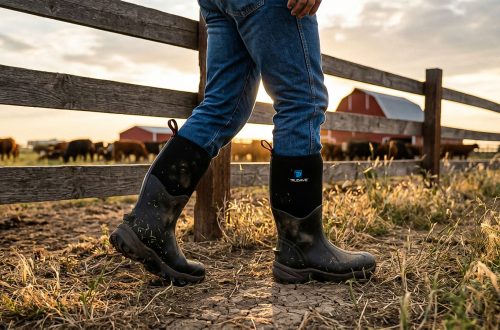
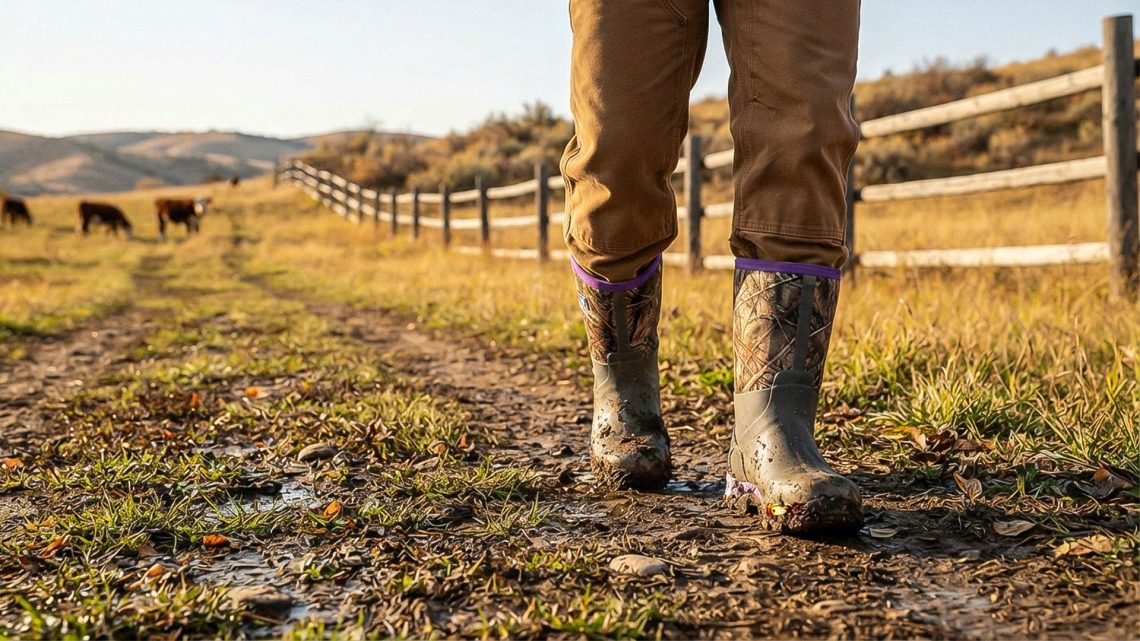
Waterproof mid-height or mid-calf boots are practical.
Boots for Bringing Horses In From the Field
Evening turnout areas may remain wet long after rain ends.
Workers often lead horses with one hand occupied.
Secure footwear improves control.
Boots for Leading Horses
A horse may suddenly:
- Stop.
- Move sideways.
- Pull forward.
Workers need stable footing.
Loose oversized rubber boots may make quick adjustments harder.
Boots for Large Horse Facilities
Commercial barns may require workers to walk significant distances between:
- Stalls.
- Arenas.
- Turnout areas.
- Hay storage.
- Training barns.
Boot weight matters.
Boots for Boarding Barn Employees
Boarding stables may combine:
- Customer interaction.
- Stall cleaning.
- Feeding.
- Turnout.
- Facility maintenance.
A versatile waterproof work boot works well.
Boots for Training Barns
Training facilities may require staff to move quickly between:
- Arenas.
- Barn aisles.
- Paddocks.
- Tack rooms.
A supportive mid-height boot provides a useful balance.
Boots for Breeding Farms
Breeding operations may involve larger fields and more outdoor work.
Employees may encounter:
- Deep mud.
- Foaling barns.
- Grass paddocks.
- Fencing.
More outdoor-oriented tread may be useful.
Boots for Foaling Barns
Foaling areas may require frequent cleaning and sanitation.
Smooth waterproof uppers are practical.
Boots for Veterinary Support Work
Barn employees assisting veterinarians may need footwear that is:
- Easy to clean.
- Securely fitted.
- Stable around horses.
Facility hygiene procedures should guide cleaning.
Boots for Quarantine Barns
Some equestrian facilities maintain isolation areas.
Dedicated footwear may help reduce transfer between zones.
Biosecurity Matters
Footwear can carry:
- Mud.
- Manure.
- Organic material.
Barns with disease-control protocols may use:
- Dedicated boots.
- Boot-wash stations.
- Footbaths.
Boots for Boot-Wash Stations
Smooth molded waterproof footwear is easier to clean repeatedly.
Complex fabric uppers may be more difficult to sanitize.
Boots for Riding Arena Maintenance
Arena workers may maintain:
- Sand.
- Fiber footing.
- Dirt footing.
They may use:
- Rakes.
- Tractors.
- Drag equipment.
Footwear should remain stable without digging excessively into soft footing.
Deep Lugs Are Usually Unnecessary in Arenas
Aggressive tread can collect:
- Sand.
- Fiber.
- Organic footing material.
Moderate tread is usually easier to manage.
Boots for Arena Drag Operators
Workers operating tractors or arena drags need:
- Good pedal control.
- Secure heel position.
- Moderate outsole thickness.
Tall rubber boots may feel cumbersome.
Boots for Indoor Arenas
Indoor facilities may be dry but dusty.
Workers may prefer lighter waterproof or water-resistant work boots.
Boots for Outdoor Arenas
Outdoor arenas may become wet after rain.
Workers may deal with:
- Muddy edges.
- Wet footing.
- Drainage problems.
Waterproof construction becomes more valuable.
Boots for Arena Drainage Work
Crews may maintain:
- Ditches.
- Drain lines.
- Low spots.
These jobs may require more shaft coverage.
Boots for Fence Repair
Horse facilities rely heavily on fencing.
Workers may handle:
- Boards.
- Wire.
- Posts.
- Fasteners.
Durable footwear is important.
Puncture Hazards Around Fencing
Workers may encounter:
- Nails.
- Wire.
- Screws.
Appropriate puncture protection may be required.
Boots for Post Installation
Setting fence posts may involve:
- Digging.
- Concrete.
- Heavy tools.
Safety-toe footwear may be appropriate.
Boots for Wooden Fence Maintenance
Workers may carry:
- Boards.
- Rails.
- Posts.
Protective toes can reduce impact risk.
Boots for Electric Fence Maintenance
Waterproof boots are not automatically electrically protective.
Workers should follow proper procedures around electric fencing systems.
Boots for Gate Areas
Gates are often the muddiest places on horse farms.
Repeated hoof and vehicle traffic creates:
- Deep ruts.
- Soft soil.
- Standing water.
More aggressive tread may be useful.
Boots for Gravel Gateways
Some facilities improve gates with gravel.
Workers need enough underfoot support for coarse stone.
Boots for Water Trough Maintenance
Water trough areas often stay wet.
Workers may need to:
- Drain.
- Scrub.
- Refill.
Mid-calf waterproof boots are useful.
Boots for Automatic Waterer Repairs
Leaks can create local mud quickly.
Easy-clean boots with secure fit are practical.
Boots for Frozen Water Troughs
Winter work may involve:
- Ice.
- Snow.
- Cold water.
Moderate insulation and cold-flexible outsole rubber can improve comfort.
Boots for Hay Barns
Hay storage areas are generally dry.
However, employees may move directly from muddy turnout into storage.
Simple tread helps reduce tracked-in debris.
Boots for Bedding Storage
Workers may handle:
- Straw.
- Shavings.
- Pelleted bedding.
Lightweight footwear is useful for repetitive material handling.
Boots for Horse Trailer Loading
Workers may help load horses into trailers.
They need secure footing on:
- Ramps.
- Rubber mats.
- Gravel.
- Mud.
Trailer Ramps Can Become Slippery
Mud packed into tread may reduce traction on trailer surfaces.
Workers should keep soles as clean as practical.
Boots for Trailer Cleaning
Trailer washout can involve:
- Water.
- Manure.
- Bedding.
Fully waterproof easy-clean boots are useful.
Boots for Horse Transport Crews
Drivers may spend long periods behind the wheel.
Very tall rigid rubber boots may reduce pedal comfort.
A supportive mid-height waterproof boot is more versatile.
Boots for Riding School Staff
Riding schools may require employees to move between:
- Lesson arenas.
- Barns.
- Turnout areas.
- Offices.
A relatively neat waterproof work boot may be useful.
Boots for Event Barns
Show facilities may host large numbers of horses.
Workers may manage:
- Temporary stalls.
- Wash racks.
- Trailer areas.
- Muddy parking fields.
Mixed-surface footwear becomes especially important.
Boots for Horse Show Grounds
Outdoor horse shows may involve:
- Grass.
- Mud.
- Gravel.
- Temporary flooring.
Workers may spend long days on their feet.
Boots for Temporary Stable Areas
Temporary barns may have less predictable drainage.
Waterproof mid-calf boots are useful.
Boots for Showground Wash Areas
Constant washing can create standing water.
Easy-clean rubber boots work well.
Boots for Racehorse Stables
Racing barns may have strict routines and extensive walking.
Workers may move between:
- Stalls.
- Tracks.
- Wash racks.
- Paddocks.
Footwear should be lightweight but durable.
Boots for Trackside Stable Workers
Surface requirements may vary between:
- Dirt.
- Synthetic track material.
- Concrete.
A moderate mixed-surface outsole is practical.
Boots for Polo Barns
Polo facilities often include large grass areas and horse transport.
Workers may encounter:
- Wet turf.
- Mud.
- Trailer ramps.
Supportive waterproof boots work well.
Boots for Therapeutic Riding Centers
Staff may move between accessible facilities and outdoor horse areas.
Footwear should balance:
- Clean appearance.
- Waterproofing.
- Hard-floor comfort.
Boots for Manure Compost Areas
Horse farms may compost manure and bedding.
These areas can become:
- Muddy.
- Wet.
- Soft.
More aggressive outdoor tread may be useful.
Boots for Compost Loader Operators
Workers using machinery need:
- Pedal control.
- Stable machine steps.
- Secure heel fit.
Boots for Manure Spreading
Some farms spread manure on fields.
Workers may move across:
- Mud.
- Grass.
- Equipment.
A durable waterproof work boot is useful.
Boots for Barn Cleaning Crews
Full cleanouts may involve large volumes of wet bedding.
Workers benefit from:
- More shaft coverage.
- Easy-clean uppers.
- Moderate outdoor tread.
Boots for Pressure Washing Barns
Pressure washing may be used on:
- Stalls.
- Aisles.
- Equipment.
Waterproof boots protect against normal splash.
They do not protect against direct high-pressure spray.
Boots for Disinfection Work
Some cleaning tasks may use disinfectants.
Waterproof does not automatically mean chemical resistant.
Workers should follow:
- Product labels.
- SDS information.
- Facility protocols.
Boots for Feed Delivery Areas
Feed deliveries may occur on:
- Concrete.
- Gravel.
- Muddy yards.
Workers unloading heavy bags may need more structured footwear.
Boots for Pallet Handling
Large barns may receive feed on pallets.
Safety-toe footwear may be appropriate.
Boots for Barn Maintenance Technicians
Facilities may require repair of:
- Doors.
- Water systems.
- Fans.
- Fencing.
- Tractors.
Maintenance workers often need more protective footwear than animal-care staff.
Boots for Tractor Operators
Tractors may be used for:
- Arena dragging.
- Manure handling.
- Mowing.
- Feeding.
Pedal control matters.
Boots for Skid Steer Operators
Operators may work around:
- Mud.
- Gravel.
- Manure piles.
A waterproof safety boot with moderate outsole thickness is practical.
Boots for Mowing Horse Pastures
Workers may use tractors or mowers across fields.
Footwear should allow good equipment control.
Boots for Pasture Inspection
Employees may walk:
- Fencelines.
- Wet grass.
- Uneven soil.
Lightweight waterproof support is useful.
Boots for Wet Grass
Pastures may stay wet for hours after rain or dew.
Low shoes can become soaked quickly.
Mid-height boots provide useful coverage.
Boots for Spring Horse Farm Work
Spring may bring:
- Mud.
- Rain.
- Soft paddocks.
This is when waterproof boots become especially important.
Boots for Summer Stable Work
Barns can become hot.
Heavy insulated rubber boots should usually be avoided.
Workers should prioritize:
- Uninsulated construction.
- Lightweight materials.
- Moisture-wicking socks.
Boots for Autumn Barn Work
Fall may bring:
- Wet leaves.
- Mud.
- Cool rain.
Versatile waterproof boots work well.
Boots for Winter Horse Barn Work
Cold climates may create:
- Snow.
- Slush.
- Frozen mud.
- Ice.
Workers may need moderate insulation.
Frozen Paddocks Are Uneven
Mud ruts can freeze solid.
Supportive midsoles and ankle control become important.
Ice Requires Separate Traction Controls
No ordinary boot completely eliminates ice risk.
Approved traction devices may be needed.
Best Socks for Horse Barn Workers
Synthetic and wool-blend socks generally perform better than cotton.
Useful features include:
- Moisture wicking.
- Quick drying.
- Heel cushioning.
- Secure fit.
Boot Weight Matters During Long Barn Shifts
Stable employees may walk thousands of steps.
Heavy footwear increases fatigue.
Cushioning Matters on Concrete Aisles
Workers may spend several hours indoors on hard floors.
Supportive midsoles are important.
Heel Retention Matters in Mud
A secure heel reduces internal boot movement in sticky ground.
Toe Space Matters During Long Days
Feet may swell.
Boots should hold the heel without crowding the toes.
Forefoot Flexibility Helps With Stall Work
Workers frequently:
- Kneel.
- Crouch.
- Bend.
- Push wheelbarrows.
The boot should flex naturally.
Removable Insoles Improve Daily Use
Replaceable footbeds allow workers to:
- Dry footwear.
- Restore cushioning.
- Improve hygiene.
- Adjust support.
Easy-Clean Construction Saves Time
Barn boots may collect:
- Mud.
- Manure.
- Bedding.
- Hay.
- Sand.
Smooth waterproof uppers simplify cleaning.
How to Clean Horse Stable Work Boots
A practical routine may include:
- Remove hay and bedding.
- Brush mud and manure from tread.
- Rinse the exterior.
- Follow facility sanitation procedures where necessary.
- Inspect for nails or sharp objects.
- Remove damp insoles.
- Allow boots to dry completely.
Bedding Should Be Removed From Tread Regularly
Straw and shavings can become tightly packed into outsole grooves.
Check Soles for Horseshoe Nails
Sharp metal may become lodged in tread around farrier areas.
Inspect footwear carefully.
How to Dry Barn Work Boots
After cleaning:
- Remove insoles.
- Open the boots.
- Allow airflow.
- Use low-temperature drying if approved.
Avoid strong direct heat.
Rotating Two Pairs Can Help Stable Workers
Daily exposure to mud and wash water may keep boots damp.
Alternating footwear allows additional drying time.
When Horse Stable Boots Should Be Replaced
Replace footwear when:
- Waterproofing fails.
- Tread becomes badly worn.
- Rubber cracks.
- Outsole separation develops.
- Heel support collapses.
- Puncture damage occurs.
- Cushioning becomes ineffective.
Do Horse Stable Workers Need Safety-Toe Boots?
Some jobs may benefit from protective toes, especially around:
- Heavy gates.
- Machinery.
- Feed pallets.
- Fence materials.
However, requirements depend on the facility and duties.
Hoof Impact Is a Special Concern
Working around horses always involves the possibility of a foot being stepped on.
Workers should follow facility safety requirements when choosing protective footwear.
Do Horse Barn Workers Need Puncture-Resistant Boots?
Puncture protection may be valuable around:
- Farrier nails.
- Fence wire.
- Screws.
- Barn construction debris.
Common Mistakes When Buying Horse Stable Boots
Buying Cheap Rain Boots for Full-Time Barn Work
They may lack cushioning and support.
Choosing Deep Mud Boots for Indoor Barn Work
Aggressive tread can trap bedding and manure.
Wearing Boots Too Loose Around Horses
Secure fit improves quick foot movement.
Ignoring Concrete Aisle Comfort
Workers spend more time on hard floors than many people expect.
Buying Boots Too Tall for Summer Barn Work
Extra shaft height increases heat and weight.
Ignoring Farrier Nail Hazards
Sharp metal can create puncture risks.
Assuming Waterproof Means Disinfectant Resistant
Sanitation chemicals may require compatible materials.
Failing to Clean Tread Before Entering Trailers
Mud and manure can reduce traction on ramps.
How to Choose the Best Boots for Horse Stable Work
Start with the worker’s primary responsibilities.
For stall-cleaning crews, prioritize:
- Waterproof construction.
- Easy-clean uppers.
- Flexible movement.
- Moderate tread.
For turnout workers, prioritize:
- Mud traction.
- Secure heel fit.
- Wet-grass protection.
- Ankle support.
For wash-rack crews, prioritize:
- Full waterproofing.
- Hard-floor traction.
- Good cushioning.
For arena workers, prioritize:
- Moderate tread.
- Pedal control.
- Sand-friendly outsole design.
For fence and maintenance crews, prioritize:
- Safety protection.
- Durable uppers.
- Puncture resistance where required.
For horse transport workers, prioritize:
- Trailer-ramp traction.
- Driving comfort.
- Secure heel positioning.
Workers comparing waterproof footwear from brands such as Trudave Gear should select boots according to the actual combination of mud, manure, wet barn floors, paddocks, wash racks, trailers, and long walking shifts involved in their work.
Frequently Asked Questions
What are the best boots for horse stable work?
The best horse stable boots are waterproof, securely fitted, easy to clean, supportive for long shifts, and equipped with traction suitable for mud, wet barn floors, gravel, and paddocks.
Are rubber boots good for horse barns?
Yes. Rubber boots are especially practical for stall cleaning, wash racks, muddy paddocks, manure handling, and rainy turnout work.
How tall should barn work boots be?
Mid-height or mid-calf boots are versatile for most stable work. Taller boots may be useful for deep mud, washdown, and extremely wet paddocks.
What boots are best for muddy horse paddocks?
Waterproof boots with open tread channels, moderate-to-deep lugs, secure heel retention, and supportive uppers work well.
Are deep mud boots good inside horse barns?
Usually not. Deep lugs can trap bedding and manure and may feel awkward on concrete or rubber mats.
What boots are best for stall cleaning?
Waterproof easy-clean boots with flexible forefoot movement, supportive midsoles, secure heel fit, and moderate tread are practical.
Do horse stable workers need safety-toe boots?
Some barns and maintenance jobs may require protective toes, especially around machinery, heavy materials, and equipment.
Do barn workers need puncture-resistant boots?
Puncture protection may be useful around horseshoe nails, fencing wire, screws, and maintenance debris.
What boots are best for horse wash racks?
Fully waterproof boots with broad hard-surface contact, flexible rubber, good cushioning, and enough splash coverage are practical.
How should horse barn boots be cleaned?
Remove bedding, mud, and manure, brush outsole grooves, rinse the exterior, inspect for sharp objects, follow sanitation procedures where needed, and allow the boots to dry completely.
Final Thoughts
Horse stable and equestrian facility work combines muddy paddocks, wet barn aisles, stall cleaning, wash racks, manure handling, arena maintenance, fencing, tractors, trailers, and long days around large animals.
The best footwear depends on the employee’s role.
Stall crews need waterproof boots that are easy to clean.
Turnout workers need stronger mud and wet-grass traction.
Wash-rack employees benefit from broad hard-floor contact and additional water protection.
Arena workers need flexible boots that work well around sand and equipment.
Maintenance teams may require additional safety and puncture protection.
Transport crews need footwear that balances trailer traction with driving comfort.
Trudave Gear offers waterproof outdoor and work footwear suited to mud, wet grass, rain, farm maintenance, barn work, and demanding outdoor environments.
Choosing footwear according to the actual equestrian task can help workers stay drier, reduce fatigue, maintain better footing, and remain more comfortable from the first morning feeding round to the final horse brought in from turnout at the end of the day.


You May Also Like
Best Boots for Peanut Farm and Harvest Work
Tall vs Mid-Calf Rain Boots: Which Boot Height Is Better?