Beyond Puddles: Why Serious Farmers Rely on Trudave Gear Tall Rain Boots for Daily Chores
Cheap rain boots split, leak, and ruin your feet. Discover why the heavy-duty construction of Trudave Gear Tall Rain Boots makes them the ultimate essential for livestock management and rugged farm chores.
If you manage a working farm, a homestead, or a large property, “rain boots” is almost a misleading term. You aren’t just splashing in puddles on a suburban sidewalk; you are wading through livestock manure, navigating mud-rutted tractor paths, and kicking through dense, thorny brush. In this environment, a boot is not a fashion accessory—it is a vital piece of protective equipment.
For generations, farmers accepted that they would have to buy two or three pairs of cheap, big-box store PVC boots every single year because they inevitably crack, split at the seams, or lose their tread.
But the game has changed. Agricultural workers are demanding better, more durable footwear, and one brand is stepping up to the plate: Trudave Gear. Today, we are diving deep into why the Trudave Gear Tall Rain Boots are becoming the undisputed king of the barnyard.
The Problem with “Discount” Rubber Boots
Before we look at the solution, let’s look at why cheap boots fail on the farm:
- The PVC Curse: Most cheap boots are injection-molded from stiff PVC plastic. In cold weather, this material becomes rigid and brittle. Within a few months of squatting, kneeling, and walking, the flex point across the top of your foot will crack, letting water pour in.
- Chemical Degradation: Chicken droppings, cow manure, and agricultural fertilizers are highly acidic. They eat away at cheap synthetic materials, causing the boot to literally rot off your foot.
- Zero Arch Support: Spending 12 hours on concrete dairy parlor floors or rocky pastures in flat, unsupportive boots guarantees severe lower back and knee pain.
Why Trudave Gear is Built for the Grind
The engineers at Trudave Gear didn’t design a boot for walking the dog; they built a tool for the working professional. Here is why they thrive in the worst conditions:
1. Premium Hand-Laid Rubber Construction Instead of cheap plastic, Trudave Gear utilizes multi-layered, vulcanized natural rubber. This means the boots remain incredibly pliable even when the temperature drops below freezing. The high-stress areas—specifically the toe box, the heel kicker, and the Achilles tendon zone—are heavily reinforced with extra layers of rubber. This prevents punctures from rogue barbed wire or sharp branches and stops the dreaded “blowout” at the seams.
2. The Livestock Acid Test The proprietary rubber compound used in Trudave Gear Tall Boots is highly resistant to barnyard acids and agricultural chemicals. Whether you are mucking out stalls or spraying crops, these boots won’t degrade. Plus, the smooth outer layer is designed to shed debris—a quick blast with the pressure washer, and they look brand new.
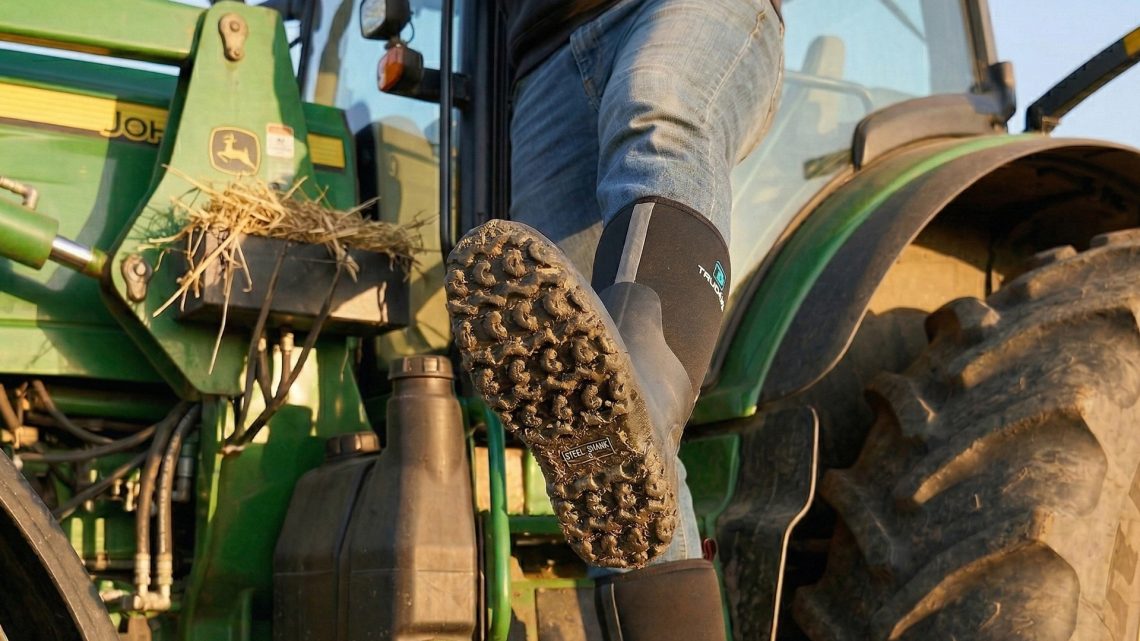
3. Tractor-Grade Traction A slick pair of boots on a muddy tractor pedal is an accident waiting to happen. The outsoles on the Trudave Gear boots feature aggressive, deep-cleated lugs that bite into thick mud, wet snow, and slick concrete, providing superior stability when wrestling heavy feed bags or handling livestock.
The Bottom Line for Farmers
Farming is hard enough; your feet shouldn’t make it harder. By investing in a pair of Trudave Gear Tall Rain Boots, you are stopping the endless cycle of replacing blown-out footwear. You get dry feet, protected shins, and the comfort needed to finish the day’s work.
FAQ: Heavy-Duty Farm Boots
Q: Are these tall boots difficult to get on and off? A: Not at all. Trudave Gear designs their tall boots with a slightly wider calf opening and a robust “heel kicker” ledge on the back. You can step on the back of the heel with your other foot to easily slide them off, hands-free, before walking into the house.
Q: Can I wear them while operating a chainsaw or heavy machinery? A: While they offer excellent protection against mud, water, and brush, standard rubber rain boots do not have a steel or composite safety toe. If your specific task requires impact or crush protection, you should wear certified safety footwear.
Q: How do they hold up to barbed wire? A: The reinforced lower section is highly puncture-resistant and will brush off most thorns and briars with ease. While no rubber boot is 100% impenetrable to a direct, forceful puncture from heavy gauge wire, they offer significantly more protection than standard fabric or leather work boots in wet conditions.


You May Also Like
Height Matters: Choosing the Right Shaft Height for Your Trudave Rain Boots

Turning Leaves into Gold: Making Compost from Autumn’s Bounty