Best Boots for Horse Racetrack and Stable Maintenance
A horse racetrack is not one single workplace.
Before the public arrives, maintenance crews may already be watering the track, checking drainage, repairing rails, dragging the surface, moving equipment, cleaning stable aisles, preparing the paddock, and washing down horse areas.
By race time, the same property may contain:
- Damp track surfaces.
- Muddy paddocks.
- Wet grass.
- Stable bedding.
- Manure.
- Wash racks.
- Concrete aisles.
- Gravel service roads.
- Metal gates.
- Equipment yards.
- Rainwater.
- Standing water near drainage points.
That variety makes footwear selection more complicated than simply choosing a generic pair of farm boots.
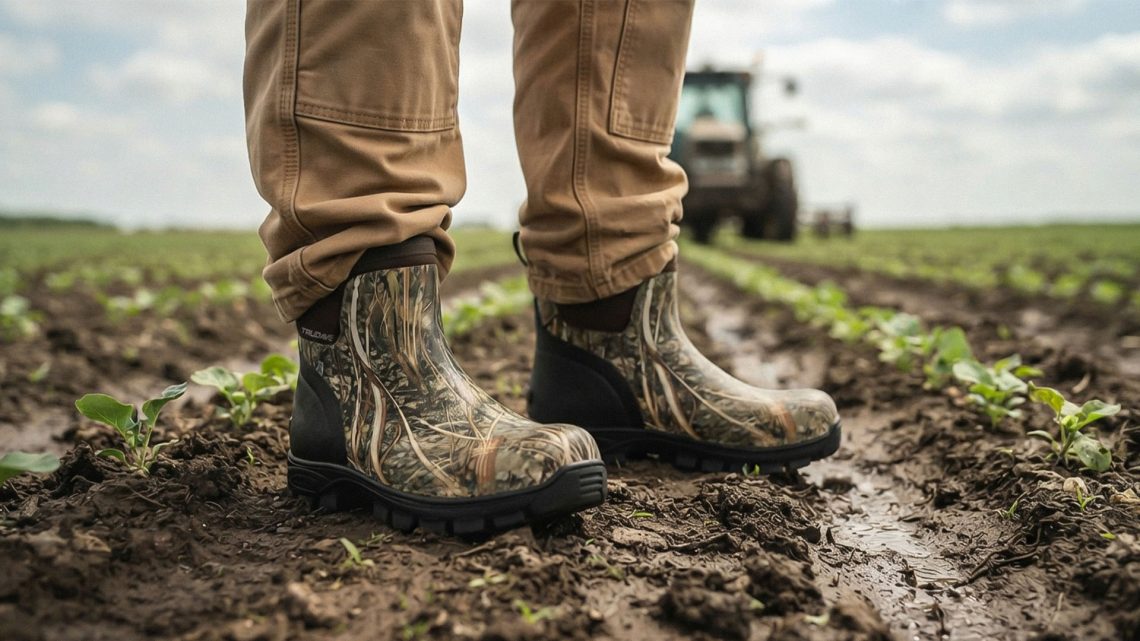
The best boots for horse racetrack work should provide waterproof protection where it matters, enough traction for mud and wet surfaces, secure heel support around horses and machinery, and comfort for workers who may spend an entire shift moving between barns, track surfaces, paddocks, and maintenance buildings.
Racetrack Workers Move Between Soft and Hard Ground Constantly
A racetrack maintenance employee may spend ten minutes on soft dirt, then step onto concrete, gravel, rubber mats, or metal equipment.
This creates conflicting footwear requirements.
A very aggressive mud boot may work well beside the track but feel awkward inside a stable aisle.
A flat indoor work shoe may feel comfortable on concrete but struggle in a rain-soaked paddock.
The most useful footwear is usually designed for mixed surfaces rather than one extreme environment.
Track Surface Type Changes the Ideal Boot
Not every racetrack uses the same surface.
Workers may maintain:
- Dirt tracks.
- Turf courses.
- Synthetic tracks.
- Training tracks.
- Warm-up areas.
Each surface behaves differently.
The correct boot depends on where the worker spends the most time.
Boots for Dirt Racetrack Maintenance
Dirt tracks require constant grooming.
Crews may:
- Harrow the surface.
- Water the track.
- Repair uneven spots.
- Check depth.
- Maintain drainage.
- Remove debris.
Track material may become:
- Dry and loose.
- Damp and firm.
- Sticky after rain.
- Muddy near low areas.
Suitable boots should provide moderate tread and stable heel support without excessively digging into the maintained surface.
Too Much Tread Can Be Unnecessary on Prepared Tracks
Deep agricultural lugs are built for soft fields.
A professionally maintained racetrack often has a more controlled surface.
Very deep tread may:
- Carry excessive material.
- feel heavy.
- reduce comfort on equipment.
- leave deeper marks.
Moderate, well-spaced tread is often more practical.
Boots for Turf Course Maintenance
Turf crews may work on:
- Wet grass.
- soft soil.
- irrigated sections.
- divot repair areas.
Morning dew alone can soak ordinary work shoes.
Waterproof boots with flexible rubber and moderate grass traction are especially useful for early maintenance shifts.
Protecting Turf Matters
Workers maintaining turf courses should avoid overly aggressive footwear where possible.
The goal is to maintain grip without unnecessarily damaging carefully managed grass.
Broad outsole contact and moderate tread are usually better than extreme mud lugs.
Boots for Synthetic Track Surfaces
Synthetic racing surfaces may be composed of engineered materials.
Workers should prioritize:
- Secure footing.
- moderate tread.
- clean outsole design.
- lightweight comfort.
Heavy mud tread may collect surface material unnecessarily.
Morning Track Watering Creates Constant Splash
Track maintenance often begins with watering.
Workers may handle:
- Irrigation equipment.
- Water trucks.
- Hoses.
- Sprinklers.
Even when the track itself is not muddy, workers may repeatedly step around wet equipment.
Fully waterproof footwear helps prevent socks from becoming soaked early in the shift.
Boots for Irrigation Crews
Racetrack irrigation technicians may repair:
- Sprinklers.
- pipes.
- valves.
- pumps.
- hoses.
Leaks can create localized mud quickly.
Flexible mid-height waterproof boots are practical because workers often need to kneel, bend, dig, and move between turf and equipment areas.
Boots for Drainage Maintenance
Rain can reveal drainage issues around:
- Track edges.
- infield areas.
- paddocks.
- stable roads.
- parking zones.
Drainage crews may work in:
- Deep mud.
- saturated soil.
- standing water.
- ditches.
For these tasks, taller waterproof boots with more open tread may be useful.
Paddocks Create a Different Footwear Problem
Paddocks combine horse traffic with wet outdoor ground.
Workers may encounter:
- Mud.
- grass.
- manure.
- gravel.
- wet walkways.
The main requirement is stable, predictable movement.
Workers should avoid loose oversized footwear around horses.
Why Secure Heel Fit Matters Around Horses
Horses move quickly and unpredictably.
A worker may need to:
- Step sideways.
- move backward.
- turn quickly.
- lead a horse.
- open a gate.
If the foot slides around inside the boot, reaction time and balance can suffer.
Secure heel retention is more important than many buyers realize.
Boots for Stable Aisles
Stable aisles may contain:
- Concrete.
- Rubber mats.
- bedding.
- manure.
- water.
Workers may spend long periods walking or standing on hard surfaces.
Useful footwear features include:
- Cushioned midsoles.
- stable heel cups.
- moderate tread.
- waterproof uppers.
- easy-clean construction.
Deep mud tread is usually unnecessary indoors.
Boots for Horse Stall Cleaning
Stall cleaning may involve:
- Bedding.
- manure.
- urine.
- water.
- shovels.
- wheelbarrows.
Smooth waterproof boots are easy to rinse after work.
Moderate open tread also helps prevent bedding from becoming packed into the outsole.
Bedding Can Clog Tread
Materials such as:
- Straw.
- shavings.
- pellets.
can collect inside deep lug patterns.
A simple outsole is easier to clean.
This is one reason barn workers often benefit from moderate tread rather than extreme farm tread.
Boots for Wash Racks
Horse wash racks are among the wettest areas at a racetrack.
Workers may encounter:
- Hoses.
- Water.
- Shampoo.
- Wet concrete.
- Rubber mats.
Suitable boots should provide:
- Fully waterproof construction.
- Broad outsole contact.
- flexible rubber.
- secure heel support.
- good cushioning.
Soap and Water Increase Slip Risk
Horse shampoo mixed with water can make wash-rack floors more difficult.
No ordinary outsole eliminates the risk completely.
Good footwear should be combined with:
- Drainage.
- Floor cleaning.
- Controlled movement.
Boots for Grooming Areas
Grooming workers may spend significant time:
- Standing.
- bending.
- walking around horses.
A bulky knee-high boot may be unnecessary.
A mid-height waterproof work boot can provide enough protection while remaining flexible.
Boots for Hot-Walking Areas
Workers handling horses after training may walk continuously.
Footwear should prioritize:
- Low weight.
- cushioning.
- secure heel fit.
- flexible movement.
Heavy rubber boots become tiring after many laps.
Boots for Walking Rings
Walking rings may have:
- Dirt.
- sand.
- synthetic footing.
A moderate outsole usually provides enough traction.
Deep tread can dig unnecessarily into soft prepared surfaces.
Boots for Starting Gate Crews
Starting gate work requires quick movement and precise footing.
Workers may handle:
- Horses.
- gates.
- metal structures.
- equipment.
Suitable footwear should provide:
- Secure heel retention.
- moderate outsole thickness.
- durable uppers.
- good mixed-surface traction.
- protective toes where required.
Metal Gate Surfaces Need Clean Tread
Mud or manure packed into the outsole can reduce contact on metal steps.
Workers should keep tread clean before climbing or moving around gate equipment.
Boots for Rail Maintenance
Track crews may repair:
- Inner rails.
- outer rails.
- fencing.
- posts.
This work may involve:
- Grass.
- mud.
- tools.
- hardware.
- gravel.
Supportive waterproof lace-up work boots may be more practical than loose rubber boots for repeated tool and repair work.
Boots for Fence Repair
Fence maintenance may expose workers to:
- Wire.
- nails.
- sharp hardware.
- uneven terrain.
A standard waterproof rubber boot is not automatically puncture resistant.
Workers should use appropriately rated footwear where sharp hazards are present.
Boots for Equipment Operators
Racetrack maintenance may use:
- Tractors.
- harrows.
- water trucks.
- loaders.
- utility vehicles.
Operators need good pedal feel.
Tall bulky rubber boots may interfere with precise control.
A supportive waterproof work boot with moderate outsole thickness is often more practical.
Boots for Tractor Drivers
Tractor operators may repeatedly move between the cab and track surface.
Useful features include:
- Secure heel positioning.
- flexible ankle movement.
- stable equipment steps.
- moderate tread.
- waterproof uppers.
Boots for Water-Truck Operators
Water-truck drivers work around hoses and wet track areas.
Their footwear needs:
- Waterproof protection.
- good step traction.
- pedal control.
- comfortable walking support.
Boots for Utility Vehicle Crews
UTVs and carts are common around large racetrack properties.
Workers may repeatedly enter and exit vehicles.
Bulky shafts can make this awkward.
Mid-height footwear is usually more practical.
Rainy Race Days Change Everything
Rain can affect nearly every work zone.
Workers may suddenly face:
- Muddy paddocks.
- Soft track edges.
- wet stable entrances.
- standing water.
- slippery concrete.
A versatile waterproof boot becomes especially valuable.
Boots for Muddy Paddocks
When paddocks become deeply muddy, open tread becomes more important.
Useful features include:
- Wider lug spacing.
- defined heel edges.
- flexible rubber.
- secure heel retention.
Mud suction makes oversized boots especially tiring.
Boots for Wet Grass Around the Infield
Wet grass requires different traction than mud.
A balanced outsole with broad contact and moderate grooves is usually better than extremely deep lugs.
Boots for Gravel Service Roads
Racetrack properties may include long gravel routes between:
- Stables.
- equipment yards.
- training areas.
- maintenance buildings.
Thin recreational rain boots may become uncomfortable.
Workers who walk long distances should look for strong midsoles and durable outsoles.
Boots for Concrete Barn Aprons
Barn entrances may have concrete aprons that become wet from:
- Rain.
- horse washing.
- cleaning.
- tracked mud.
Hard-floor traction matters here.
This is another reason mixed-surface outsole design is important.
Boots for Manure Handling
Stable maintenance crews may move manure using:
- Wheelbarrows.
- carts.
- loaders.
Smooth waterproof uppers are easy to rinse.
Simple tread also reduces the amount of material carried into cleaner areas.
Boots for Manure Storage Areas
These areas may become muddy or wet.
Taller rubber boots can be useful depending on conditions.
Employees operating loaders may prefer more structured work footwear for pedal control.
Boots for Hay and Feed Rooms
Feed storage areas are usually drier.
Workers may handle:
- Hay.
- bags.
- pallets.
- carts.
Deep tread is unnecessary and may collect debris.
A supportive waterproof work boot can transition more easily between barn and outdoor areas.
Boots for Feed Delivery
Workers carrying feed need stable footing.
Safety-toe protection may be appropriate around:
- Heavy pallets.
- forklifts.
- loading areas.
The correct rating depends on workplace requirements.
Boots for Race-Day Setup
Race-day crews may prepare:
- Barriers.
- signs.
- paddock equipment.
- spectator areas.
- track markers.
They may need cleaner, less bulky footwear than heavy maintenance crews.
A presentable waterproof work boot can be useful when employees move between operational and public areas.
Boots for Horse Transport Areas
Horse vans and trailers may create:
- Wet ramps.
- manure.
- bedding.
- mud.
Workers need good ramp contact and secure heel fit.
Deep mud should be removed from soles before stepping onto smooth ramps whenever practical.
Trailer Ramps Can Be Slippery
Wet rubber, metal, or wood ramps require controlled movement.
Broad outsole contact is valuable.
Workers should never rely on aggressive tread alone.
Boots for Veterinary Barn Support
Racetracks may have veterinary examination or treatment areas.
These spaces generally require:
- Cleanable footwear.
- moderate tread.
- hard-floor comfort.
- good hygiene.
Deep mud boots may be inappropriate inside cleaner treatment areas.
Dedicated Boots for Certain Barn Zones
Some facilities may use dedicated footwear for specific horse-care or isolation areas.
Workers should follow site hygiene and biosecurity procedures.
Chemical Exposure Around Racetrack Maintenance
Grounds crews may use:
- Herbicides.
- fertilizers.
- track treatments.
- disinfectants.
- cleaning products.
Waterproof construction does not automatically provide chemical resistance.
Workers should follow product labels and facility PPE requirements.
Boots for Turf Treatment Crews
Employees applying products to turf should use footwear compatible with the specific product.
Do not assume any rubber boot is universally suitable for pesticide or fertilizer exposure.
Winter Racetrack Work
Cold-weather tracks may operate through:
- Snow.
- slush.
- frozen ground.
- cold rain.
Suitable boots may need:
- Waterproof construction.
- moderate insulation.
- cold-flexible rubber.
- thicker midsoles.
- room for warm socks.
Frozen Stable Yards
Water around barns may freeze during winter.
No ordinary boot completely eliminates slipping on ice.
Facilities may need:
- Deicing.
- surface maintenance.
- approved traction devices.
Summer Racetrack Work
Summer workers may face:
- Heat.
- dust.
- long walking shifts.
- irrigation.
Heavy insulated rubber boots are usually unnecessary.
Workers should prioritize lightweight uninsulated waterproof footwear.
Boot Weight Matters More During Race-Day Shifts
Workers may cover large distances between:
- Track.
- barns.
- paddock.
- equipment areas.
Heavy footwear increases fatigue.
Select only as much shaft height and outsole bulk as the job requires.
Cushioning Matters on Stable Concrete
Stable workers may spend hours on hard surfaces.
Supportive midsoles and removable insoles can significantly improve comfort.
Best Socks for Racetrack Workers
Synthetic and wool-blend socks generally perform better than cotton.
Useful characteristics include:
- Moisture management.
- heel cushioning.
- quick drying.
- secure fit.
Spare socks can be helpful during wet race days.
Easy-Clean Construction Is a Major Advantage
Racetrack footwear may collect:
- Mud.
- manure.
- bedding.
- grass.
- sand.
- track material.
Smooth waterproof uppers are much easier to clean before entering public-facing or indoor areas.
How to Clean Racetrack Work Boots
A practical routine may include:
- Remove heavy mud and manure.
- Brush track material from tread.
- Rinse the outsole.
- Wipe waterproof uppers.
- Follow any barn sanitation procedures.
- Inspect for cracks.
- Remove damp insoles.
- Dry footwear completely.
Mud and Bedding Should Not Be Left in Tread
Packed debris can reduce traction on:
- Metal gates.
- concrete.
- trailer ramps.
Regular cleaning keeps the outsole working as intended.
How to Dry Stable and Racetrack Boots
After a wet shift:
- Remove insoles.
- loosen laces or open shafts.
- allow airflow.
- use a low-temperature boot dryer if approved.
Avoid strong direct heat.
When Racetrack Boots Should Be Replaced
Replace footwear when:
- Waterproofing repeatedly fails.
- tread becomes badly worn.
- heel support collapses.
- outsole separation develops.
- cracks appear.
- cushioning is permanently compressed.
- protective components are damaged.
Do Racetrack Workers Need Safety-Toe Boots?
Safety toes may be appropriate around:
- Starting gates.
- maintenance equipment.
- loaders.
- feed pallets.
- heavy tools.
- horse transport equipment.
The correct protection depends on the worker’s role.
Puncture Hazards Around Track Facilities
Workers may encounter:
- Fence wire.
- nails.
- broken boards.
- metal hardware.
A thick outsole is not automatically puncture resistant.
Appropriate rated footwear should be used where required.
Common Mistakes When Choosing Racetrack Work Boots
Buying Deep Farm Boots for Every Role
Track operators and stable workers often need different footwear.
Wearing Loose Boots Around Horses
Secure movement matters around unpredictable animals.
Choosing Heavy Tall Boots for Equipment Operators
Pedal control may suffer.
Ignoring Wet Concrete
Barn and wash areas need hard-surface traction.
Buying Casual Rain Boots for Full Stable Shifts
They may lack enough support and cushioning.
Ignoring Track Surface Type
Dirt, turf, and synthetic surfaces have different traction needs.
Assuming Waterproof Means Chemical Resistant
Track and turf products may require specific protective materials.
Failing to Clean Mud Before Using Ramps or Equipment
Packed tread reduces usable surface contact.
How to Choose the Best Boots for Horse Racetrack Work
Start with the employee’s actual role.
For track grounds crews, prioritize:
- Waterproof construction.
- moderate surface-friendly tread.
- lightweight support.
- secure heel retention.
For stable workers, prioritize:
- Easy-clean uppers.
- cushioning.
- wet-floor traction.
- moderate tread.
For paddock crews, prioritize:
- Secure fit.
- mixed-surface traction.
- waterproof protection.
- lateral stability.
For irrigation and drainage crews, prioritize:
- More shaft coverage.
- mud-release tread.
- flexible movement.
For equipment operators, prioritize:
- Pedal control.
- moderate outsole thickness.
- stable machine steps.
For starting gate and maintenance workers, prioritize:
- Additional safety protection.
- durable construction.
- secure ankle support.
Workers comparing waterproof footwear from brands such as Trudave Gear should select boots based on the actual combination of track surface, stable work, paddock conditions, machinery, weather, and horse handling involved in the job.
Frequently Asked Questions
What are the best boots for racetrack groundskeepers?
The best racetrack groundskeeping boots are waterproof, lightweight enough for long shifts, securely fitted, and equipped with moderate traction for dirt, turf, mud, grass, and maintenance areas.
Are rubber boots good for horse racetracks?
Yes. Rubber boots are especially useful for wet paddocks, wash racks, stable cleaning, irrigation repairs, muddy track edges, and rainy race days.
What boots are best for stable workers?
Waterproof work boots with easy-clean uppers, cushioning, moderate tread, secure heel support, and good wet-floor traction are practical for stable work.
How tall should racetrack work boots be?
Mid-height or mid-calf boots are versatile for many roles. Taller boots may be useful for deep mud, drainage work, and heavy washdown.
Are deep mud boots good for track maintenance?
Not usually for routine track grooming. Moderate tread is often more practical on prepared dirt, turf, synthetic surfaces, and equipment.
What boots are best for muddy paddocks?
Waterproof boots with secure heel retention, open tread channels, flexible rubber, and good lateral support are useful.
Do racetrack workers need safety-toe boots?
Some starting gate, maintenance, loader, feed-handling, and equipment roles may require safety-toe footwear.
What footwear is best for horse wash racks?
Fully waterproof boots with broad floor contact, flexible rubber, moderate tread, and good cushioning are practical.
Are waterproof boots suitable for racetrack chemicals?
Not automatically. Material compatibility should be checked for fertilizers, herbicides, disinfectants, and track-treatment products.
How should racetrack work boots be cleaned?
Remove mud, manure, bedding, and track material, rinse tread channels, follow barn sanitation procedures where necessary, and dry the footwear completely.
Final Thoughts
Horse racetrack work requires footwear that can move between prepared track surfaces, wet turf, muddy paddocks, stable aisles, wash racks, gravel roads, trailers, machinery, and public-facing race-day areas.
No single extreme boot design is ideal for every employee.
Track crews benefit from lightweight waterproof footwear with moderate surface-friendly tread.
Stable workers need cleanable boots with better cushioning and wet-floor traction.
Paddock workers need secure heel fit and controlled mixed-surface grip.
Irrigation and drainage teams may need taller waterproof boots with better mud release.
Equipment operators need reliable pedal control.
Maintenance and starting gate crews may require additional safety features.
Trudave Gear offers waterproof outdoor and work footwear suited to wet grass, rain, mud, animal-care environments, and demanding outdoor maintenance.
Choosing footwear according to the worker’s actual racetrack role can help improve comfort, traction, stability, and water protection from the first track-preparation pass before sunrise to the final stable check after the last race.


You May Also Like
How January Ground Conditions Change Lying Time and Rest Quality

Why Green Grass Doesn’t Always Mean High-Quality Feed