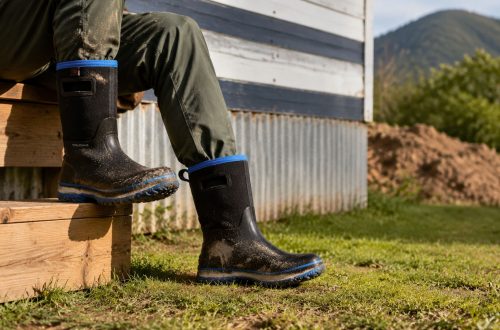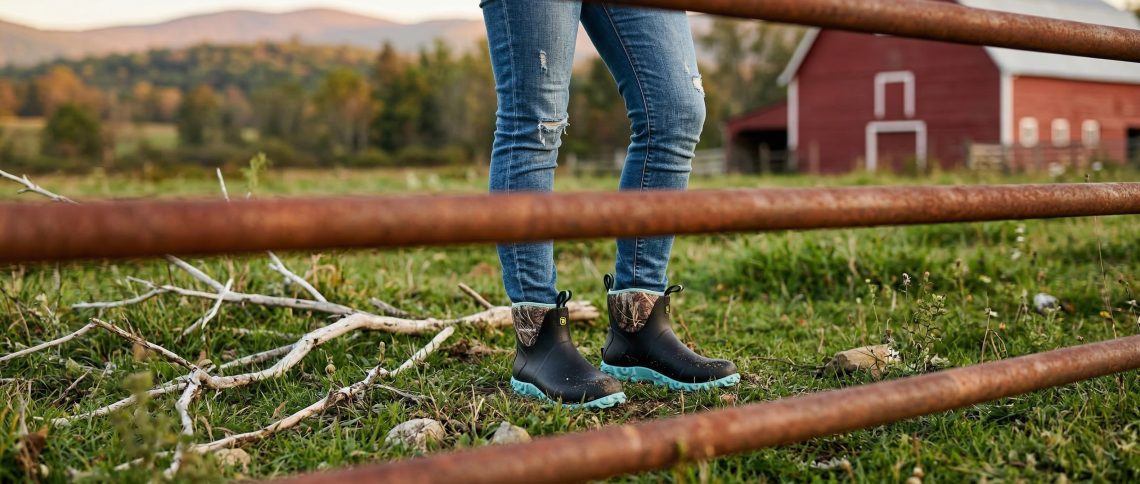
The Gardener’s Guide to Rain Boots: How to Choose the Right Pair for Your Yard, Raised Beds, and Weekend Harvests
Meta Description: The right rain boots transform a soggy morning in the garden from a chore into a pleasure. Here’s exactly how to pick the right waterproof boots for every type of gardening — and why Trudave Gear gets it right.
Gardening is one of the few hobbies where the weather doing exactly what it’s supposed to do — rain, keeping the soil moist and the plants growing — is the thing most likely to make you miserable if you’re not dressed for it.
Wet feet ruin a morning in the garden faster than anything else. You’ll cut the session short. You’ll skip the weeding. You’ll delay the harvest. You’ll tell yourself you’ll deal with it when it dries out, and then it rains again, and the weeds keep growing, and the tomatoes that needed staking two days ago are now flopped over on the cage wire.
The right rain boots fix this entirely. A good pair means you’re out in the garden thirty seconds after deciding to be there, regardless of whether it rained last night or the sprinklers just ran. You’re working, not watching the weather.
But gardeners have different needs depending on how they garden — and the boot that’s perfect for a raised-bed kitchen gardener is not necessarily the right boot for a market gardener harvesting multiple acres or someone managing a homestead with a mix of gardening and light animal work. This guide breaks it down by gardening scenario so you can find the boot that actually fits your life.
Why Gardening is Harder on Boots Than People Realize
Here’s what gardening actually does to footwear over a season:
Soil chemistry. Fertilizers — even organic ones — are mildly acidic or alkaline and break down materials faster than plain water. Boots that get regular contact with amended garden soil and organic fertilizer experience more chemical stress than boots used only in rain.
Repeated flex cycles. Kneeling, crouching, stepping over raised beds, and the constant micro-adjustment of working in close quarters with plants means your boots are bending and flexing thousands of times per gardening season. Materials that can’t handle this repeated flexion crack or delaminate faster than the simple foot strike of walking would suggest.
Hose and irrigation contact. Garden boots get wet from both ends: precipitation from above and irrigation and hose spray from below. Most waterproof boots are tested for rain and shallow puddles; fewer are tested for lateral hose spray at close range, which finds its way through any weak point in construction.
Clay soil. Clay is adhesive in a way that sandy or loam soil is not. A boot that handles loam beautifully can become a clay anchor in Pacific Northwest or Southeastern clay soil — so heavy with adhered material that walking becomes genuinely fatiguing.
Transition zones. Gardeners move constantly between wet garden beds, dry mulched paths, hard pavement, wooden deck surfaces, and grass. A sole that grips one of these surfaces well may be inadequate for the others.
Trudave Gear’s garden-focused boot lineup was designed with these specific conditions in mind — not just rain and mud in the abstract, but the actual conditions of active garden work.
Scenario 1: The Kitchen Garden and Raised Bed Gardener
Your Garden Profile
You have somewhere between two and eight raised beds, maybe a small in-ground herb or perennial section, and a patio or path system between them. You garden regularly — several times a week in season — for maybe thirty to ninety minutes at a time. Your primary challenges are morning dew on the grass paths between beds, occasional rain that turns your in-ground sections muddy, and the hose that always seems to have its spray end aimed directly at your shoes.
You don’t need a heavy farm boot. You need something that’s quick to put on, light enough not to fatigue you on a casual morning in the garden, and comfortable enough that you might keep them on while you have coffee on the patio afterward.
What This Requires
- Lightweight, low-profile construction — not a calf-high farm boot
- Quick on/off — you’re putting these on and taking them off every day, multiple times a week
- Grip on wet grass and patio surfaces as much as wet soil
- Comfort for light-to-moderate activity — bending, kneeling, short walks
The Right Trudave Boot: GardenStride Series or GreenStep Slip-On
The GardenStride is built specifically for this gardener. The one-piece rubber construction with neoprene collar delivers full waterproofing without the bulk of a tall farm boot. The wave-pattern outsole with micro water-shedding texture is specifically calibrated for wet grass, loose soil, and the transition surfaces (wet wood deck, wet patio stone) that kitchen gardeners navigate daily. The cushioned footbed handles the bend-and-kneel sessions that are the constant rhythm of raised bed work, and the dual pull loops make on/off genuinely quick.
Four colorways — Olive, Earth Brown, Woodland Camo, and Slate — mean these boots don’t look like you borrowed them from a cattle operation, which matters if you’re wearing them on the patio or making a quick run to the farmers’ market after your morning harvest.
The GreenStep Slip-On is the even more casual option for gardeners who want essentially a waterproof slip-on shoe for light garden work and quick outdoor transitions. It’s not built for heavy mud or livestock territory, but for the kitchen gardener whose biggest challenge is morning dew and occasional light rain, it’s a comfortable, easy solution.
Scenario 2: The Market Gardener and Serious Food Producer
Your Garden Profile
You’re growing food at scale — whether for farmers’ market sales, a CSA, or extensive family production. You have somewhere between a quarter-acre and several acres under cultivation. Your work days in peak season run four to eight hours in the garden. You’re harvesting, transplanting, weeding, irrigating, and managing soil across diverse bed conditions. Your boots are on your feet for hours, not minutes.
You need boots that work as hard as you do — and feel like it when you take them off at the end of the day, not two hours in.
What This Requires
- Serious all-day comfort — cushioning, arch support, and a footbed designed for extended wear
- Mid-calf height for the deeper mud and irrigation runoff common in intensively worked garden beds
- Outsole designed for diverse terrain — your operation has wet beds, gravel paths, grass aisles, and possibly some sloped terrain
- Durable construction that holds up to daily use through a full growing season
- Chemical resistance for contact with organic fertilizers, pest management sprays, and soil amendments
The Right Trudave Boot: AquaGrip Series or MudFlex Series
The AquaGrip’s suction-pod outsole earns its keep in the market garden environment. Heavily cultivated beds — especially with clay-heavy or amended heavy soil — create the kind of adhesive mud that standard lug outsoles pack with and eventually slip on. The AquaGrip’s combination of cup lugs and multi-directional edges sheds this material more effectively, maintaining grip and reducing the leg fatigue of fighting mud adhesion across hours of active work.
The 6mm neoprene shaft of the AquaGrip provides meaningful arch support for extended standing and walking on uneven garden terrain. This is the detail that separates a boot designed for all-day work from one designed for occasional use — the cumulative effect of even modest arch support over a six-hour harvest day is significant.
The MudFlex is the alternative recommendation for market gardeners whose primary challenge is deep, adhesive mud in high-traffic bed areas — especially in spring when soil is saturated from winter. The stretch neoprene collar is a practical advantage for gardeners whose leg circumference varies with seasonal clothing layers.
Cold-season note for market gardeners: If you’re doing fall harvest or winter greenhouse work in cold climates, the DryFlow tall waterproof series or the AquaGrip paired with heavyweight wool socks provides the cold protection needed for working in soil temperatures that cool ambient air temperature faster than you’d expect.
Scenario 3: The Homesteader with Mixed Garden and Animal Work
Your Garden Profile
Your operation combines significant food production with light animal management — chickens, maybe ducks or rabbits, possibly a few goats. Your boots go from the garden bed to the chicken run to the compost pile and back to the garden without stopping. You need one boot that handles all of it without requiring you to swap footwear between tasks.
This is actually one of the more demanding boot use cases because the diverse environments create diverse failure modes: garden soil versus animal waste versus wet chicken run wire versus concrete waterer pads versus garden path gravel.
What This Requires
- Full chemical resistance — animal waste is significantly more corrosive to materials than garden soil
- Easy-clean exterior — a smooth outer surface that doesn’t trap organic debris
- Mid-to-tall height for animal management areas where you’re stepping through deep bedding
- Outsole that handles hard surfaces as well as soft — concrete animal areas and grass/soil garden areas require different traction profiles
The Right Trudave Boot: MudFlex Series (primary) or AquaGrip for Lighter Operations
The MudFlex’s seamless rubber construction is naturally resistant to the chemical content of animal waste — a serious consideration that fabric-faced boots and membrane boots simply can’t match. The breathable mesh lining manages the heat generated during the active work of a diverse homestead operation. The grab handles and pull loop are especially practical in a homestead environment where your hands are often occupied with feed buckets or egg baskets when you need to remove your boots.
For purely garden-and-light-animal operations (backyard chickens in a clean urban or suburban setup), the AquaGrip is the better balance of agricultural performance and comfort. For serious mixed livestock-and-garden homesteads, the MudFlex’s construction holds up better to the full range of homestead conditions.
Scenario 4: The Women Gardener on a Working Property
Your Garden Profile
You’re managing a significant garden operation — possibly alongside managing a household or a property with multiple demands. You need a boot that provides genuine performance in challenging garden and light farm conditions while fitting the female foot geometry properly.
A pervasive problem in women’s outdoor footwear is that performance boots are often men’s boots scaled down, which creates fit issues at the calf, instep, and toe box that cause discomfort during extended wear.
What This Requires
- Women’s-specific last and fit — calf fit designed for female anatomy, not scaled-down men’s dimensions
- Lightweight enough for all-day comfort in active garden work
- Genuine traction and waterproofing, not the compromised performance that some women’s styles accept in favor of aesthetics
- Steel shank option for operations with heavy equipment or livestock
The Right Trudave Boot: Women’s Neoprene Farm and Garden Series or HeatHold (Cold Climate)
Trudave’s women’s farm and garden boot line is designed with women’s foot geometry as the starting point, not as a modification of a men’s model. The irregular deep-tread outsole provides the same level of all-terrain mud performance as the men’s lineup without making the boot disproportionately heavy. The H-Airmesh breathable lining manages heat during active work — a feature that matters more during the physical exertion of intensive gardening than it does during stationary use.
The steel shank option in Trudave’s women’s line addresses a gap that most women’s boot manufacturers ignore: women who work on properties with equipment or animals that present genuine foot injury risk. The steel shank provides both protective coverage and arch support for extended work on uneven terrain.
For cold-climate gardening, the HeatHold Series (women’s tall waterproof insulated) provides serious thermal protection for northern gardeners doing fall harvest and early spring work in near-freezing conditions — purpose-built insulation matched to active outdoor work rather than sedentary cold exposure.
The Boot Care Calendar for Gardeners
Garden boots follow a fairly predictable seasonal stress pattern. Here’s how to maintain them through it:
Spring (High Stress — Wet, Clay Soil, Chemical Contact) Rinse after every session. Spring mud in clay-heavy soils is adhesive and saturated with winter organic matter. Left on the boot, it breaks down rubber faster than any other garden soil condition. Pay attention to the neoprene collar — spring flexion in cold conditions is when collar cracking first appears if the neoprene hasn’t been cared for.
Summer (Moderate Stress — Heat, Dry/Wet Cycles) Heat is the primary enemy of rubber and neoprene during summer. Don’t leave garden boots in direct sun when not in use — UV and heat accelerate rubber degradation faster than any amount of mud or water. Store in a shaded location. If your garden is drip-irrigated and your boots rarely get fully wet, take them through a deliberate full-soak and dry cycle monthly to prevent the rubber from cracking under dryness stress.
Fall (Moderate-High Stress — Saturated Soil, Chemical Breakdown) Similar to spring in terms of soil saturation conditions. Fall harvest means heavy boots, repeated loading, and more crouching and kneeling stress on the neoprene collar. Check the collar-to-shell bond before fall harvest season and address any small separations with waterproof adhesive before they develop under repeated flexion stress.
Off-Season Storage Clean completely, dry fully, stuff loosely with newspaper to maintain shape, and store in a cool, dark location. Do not store in a hot shed or barn — temperature cycling in sealed storage accelerates rubber degradation. Bring them inside or into a temperature-stable outbuilding.
Sizing Trudave Garden Boots: What to Know Before You Order
Trudave garden and rain boots are built to US sizing standards and run true to size for the majority of customers. A few practical notes specific to gardening use:
Sock weight matters for cold-season gardening. If you’re planning to wear heavyweight wool or thermal socks for fall and early spring garden work, size up a half size to maintain proper toe room. Compressed toes lose warmth faster and cause discomfort during extended kneeling.
Women’s calf sizing. Trudave’s women’s garden boot line is designed with women’s calf circumference as the baseline. If you’ve experienced traditional men’s-scaled boots being too loose in the calf (a common issue), Trudave’s women’s-specific models should fit more naturally.
No break-in required. Rubber and neoprene construction is field-ready immediately. You can plant in them the day they arrive.
FAQ
What rain boots are best for vegetable gardening? For kitchen and raised-bed gardeners, the Trudave GardenStride Series offers the best combination of lightweight comfort, quick on/off convenience, and full waterproof protection for regular garden use. For market gardeners and serious food producers with intensive all-day use, the AquaGrip Series provides better all-day arch support and more aggressive mud traction.
Do I need tall rain boots for gardening? Not for most gardening scenarios. A mid-calf height — the GardenStride or AquaGrip — handles the typical mud and water exposure of garden work without the extra weight and heat of a tall boot. Taller boots are appropriate if your garden work includes irrigated row crops or consistently saturated soil above ankle depth.
Are Trudave garden boots good for wet grass? Yes. The wave-pattern outsole on the GardenStride and the multi-directional lug design on the AquaGrip both include water-shedding texture specifically designed for traction on wet grass and slick garden path surfaces — not just in loose soil.
Can I use my garden rain boots for light chicken or goat chores? For light backyard chicken management, the AquaGrip’s chemical-resistant rubber construction handles the environment well. For more intensive livestock management, the MudFlex’s taller construction and seamless waterproofing is a better choice.
Do Trudave rain boots come in women’s specific styles? Yes. Trudave offers women’s-specific garden and farm boot models — including the Women’s Neoprene Farm and Garden Boot, the HeatHold Series for cold climates, and the BloomBoot and MudGuard Series — all designed around women’s foot geometry rather than scaled-down men’s lasts.
Where can I buy Trudave garden and rain boots? Available at trudavegear.com with free shipping to the continental US, and through Amazon.
Final Thoughts
The right rain boots don’t make gardening easier because they’re magic. They make it easier because they remove one of the most consistent, preventable sources of discomfort and disruption from a hobby that already asks a lot of your patience and your schedule.
Wet feet cut garden sessions short. Cold feet make you resent the work. Boots that fall apart after one season make you spend money and time you didn’t budget for.
Trudave Gear’s garden and rain boot lineup — from the lightweight GardenStride for kitchen gardeners to the heavy-duty AquaGrip for market-scale operators — covers the actual range of what gardeners in wet climates, muddy seasons, and demanding growing environments need from waterproof footwear.
Match your boot to your garden. Then get out there and grow something.
Shop Trudave Gear Garden & Rain Boots → trudavegear.com/collections/rain-boots


You May Also Like
The Spring Gardening Mistake Almost Everyone Makes Without Knowing
Building Cold Frames That Last: Extending Your Growing Season Naturally