Rain Boots vs Waders: Which Do You Actually Need for Fishing, Hunting, and Wet Terrain?
When outdoor conditions become wet, choosing the right footwear is not always as simple as buying the tallest waterproof boots available.
Rain boots and waders are both designed to keep water away from your body, but they protect very different areas and are intended for different levels of water exposure.
Rain boots typically protect the feet and lower legs.
Waders may extend to the hip, waist, or chest, allowing anglers, hunters, and outdoor workers to enter significantly deeper water.
The extra coverage can be extremely useful.
It can also add weight, restrict movement, trap heat, and introduce safety concerns that do not apply to ordinary waterproof boots.
A shoreline angler walking through wet grass may only need mid-calf rain boots.
A duck hunter crossing knee-deep flooded timber may require chest waders.
Someone launching a boat may need tall rubber boots for a few minutes but have no reason to wear full waders for the rest of the day.
The right choice depends on water depth, current, terrain, temperature, mobility, and how much time you expect to spend in the water.
This guide compares rain boots vs waders for fishing, hunting, farm work, marshes, muddy shorelines, and other wet outdoor environments.
What Are Rain Boots?
Rain boots are waterproof footwear designed to protect the feet and lower legs from rain, mud, wet vegetation, puddles, and shallow standing water.
Common rain boot heights include:
- Ankle height.
- Mid-calf.
- Tall or knee height.
Most rain boots use molded rubber, synthetic waterproof materials, neoprene, or a combination of materials.
They are commonly worn for:
- Hunting.
- Fishing.
- Farm chores.
- Gardening.
- Boat launching.
- Muddy trails.
- Wet grass.
- Outdoor work.
- Everyday rain.
Rain boots are simple, convenient, and usually easy to clean.
Their main limitation is the open top.
Once water rises above the boot shaft, it can enter immediately.
What Are Waders?
Waders are waterproof garments designed to protect a much larger portion of the body.
Depending on the design, waders may extend to the thighs, waist, or chest.
Common types include:
- Hip waders.
- Waist-high waders.
- Chest waders.
- Stockingfoot waders.
- Bootfoot waders.
Bootfoot waders include waterproof boots permanently attached to the lower garment.
Stockingfoot waders use waterproof sock-like feet and require separate wading boots.
Waders are commonly used for:
- Fly fishing.
- River fishing.
- Duck hunting.
- Marsh hunting.
- Stream work.
- Pond maintenance.
- Flooded property.
- Cold-water activities.
Waders provide much more coverage than rain boots, but they are also more specialized.
Rain Boots vs Waders: The Main Difference
The primary difference is water depth.
Rain boots are designed for shallow wet conditions below the boot opening.
Waders are designed for water that may rise above the knee, thigh, waist, or chest.
Rain boots are generally better when you expect:
- Mud.
- Puddles.
- Wet grass.
- Shallow marsh edges.
- Boat ramps.
- Brief water exposure.
- Frequent walking on dry ground.
Waders are generally better when you expect:
- Knee-deep or deeper water.
- Extended time standing in rivers.
- Flooded hunting areas.
- Deep marshes.
- Repeated stream crossings.
- Water above the top of normal boots.
The decision should be based on the deepest realistic water exposure, not the average condition.
How Deep Can You Go in Rain Boots?
Rain boots protect only below the shaft opening.
A tall knee-height boot may allow you to enter shallow water, but the safe usable depth should remain several inches below the top.
Water moves.
Mud sinks.
Waves, boat wakes, uneven ground, and sudden holes can raise the water level unexpectedly.
Entering water close to the top of the boot creates a high risk of flooding the interior.
Once water enters, the boot becomes heavier and uncomfortable.
It may also be difficult to remove in mud.
Rain boots are best used when the water remains clearly below the opening.
How Deep Can You Go in Waders?
The answer depends on the wader height.
Hip waders protect the legs to the upper thigh.
Waist-high waders provide protection around the lower torso.
Chest waders extend much higher.
However, the top of the wader should never be treated as the target water depth.
Water conditions can change quickly.
Current, waves, soft ground, and hidden drop-offs can create serious risk.
Waders allow deeper access, but they do not make deep water automatically safe.
Users must evaluate water speed, footing, temperature, weather, and escape routes.
Rain Boots vs Hip Waders
Hip waders consist of two long waterproof legs that extend to the upper thighs and attach to a belt.
They provide more coverage than rain boots without covering the waist and torso.
Hip waders can be useful for:
- Shallow streams.
- Drainage work.
- Pond edges.
- Marsh access.
- Light fishing.
- Irrigation areas.
Compared with chest waders, hip waders are usually lighter and easier to put on.
They can also provide better ventilation.
However, they offer limited protection if water rises unexpectedly.
Rain boots remain more convenient for water that stays below the knee.
Rain Boots vs Chest Waders
Chest waders provide maximum coverage among common recreational wader designs.
They are widely used by fly anglers, waterfowl hunters, and people entering deeper streams or marshes.
Chest waders can protect against water reaching the waist or torso.
They also allow users to kneel or sit in shallow water more comfortably.
Compared with rain boots, chest waders are:
- More protective in deep water.
- Heavier.
- Warmer.
- More restrictive.
- More expensive.
- More difficult to clean and dry.
- More specialized.
Chest waders make sense when the environment requires them.
They are unnecessary for ordinary rain, mud, wet grass, and shallow puddles.
Rain Boots vs Waders for Fishing
Fishing conditions vary significantly.
Shore Fishing
Rain boots are often enough for shoreline fishing when anglers remain on the bank or enter only shallow water.
Tall waterproof boots protect against mud, wet grass, rain, and shallow edges.
They are easier to wear while walking between fishing spots.
River Fishing
Waders are usually more appropriate when anglers need to stand in a river.
They allow access to deeper channels and areas beyond the bank.
Stockingfoot waders with separate wading boots may provide better support and traction on rocky river bottoms.
Boat Fishing
Most boat anglers do not need waders.
Short deck boots or tall rain boots may provide enough protection from rain, spray, and water on the deck.
Waders can restrict movement and may create additional safety concerns if a person falls overboard.
Surf Fishing
The right choice depends on water depth, waves, and local conditions.
Waders may provide more coverage, but moving surf introduces significant risk.
Anglers should never rely on waders as flotation equipment.
A personal flotation device may be necessary depending on the environment.
Rain Boots vs Waders for Duck Hunting
Duck hunting is one of the most common situations where outdoor users compare rain boots and waders.
Tall rubber hunting boots may be enough for:
- Muddy fields.
- Shallow flooded areas.
- Wet grass.
- Marsh edges.
- Boat-based hunting.
- Areas with firm, shallow ground.
Waders may be necessary for:
- Flooded timber.
- Deeper marshes.
- Retrieving decoys.
- Crossing channels.
- Standing in water for extended periods.
- Entering water above boot height.
Waterfowl hunters should evaluate the complete route, not only the hunting location.
The access path may include deeper water than the final blind area.
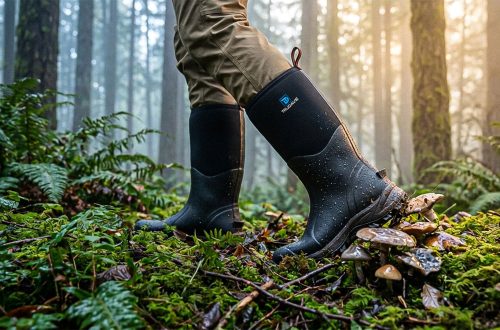
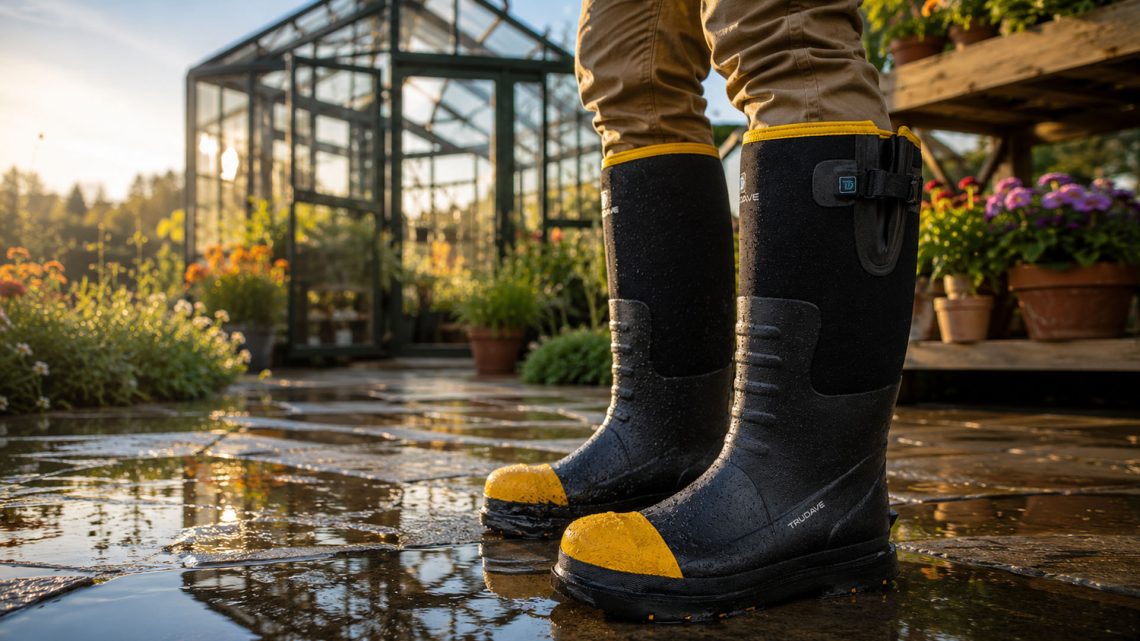
Outdoor brands such as Trudave Gear offer waterproof footwear designed for hunting, fishing, rain, mud, and wet field conditions.
When ordinary waterproof boots provide enough coverage, they can offer greater mobility and convenience than full waders.
When the water is consistently deeper, proper waders are the more appropriate option.
Rain Boots vs Waders for Deer Hunting
Most deer hunters do not need full waders.
Waterproof rain boots or rubber hunting boots are generally more practical for:
- Wet fields.
- Muddy trails.
- Swamps with shallow water.
- Wet grass.
- Forest access routes.
- Rainy conditions.
Waders may be useful in specialized environments involving flooded timber, marshes, or deep creek crossings.
However, they can become hot and restrictive during long walks.
Hunters should choose the minimum level of waterproof coverage that safely handles the terrain.
Rain Boots vs Waders for Farm Work
Rain boots are usually the better choice for everyday farm work.
They are easier to put on, remove, clean, and dry.
Farm workers commonly use them for:
- Livestock chores.
- Muddy fields.
- Irrigation.
- Barn cleaning.
- Wet grass.
- Shallow flooding.
Hip or chest waders may be useful for:
- Deep drainage work.
- Pond maintenance.
- Flooded ditches.
- Water system repairs.
- Extended work in deeper water.
For most daily chores, waders provide more coverage than necessary.
Which Option Is More Comfortable?
Rain boots are generally more comfortable for walking on dry ground.
They are lighter, less restrictive, and easier to ventilate.
Waders cover more of the body and can trap heat and moisture.
Comfort depends on:
- Material.
- Fit.
- Water temperature.
- Air temperature.
- Activity level.
- Walking distance.
- Boot construction.
- Layering.
Breathable waders may feel more comfortable than neoprene waders in warm weather.
Neoprene waders may provide more warmth in cold water.
Rain boots remain the simpler choice when deeper water protection is not required.
Which Option Is Easier to Walk In?
Rain boots are usually easier to walk in.
They allow more upper-body movement and involve less material.
Waders may restrict stride length, especially when improperly sized.
Bootfoot waders can also feel heavy.
Stockingfoot waders with separate wading boots may provide better support, but they require more equipment.
For long approaches over dry ground, some anglers carry waders and put them on closer to the water.
Hunters may use a similar strategy when walking long distances to flooded areas.
Which Option Is Better for Mud?
Both rain boots and waders can protect against mud.
The correct choice depends on mud depth and water exposure.
Tall rain boots are excellent for ordinary muddy ground.
They are easy to rinse and provide fewer layers to clean.
Waders provide more coverage when mud and water rise above the knees.
However, deep mud creates suction.
Heavy waders and loose footwear may make movement difficult.
Look for:
- Secure heel retention.
- Appropriate boot sizing.
- Mud-focused outsoles.
- Stable footing.
- Manageable weight.
Never enter deep mud without understanding the ground beneath the surface.
Which Option Is Warmer?
Waders generally provide more total-body coverage.
Neoprene waders can provide significant insulation.
This makes them useful in cold water.
However, excessive warmth can cause sweating during active movement.
Rain boots may be more comfortable when only the feet and lower legs require waterproof protection.
For cold-weather use, consider:
- Water temperature.
- Air temperature.
- Time spent standing still.
- Insulation.
- Sock thickness.
- Base layers.
- Circulation.
More insulation is not automatically better.
Moisture from sweat can later make the body feel colder.
Which Option Is Easier to Clean?
Rain boots are generally easier to clean.
The smooth waterproof exterior can usually be rinsed with water.
Waders have more surface area and may collect mud, algae, fish residue, salt, seeds, and organic material.
After use, waders may need:
- Exterior rinsing.
- Interior drying.
- Suspended storage.
- Seam inspection.
- Boot cleaning.
- Odor control.
Saltwater users should rinse both rain boots and waders with fresh water.
Which Option Dries Faster?
Rain boots usually dry faster because they have less material.
However, insulated or neoprene-lined boots may still take significant time.
Waders can take much longer to dry, especially when the inside becomes wet.
Drying should include:
- Turning appropriate areas inside out when permitted.
- Hanging the garment.
- Opening the legs and boots.
- Removing insoles.
- Increasing airflow.
- Avoiding direct high heat.
Never store damp waders in a sealed bag.
Mold, mildew, odor, and material deterioration may develop.
Which Option Is More Durable?
Durability depends on construction and use.
Rain boots may experience:
- Rubber cracking.
- Sole wear.
- Punctures.
- Heel breakdown.
- Material separation.
Waders may experience:
- Seam leaks.
- Fabric punctures.
- Boot separation.
- Strap damage.
- Delamination.
- Abrasion.
Waders cover more surface area, creating more locations where damage can occur.
Rain boots are simpler and may be easier to inspect.
Both require regular maintenance.
Bootfoot vs Stockingfoot Waders
Waders are available in two major foot designs.
Bootfoot Waders
Bootfoot waders have permanently attached rubber boots.
Advantages include:
- Fast entry.
- Simple setup.
- Fewer separate items.
- Good cold-weather convenience.
Disadvantages may include:
- Heavier construction.
- Less precise fit.
- Reduced ankle support.
- More difficult storage.
Stockingfoot Waders
Stockingfoot waders use attached waterproof socks and separate wading boots.
Advantages include:
- Better boot fit.
- More ankle support.
- Better traction options.
- Easier replacement of worn boots.
Disadvantages include:
- More equipment.
- Longer setup.
- Higher combined cost.
- More cleaning.
Serious river anglers often prefer stockingfoot designs for walking support.
Hunters may prefer bootfoot waders for convenience and warmth.
Do Waders Keep You Completely Dry?
Properly constructed waders should keep outside water away from the body below the opening.
However, users may still feel damp because of sweat and condensation.
Waders can also leak because of:
- Punctures.
- Damaged seams.
- Worn material.
- Poor fit.
- Material separation.
- Water entering from above.
Regular inspection is important.
A damp interior does not always mean the wader is leaking.
Moisture may come from perspiration.
Are Waders Dangerous?
Waders require additional caution.
They are not flotation devices.
Deep or fast-moving water can be dangerous regardless of footwear.
Important safety practices include:
- Use a properly fitted wading belt.
- Wear a personal flotation device when appropriate.
- Avoid water deeper than your skill level allows.
- Move slowly.
- Use a wading staff.
- Check current strength.
- Avoid unknown drop-offs.
- Never wade alone in hazardous conditions.
- Monitor weather and water levels.
- Understand hypothermia risk.
Water depth is not the only concern.
Cold temperature, soft ground, strong current, and limited exit routes can create serious danger.
Why Is a Wading Belt Important?
A wading belt fits around the waist outside chest waders.
It helps limit the amount of water that can quickly enter the lower portion if a person falls or the wader opening becomes submerged.
A belt does not make unsafe water safe.
It is one part of a larger safety system.
Users should follow the wader manufacturer’s instructions.
Can You Wear a Life Jacket With Waders?
Yes.
A personal flotation device may be appropriate or necessary depending on the water, activity, boat regulations, and local requirements.
Waders do not provide reliable flotation.
Boat users and people entering deeper or moving water should evaluate the need for a properly fitted personal flotation device.
Do Rain Boots Need the Same Safety Precautions?
Rain boots do not create the same full-body enclosure as waders.
However, users should still be cautious around water.
Rain boots can fill with water if submerged.
This increases weight and makes movement difficult.
They may also slip on rocks, algae, mud, and boat ramps.
Do not enter deep or fast water simply because the boots are waterproof.
Can You Wear Rain Boots Inside Waders?
Standard rain boots are generally not worn inside stockingfoot waders.
Stockingfoot waders are designed for separate wading boots that accommodate the waterproof stocking feet.
Bootfoot waders already include attached boots.
Wearing unsuitable footwear can damage the wader material or create an unsafe fit.
Follow the manufacturer’s footwear recommendations.
Rain Boots vs Waders for Shallow Water
For shallow water clearly below knee height, tall rain boots may be more convenient.
They are easier to walk in, faster to put on, and simpler to clean.
However, the safe water level should remain well below the boot opening.
If water depth changes frequently or hidden holes are common, waders provide a greater margin of coverage.
The terrain should determine the choice.
Rain Boots vs Waders for Cold Water
Cold water removes body heat quickly.
Waders can provide more protection, especially when combined with appropriate insulation and base layers.
Rain boots may be sufficient for brief shallow exposure.
For extended time in cold water, evaluate:
- Wader material.
- Insulation.
- Sock system.
- Air temperature.
- Water temperature.
- Emergency exit plan.
- Hypothermia risk.
Cold-water activities require more planning than ordinary rainy-weather use.
Rain Boots vs Waders for Warm Weather
Rain boots are usually more comfortable in warm weather when only lower-leg protection is needed.
Waders can trap substantial heat.
Breathable waders may reduce discomfort, but users can still sweat during active movement.
Wear moisture-wicking layers and avoid unnecessary insulation.
Take breaks when safe.
Hydration is also important during warm-weather outdoor activity.
Should You Own Both Rain Boots and Waders?
People who regularly fish, hunt, or work around wetlands may benefit from owning both.
Rain boots are useful for:
- Rain.
- Mud.
- Wet grass.
- Shallow water.
- Boat launches.
- Farms.
- Everyday outdoor chores.
Waders are useful for:
- Rivers.
- Deep marshes.
- Flooded timber.
- Pond work.
- Water above boot height.
- Extended standing in water.
Owning both allows users to match the equipment to the environment.
This can improve comfort, mobility, and safety.
Common Mistakes When Choosing Between Rain Boots and Waders
Wearing Waders When Rain Boots Are Enough
This adds unnecessary weight, heat, and maintenance.
Entering Deep Water in Rain Boots
Water can enter from above and make the boots difficult to manage.
Treating Waders as Safety Equipment
Waders are waterproof garments, not flotation devices.
Ignoring Water Current
Shallow fast water can be more dangerous than deeper calm water.
Buying Waders Without Considering Fit
Poorly fitted waders restrict movement and may create trip hazards.
Ignoring Drying and Storage
Both boots and waders can develop odor, mold, and material damage.
Choosing Footwear Only by Water Depth
Terrain, temperature, walking distance, and traction also matter.
How to Decide What You Need
Ask the following questions before choosing footwear:
How deep is the water?
Could the water level change?
Is there a current?
How firm is the bottom?
How far will I walk?
Will I spend more time on land or in water?
What is the air temperature?
What is the water temperature?
Do I need full-leg protection?
Will I be fishing, hunting, working, or launching a boat?
Do I have the necessary safety equipment?
For hunters, anglers, farmers, and outdoor workers who mainly encounter rain, mud, wet grass, and shallow water, Trudave Gear offers waterproof footwear designed for practical outdoor conditions.
When water rises beyond normal boot height, correctly selected waders become the more appropriate equipment.
Frequently Asked Questions
Are rain boots better than waders?
Rain boots are better for shallow water, mud, rain, and walking on land. Waders are better when water rises above boot height.
Do I need waders for fishing?
You need waders only when you plan to enter water deeper than your ordinary waterproof boots can safely handle.
Can I use rain boots for duck hunting?
Yes. Tall rain boots can work for muddy fields, marsh edges, boats, and shallow flooded areas. Deeper water may require waders.
How deep can I go in knee-high rain boots?
Water should remain several inches below the boot opening. Uneven ground and waves can raise the effective water level.
Are chest waders safer than rain boots?
They provide more waterproof coverage but introduce different risks. They do not make deep or fast water safe.
Do waders keep you warm?
Neoprene and insulated waders can provide warmth, but actual performance depends on water temperature, layers, fit, and activity.
Are rain boots easier to walk in than waders?
Generally, yes. Rain boots are lighter and less restrictive on land.
Can waders fill with water?
Yes. Water may enter from above or through damage. A wading belt can help limit rapid water entry but does not eliminate risk.
Do you need a life jacket with waders?
A personal flotation device may be appropriate in boats, deep water, moving water, or other hazardous environments.
Final Thoughts
The rain boots vs waders decision begins with one basic question:
How much water protection do you actually need?
Rain boots are the more practical choice for mud, rain, wet grass, boat ramps, farms, shallow water, and everyday outdoor work.
They are lighter, easier to clean, easier to dry, and more comfortable for walking on land.
Waders are the correct tool when water regularly rises above normal boot height.
They provide essential coverage for river fishing, flooded timber, deep marshes, pond work, and other water-intensive activities.
Additional coverage also means additional responsibility.
Users must evaluate current, temperature, footing, water depth, weather, and appropriate safety equipment.
For hunters, anglers, farmers, and outdoor workers dealing with shallow wet terrain, Trudave Gear provides waterproof boots designed for rain, mud, fishing, hunting, and practical field use.
Choose rain boots when they provide enough protection.
Choose waders when deeper water makes them necessary.
The best equipment is not the option with the most coverage. It is the option that provides the right protection, mobility, comfort, and safety for the environment ahead.


You May Also Like

Feeding Smarter, Not Harder: Stretching Hay and Forage Through December

Why Garden Preparation Timing Matters More Than Planting Speed