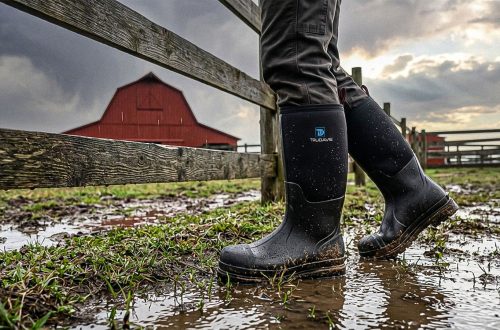
Best Boots for Septic Tank Service and Drain Field Work
Septic service technicians work in places where clean, dry ground cannot be taken for granted.
A normal service call may begin with walking across a dew-covered lawn, locating a buried tank lid, digging through wet soil, dragging heavy pumping hose across mud, inspecting a drain field, washing equipment, and climbing back into a service truck before heading to the next property.
Rain can make the job significantly more difficult.
A dry yard can quickly become:
- Muddy.
- Saturated.
- Slippery.
- Rutted by service vehicles.
- Covered with standing water.
Workers may also operate around wastewater and contaminated surfaces, which makes easy-clean waterproof footwear especially important.
The best boots for septic tank service should provide dependable waterproof protection, secure traction in mud and wet grass, enough support for digging and hose handling, easy-clean construction, and a stable fit for technicians who move continuously between yards, trucks, tanks, and equipment.
Septic Service Is a Mixed-Terrain Job
Unlike workers in a factory, septic technicians rarely know exactly what surface they will face at the next job.
One property may have:
- Dry gravel access.
- Firm lawn.
- Concrete around the tank.
The next may involve:
- Deep mud.
- Tall wet grass.
- Soft clay.
- Standing water.
- A steep backyard.
- Limited vehicle access.
That unpredictability makes versatile waterproof footwear valuable.
Waterproofing Should Be a Basic Requirement
Even when technicians are not standing in wastewater, they regularly encounter water from:
- Rain.
- Wet grass.
- Hose cleaning.
- Equipment washdown.
- Mud.
- Groundwater.
Water-resistant footwear may eventually become saturated.
Fully waterproof boots provide more dependable protection during long service days.
Why Wet Grass Matters More Than It Seems
Many septic systems are located behind homes in grass-covered yards.
Early service calls may involve heavy morning dew.
A technician can walk only a short distance through wet grass and soak ordinary fabric footwear.
Mid-height waterproof boots provide useful protection without the bulk of very tall rubber boots.
Best Boots for Septic Tank Pumping
Tank pumping crews may work around:
- Heavy suction hoses.
- Tank openings.
- Service trucks.
- Mud.
- Wet grass.
Suitable boots should provide:
- Fully waterproof uppers.
- Secure heel retention.
- Moderate-to-deep outdoor tread.
- Strong midsoles.
- Easy-clean construction.
The footwear should feel stable while workers pull, reposition, and lift heavy hose.
Pumping Hose Changes the Footwear Requirement
Septic hose can be:
- Heavy.
- Awkward.
- Dirty.
- Difficult to move across uneven ground.
Technicians may need to step backward while pulling it.
That makes secure traction and heel fit particularly important.
Loose Boots Are a Poor Match for Hose Work
Oversized rubber boots may shift while a worker is:
- Pulling.
- Turning.
- Stepping backward.
This increases:
- Friction.
- fatigue.
- instability.
A boot should hold the heel securely while leaving enough room at the toes.
Boots for Septic Tank Lid Location
Tank lids may be buried beneath:
- Grass.
- Soil.
- Mulch.
- Landscaping.
Technicians may probe or dig to locate access points.
Footwear should provide enough support for repeated digging and shovel work.
Boots for Shovel Work
Digging around tank lids requires workers to press down on shovel steps.
Thin recreational rain boots may not provide enough underfoot support.
A stronger midsole can make repetitive digging more comfortable.
Boots for Muddy Tank Access
If the tank is located in a low part of the yard, workers may need to stand in mud for extended periods.
Useful outsole features include:
- Open channels.
- Defined heel edges.
- Moderate-to-deep lugs.
- Flexible rubber.
Clay Mud Is Especially Difficult
Wet clay can fill tread channels and add significant weight.
Once the sole becomes packed, traction decreases.
Wider lug spacing makes cleaning easier.
Boots for Sandy Drain Fields
Some septic systems are installed in sandy soils.
In loose sand, extremely deep tread may be unnecessary.
Broad outsole contact and moderate tread can make walking easier.
Boots for Drain Field Inspections
Technicians may inspect drain fields for:
- Saturation.
- Surfacing water.
- Odor.
- Vegetation changes.
- Drainage problems.
These areas may be soft and wet.
Waterproof boots with secure fit and good grass traction are useful.
Saturated Drain Fields Require Careful Footing
A lawn may look firm while the soil underneath is extremely soft.
Workers should step carefully and avoid unnecessarily disturbing the area.
A lightweight waterproof boot often performs better than a very heavy field boot.
Boots for Wet Drainage Areas
Failed or overloaded systems may create unusually wet ground.
More shaft coverage may become useful.
Mid-calf rubber boots work well for many of these conditions.
When Knee-High Boots Make Sense
Taller rubber boots may be useful during:
- Deep mud.
- Heavy rain.
- Standing water.
- Excavation cleanup.
- Severe system failures.
However, they may be unnecessary for routine inspections.
When Standard Boots Are Not Enough
If workers must enter deeper contaminated water, specialized PPE may be required.
Standard work boots should not be used beyond their intended protection level.
Boots for Septic Tank Cleaning
Tank cleaning may create additional splash around the access point.
Workers should use footwear that is:
- Waterproof.
- Easy to rinse.
- Compatible with workplace sanitation procedures.
Smooth rubber uppers are often practical.
Easy-Clean Construction Matters More in Septic Work
Complex fabric-heavy boots can hold:
- Mud.
- organic material.
- wastewater residue.
Simple waterproof uppers reduce cleaning time.
Boots for Septic Inspection Technicians
Inspection workers may spend less time pumping and more time:
- Walking properties.
- Opening lids.
- Testing components.
- Checking drain fields.
They often benefit from lighter waterproof boots with better walking comfort.
Boots for Real Estate Septic Inspections
Property inspections may involve several sites in one day.
Technicians may repeatedly move between:
- Trucks.
- Lawns.
- Gravel driveways.
- Basements.
- Tank areas.
A moderate-height waterproof work boot is versatile.
Boots for Septic Camera Inspections
Camera equipment may be used to inspect:
- Pipes.
- Lines.
- Components.
Workers carrying electronic equipment need stable movement on wet ground.
Boots for Distribution Box Work
Distribution boxes may be buried in wet soil.
Access may require:
- Digging.
- kneeling.
- working in mud.
Flexible waterproof boots make kneeling easier.
Boots for Septic Pipe Repair
Pipe repairs can involve more excavation than routine pumping.
Workers may encounter:
- Mud.
- Gravel.
- Trenches.
- Broken pipe.
- Tools.
More rugged protective footwear may be appropriate.
Boots for Excavation Work
Septic repair crews may use:
- Mini excavators.
- Backhoes.
- Shovels.
- Compaction equipment.
Workers need footwear that performs both on the ground and around machinery.
Boots for Mini Excavator Operators
Operators should prioritize:
- Pedal control.
- moderate outsole thickness.
- secure heel fit.
- waterproof protection.
Tall bulky rubber boots may interfere with equipment control.
Boots for Backhoe Crews
Backhoe operators may work in the cab for long periods but still step into deep mud.
A supportive waterproof safety boot offers better versatility.
Boots for Trench Work
Septic trenches may contain:
- Wet soil.
- Gravel.
- Mud.
- Pipe materials.
Footwear should be selected according to site hazards and excavation procedures.
Puncture Hazards Around Septic Repairs
Repair sites may contain:
- Wire.
- broken pipe.
- nails.
- screws.
- sharp construction debris.
A thick rubber outsole is not automatically puncture resistant.
Appropriately rated footwear should be used where required.
Safety-Toe Boots for Septic Workers
Safety toes may be appropriate around:
- Tank lids.
- Pumps.
- Pipes.
- excavation equipment.
- service trucks.
- heavy tools.
Job requirements determine whether protective toes are necessary.
Boots for Concrete Septic Lids
Concrete lids can be extremely heavy.
Workers handling them may need footwear with impact protection.
The correct lifting equipment should still be used.
Boots for Plastic Tank Components
Plastic components may be lighter, but workers still need stable footing around excavation edges.
Boots for Effluent Pump Systems
Some septic systems use pumps.
Technicians may service:
- Pump chambers.
- floats.
- alarms.
- control boxes.
These tasks may combine wet ground with electrical equipment.
Waterproof Does Not Mean Electrical Protection
This distinction is important.
A boot that keeps water out is not automatically rated for electrical hazards.
Workers servicing electrical septic components should follow appropriate electrical safety procedures.
Boots for Control Panel Work
Technicians may stand on:
- Wet grass.
- concrete pads.
- gravel.
A supportive waterproof work boot provides a stable working platform.
Boots for Septic Alarm Service
Alarm troubleshooting may require repeated visits during poor weather.
Lightweight waterproof footwear is often sufficient.
Boots for Aerobic Treatment Systems
Aerobic septic systems may contain additional:
- Pumps.
- Aerators.
- Control equipment.
Maintenance workers may move between multiple access points.
Comfort and walking support become important.
Boots for Mound Systems
Mound systems often sit above the surrounding landscape.
Workers may need to walk across slopes.
A supportive boot with good lateral control is helpful.
Sidehill Walking Requires Stable Footwear
Loose rubber boots may shift sideways inside the upper.
Supportive waterproof lace-up boots may be preferable for steep properties.
Boots for Hilltop Septic Systems
Some rural properties place systems on sloped ground.
Workers should prioritize:
- Secure heel retention.
- ankle support.
- moderate outdoor tread.
Boots for Rural Septic Service
Rural calls may involve:
- Long gravel driveways.
- muddy access roads.
- livestock areas.
- fields.
More rugged mixed-terrain footwear may be useful.
Boots for Residential Backyard Service
Suburban work may involve:
- Lawns.
- landscaping.
- patios.
- fences.
Technicians may want boots that are waterproof without being excessively aggressive.
Avoiding Lawn Damage
Deep lugs can leave noticeable tracks in soft lawns.
For routine residential service, moderate tread may provide enough traction while causing less disturbance.
Boots for Landscaped Properties
Technicians may cross:
- Mulch.
- garden beds.
- decorative stone.
A controlled tread helps reduce debris tracking.
Boots for Commercial Septic Systems
Commercial properties may include:
- Restaurants.
- campgrounds.
- industrial facilities.
- public buildings.
Workers may spend more time on:
- Asphalt.
- concrete.
- gravel.
Hard-surface comfort becomes more important.
Boots for Restaurant Septic Service
Grease-related systems may create different contamination concerns.
Footwear should follow employer hygiene and chemical procedures.
Boots for Campground Septic Work
Campgrounds may require service around:
- Grass.
- gravel.
- RV areas.
- wet roads.
Versatile waterproof work boots are practical.
Boots for RV Dump Station Maintenance
Dump stations may involve:
- Wastewater.
- hose connections.
- concrete.
- washdown.
Easy-clean waterproof rubber footwear is useful.
Boots for Portable Toilet Service Crews
Some septic companies also service portable sanitation units.
Workers may move through:
- Construction sites.
- festivals.
- fields.
- gravel lots.
They need mixed-surface waterproof footwear.
Construction Sites Require More Protection
Portable toilet service at construction sites may expose workers to:
- Nails.
- rebar.
- heavy equipment.
- uneven ground.
Safety-rated boots may be more appropriate than ordinary rubber footwear.
Boots for Septic Service Truck Drivers
Drivers may spend substantial time behind the wheel.
Footwear should allow:
- Comfortable pedal operation.
- secure heel positioning.
- easy vehicle entry.
Very tall rigid boots may be inconvenient.
Boots for Vacuum Truck Operators
Vacuum truck crews repeatedly move between:
- Cab steps.
- hose reels.
- tank access.
- wet ground.
A supportive waterproof work boot offers a good balance.
Truck Steps Need Clean Tread
Mud packed into outsole grooves can reduce traction on metal steps.
Workers should remove heavy soil before climbing whenever practical.
Boots for Hose Reel Operation
Operators may stand beside trucks while managing hose.
Stable hard-surface traction and secure heel support are useful.
Boots for Equipment Washdown
At the end of the day, crews may clean:
- Hoses.
- fittings.
- tools.
- trucks.
This creates another high-water-exposure task.
Mid-calf rubber boots can be practical.
Pressure Washing Safety
Waterproof boots do not protect feet from direct pressure-washer spray.
Workers should follow equipment procedures and keep high-pressure nozzles directed away from the body.
Boots for Septic Truck Wash Bays
Wash bays may have:
- Wet concrete.
- soap.
- organic residue.
- drainage.
Workers need broad outsole contact and easy-clean footwear.
Soap Can Reduce Traction
No ordinary boot eliminates slipping on soapy concrete.
Floor management remains essential.
Boots for Rainy Service Calls
Septic companies usually cannot stop operating every time it rains.
Wet-weather crews may deal with:
- Saturated lawns.
- Mud.
- flooded access points.
- slippery truck steps.
Waterproof footwear becomes especially important.
Boots for Storm Response
Heavy rainfall may overload septic systems.
Technicians may receive emergency calls under the worst ground conditions.
More rugged mud-focused boots may be useful.
Boots for Flooded Properties
Flood conditions require additional caution.
Wastewater and floodwater can contain contaminants.
General waterproof boots should not automatically be treated as sufficient PPE.
Contaminated Water Requires Site-Specific Protection
Workers should follow employer protocols for biological and chemical hazards.
Waterproof is not the same as contamination-rated.
Boots for Winter Septic Service
Cold-climate technicians may work through:
- Snow.
- Slush.
- Frozen soil.
- Ice.
- Cold water.
Suitable footwear may need:
- Waterproof construction.
- moderate insulation.
- cold-flexible outsole rubber.
- thicker midsoles.
Frozen Tank Lids and Ground
Winter service may involve more digging and hard ground.
Supportive soles become especially useful.
Ice Requires Separate Traction Controls
No standard work boot completely eliminates ice hazards.
Workers may need approved traction devices depending on conditions.
Boots for Summer Septic Work
Summer can be:
- Hot.
- Humid.
- Muddy after storms.
Heavy insulated boots should usually be avoided.
Workers should prioritize:
- Lightweight construction.
- uninsulated uppers.
- moisture-wicking socks.
- removable insoles.
Waterproof Boots Can Trap Sweat
Even when outside water stays out, perspiration can build inside.
Daily drying is important.
Best Socks for Septic Technicians
Synthetic and wool-blend socks generally perform better than cotton.
Useful features include:
- Moisture wicking.
- fast drying.
- heel cushioning.
- secure fit.
Spare Socks Can Be Useful
Unexpected deep mud or water may occasionally enter over the collar.
A spare pair can significantly improve comfort during the rest of the route.
Cushioning Matters on Gravel and Concrete
Septic technicians spend part of the day in soft yards and part on:
- Driveways.
- service stations.
- truck yards.
Supportive midsoles help across both.
Boot Weight Matters During Multi-Stop Routes
A technician may visit many properties in one day.
Heavy boots are lifted thousands of times.
Choose enough protection without unnecessary bulk.
Heel Retention Is One of the Most Important Fit Features
Secure heel fit helps during:
- Mud walking.
- Hose pulling.
- slope work.
- truck climbing.
Forefoot Flexibility Helps With Kneeling
Workers frequently kneel around:
- Tank openings.
- Pumps.
- control equipment.
The boot should flex comfortably.
Easy-Clean Uppers Save Time
Septic boots may collect:
- Mud.
- grass.
- organic material.
- wastewater residue.
Smooth waterproof uppers simplify cleaning.
Simple Tread Helps Sanitation
Extremely complex tread can trap contaminated material.
Open, accessible grooves are easier to scrub.
How to Clean Septic Service Boots
Workers should follow employer sanitation procedures first.
A general routine may include:
- Remove heavy mud and debris.
- Rinse the exterior where appropriate.
- Brush tread grooves.
- Apply approved cleaning or disinfection procedures.
- Inspect for cuts or cracks.
- Remove damp insoles where appropriate.
- Allow footwear to dry completely.
Organic Material Should Be Removed Before Disinfection
Visible soil can interfere with effective cleaning.
Physical debris should generally be removed before approved sanitation steps.
Do Not Take Contaminated Work Boots Into Living Areas
Dedicated work footwear can help reduce transfer of:
- Soil.
- wastewater residue.
- biological contaminants.
Workers should follow company hygiene procedures.
How to Dry Septic Work Boots
After cleaning:
- Remove insoles.
- open the boot fully.
- allow airflow.
- use low-temperature drying if approved.
Avoid strong direct heat.
Rotating Two Pairs Can Help
Full-time technicians frequently work in wet conditions.
Rotating footwear gives each pair more drying time.
When Septic Service Boots Should Be Replaced
Replace footwear when:
- Waterproofing fails.
- rubber cracks.
- tread becomes badly worn.
- sole separation appears.
- puncture damage develops.
- heel support collapses.
- the boot becomes difficult to sanitize.
Chemical Exposure Around Septic Work
Technicians may encounter:
- Cleaning products.
- disinfectants.
- fuel.
- oil.
- unknown household chemicals.
Waterproof footwear is not automatically resistant to all of these materials.
Waterproof Does Not Mean Chemical Resistant
Material compatibility should be checked for known exposures.
Specialized PPE may be required for hazardous chemicals.
Biological Exposure Requires More Than Just Rubber
Septic wastewater can contain microorganisms.
Footwear should be one part of a broader hygiene and PPE system that may include:
- Gloves.
- protective clothing.
- eye protection.
- sanitation procedures.
Common Mistakes When Buying Septic Work Boots
Buying Cheap Rain Boots for Full-Time Pumping Work
They may lack enough support and durability.
Choosing Deep Mud Lugs for Every Service Call
Residential lawns, concrete, and truck steps often benefit from more moderate tread.
Wearing Boots Too Loose
Mud suction and hose pulling amplify heel movement.
Choosing Boots Too Short for Wet Failure Areas
Water can enter over the collar.
Ignoring Hard-Surface Cushioning
Technicians spend plenty of time on gravel and concrete.
Assuming Waterproof Means Contamination-Protective
Biological and chemical hazards may require specific PPE.
Wearing Tall Heavy Boots While Driving All Day
Bulky footwear may reduce pedal comfort.
Failing to Clean Tread Between Jobs
Mud and contaminated debris can be transferred from one property to another.
How to Choose the Best Boots for Septic Tank Work
Start with the technician’s primary responsibility.
For pumping crews, prioritize:
- Fully waterproof construction.
- secure heel fit.
- mud traction.
- easy-clean uppers.
- supportive midsoles.
For inspection technicians, prioritize:
- Lightweight walking comfort.
- moderate tread.
- waterproof protection.
- flexible movement.
For repair and excavation crews, prioritize:
- Safety protection.
- stronger ankle support.
- puncture resistance where required.
- rugged construction.
For drain-field work, prioritize:
- Wet-grass traction.
- mud release.
- moderate shaft coverage.
For vacuum-truck operators, prioritize:
- Pedal control.
- stable truck-step traction.
- secure heel positioning.
For washdown and sanitation crews, prioritize:
- More shaft coverage.
- smooth cleanable construction.
- facility-compatible materials.
Workers comparing waterproof work footwear from brands such as Trudave Gear should select boots based on the actual combination of mud, wet grass, wastewater exposure, hose handling, truck work, excavation, and long service routes involved in their job.
Frequently Asked Questions
What are the best boots for septic tank work?
The best septic service boots are waterproof, securely fitted, easy to clean, supportive during hose handling, and equipped with traction suitable for mud, wet grass, gravel, and service yards.
Are rubber boots good for septic workers?
Yes. Rubber boots are especially useful for tank pumping, muddy drain fields, equipment washdown, wet-weather service, and contaminated work zones when appropriate for the site’s PPE requirements.
How tall should septic work boots be?
Mid-calf boots are versatile for many service calls. Knee-high boots may be useful for deep mud, standing water, system failures, and heavy washdown.
What boots are best for septic pumping?
Waterproof boots with secure heel retention, supportive midsoles, moderate-to-deep outdoor tread, and easy-clean uppers are practical.
What boots are best for drain field inspections?
Lightweight waterproof boots with wet-grass traction, moderate tread, cushioning, and good heel support work well.
Do septic workers need safety-toe boots?
Some pumping, repair, excavation, pump-maintenance, and heavy-equipment roles may require safety-toe footwear.
Do septic workers need puncture-resistant boots?
Repair and construction-style septic work may involve sharp debris, so puncture-rated footwear may be required depending on the site.
Are waterproof boots enough for septic wastewater exposure?
Not automatically. Workers should follow employer requirements for biological, chemical, and contamination-related PPE.
Are tall rubber boots good for septic truck drivers?
They can be useful during wet jobs, but workers who spend long periods driving may prefer more supportive mid-height boots with better pedal control.
How should septic work boots be cleaned?
Remove mud and debris, follow approved workplace cleaning and disinfection procedures, clean tread grooves, inspect for damage, and allow the footwear to dry completely.
Final Thoughts
Septic tank service combines wet grass, deep mud, heavy hose handling, excavation, wastewater exposure, truck work, gravel driveways, drainage fields, rain, and long multi-stop service routes.
The best footwear depends heavily on the technician’s role.
Pumping crews need waterproof boots with strong mud performance and secure heel retention.
Inspection technicians benefit from lighter footwear designed for long walking routes.
Repair crews may need additional toe and puncture protection.
Drain-field workers need reliable traction in wet grass and saturated soil.
Vacuum-truck operators need footwear that balances waterproof protection with pedal control.
Washdown crews benefit from smooth, easy-clean rubber construction.
Trudave Gear offers waterproof outdoor and work footwear suited to wet grass, rain, mud, service work, maintenance, and demanding outdoor environments.
Choosing footwear according to the actual septic-service task can help workers stay drier, reduce fatigue, maintain better footing, and move more comfortably from the first tank inspection of the morning to the final hose cleanup at the end of the route.


You May Also Like

Hay Storage Hacks: Preventing Mold, Moisture, and Wasted Feed
The Equestrian’s Guide to Trudave Rain Boots: Tough, Waterproof Footwear for Stall, Paddock, and Pasture