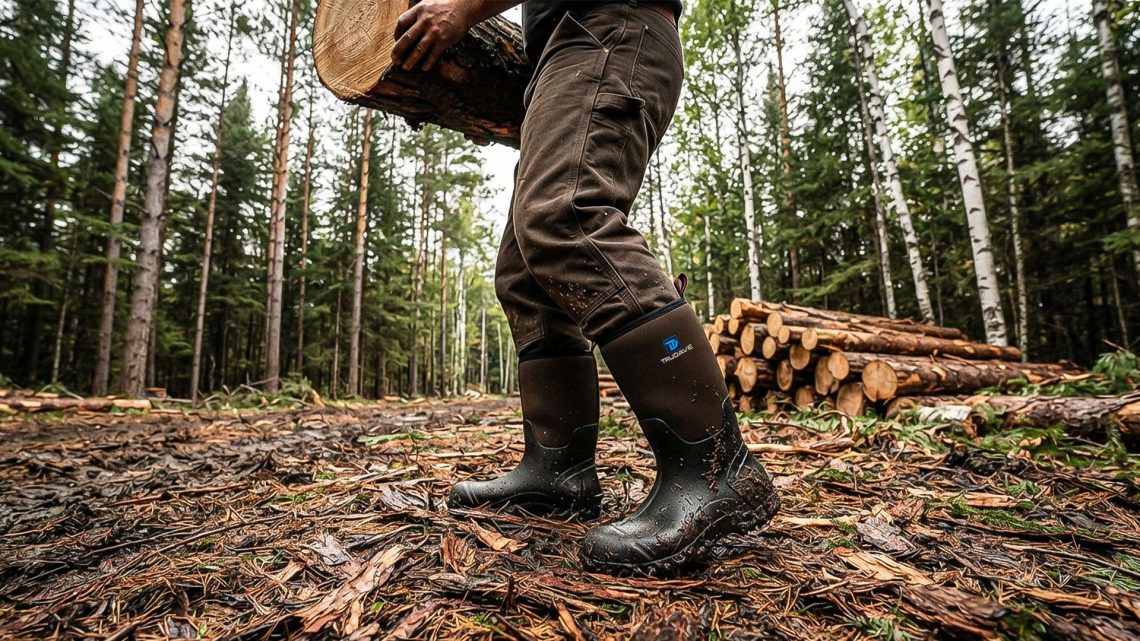
Best Boots for Compost Facility and Organic Waste Processing Work
Compost facilities combine agriculture, waste handling, heavy equipment, wet organic material, mud, gravel, washdown, and industrial processing in one demanding work environment.
Employees may begin the day inspecting compost windrows, move through a muddy tipping area, unload food or yard waste, operate loaders, monitor moisture levels, clean processing equipment, walk across gravel yards, and finish the shift around screening or loading areas.
Footwear may encounter:
- Wet compost.
- Mud.
- Food waste.
- Yard debris.
- Wood chips.
- Leachate.
- Gravel.
- Wash water.
- Rain.
- Concrete.
- Truck traffic.
- Organic residue.
That makes waterproof and easy-clean footwear especially useful.
The best boots for compost facility workers should keep feet dry, provide dependable traction in mud and organic material, remain supportive on gravel and concrete, clean easily after dirty work, and offer enough protection for employees working around loaders, trucks, conveyors, grinders, and processing equipment.
Compost Facilities Are Wet Even When It Is Not Raining
Moisture is a critical part of composting.
Workers may manage water through:
- Irrigation.
- Sprinklers.
- Moisture adjustment.
- Leachate control.
- Washdown.
Even during dry weather, production areas may remain damp.
Fully waterproof footwear provides more predictable protection than ordinary work shoes.
Organic Material Changes the Way Footwear Performs
Compost can contain:
- Food scraps.
- Leaves.
- Grass.
- Wood chips.
- Manure.
- Soil.
These materials may pack into outsole tread.
If the tread is too complicated, organic material can become difficult to remove.
Simple, open outsole channels are often easier to maintain.
Boots for Compost Windrow Workers
Many composting operations use long windrows.
Workers may inspect:
- Moisture.
- Temperature.
- Aeration.
- Decomposition.
They may walk across soft, uneven ground throughout the day.
Waterproof boots with supportive midsoles and secure heel fit work well.
Windrow Areas Can Become Muddy Quickly
Heavy equipment traffic and irrigation can create:
- Ruts.
- Soft soil.
- Standing water.
Moderate-to-deep tread is useful.
Best Tread for Compost Yard Mud
Useful outsole features include:
- Open channels.
- Moderate lug depth.
- Flexible rubber.
- Defined heel edges.
The outsole should release mud and organic material rather than trap it.
Boots for Food Waste Composting
Facilities accepting food waste may handle:
- Produce.
- Restaurant scraps.
- Food-processing material.
Floors and tipping areas may become wet or slick.
Workers need footwear that is:
- Waterproof.
- Easy to rinse.
- Supportive.
- Securely fitted.
Food Residue Can Affect Traction
Organic liquids and crushed food can reduce floor grip.
No boot can compensate for poor housekeeping.
Regular cleanup remains essential.
Boots for Yard Waste Facilities
Yard waste may include:
- Leaves.
- Grass clippings.
- Branches.
- Wood chips.
Workers may spend more time on outdoor gravel and dirt surfaces.
A mixed-surface waterproof work boot is practical.
Leaves Can Pack Into Tread
Wet leaves may fill deep grooves.
Simple tread patterns are easier to clean.
Boots for Wood-Chip Areas
Wood chips create unstable footing.
They may shift underfoot and collect inside aggressive outsole patterns.
Broad outsole contact can improve stability.
Boots for Brush Processing Crews
Workers may handle:
- Branches.
- Woody debris.
- Brush.
Durable uppers are useful.
Boots for Grinder and Chipper Areas
Processing equipment may create:
- Wood debris.
- Dust.
- Uneven ground.
Safety footwear may be required around heavy machinery.
Safety-Toe Boots for Compost Workers
Protective toes may be appropriate around:
- Loaders.
- Trucks.
- Conveyors.
- Grinders.
- Heavy containers.
Requirements depend on the facility and role.
Boots for Organic Waste Tipping Floors
Incoming material may be unloaded onto:
- Concrete.
- Asphalt.
- Compacted gravel.
These areas can become wet and dirty.
Workers need strong hard-surface traction.
Tipping Areas Need Balanced Tread
Extremely deep mud lugs may feel less stable on concrete.
A moderate mixed-surface outsole is often more practical.
Boots for Transfer Station Support
Some compost operations share space with:
- Recycling.
- Waste transfer.
- Material recovery.
Workers may encounter more:
- Debris.
- Metal.
- Broken pallets.
Additional puncture protection may be needed.
A Thick Outsole Is Not Automatically Puncture Resistant
Sharp objects can penetrate ordinary soles.
Rated puncture-resistant footwear may be appropriate in debris-heavy facilities.
Boots for Leachate Areas
Water moving through organic material may create leachate.
Workers may maintain:
- Collection drains.
- Tanks.
- Pumps.
- Channels.
These areas require additional care.
Waterproof Does Not Mean Chemical Resistant
General waterproof boots should not automatically be considered suitable for every liquid encountered in waste-processing environments.
Workers should follow:
- Facility PPE procedures.
- SDS information.
- Site-specific safety guidance.
Boots for Leachate Pump Maintenance
Technicians may work around:
- Wet concrete.
- Pumps.
- Pipes.
- Mechanical equipment.
A structured waterproof safety boot may be more appropriate.
Boots for Drainage Channels
Workers may clean:
- Sediment.
- Organic debris.
- Mud.
Mid-calf waterproof boots provide useful coverage.
Boots for Stormwater Systems
Outdoor compost yards need drainage.
Workers may inspect:
- Ditches.
- Culverts.
- Retention areas.
These jobs may involve deeper mud.
Boots for Retention Pond Work
Pond banks can be:
- Wet.
- Sloped.
- Soft.
Secure ankle and heel support improve control.
Boots for Muddy Side Slopes
Loose pull-on boots may shift during sidehill walking.
Supportive waterproof boots can be more stable.
Boots for Compost Turning Crews
Windrows may be turned using:
- Specialized turners.
- Loaders.
- Tractors.
Operators need footwear that works both inside equipment and on muddy ground.
Boots for Windrow Turner Operators
Pedal or control feel matters.
Very bulky rubber boots may reduce comfort.
Boots for Wheel Loader Operators
Loaders may move:
- Compost.
- Wood chips.
- Food waste.
- Finished product.
A supportive waterproof safety boot is versatile.
Boots for Skid Steer Operators
Workers may repeatedly enter and exit equipment.
Useful features include:
- Secure heel positioning.
- Moderate outsole thickness.
- Stable machine-step contact.
Boots for Tractor Operators
Tractors may be used for:
- Turning.
- Hauling.
- Site maintenance.
Pedal control remains important.
Boots for Compost Screening Crews
Finished compost may be screened to remove oversized material.
Workers may operate around:
- Screens.
- Conveyors.
- Stockpiles.
Footwear should provide industrial support.
Boots for Trommel Screen Areas
Workers may encounter:
- Dust.
- Compost residue.
- Gravel.
- Wet ground.
A mixed-surface safety boot works well.
Boots for Conveyor Maintenance
Maintenance workers may climb:
- Platforms.
- Metal stairs.
Very deep mud tread may feel awkward.
Boots for Equipment Platforms
Moderate outsole thickness improves precise footing.
Boots for Finished Compost Stockpiles
Finished compost is often softer and drier than raw material.
Workers may need less aggressive tread.
Broad outsole contact can be more comfortable.
Boots for Compost Bagging Areas
Bagged compost may be:
- Filled.
- Sealed.
- Palletized.
Workers may spend more time on concrete floors.
Cushioning becomes important.
Boots for Pallet Handling
Protective toes may be appropriate around:
- Pallets.
- pallet jacks.
- forklifts.
Boots for Forklift Operators
Drivers need:
- Good pedal control.
- secure heel fit.
- stable equipment-step contact.
Boots for Loading Finished Compost
Bulk compost may be loaded into:
- Trucks.
- Trailers.
- Customer vehicles.
Workers may move between:
- Gravel.
- mud.
- asphalt.
- concrete.
Mixed-surface waterproof boots are useful.
Boots for Customer Pickup Areas
Retail compost yards may receive:
- Landscapers.
- Homeowners.
- Gardeners.
Employees may spend long hours outside.
Walking comfort matters.
Boots for Bulk Soil and Compost Yards
Some facilities also sell:
- Topsoil.
- Mulch.
- Bark.
- Gravel.
This increases surface variety.
A durable mixed-terrain boot works well.
Boots for Mulch Areas
Bark and wood chips can become trapped in deep tread.
Simple channels are easier to clean.
Boots for Topsoil Stockpiles
Wet topsoil may become sticky.
Open tread helps release soil.
Boots for Manure Composting
Agricultural composting may include:
- Dairy manure.
- Poultry litter.
- Horse manure.
Workers need waterproof easy-clean footwear.
Boots for Manure Windrows
These areas may combine:
- Organic material.
- Mud.
- gravel.
Mid-calf rubber boots are practical.
Biosecurity May Matter on Agricultural Compost Sites
Facilities receiving farm waste may have specific hygiene procedures.
Workers should follow site protocols.
Boots for Biosolids Composting
Facilities processing biosolids may have stricter PPE requirements.
General waterproof boots should not automatically be assumed adequate.
Site-Specific PPE Comes First
Workers should follow actual facility exposure controls and regulations.
Boots for Municipal Compost Facilities
Municipal sites may process:
- Leaves.
- Food scraps.
- Yard waste.
Employees may work around:
- Public drop-off areas.
- Trucks.
- Loaders.
Durable waterproof safety footwear is practical.
Boots for Community Compost Sites
Smaller operations may involve more:
- Manual handling.
- Wheelbarrows.
- Garden tools.
Lightweight waterproof boots may be sufficient.
Boots for Wheelbarrow Work
Workers may move:
- Compost.
- Leaves.
- Food waste.
A secure heel fit improves control.
Boots for Shovel Work
Strong midsoles make repeated digging more comfortable.
Boots for Pitchfork Work
Workers may move bulky organic material.
Footwear should provide stable footing.
Boots for Compost Sampling
Quality-control workers may collect samples for:
- Moisture.
- Temperature.
- Maturity.
- Nutrient testing.
They may walk through multiple processing zones.
Lightweight waterproof footwear is useful.
Boots for Temperature Monitoring
Workers may use long compost probes.
A supportive base helps when pushing tools into dense material.
Boots for Laboratory Transitions
Workers entering cleaner areas should remove excessive mud and organic material from tread.
Boots for Compost Moisture Management
Facilities may add water using:
- Hoses.
- Sprinklers.
- Tankers.
Workers may experience repeated splash.
Boots for Hose Crews
Employees pulling hoses need secure heel retention.
Boots for Sprinkler Maintenance
Wet gravel and mud may surround irrigation equipment.
More shaft coverage may be useful.
Boots for Water Trucks
Drivers need footwear that works for:
- Vehicle pedals.
- wet yards.
- gravel.
A mid-height waterproof work boot works well.
Boots for Washdown Crews
Equipment and concrete areas may require frequent cleaning.
Workers may use:
- Hoses.
- Pressure washers.
- Scrubbers.
Mid-calf waterproof boots provide useful splash coverage.
Pressure Washing Safety
Waterproof footwear protects against normal spray.
It does not protect against direct high-pressure water.
Boots for Equipment Cleaning
Loaders and screens may collect heavy organic buildup.
Smooth waterproof uppers simplify cleanup.
Boots for Sanitation Areas
Food-waste compost facilities may have stricter sanitation procedures.
Easy-clean footwear is especially useful.
Boots for Disinfectant Use
Waterproof does not automatically mean resistant to:
- Disinfectants.
- Degreasers.
- Industrial cleaners.
Workers should verify material compatibility.
Boots for Truck Wash Areas
Incoming and outgoing vehicles may need wheel or body cleaning.
These zones may stay wet.
Broad hard-surface contact is useful.
Boots for Rainy Compost Yards
Rain can quickly turn active yards into:
- Mud.
- puddles.
- soft gravel.
Fully waterproof boots become especially valuable.
Boots for Heavy Spring Mud
Spring conditions may require:
- More shaft coverage.
- stronger mud-release tread.
Boots for Summer Compost Work
Compost facilities may be hot.
Workers should avoid unnecessarily insulated boots.
Useful features include:
- Uninsulated construction.
- manageable boot weight.
- moisture-wicking socks.
Waterproof Boots Can Still Become Damp Inside
Sweat may build during active shifts.
Daily drying is important.
Boots for Winter Compost Facilities
Cold climates may bring:
- Snow.
- slush.
- frozen mud.
- ice.
Outdoor workers may need moderate insulation.
Frozen Compost Yards Become Uneven
Mud ruts may freeze solid.
Supportive ankle construction helps.
Ice Requires Separate Traction Measures
No ordinary boot completely eliminates ice risk.
Approved traction devices may be required.
Boots for Slush
Mid-calf waterproof boots provide useful protection.
Boots for Fall Leaf Composting
Autumn may bring extremely high volumes of leaves.
Workers may encounter deep piles of wet organic material.
Wet Leaves Can Be Slippery
Workers should maintain clear travel paths around equipment and loading zones.
Boots for Leaf Collection Crews
Municipal employees may move between:
- Trucks.
- piles.
- wet streets.
- compost yards.
Mixed-surface waterproof work boots are practical.
Boots for Food-Scrap Collection Support
Some compost companies operate collection routes.
Drivers may move between:
- Restaurants.
- businesses.
- processing facilities.
Footwear should balance driving comfort with dirty-yard protection.
Boots for Collection Drivers
Lower-profile waterproof safety boots may be more comfortable than tall rubber boots.
Boots for Bin Washing
Food-waste bins may require cleaning.
This is a high-splash task.
Mid-calf rubber boots are useful.
Boots for Tote and Container Handling
Workers may push or pull heavy containers.
Secure heel support improves control.
Boots for Transfer Truck Drivers
Drivers may spend long periods inside vehicles.
Pedal comfort becomes important.
Boots for Walking-Floor Trailer Areas
Bulk organic material may be transported in specialized trailers.
Workers may climb:
- Steps.
- Platforms.
Mud should be removed before climbing where practical.
Boots for Truck Scale Areas
Scale houses may involve frequent transitions between:
- Office flooring.
- gravel.
- wet pavement.
Moderate tread is useful.
Boots for Compost Delivery Drivers
Finished compost may be delivered to:
- Farms.
- Landscapers.
- Gardens.
- Construction sites.
Workers need versatile waterproof footwear.
Boots for Farm Deliveries
Sites may include:
- Mud.
- fields.
- gravel.
Mixed-terrain tread is useful.
Boots for Landscape Deliveries
Workers may enter:
- Residential properties.
- Commercial landscaping projects.
A cleaner waterproof work boot can be practical.
Boots for Urban Compost Operations
City facilities may have more:
- Concrete.
- asphalt.
- loading docks.
Hard-floor cushioning matters.
Boots for Rural Compost Operations
Rural sites may have more:
- Dirt roads.
- mud.
- drainage ditches.
Outdoor tread becomes more important.
Boots for Gravel Processing Yards
Large compost facilities may cover extensive crushed-stone surfaces.
Supportive midsoles reduce pressure.
Thin Rain Boots Are Poor for Long Gravel Shifts
Waterproofing alone does not provide enough underfoot protection.
Boots for Maintenance Mechanics
Compost sites rely on:
- Loaders.
- Screens.
- Conveyors.
- Grinders.
- Trucks.
Mechanics may need industrial footwear.
Oil Resistance May Matter
Maintenance workers may encounter:
- Diesel.
- Grease.
- Hydraulic fluid.
Waterproof does not automatically mean oil resistant.
Boots for Hydraulic Repairs
Equipment fluids may make surfaces slippery.
Appropriate outsole properties should be considered.
Boots for Welding and Fabrication
Compost facilities may repair equipment in-house.
Standard waterproof boots are not automatically suitable for sparks and hot metal.
Task-specific PPE may be required.
Boots for Electrical Maintenance
Processing equipment may use significant electrical systems.
Waterproof footwear is not automatically electrical-hazard rated.
Boots for Grinder Maintenance
Grinding equipment contains heavy components.
Safety-toe footwear is often appropriate.
Boots for Belt and Conveyor Repairs
Workers may climb into maintenance positions.
Moderate outsole thickness helps with precise footing.
Boots for Fueling Areas
Heavy equipment may require onsite diesel fueling.
Footwear should be appropriate for petroleum exposure.
Boots for Storm Cleanup
Severe rain may cause:
- Erosion.
- flooded access roads.
- damaged drainage.
More rugged waterproof footwear may be needed.
Boots for Floodwater
Floodwater can contain unknown contaminants and debris.
General waterproof boots may not be sufficient.
Boots for Fire Response Support
Organic materials can occasionally create heating or fire concerns.
Fire-related work requires specialized PPE.
General waterproof work boots should not be substituted for fire-resistant footwear.
Boots for Compost Pile Monitoring
Workers checking internal heat may operate around high-temperature material.
They should avoid unstable pile surfaces.
Hot Compost Is Not the Same as Heat-Resistant Footwear
Waterproof construction does not guarantee protection from high-temperature exposure.
Boots for Farm Compost Operations
Farm-based systems may combine composting with:
- Livestock.
- fields.
- barns.
Workers may need more agricultural tread.
Boots for Vineyard Compost Sites
Compost may be produced for vineyard or orchard use.
Workers may transition into:
- wet grass.
- farm lanes.
Boots for Nursery Composting
Nurseries may blend compost into potting media.
Workers may encounter more concrete and greenhouse environments.
Boots for Potting-Mix Operations
Workers may handle:
- Compost.
- bark.
- peat.
- soil amendments.
Simple tread is easier to clean.
Boots for Compost Tea Operations
Some growers prepare liquid compost products.
Workers may experience more water and hose exposure.
Fully waterproof boots are practical.
Boots for Long Compost Facility Shifts
Workers may walk across large industrial yards throughout the day.
Boot weight matters.
Cushioning Matters Across Gravel and Concrete
Employees may transition constantly between:
- Mud.
- gravel.
- concrete.
- machinery.
Supportive midsoles improve comfort.
Heel Retention Matters in Mud
Sticky organic soil can pull at footwear.
Secure fit reduces heel lift.
Ankle Support Matters in Uneven Processing Yards
Ruts and piles can create unstable footing.
Forefoot Flexibility Helps With Manual Work
Workers may:
- shovel.
- crouch.
- climb.
- kneel.
The boot should flex naturally.
Toe Room Matters During Long Shifts
Feet may swell after hours of work.
Enough toe space improves comfort.
Best Socks for Compost Workers
Synthetic and wool-blend socks generally perform better than cotton.
Useful features include:
- Moisture wicking.
- quick drying.
- heel cushioning.
- secure fit.
Spare Socks Can Be Useful
Heavy washdown or deep mud may occasionally allow water into the boot.
A dry pair improves comfort.
Removable Insoles Improve Daily Use
Replaceable footbeds allow workers to:
- Dry footwear.
- restore cushioning.
- improve hygiene.
- manage moisture.
Easy-Clean Construction Is Essential
Compost boots may collect:
- Mud.
- food residue.
- leaves.
- wood chips.
- organic material.
Smooth waterproof uppers are much easier to maintain.
How to Clean Compost Facility Work Boots
A practical routine may include:
- Remove heavy organic material.
- Brush mud and debris from tread.
- Rinse visible residue where appropriate.
- Follow facility sanitation procedures.
- Clean chemical or fuel exposure according to guidance.
- Inspect for punctures.
- Dry footwear completely.
Organic Material Should Be Removed Before It Hardens
Dried compost can be much harder to clean.
Tread Should Be Checked for Sharp Debris
Waste streams may occasionally contain:
- Metal.
- glass.
- wire.
Workers should inspect footwear regularly.
How to Dry Compost Work Boots
After cleaning:
- Remove insoles.
- Open the boots fully.
- Allow airflow.
- Use low-temperature drying if approved.
Avoid excessive direct heat.
Rotating Two Pairs Can Help Full-Time Workers
Daily mud, washdown, and rain may prevent boots from drying completely.
Alternating pairs provides more drying time.
When Compost Work Boots Should Be Replaced
Replace footwear when:
- Waterproofing fails.
- tread becomes badly worn.
- rubber cracks.
- outsole separation develops.
- chemical damage appears.
- puncture damage occurs.
- heel support collapses.
- safety components are compromised.
Do Compost Facility Workers Need Safety-Toe Boots?
Many loader, processing, warehouse, maintenance, pallet, and truck-loading roles may require safety-toe footwear.
Do Compost Workers Need Puncture-Resistant Boots?
Puncture protection may be appropriate where organic waste streams can contain:
- Nails.
- metal.
- glass.
- broken pallets.
Common Mistakes When Buying Compost Work Boots
Buying Cheap Rain Boots for Full-Time Compost Work
They may lack enough support for gravel, machinery, and long shifts.
Choosing Deep Mud Lugs for Concrete Processing Floors
Balanced tread is often better for mixed surfaces.
Wearing Boots Too Loose in Wet Compost
Secure heel fit improves control.
Ignoring Organic Material Buildup
Deep complicated tread can be difficult to clean.
Choosing Tall Rubber Boots for Equipment Operators
Bulky shafts may reduce pedal comfort.
Assuming Waterproof Means Chemical Resistant
Leachate, cleaners, and other liquids may require specific PPE.
Ignoring Puncture Hazards
Waste-processing environments may contain sharp debris.
Failing to Clean Boots Before Entering Clean Areas
Dirty tread can spread organic material throughout the facility.
How to Choose the Best Boots for Compost Facility Work
Start with the worker’s primary responsibilities.
For windrow crews, prioritize:
- Full waterproofing.
- mud-release tread.
- secure heel fit.
- ankle support.
For food-waste workers, prioritize:
- Easy-clean construction.
- moderate hard-surface traction.
- waterproof coverage.
For loader and equipment operators, prioritize:
- Pedal control.
- stable machine-step contact.
- safety protection.
For washdown crews, prioritize:
- More shaft coverage.
- fully waterproof uppers.
- simple cleanable tread.
For screening and processing workers, prioritize:
- Hard-floor support.
- moderate tread.
- safety features.
For maintenance technicians, prioritize:
- Safety ratings.
- oil resistance where required.
- puncture protection where appropriate.
Workers comparing waterproof footwear from brands such as Trudave Gear should select boots according to the actual combination of wet compost, mud, food waste, gravel, washdown, equipment, and industrial processing involved in their job.
Frequently Asked Questions
What are the best boots for compost facility work?
The best compost facility boots are waterproof, easy to clean, securely fitted, supportive on gravel and concrete, and equipped with traction suitable for mud and wet organic material.
Are rubber boots good for compost workers?
Yes. Rubber boots are particularly practical for wet compost, food waste, washdown, muddy yards, drainage work, and other high-moisture tasks.
How tall should compost work boots be?
Mid-height or mid-calf boots are versatile for most workers. Knee-high boots may be useful for deep mud, heavy washdown, and standing water.
What boots are best for wet compost yards?
Waterproof boots with open tread channels, secure heel retention, durable uppers, supportive midsoles, and moderate-to-deep outdoor tread work well.
Are deep mud boots good inside compost processing buildings?
Usually not. Deep tread may trap organic material and feel less stable on concrete, stairs, and equipment platforms.
Do compost workers need safety-toe boots?
Many heavy-equipment, loading, maintenance, pallet, processing, and warehouse jobs may require protective-toe footwear.
Do compost workers need puncture-resistant boots?
Some facilities may require puncture protection because incoming waste can contain sharp metal, glass, nails, or broken pallets.
Are waterproof boots suitable for leachate work?
Not automatically. Actual protection requirements depend on the material composition and facility PPE program.
What boots are best for loader operators?
Supportive waterproof safety boots with moderate outsole thickness, good pedal control, secure heel fit, and stable gravel traction are practical.
How should compost facility boots be cleaned?
Remove organic material, mud, leaves, and wood chips, rinse visible residue according to facility procedures, inspect tread for sharp debris, and allow the footwear to dry completely.
Final Thoughts
Compost facility and organic-waste processing work combines wet organic material, mud, food waste, wood chips, gravel, washdown, loaders, screening equipment, drainage systems, truck traffic, and long industrial shifts.
The best footwear depends on the worker’s actual role.
Windrow crews need waterproof boots with strong mud performance.
Food-waste employees benefit from easy-clean construction.
Washdown workers may need additional shaft coverage.
Equipment operators need reliable pedal and machine-step control.
Processing employees need supportive mixed-surface footwear.
Maintenance crews may require additional safety, puncture, oil, or chemical protection.
Trudave Gear offers waterproof outdoor and work footwear suited to mud, rain, washdown, gravel, agricultural operations, waste-processing yards, and demanding outdoor work environments.
Choosing footwear according to the actual composting task can help workers stay drier, reduce fatigue, maintain better footing, simplify cleaning, and remain more comfortable from the first morning windrow inspection to the final equipment washdown after the day’s material processing is complete.


You May Also Like

What Your Pasture Needs Right Now That Most Ranchers Miss

Why Your Pasture Isn’t Performing as Well as It Should This Spring