-
The Perfect Fit: How to Choose Trudave Rain Boots for Wide Feet, Narrow Feet, Flat Arches, and High Arches
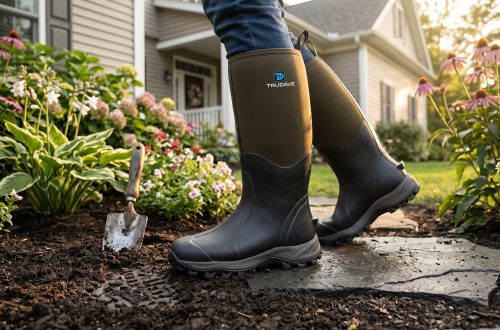
Introduction: The Boot That Doesn’t Fit Is a Boot That Stays in the Closet There’s a particular kind of disappointment that only arrives when you pull a brand-new pair of rain boots out of the box, slide your foot in, and feel something wrong. The length is right, but your toes are jammed against the sides. Or your heel lifts with every step, promising a blister by lunchtime. Or the arch support hits in the wrong place, turning what should be a comfortable day in the garden into an exercise in pain management. Most people assume the problem is their feet. Their feet are too wide, too narrow, too flat,…
-
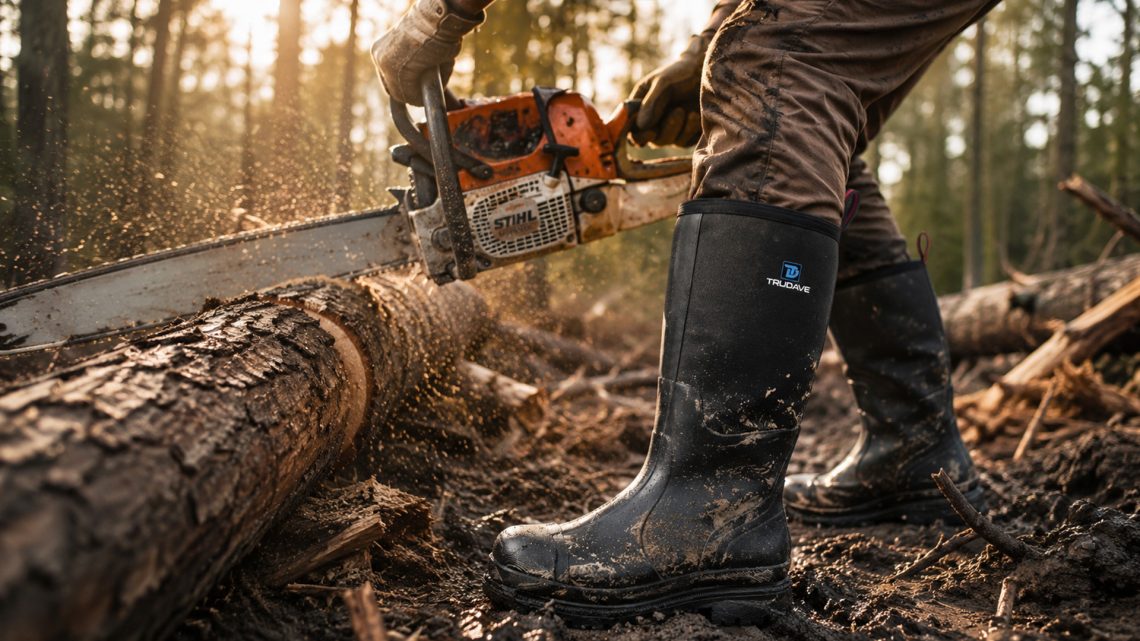
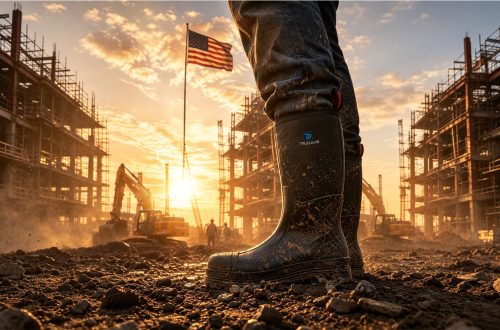
The Men’s Guide to Trudave Rain Boots: Tough Footwear for the Job Site, the Farm, and the Field
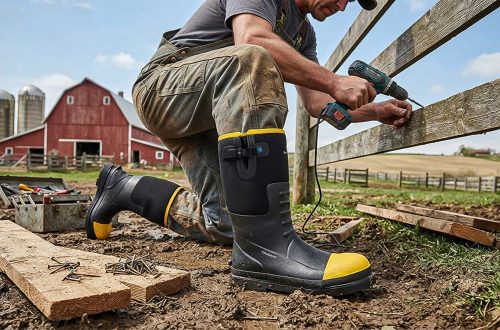
Introduction: Why Most Rain Boots Fail Men Who Work Hard Most men who work outdoors—whether on a construction site, a farm, a commercial fishing boat, or just a muddy back forty—learn early that the $30 rain boots from the hardware store are a false economy. The PVC cracks at the toe crease before the season ends. The glued seams peel apart. The flat, unsupportive footbed leaves your arches aching and your back screaming after a ten-hour shift. You end up buying a new pair every year, sometimes twice a year, and in the long run you spend more on disposable junk than you would have on a single pair of…
-
The Rain Boot Buyer’s Guide to Materials: How to Spot Quality and Why Trudave Is Built to Last
Introduction: The Label Doesn’t Tell the Whole Story Walk into any big-box store or scroll through an online marketplace, and you’ll see rain boots at every price point—from 25PVCwellingtonsto25PVCwellingtonsto200 premium rubber boots. The labels all say the same thing: “waterproof.” But if you’ve ever had a boot crack at the toe crease in under a season, or felt your feet freeze inside a supposedly insulated pair, you know that “waterproof” is just the beginning of the story. The real difference between a boot that lasts five years and one that fails in five months lies in the materials and construction hidden beneath the surface. Understanding what your boots are made of—and…
-
The Environmental Case for Trudave Rain Boots: Natural Rubber, Longevity, and a Cleaner Footprint
Introduction: The Hidden Cost of Cheap Boots Every spring, millions of Americans pull on a pair of rain boots to garden, walk the dog, or slog through mud season. By fall, a shocking number of those boots are in the trash. The culprit isn’t a single season of hard work—it’s the materials. Most budget rain boots are made from PVC, a petroleum-based plastic that cracks, stiffens, and fails with depressing predictability. The result is a cycle of buy-and-discard that fills landfills with non-biodegradable waste and keeps consumers coming back for more. But there’s another way. Trudave Gear’s rain boots are built on a different foundation: vulcanized natural rubber, a renewable…
-
Height Matters: Choosing the Right Shaft Height for Your Trudave Rain Boots
Introduction: The Goldilocks Problem Walk into any well-stocked mudroom or browse any online boot retailer, and you’ll be faced with a choice that seems simple but has outsized consequences: how tall should your rain boots be? Ankle-height, mid-calf, or knee-high? Each option promises to keep you dry, but they go about it in fundamentally different ways—and the wrong height for your tasks can leave you with soaked socks, restricted movement, or boots that feel like anchors by the end of the day. This is not a question of style. It’s a question of physics. A taller boot keeps water out over a greater depth, but it also traps more heat,…
-
A Boot for Every Chapter: How Trudave Gear Rain Boots Serve Women Through Every Stage of an Outdoor Life
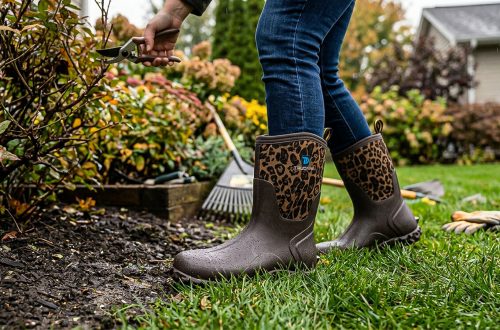
Introduction: The One-Boot Myth Walk into any big-box store in America, and the message is clear: one pair of rain boots should handle everything. The glossy displays show a single style—usually a tall, solid-colored Wellington—and the implication is that this one boot will serve you equally well whether you’re walking the dog on a dewy morning, weeding the vegetable beds for three hours, or navigating a rainy commute to the office. Any woman who has actually tried to live that way knows the truth. The stiff rubber boot that keeps your feet dry during a 20-minute dog walk becomes an instrument of torture after two hours of kneeling in the…
-
The Seasonal System: Why One Pair of Rain Boots Isn’t Enough—and How to Build a Trudave Rotation That Works Year-Round
Introduction: The Boots in the Corner Look at the spot where you keep your outdoor footwear. Is it one pair of boots, worn down at the heels, caked with mud from three seasons ago, dragged out for every task from walking the dog to shoveling snow? If so, you’re not alone. Most people own exactly one pair of rain boots. They bought them during a specific season—probably spring, when the garden was calling—and they’ve worn them ever since, through summer downpours, fall mud, and winter freezes. The boots have been asked to do everything, and they’ve done none of it particularly well. The problem isn’t the boots. It’s the expectation.…
-
The Trudave Rain Boot Lineup in 2026: Which Boot Is Built for Your Outdoor Life?
Introduction: A Market Worth Billions, A Problem Worth Solving The global rain boot market was valued at US1.9billionin2024andisprojectedtoreachUS1.9billionin2024andisprojectedtoreachUS2.4 billion by 2030, growing at a compound annual growth rate of roughly 4.5%. Those numbers tell a story of demand—more rain, more gardeners, more people needing to stay dry. But spend any time reading reviews of cheap rain boots, and you’ll find the same complaints over and over. Cracking at the toe crease before the first season ends. Glued seams that separate after a few months. Flat footbeds that offer no arch support, making long days on hard ground a genuine pain. The vast majority of these failures come down to two…
-
The Heavy-Duty Guide to Trudave AquaGuard and AquaGrip: When the Job Demands Industrial-Grade Protection
Introduction: Beyond the Garden and the Sidewalk Most rain boots are built for the middle of the bell curve—walking the dog, pulling weeds, running a quick errand in a downpour. They’re designed for wet grass, shallow puddles, and the occasional muddy patch. But there’s a whole world of work that exists beyond that curve, where the ground isn’t just wet. It’s saturated with chemicals, slick with oil, carpeted with algae, or so thick with mud that a standard boot will be sucked clean off your foot. For the farmer slogging through manure and standing water. For the commercial fisherman working on a deck coated in diesel and fish slime. For…
-
The $30 Mistake: Why Cheap Rain Boots Cost You More, and How Trudave Gear Engineered a Better Value
Introduction: The Cycle Nobody Talks About Walk into any big-box hardware store in March, and you’ll see them: the $29.99 rain boots. They’re shiny. They’re new. They’re stacked in a display near the garden section, positioned exactly where a hopeful gardener who just wants to get outside will see them and think, “Why not? They’re only thirty bucks.” By July, those boots will be in a landfill. The PVC will have cracked at the toe crease. The glued seams will have separated. The flat, unsupportive footbed will have compressed into a hard, slick surface that offers neither cushioning nor grip. The gardener will have spent 30andgottenthreemonthsofuse.Nextspring,they′lldoitagain.Overadecade,that′s30andgottenthreemonthsofuse.Nextspring,they′lldoitagain.Overadecade,that′s300 to $400 spent on disposable…