-
The Ultimate Online Buying Guide: How to Choose the Perfect Trudave Rain Boots Without Leaving Your Couch
Introduction: The Online Shopping Dilemma Buying rain boots online sounds simple. You browse a few styles, click your size, and wait for the box to arrive. But anyone who has actually done it knows the anxiety: Will they fit? Will they be comfortable for all-day wear? Will the material hold up, or will they crack after a single season? The photos look great, but how do you know what you’re really getting? Unlike sneakers or casual shoes, rain boots are a specialized piece of gear. They need to keep your feet dry, provide support for hours of standing and walking, and withstand the kind of mud, water, and temperature swings…
-
Fix It, Don’t Toss It: The Complete Guide to Waterproof Testing, Patching, and Restoring Your Trudave Rain Boots
Introduction: A Better Way Than the Landfill Every year, millions of rain boots end up in the trash. A cracked toe crease, a puncture from a sharp rock, a sole that’s starting to separate—most people see a broken boot and assume it’s finished. They toss it, buy a new pair, and repeat the cycle. But a well-made rain boot, particularly one built from vulcanized natural rubber like every Trudave Gear boot, is not disposable. It’s repairable, and with a little knowledge and a few basic tools, you can add years to its life. Trudave’s rain boot lineup—from the flexible BloomBoot to the heavy-duty AquaGuard—is engineered with durability and repairability in mind. The vulcanized…
-
5 Common Care Mistakes That Are Killing Your Rain Boots—and How Trudave Boots Are Built to Survive Them
Introduction: The Slow Death of a Good Boot Every spring, the scene repeats itself in mudrooms and garages across America. A pair of rain boots, purchased with optimism just a year or two ago, is pulled from a dark corner. The rubber is cracked at the toe crease. The tread is worn smooth. The interior smells like something crawled in and died. The boots that were supposed to last for seasons are headed to the landfill, and their owner is left wondering what went wrong. Here’s the uncomfortable truth: most rain boots don’t die from overuse. They die from neglect and well-intentioned care mistakes. Drying them next to a roaring…
-
Trudave vs. the Big Brands: How Do Trudave Rain Boots Stack Up Against Hunter, Bogs, and Muck?
Introduction: The Price of a Logo The rain boot aisle is a confusing place. On one end, a pair of Hunter boots commands a price tag that could cover a weekend grocery run, their iconic red-and-white badge promising British heritage and timeless style. On the other, Bogs and Muck Boots advertise heavy-duty insulation and farm-ready toughness for a premium that working families feel. Somewhere in the middle—or, more accurately, tucked away in the direct-to-consumer corner—sits Trudave Gear, a brand that claims to deliver the same vulcanized natural rubber, the same insulating neoprene, and the same all-day comfort architecture as the big players, but at a fraction of the cost. This…
-
The Rain Boot Buyer’s Checklist: 7 Non-Negotiables for Dry, Comfortable Feet
Introduction: The Disposable Boot Cycle Walk into any big-box hardware store in March, and you’ll see them stacked in glossy piles: $29.99 rain boots, shining under the fluorescent lights, promising waterproof protection at a price that feels like a steal. By August, most of those boots will be in landfills. The PVC will have cracked at the toe crease. The glued seams will have separated. The flat, unsupportive footbed will have compressed into a hard, painful slab. The cycle is predictable because the boots are designed to be disposable. They’re built from petroleum-based PVC instead of natural rubber, assembled with glue instead of vulcanization, and outfitted with insoles that are…
-
The Ultimate Trudave Rain Boot Gift Guide: Find the Perfect Pair for Every Outdoor Person in Your Life
Introduction: The Boot That Says “I Get You” Finding the right gift for the person who loves the outdoors can be tough. Another sweater, another gift card to the garden center, another pair of wool socks that will get lost in the drawer. But a pair of rain boots? That’s different. A great pair of rain boots is both deeply personal and universally practical. It says, “I know you’re going to be out there in the mud, the rain, the snow, and the slush—and I want your feet to be dry, comfortable, and safe while you do it.” But here’s the challenge: the person on your gift list isn’t just…
-
When the Storm Hits: Why Trudave Rain Boots Are the Ultimate Emergency Preparedness Footwear
Introduction: The First Thing You Reach For The sirens are wailing. The floodwaters are rising in the street. A hurricane has knocked out power, and the yard is a wasteland of broken branches and debris. In moments like these, you don’t think about fashion. You don’t think about what’s on sale. You reach for the gear that will keep you safe, keep you moving, and keep you protected. For millions of Americans living in hurricane zones, floodplains, and tornado alleys, severe weather isn’t a hypothetical. The National Oceanic and Atmospheric Administration (NOAA) reports that flooding alone accounts for more fatalities each year than any other thunderstorm-related hazard. Often, the most…
-
The Anatomy of a Trudave Rain Boot: What Every Part Does, and Why It Matters for Your Comfort
Introduction: More Than a Rubber Shell Most people see a rain boot as a simple thing—a waterproof tube you slide your foot into. But anyone who’s spent a long day in the wrong pair knows the truth: a rain boot is a system of components, each either working for your comfort or silently undermining it. The outer rubber cracks. The insole flattens. The tread clogs with mud. And somewhere around hour three, your feet start telling you exactly where the engineering fell short. Trudave Gear builds its rain boots with an obsessive attention to those components. Every boot in the lineup—whether it’s the flexible BloomBoot, the everyday MudTrek, the insulated…
-
Head-to-Head in the Mud: Comparing Trudave GardenStride and AquaGuard for the Toughest Jobs on Land and Water
Introduction: When the Chores Demand More There’s a line between a hard rain and a real mess. On one side of it, you’re dealing with wet grass, muddy garden beds, and puddles on the sidewalk. Any decent waterproof boot can get you through that. On the other side, you’re ankle-deep in a manure pile with a pitchfork in your hand. You’re clearing a clogged drainage ditch that’s been under water for a week. You’re pressure-washing the undercarriage of a tractor while standing in a slurry of mud, diesel, and degreaser. This is the kind of work that doesn’t just test a boot—it hunts for weaknesses. It finds glued seams and…
-
The Ultimate Mud Day Challenge: Stress-Testing Trudave Gear Rain Boots Against the Worst Messes You Can Throw at Them
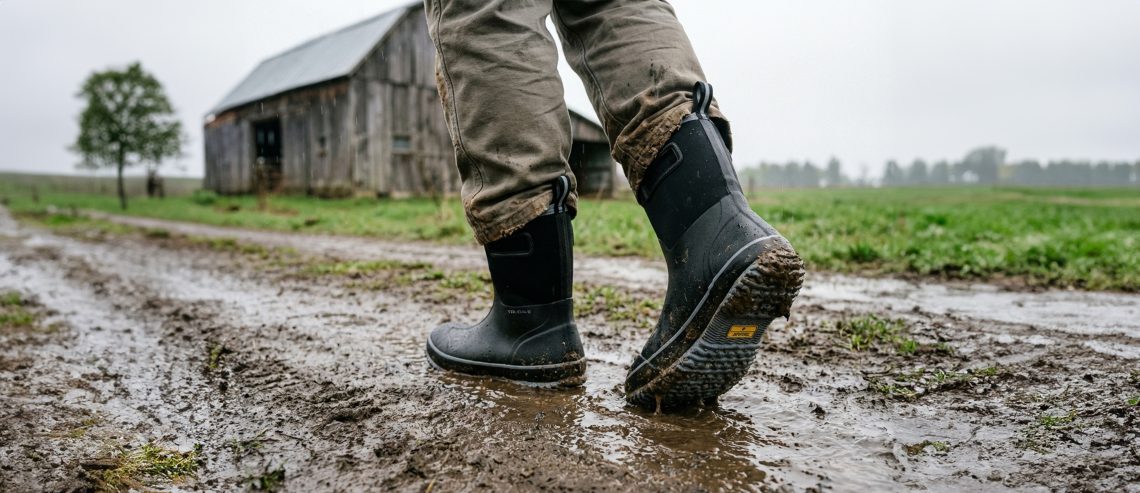
Introduction Some people test boots by walking through a puddle. Others wear them around the garden for an afternoon, check for damp socks, and call it good. This is not one of those tests. To understand what a rain boot is truly capable of, you need to seek out the worst conditions you can find. Not the polite, manageable wetness of a light spring drizzle. The deep, sucking mud at the bottom of a drainage ditch. The manure-caked paddock after a week of rain. The cold, standing water that fills a clogged culvert. The slick, algae-covered rocks at the edge of a pond. The kind of wet, filthy, physically demanding…